 Click the “blue” above to follow us!
Point:
1. The serial port and COM port refer to the physical interface form (hardware). TTL, RS-232, and RS-485 refer to the level standards (electrical signals).
2. When connecting devices, generally only GND, RX, and TX are connected. Vcc or +3.3V power lines are not connected to avoid conflicts with the power supply on the target device.
3. The PL2303 and CP2102 chips are USB to TTL serial chips, used to expand the serial port (TTL level) via USB.
4. The MAX232 chip is a dedicated bidirectional conversion chip between TTL level and RS-232 level, capable of converting TTL to RS-232 and vice versa.
5. The TTL standard has a low level of 0 and a high level of 1 (+5V level). The RS-232 standard has a positive level of 0 and a negative level of 1 (±15V level).
6. RS-485 is similar to RS-232 but uses differential signaling with negative logic. This will be skipped here.
Serial Port, COM Port:
COM port refers to the serial communication port, abbreviated as serial port. This is distinguished from USB’s “Universal Serial Bus” and the hard disk’s “SATA”.
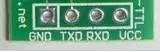
Generally, we see two types of physical standards: the D-type 9-pin connector and the 4-pin DuPont connector.
This is a common 4-pin serial port, often found on circuit boards, and usually has DuPont pins on top. Sometimes there is a fifth pin for the 3.3V power supply.
Since it is reserved on the circuit board, there can be many protocols, depending on the specific device.
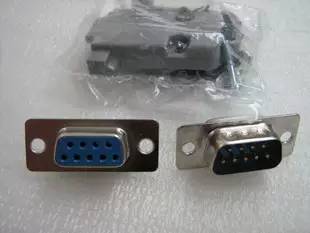
The following is a D-type 9-pin serial port (commonly referred to as such). It can be seen at the back of desktop computers.
Remember, the protocols for this type of interface are only two: RS-232 and RS-485. It will not be TTL level (unless for special applications).
We generally only connect the RXD and TXD pins, plus GND.
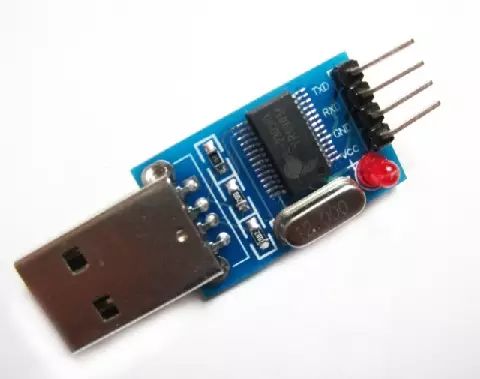
The image below is a USB to TTL serial small board that can expand a serial port via USB. The chip is PL2303HX.
Various serial ports are often confused online, but this one can indeed download programs to the STC microcontroller.
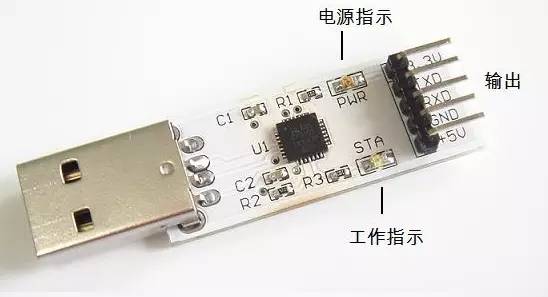
This is another type, the CP2102 chip, which is also a USB to TTL serial port. It is said to be better than the PL2303, but in actual use, I haven’t noticed a difference. This small board also has a +3.3V power supply pin to accommodate different target circuits.
The above introductions are all about USB to TTL serial ports. What if the target device has an RS-232 port (D-type 9-pin connector)?
Just add a MAX232 to convert it.
You can also build a simple comparator circuit to achieve TTL to RS-232 functionality, as shown in the image below.
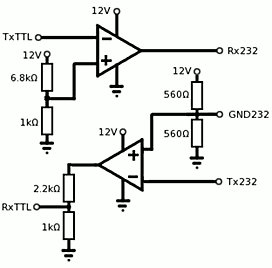
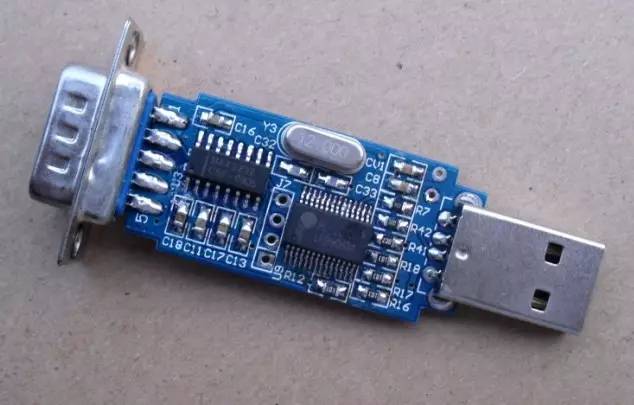
How to convert RS-232 to TTL? This will require some thought. Of course, someone has already thought of making a finished product. Look closely at the image below, where USB is converted to TTL serial through PL2303, and the four holes in the middle can be connected, then converted to RS-232 level through MAX232, leading to a 9-pin serial port.

CAN Bus Hardware Interconnection System
If you have technical needs, please add WeChat or call for consultation
WeChat: QQ14461
Phone: 15385628818

Long press the QR code to follow