Source: Machine Heart

This article contains 2696 words and is recommended to be read in 6 minutes.
It discusses how AI technology can design a successfully walking robot in just 26 seconds.
Inspired by the evolutionary design of nature, automated robot design using evolutionary algorithms has been attempted for two decades, but efficiency remains low. Now, from a soap-like material to a successfully walking robot, the entire design process using AI took only 26 seconds on a laptop (consumer-grade hardware).
The difficulty of designing a robot has always been evident due to the extremely complex interdependencies between the robot’s physical structure, sensors, motion layout, and behavior. Until now, the numerous details of each robot have been manually determined through months or years of repeated ideation, prototyping, and testing by human designers.
Previously, some researchers have also attempted to use evolutionary algorithms to automatically design robots, but their efficiency was still very low: designing robots in simulations while ensuring that these robots can exhibit the desired behaviors after being manufactured took several days of supercomputing time.
Recently, a team led by researchers from Northwestern University developed the first AI capable of designing robots from scratch, with related research published on October 3 in the Proceedings of the National Academy of Sciences.

Paper link: https://www.pnas.org/doi/epdf/10.1073/pnas.2305180120
Notably, this AI runs on a regular laptop, completing the entire design process in just 26 seconds, without any design cues provided by researchers. In other words, the AI figured out on its own that “long legs” are a good way to traverse land.
When AI Designs Robots from Scratch
“We discovered a very fast AI-driven design algorithm that bypasses the long history of evolution and does not rely on human designer biases,” said Sam Kriegman from Northwestern University. Sam Kriegman is an assistant professor of computer science, chemistry, biological engineering, and mechanical engineering, and a member of the Center for Robotics and Biosystems.
“We told the AI we wanted a robot that could walk on land, then pressed a button, and just like that, it designed a robot that looks nothing like any animal that has ever walked on Earth. I call this process ‘instant evolution.'”
Initially, the researchers gave the AI a simple prompt: design a robot that can walk on a flat surface.
While nature took billions of years to evolve the first walking species, the new algorithm compressed that evolutionary process to lightning speed—designing a successfully walking robot in just 26 seconds.
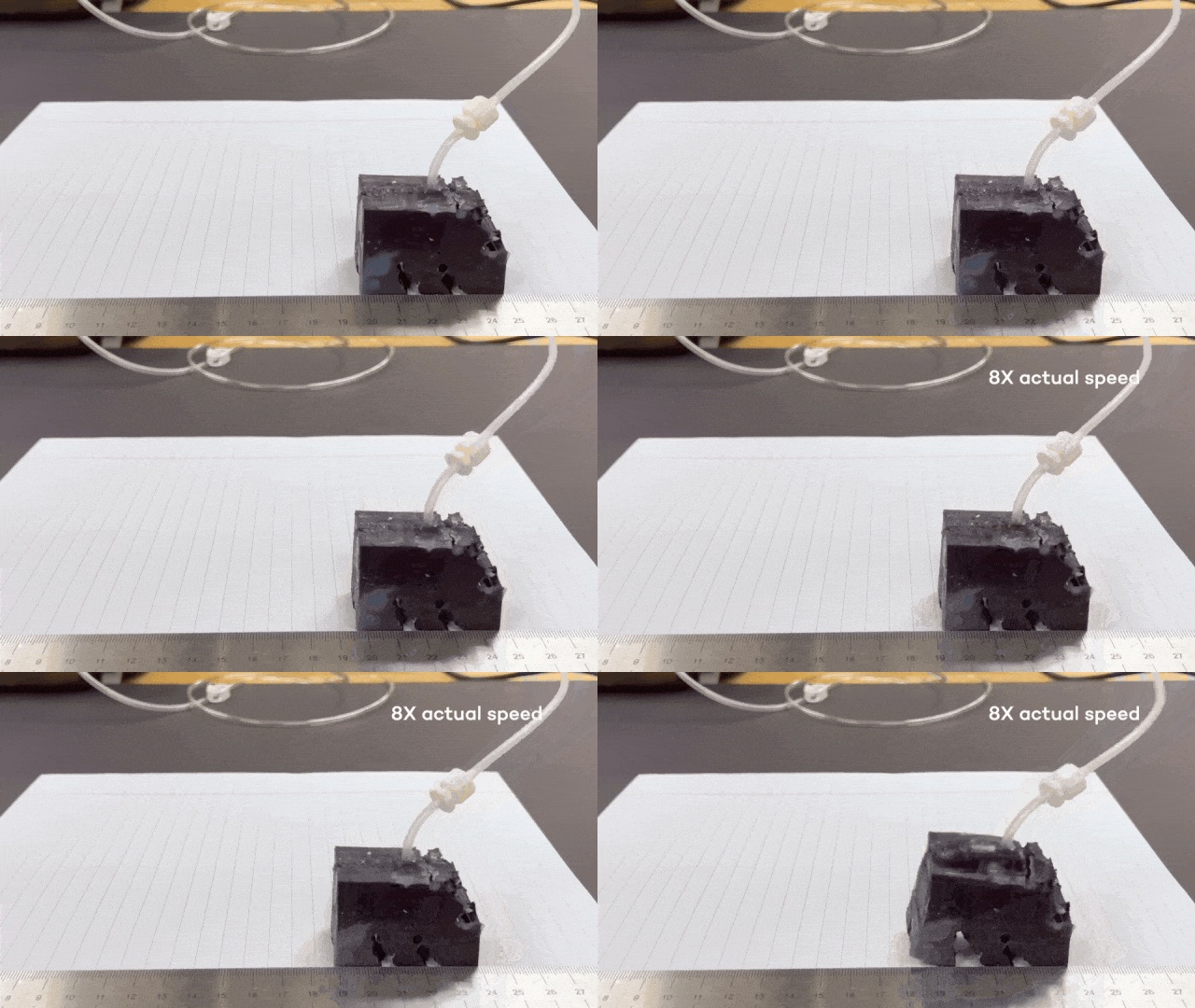
Its design speed is not only fast but can also run on a personal computer, designing entirely new structures from scratch. This contrasts sharply with other AI systems, which typically rely on supercomputers and vast datasets. Moreover, even after processing massive amounts of data, such systems are often limited by human creativity—they merely mimic past human works without generating new ideas.
The AI started with a block of material about the size of a bar of soap, which initially could only wobble and could not walk at all. The AI knew its goal was not yet achieved, so it quickly iterated on the design. With each iteration, the AI evaluated the effectiveness of its designs, identified flaws, and updated the robot’s structure through trimming. In the end, the robot could bounce in place, then jump and move forward. After nine attempts, the AI designed a robot that could walk half its body length per second, about half the speed of a human.
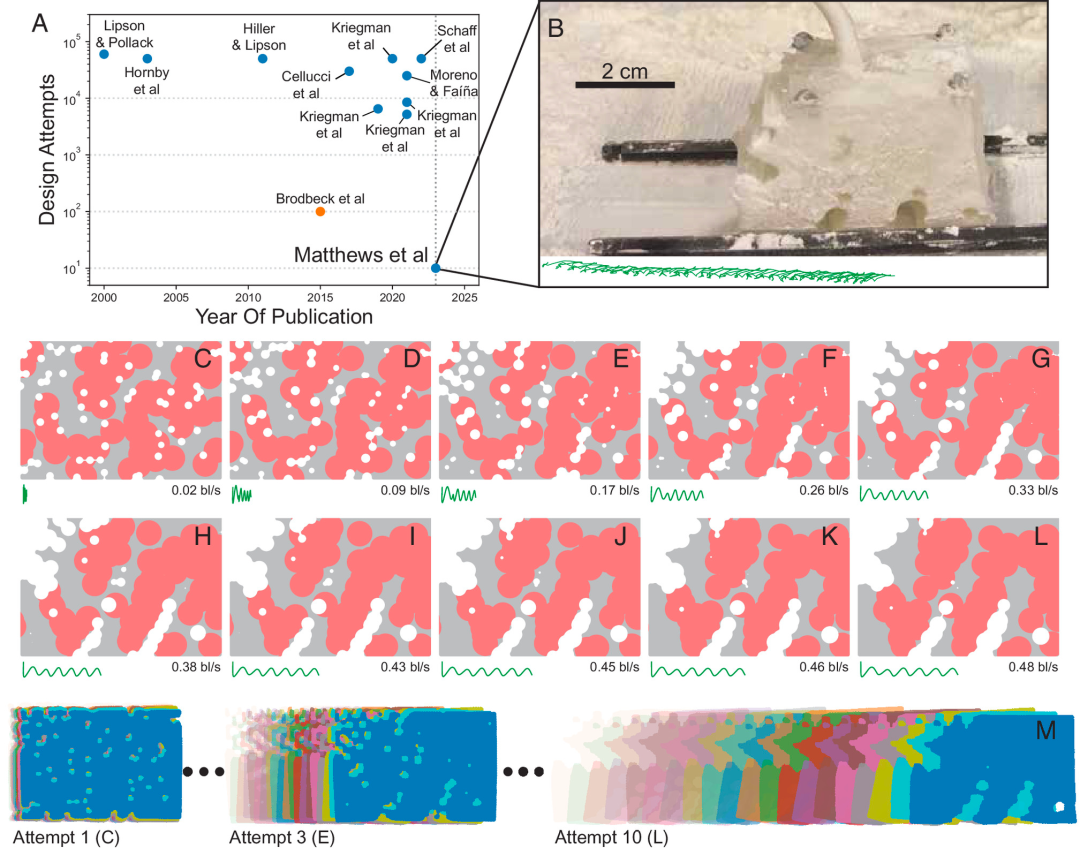
The entire design process—from a non-moving block to a successfully walking robot—took only 26 seconds on a laptop.
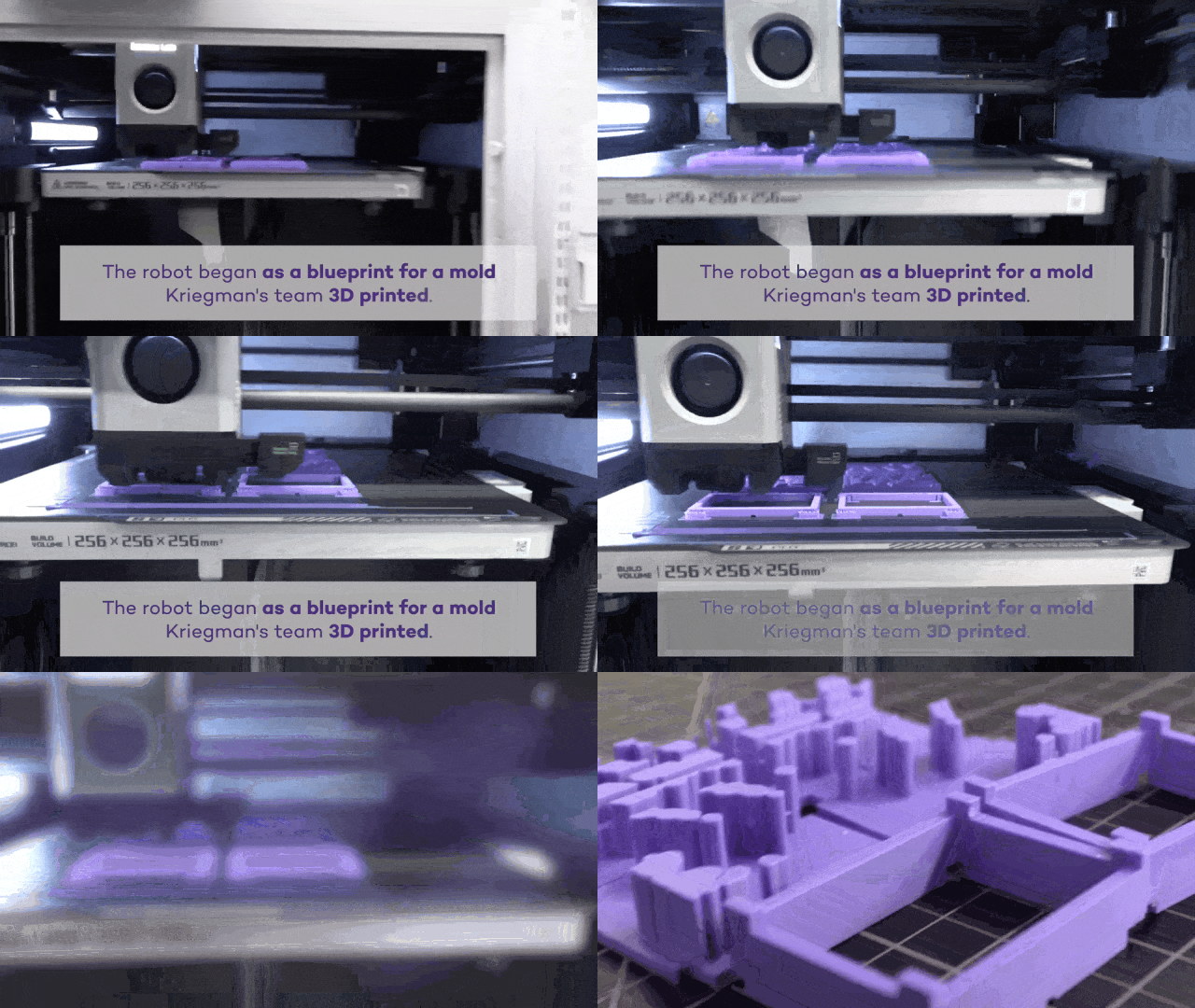
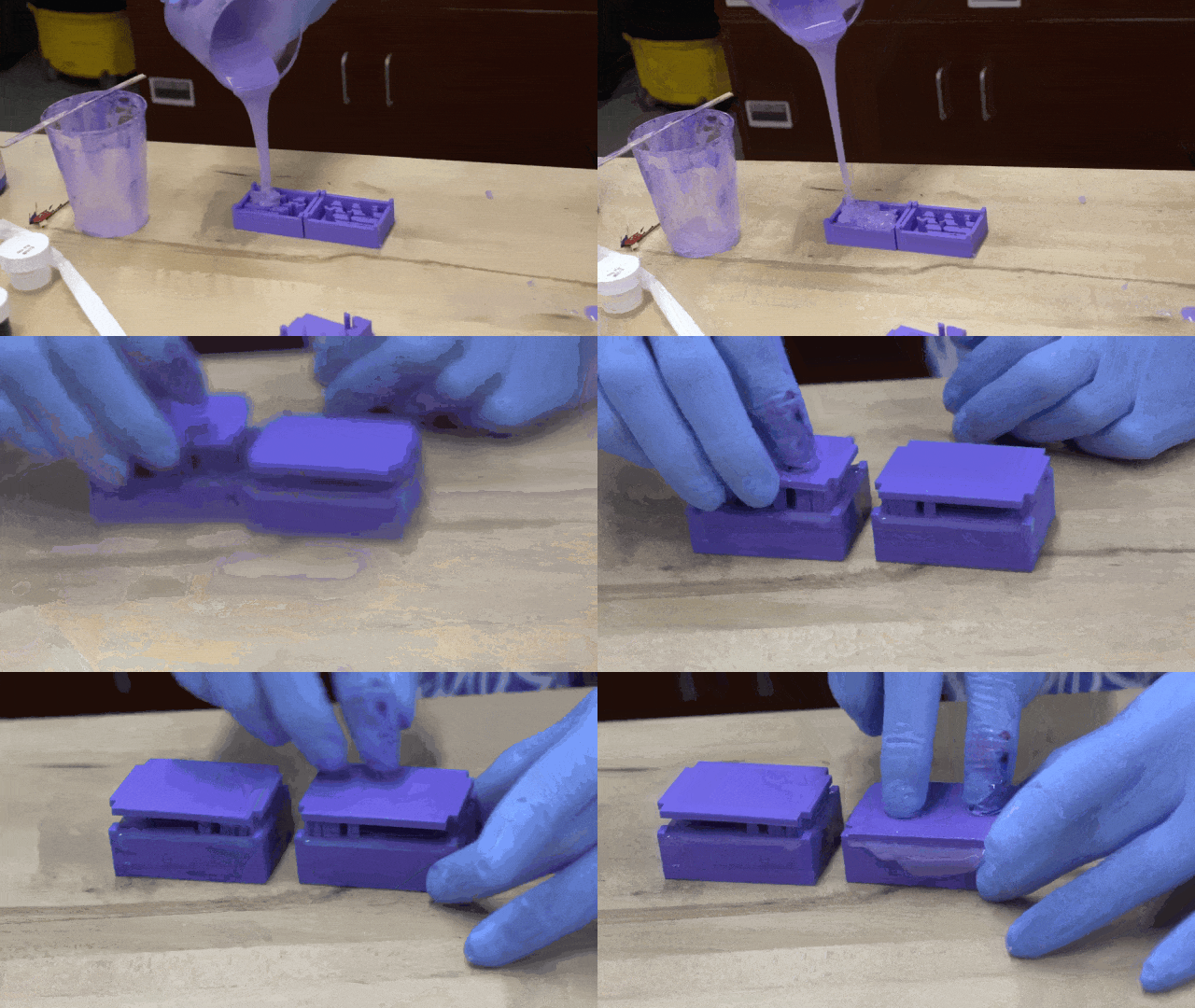
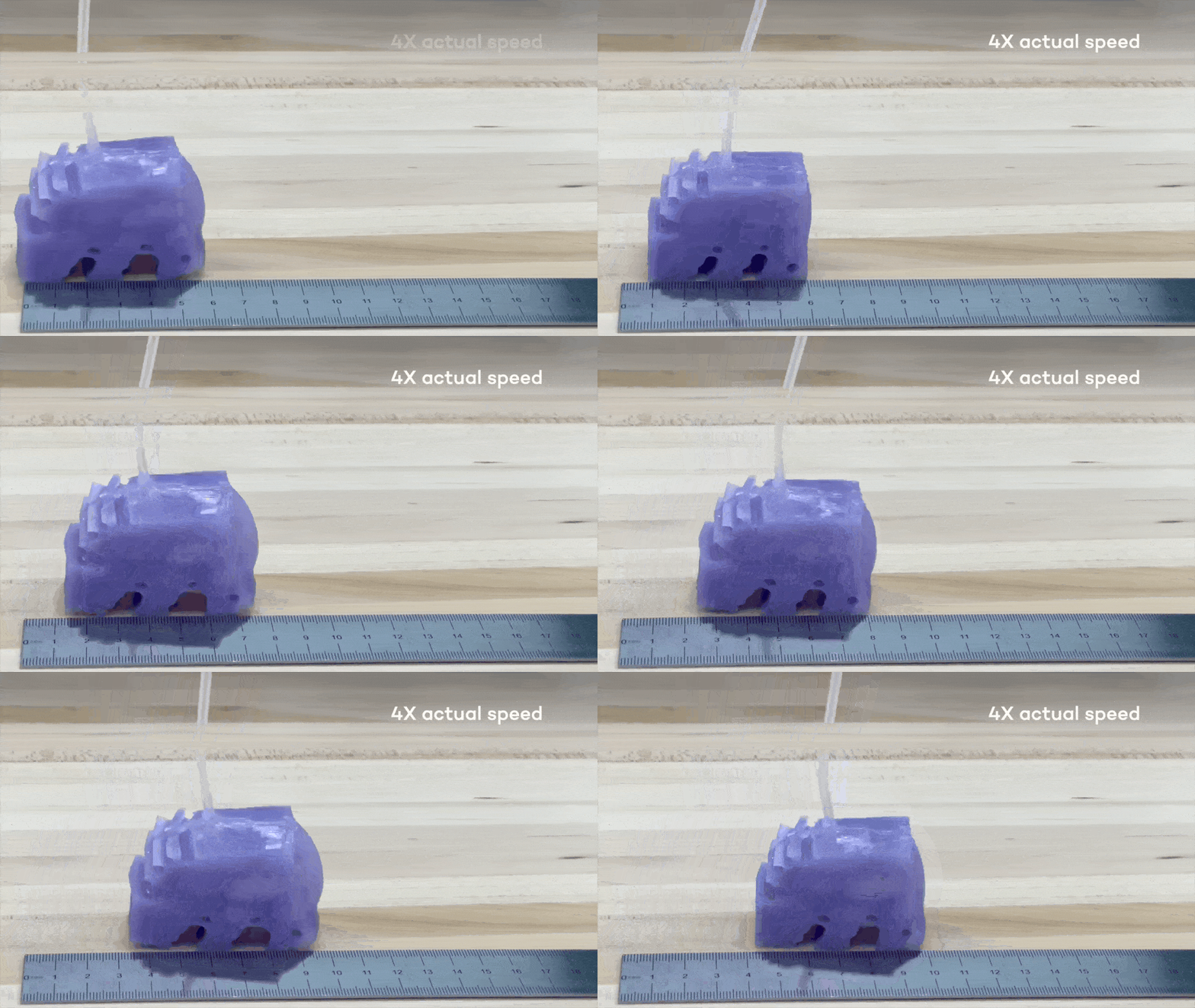
To see if this robot could work in real life, Kriegman and his team 3D printed a mold for the negative space around the robot’s body according to the design blueprint, then filled it with liquid silicone. After a few hours, they removed the cured silicone from the mold, which was soft and elastic.
But can it walk? Next, the researchers inflated it (with air), causing the three legs to swell, and after deflation, the legs shrank again. By continuously pumping air into the robot, the three legs expanded and contracted repeatedly, and the robot slowly but steadily began to walk in the process.
The Birth of a New Organism
David Matthews, a scientist in Sam Kriegman’s lab and the first author of the paper, closely collaborated with Sam Kriegman and other co-authors Andrew Spielberg, Daniela Rus (MIT), and Josh Bongard (University of Vermont) for several years to achieve this breakthrough.
In early 2020, Kriegman gained widespread attention for developing xenobots, the first living robots made entirely from biological cells. Now, Kriegman and his team see the new AI as the next step in exploring the potential of artificial life.
This robot itself is quite unremarkable—small, soft, and misshapen, made of inorganic materials. But Kriegman stated that this signifies the first step towards a new era of AI design tools that can interact with the world like animals.
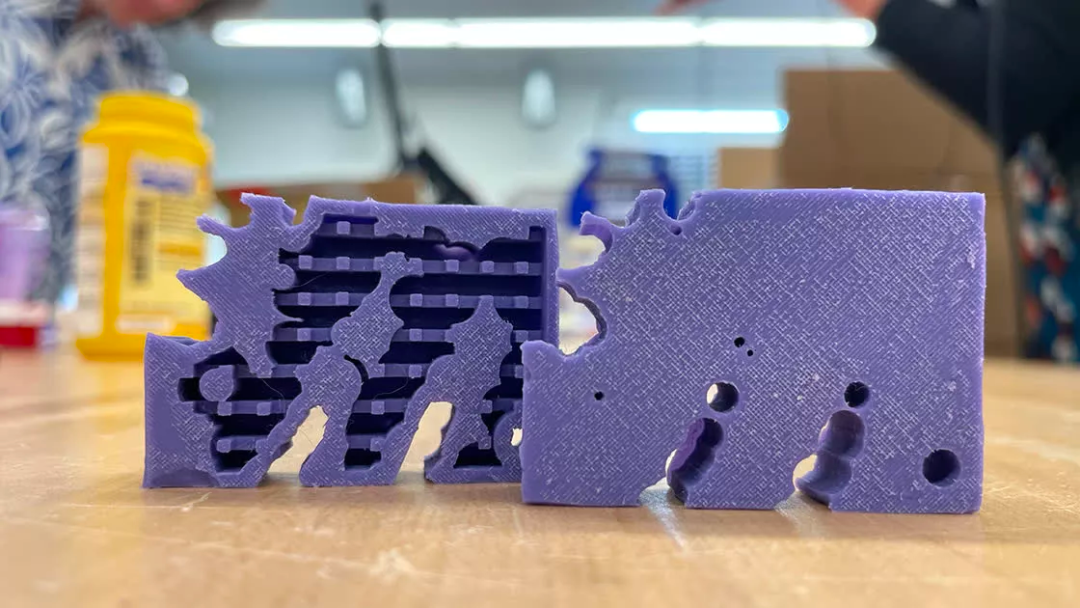
“When people see this robot, they might see a useless little gadget,” Kriegman said, “I see the birth of a new organism.”
“Now, as AI generates increasingly better robot bodies in real-time, anyone can witness evolution in action,” Kriegman said. “Previously, we needed weeks of trial and error on supercomputers, and of course, any animal experiences billions of years of trial and error before running, swimming, or flying, because evolution has no foresight and cannot know whether a specific mutation is beneficial or catastrophic. We found a way to remove the blinders, compressing billions of years of evolutionary history into an instant.”
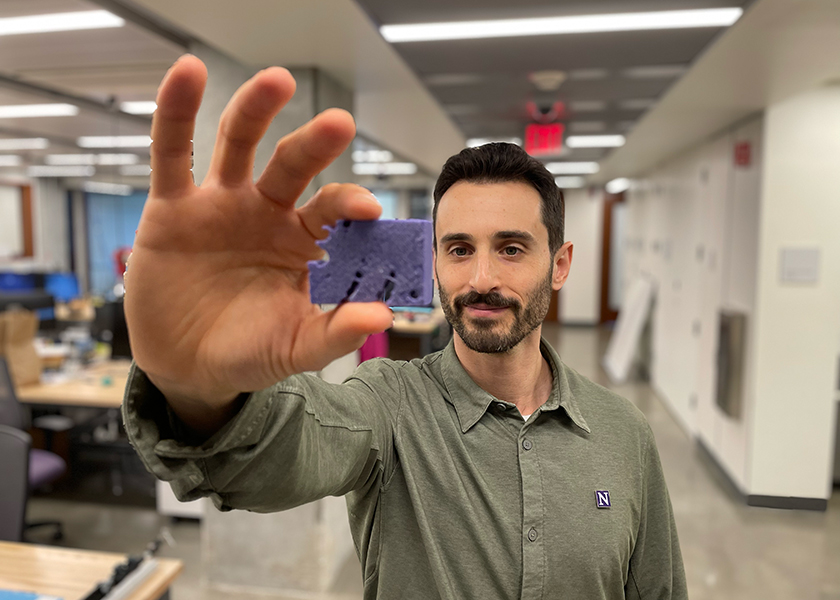
Sam Kriegman and the robot
On its own, the AI unexpectedly came up with the same walking solution as nature: legs. But unlike nature’s perfectly symmetrical designs, the AI took a different approach: it designed a robot with three legs, fins on its back, a flat face, and covered in holes.
“This is interesting because we didn’t tell the AI that the robot should have legs,” he said. “It rediscovered that legs are a good way to move on land. In fact, leg movement is the most efficient form of terrestrial locomotion.
While evolving legs makes sense, the design of these holes is somewhat strange; the AI seems to have randomly punched holes. Kriegman hypothesizes that the porosity could reduce weight and increase flexibility, allowing the robot to bend its legs to walk.
“We really don’t know what these holes are for, but we know they are important,” he said. “Because when we removed these holes, the robot either could no longer walk or walked clumsily.”
Overall, Kriegman is surprised and fascinated by the robot’s design, noting that most human-designed robots either resemble humans or look like dogs or hockey pucks.
“When humans design robots, we tend to make them look like familiar objects,” he said. “But AI can create new possibilities and evolutionary paths that humans have never considered, helping us think differently, which can aid in solving some of our most challenging problems.”
While the first robot designed by AI can only stagger forward, Kriegman imagines a new world where AI designs tools. One day, AI-designed robots could navigate through rubble to find trapped people and animals or traverse sewers to make repairs. AI could also design nanobots that enter the human body to clear arteries, diagnose diseases, or kill cancer cells.
“The only thing standing in the way of us using these new tools and therapies is that humans don’t know how to design them,” he said. “Fortunately, AI has its own ideas.”
Reference links
https://www.pnas.org/doi/10.1073/pnas.2305180120
https://www.youtube.com/watch?v=doS94hdQJu4
https://news.northwestern.edu/stories/2023/10/instant-evolution-ai-designs-new-robot-from-scratch-in-seconds/
——END——