Click on the above Smart Factory Frontline to follow us
e-works encourages originality. For submissions, please refer to the “Original Submission” instructions on the homepage.
✎ Introduction
In recent years, with the rapid development of technologies such as robot control, intelligent sensing, and artificial intelligence, especially the breakthrough development of AI large models and generative AI technologies, humanoid robots have become a new battleground for various parties competing for the future industry, driving technological leaps and commercialization of humanoid robots. Moreover, the support of AI large models provides strong technical support for humanoid robots to enter factories and “work,” opening a new chapter in intelligent manufacturing.
Author: Yang Pei from e-works
On the night of March 13, 2024, a video uploaded by the American humanoid robot startup Figure AI, funded by OpenAI, began to go viral on social media platforms. The video shows that under the empowerment of OpenAI’s visual language model (VLM), the Figure 01 humanoid robot can converse with humans, understand human intentions, and comprehend natural language commands for grasping and placing objects, while also explaining why it does so. This is seen as a significant breakthrough in the intelligence of humanoid robots.In fact, in recent years, with the rapid development of technologies such as robot control, intelligent sensing, and artificial intelligence, particularly the breakthrough development of AI large models and generative AI technologies, humanoid robots have become a new battleground for various parties competing for the future industry, driving technological leaps and commercialization of humanoid robots.Furthermore, the support of AI large models also provides strong technical support for humanoid robots to enter factories and “work,” opening a new chapter in intelligent manufacturing. Recently, several humanoid robot companies, including Apptronik, Figure AI, UBTECH, and Agility Robotics, announced that their humanoid robots have started “working” in factories. Humanoid robots working in factoriesOn March 16, 2024, German car manufacturer Mercedes-Benz announced an important agreement with Apptronik, a developer of humanoid robots, to introduce the Apollo humanoid robot into its factories, primarily for heavy, low-skilled labor such as handling and assembling parts, to test the application of humanoid robots in automotive production and their ability to perform various tasks.
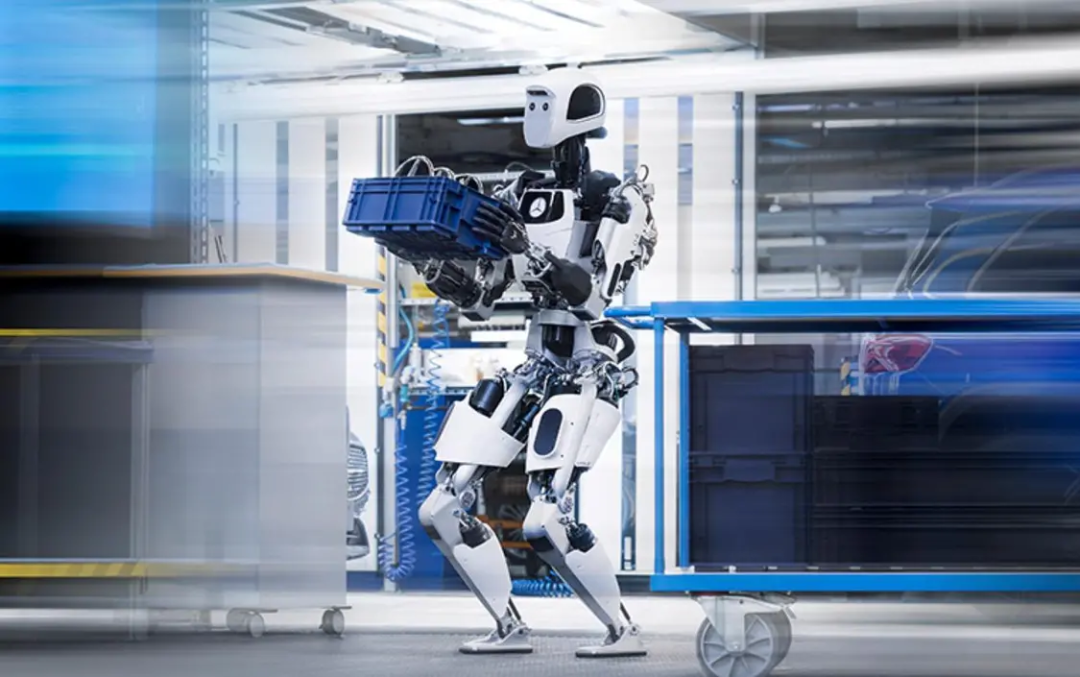 Figure 1 Apollo humanoid robot (Source: Apptronik)Earlier, on February 22, 2024, the domestic “first stock of humanoid robots” UBTECH revealed that its industrial humanoid robot Walker S has been undergoing “practical training” at NIO’s automotive factory. The “practical training” tasks include adaptive walking for starting and stopping production lines, robust odometry and walking planning, autonomous operation perception, system data communication, and task scheduling.On January 25, 2024, at the Junsheng Group’s annual gala, the humanoid robot named JARVIS (Joyson A Robot Vibrant Intelligent System) developed by the Junpu Artificial Intelligence and Humanoid Robot Research Institute made its debut. Moreover, videos of the JARVIS robot working in the Junpu smart factory were also shown at the annual gala.
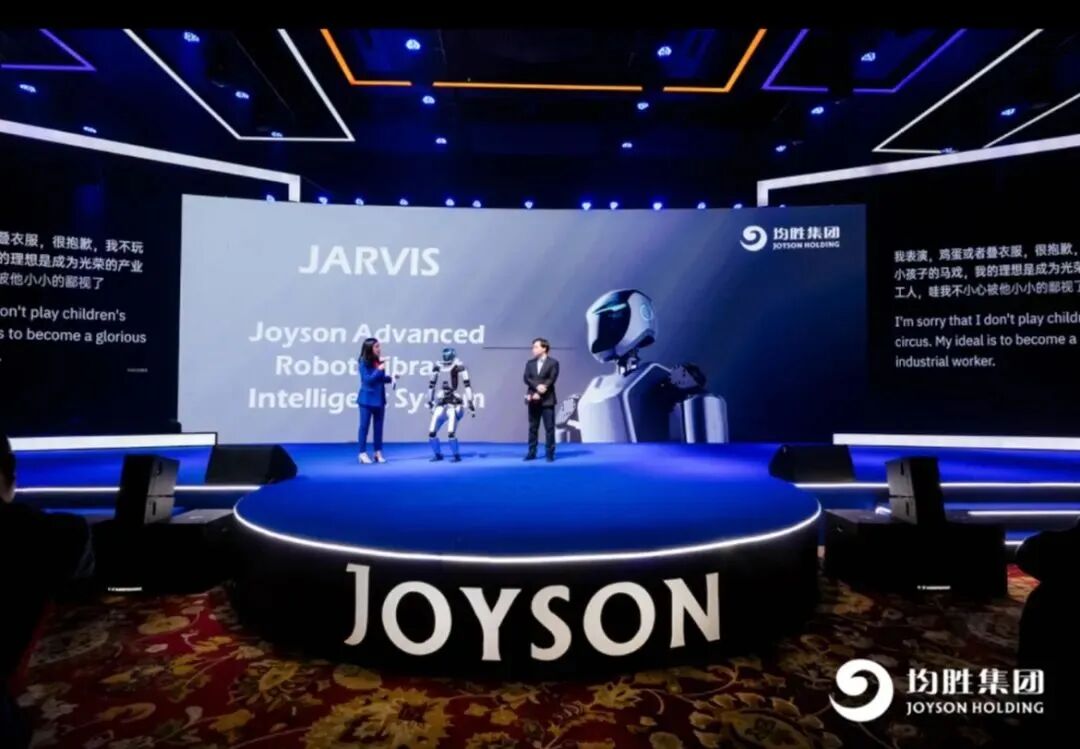 Figure 2 JARVIS humanoid robot (Image source: Junpu Intelligent)On January 18, 2024, the American humanoid robot company Figure AI reached an important cooperation with BMW, sending its first humanoid robot Figure 01 to BMW’s Spartanburg automotive factory in South Carolina for pilot applications, primarily to replace humans in performing some high-risk tasks.In October 2023, Amazon announced a trial introduction of the Digit humanoid robot in its logistics center located south of Seattle for application testing, aiming to utilize the robot to improve operational efficiency within the warehouse, thereby accelerating and enhancing delivery services. Digit is a humanoid robot product developed by Agility Robotics, a startup in which Amazon has invested. Moreover, in December 2023, the world’s largest third-party contract logistics provider, GXO Logistics, also announced the introduction of Digit for logistics task testing at the SPANX factory in Flowery Branch, Georgia.
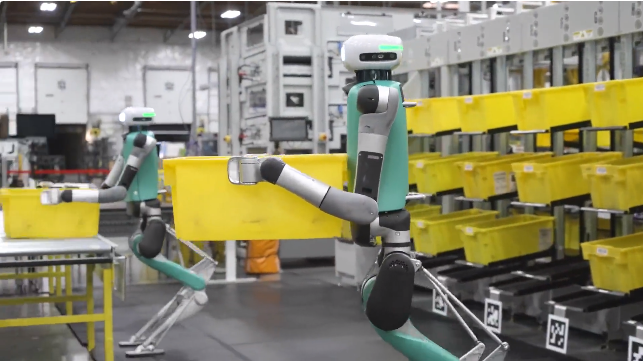 Figure 3 Digit humanoid robot (Screenshot from Agility Robotics official video)Of course, the companies sending humanoid robots into factories are not limited to the few mentioned above. Public information shows that companies including Boston Dynamics, AGIBOT, and Tesla have also expressed similar intentions, or demonstrated the application of humanoid robots in manufacturing factories.This is largely due to the unique advantages that humanoid robots possess. Especially after humanoid robots integrate AI large model technology, they can adapt to the wide and complex scenarios and tasks in manufacturing factories.
 Applications of humanoid robots in manufacturing factoriesHumanoid robots, simply put, are robots that have a human-like form and can perform movements and tasks that human limbs can accomplish, possessing human-like perception, learning, and cognitive abilities. “Humanoid” is widely regarded in the industry as the ultimate ideal form of robots, as it closely resembles humans in appearance, can perform more and more flexible actions, and has more friendly interactions.Humanoid robots are an important carrier of “Embodied AI.” “Embodied AI” refers to the ability in the field of machine intelligence to combine intelligent algorithms with the perception, action, and environmental interaction of physical entities, enabling machines to interact with the environment and solve problems in a more natural and intelligent way. As a tangible carrier of general artificial intelligence, humanoid robots, when combined with AI large models, can perceive the physical world, control their bodies using multimodal perception, and complete complex tasks.In manufacturing, compared to traditional industrial robots, humanoid robots have the advantage of not needing to complete specific tasks based on pre-planned instructions, but rather understanding, learning, and making decisions through perception of the surrounding environment, and are no longer limited to a single scenario. With the support of AI large model technology, they possess very strong autonomous decision-making, flexible operation, and interaction capabilities.Overall, the typical applications of humanoid robots in manufacturing factories currently include item handling, picking and placing, quality inspection, labeling, assembly, intelligent inspection, and high-risk operations.Item Handling:For example, when Tesla CEO Elon Musk officially released the humanoid robot prototype “Optimus” at the 2022 AI Day, he showcased a video of the humanoid robot handling boxes in an automotive factory. In Amazon warehouses, the Digit humanoid robot developed by Agility Robotics is primarily used to assist warehouse employees in picking up and moving hand-carried boxes. The first commercial humanoid robot Apollo launched by Apptronik also demonstrated its ability to pick up, handle, and place objects in a warehouse. Additionally, in a video released by Boston Dynamics, its humanoid robot Atlas can pick up car parts thicker than its own arms and transport them to the target location.
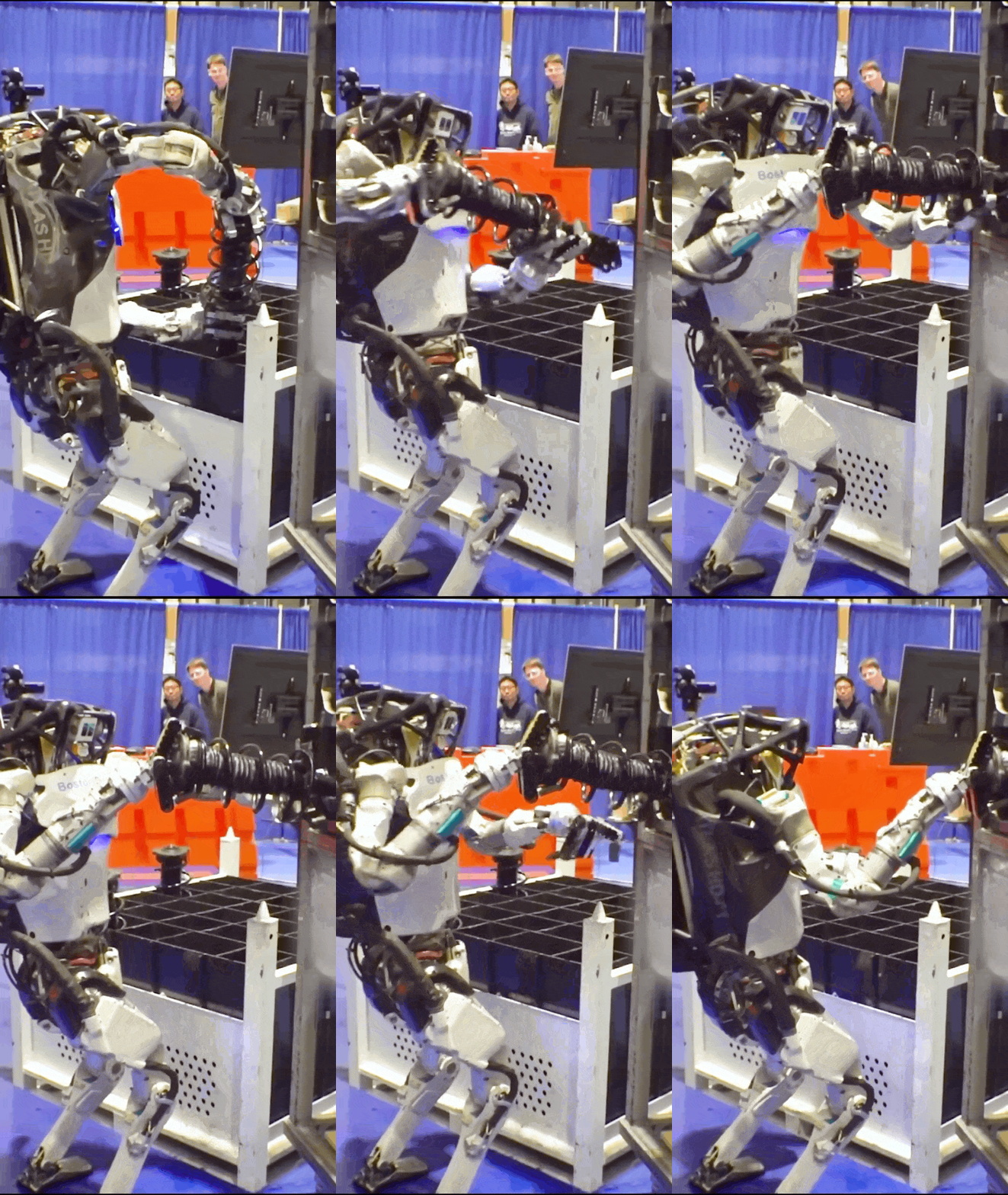
Figure 4 Atlas humanoid robot grasping and transporting car parts
(Source: Boston Dynamics)
Item Classification:The official Tesla Optimus account once shared a video on the X platform, showcasing the humanoid robot “Optimus” performing various tasks, including automatically classifying blocks by color.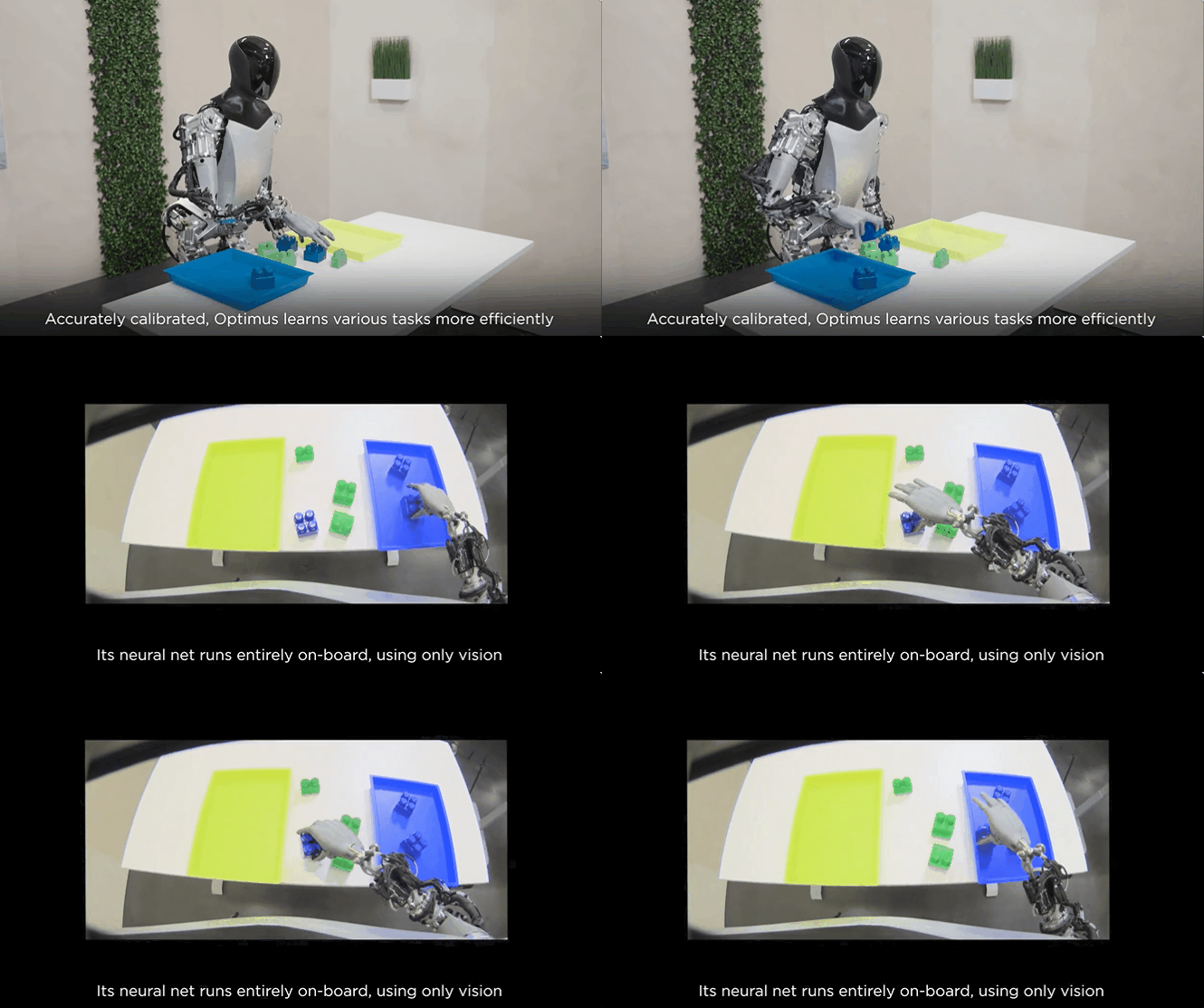 Figure 5 Optimus humanoid robot performing item classification (Source: Tesla)Quality Inspection and Labeling: In a video exposed by UBTECH’s official WeChat video account, the industrial humanoid robot Walker S participated in quality inspections of door locks, car lamp covers, seat belts, and labeling at the NIO factory. For example, in the quality inspection of automotive door locks, Walker S is equipped with a customized AI quality inspection management system that can perform real-time image capture and transmission of the door locks. If the door lock status is correct, Walker S will mark “OK” on the system.
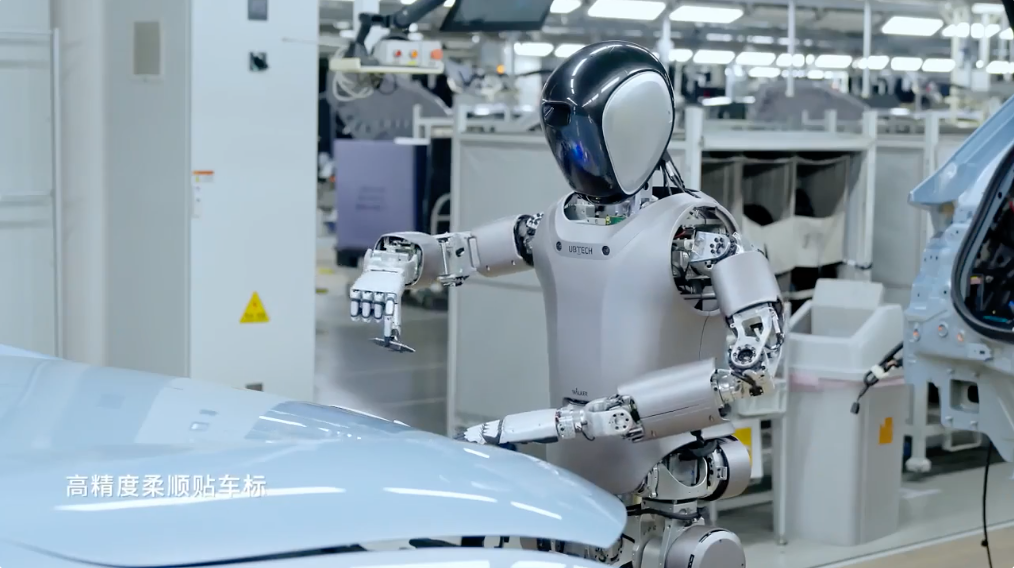
Figure 6 Industrial humanoid robot Walker S labeling
(Source: UBTECH)
Assembly Tasks:Humanoid robots can complete various assembly tasks through flexible and variable robotic arms and precise finger movements, adjusting strategies in real-time to cope with uncertainties and ensure assembly quality.Intelligent Inspection:Humanoid robots are typically equipped with various advanced sensors and high-definition cameras, possessing high flexibility and autonomous navigation and obstacle avoidance capabilities, enabling them to patrol autonomously in complex environments, conduct visual inspections through narrow or high areas, monitor the surrounding environment comprehensively, and promptly detect anomalies and issue alarms. Moreover, they can assist in rescue operations through functions such as laser radar, infrared cameras, sensors, robotic arms, and communication positioning.High-Risk Operations:In dangerous or harsh environments, humanoid robots can replace humans in performing tasks, effectively reducing personal safety risks.Industry insiders generally believe that humanoid robots have enormous application potential and space in the industrial manufacturing field. According to media reports, UBTECH’s founder, chairman, and CEO Zhou Jian has stated that intelligent manufacturing will become the first large-scale application field for humanoid robots, which will redefine workers in the AI era, liberating humans from repetitive labor. Junpu Intelligent’s chairman Zhou Xingyou has also expressed similar views in public, pointing out that the main application areas for humanoid robots will be in the service industry, but they also have great potential in intelligent manufacturing. For example, humanoid robots connected to industrial brains can replace workers in tasks such as inspection, assembly, and handling, achieving an organic integration of humans and machines on production lines. Increasing Number of Humanoid Robot Enterprises Entering the MarketIf we start counting from 1967 when Ichiro Kato, the “father of humanoid robots,” led Waseda University in Japan to initiate the development project of the humanoid robot WABOT, humanity’s research on humanoid robots has traversed half a century. However, in reality, progress in humanoid robot research was quite slow until Tesla showcased the “Optimus” humanoid robot in 2022. During this process, Waseda University, SoftBank Group, Aldebaran Robotics, Honda, Boston Dynamics, and domestic institutions such as the National University of Defense Technology have all been pioneers in humanoid robot research.With Tesla’s first demonstration of the humanoid robot “Optimus” at the AI Day in 2022, and the emergence of OpenAI’s large language model ChatGPT in November 2022, the research and development of humanoid robots have accelerated, attracting more companies to enter the humanoid robot market.According to incomplete statistics, the main humanoid robot R&D companies abroad include Boston Dynamics, Tesla, 1X Technologies, Figure AI, Agility Robotics, Apptronik, and Kawasaki Heavy Industries. Among them, Figure AI was established in 2022 and has since received multiple rounds of financing, becoming one of the hottest humanoid robot star companies. Figure’s most recent financing occurred in February 2024, raising approximately $675 million from major tech companies including Amazon founder Jeff Bezos, Microsoft, NVIDIA, and OpenAI, with a current valuation of $2.6 billion.Domestically, the main humanoid robot R&D companies include UBTECH, Fourier Intelligence, Kepler, AGIBOT, Star Motion Era, LimX Dynamics, Daer Technology, Xiaomi Technology, Xpeng Motors, Yushu Technology, MagicLab, Junpu Intelligent, iFlytek, EXrobots, Tiantai Robotics, Titan Robotics, China Electronics Technology Group 21st Institute, Daimon Robotics, Iron Man Technology, Pure Rice Technology, Leju Robotics, and Pasini Perception Technology.Analysis shows that the vast majority of these are startup companies or new entrants in the humanoid robot field.For example, AGIBOT was co-founded in February 2023 by Huawei’s “genius youth” Zhi Hui Jun (real name Peng Zhihui) and released its first humanoid robot “Expedition A1” in August 2023. Star Motion Era was incubated by the Tsinghua University Institute of Interdisciplinary Information, officially established in August 2023. Although Fourier Intelligence was established earlier, it primarily focused on rehabilitation robots in the early stages and only released its first general-purpose humanoid robot GR-1 in 2023. Junpu Intelligent first proposed in its 2023 semi-annual report to focus on and actively layout the new field of humanoid robots, and officially established the Artificial Intelligence and Humanoid Robot Research Institute in September 2023, with its first humanoid robot JARVIS making its debut in January 2024.Moreover, domestic universities such as the National University of Defense Technology, Tsinghua University, Zhejiang University, Beijing Institute of Technology, and Harbin Institute of Technology are also conducting research on humanoid robots.Among them, the National University of Defense Technology successfully developed China’s first humanoid robot “Pioneer” in 2000, achieving a significant breakthrough in robot technology. Tsinghua University developed the THBIP-I and THBIP-II autonomous humanoid robot prototype systems, capable of walking on flat ground and climbing stairs. The “Wukong” series humanoid robots developed by the Control Science and Engineering Department of Zhejiang University can play table tennis against humans and machines, and are currently iterating and improving towards practical applications. The “Huitong 6” humanoid robot developed by Beijing Institute of Technology has achieved multimodal movements such as “walking, running, jumping, falling, rolling, and climbing.”
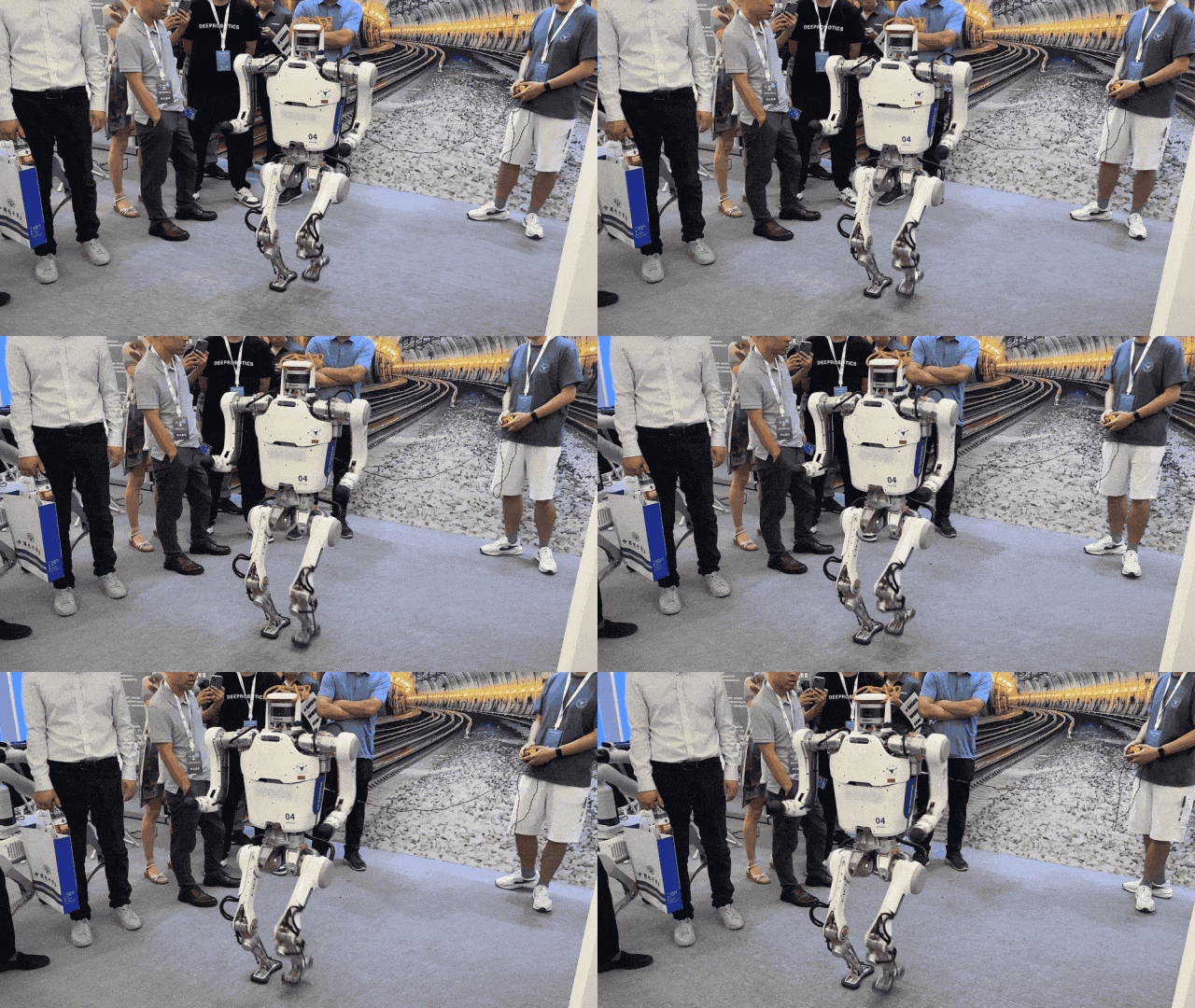
Figure 7 Humanoid robot “Wukong” at the 2023 World Robot Conference
(Source: Beijing Science and Technology News)
More entrants are increasing in the humanoid robot field.For example, Boshi Co., Ltd. announced in March 2023 that it had signed a “Strategic Cooperation Framework Agreement” with Harbin Institute of Technology to jointly establish a research and development project for the industrialization of key technologies and principles of humanoid robots, and to jointly promote the industrialization of related technological achievements and products in the future. At the end of December 2023, Tianqi Co., Ltd. completed the business registration procedures for a joint venture company, Wuxi Youqi Robot Technology Co., Ltd., co-funded with a wholly-owned subsidiary of UBTECH. It is reported that the joint venture will rely on the advantages of both parties to create humanoid robots suitable for automotive manufacturing scenarios, and will gradually expand to other intelligent manufacturing fields and application scenarios such as automotive parts, 3C, and smart logistics. With the acceleration of humanoid robot commercialization, South Korea’s Samsung Electronics has also begun to pay attention to the development of humanoid robots and is researching and formulating strategies to enter the robot market. Moreover, technology companies such as OpenAI, Microsoft, Google, NVIDIA, Meta, Amazon, and iFlytek, due to their deep technical accumulation in the field of artificial intelligence, have also joined the humanoid robot race, as humanoid robots are important carriers of embodied intelligence. Additionally, smartphone manufacturer VIVO has also stated that based on its accumulation in large model technology and mixed reality technology, it will naturally enter the humanoid robot field. Scaling Up in Factories Will Take TimeHowever, it is worth noting that although the number of “players” entering the humanoid robot field is increasing, and humanoid robots have begun to enter factories to “work,” the commercialization and application of humanoid robots in manufacturing factories are still in the exploratory verification stage.It is reported that UBTECH’s industrial humanoid robot Walker S sent to NIO’s factory for “practical training” is not an order delivery, so it does not yet belong to formal application. The humanoid robot Figure 01’s “working” life at BMW’s Spartanburg factory will start with “a small amount of work.” As time goes on, these AI-driven humanoid robots will join more manufacturing tasks, including box handling, picking and placing tasks, and pallet loading. After the assessment period ends, in the future 12-24 months, Figure 01 will be integrated into BMW’s manufacturing processes, including body workshops, sheet metal, and warehouses.This indicates that while humanoid robots have demonstrated significant application space and potential in manufacturing factories, it is still too early for large-scale factory integration. In fact, the conditions for large-scale industrialization of humanoid robots are not yet mature in the short term. High costs and technical bottlenecks are issues that humanoid robot companies need to address.Currently, the cost of humanoid robots is quite high, depending on their expensive hardware costs.Data shows that the estimated cost of Boston Dynamics’ Atlas humanoid robot exceeds $200,000. The high cost is actually one of the main reasons for the slow commercialization of Boston Dynamics, leading to the company being sold multiple times.At the launch of the “Expedition A1” embodied intelligent robot product, Zhi Hui Jun stated that the long-term goal is to control hardware costs to within 200,000 yuan. According to research data from Zhongtai Securities, the BOM (Bill of Materials) cost of humanoid robots is estimated at a future unit price of 200,000 yuan, with the total value of core components for a single humanoid robot reaching about 100,000 yuan, including sensors for force and vision valued at 23,000 yuan, rolling and sliding bearings valued at 4,200-9,600 yuan and 750-1,500 yuan respectively, brushless motors valued at 42,000 yuan, and ball screws valued at 21,000 yuan.However, even if hardware costs are controlled to within 200,000 yuan, humanoid robots currently do not have a price advantage based on the applications they can achieve.For example, collaborative robots, which are increasingly being used in manufacturing factories, have seen their prices drop to below 10,000 yuan in a highly competitive market. Collaborative robots can also perform the tasks that humanoid robots can currently accomplish in manufacturing factories, such as item delivery and transfer, item picking and classification, picking and placing, operating machinery, and quality inspection; when equipped with a mobile chassis, collaborative robots can transform into mobile composite robots, meeting more complex applications and niche scenario needs. Additionally, since the emergence of ChatGPT, collaborative robot companies such as Jiekai and Yujian Technology, as well as tech companies like Microsoft, Google, and Alibaba, are actively exploring the integration of AI large models with collaborative robots to achieve more intelligent applications.Technical bottlenecks are also a major obstacle to the large-scale application of humanoid robots in manufacturing factories.Standing on two feet is much more challenging than walking on four legs. Bipedal humanoid robots need to solve balance issues, achieve stable gait control, and possess good obstacle avoidance capabilities. From the various humanoid robot product launch events or demonstration videos, it can be seen that running, jumping, backflips, climbing slopes, climbing stairs, and dancing are also key highlights of their demonstrations, and some companies have also launched wheeled humanoid robot products, indicating that the balance issues of humanoid robots are gradually being overcome. However, the technical bottlenecks faced by humanoid robots are not limited to this; they also include motion coordination, perception, decision-making intelligence, and endurance issues. Moreover, safety standards and operational regulations for humanoid robots need to be established and improved to ensure safety in human-machine coexistence environments.Additionally, there is still room for improvement in the integration of AI large models and human-robot interaction capabilities. Although in the latest video uploaded by Figure AI, under the empowerment of OpenAI’s visual language model (VLM), the Figure 01 humanoid robot can converse with humans, understand human intentions, and execute tasks based on natural language commands while explaining its actions, significant breakthroughs have been made in intelligence, but there is still room for improvement in the fluency and experience of human-robot interaction. Moreover, humanoid robots need to understand complex human language and non-verbal communication signals and respond appropriately to be more competent in manufacturing factory applications.However, as the saying goes, “Every difficulty can be overcome, and every task can be accomplished.” Today, humanoid robots have become a new battleground for various parties competing for the future industry and a hot field in the development of “artificial intelligence +”. In November 2023, the Ministry of Industry and Information Technology issued the “Guiding Opinions on the Innovative Development of Humanoid Robots,” clearly stating the need to lead with breakthroughs in artificial intelligence technologies such as large models; to build a complete technological innovation system for the humanoid robot manufacturing industry; to focus on key manufacturing sectors such as 3C and automotive, enhance the operational and task execution capabilities of humanoid robots, and create demonstration production lines and factories for humanoid robots, achieving deep applications in typical manufacturing scenarios.Since humanoid robots mimic human capabilities, theoretically, the tasks and jobs that manufacturing workers can perform today can also be accomplished by humanoid robots in the future. Although large-scale integration of humanoid robots into factories is still a long way off, it is believed that with the support of industrial policies and the joint efforts of various parties in the industry chain, it will not be too far away.Upcoming Events