Data-Driven Multi-Operating-Point Admittance Acquisition Method for Renewable Energy Devices Considering Dataset Errors
Li Han1, Li Meng1, Wang Yaoxin1, Ma Juncha2, Ni Qiulong3, Li Haipan1, Nian Heng1
(1. College of Electrical Engineering, Zhejiang University; 2. State Grid Zhejiang Electric Power Company, Electric Power Research Institute; 3. State Grid Zhejiang Electric Power Company, Dispatch Control Center)
DOI: 10.13334/j.0258-8013.pcsee.231864
1Research Background
The data-driven neural network modeling method has been widely used to analyze the multi-operating-point impedance/admittance models of power electronic devices. However, the actual measured admittance data samples are limited, and the quality of the admittance data is poor due to the influence of measurement noise. In multi-operating-point admittance modeling, on one hand, the neural network model may overfit the noise features in the training data, leading to a significant deviation between the admittance characteristics output by the model and the true values due to the accumulation of measurement errors during the model training process. On the other hand, the measurement errors in multi-operating-point admittance have not been quantified and analyzed, and the accuracy evaluation metrics of the model considering errors need to be established urgently, making it difficult to apply data-driven methods in practical admittance acquisition scenarios. Therefore, it is necessary to propose a method for establishing multi-operating-point admittance models for renewable energy devices considering noise interference errors.
2Problems Addressed and Significance of the PaperThis paper addresses the issue of difficulty in accurately identifying the admittance of renewable energy devices due to measurement error datasets affecting neural network models. It analyzes the impact of voltage and current noise on admittance measurements under multiple operating conditions and establishes the relationship between measurement errors and the model training loss function, proposing a quantification method for evaluating the accuracy of neural network models under errors. Furthermore, it clarifies the negative propagation mechanism and cumulative effect of measurement errors during neural network model training, reducing the degrading impact of noise interference on model training and improving the accuracy of the admittance identification model.3Main Content of the Paper
1Consideration of Neural Network Model Training Metrics under Multi-Operating-Point Measurement Errors.
To better evaluate the predictive performance of the neural network model in practical applications, this paper verifies the mean square error calculated from the admittance output values obtained through the neural network model against the true values as a new evaluation metric. This metric reflects the noise interference resistance capability of the neural network model and represents the closeness of the neural network model output values to the true values. Although the true values in the above metric are unknown, the relationship between the true values and the measured values can be derived by analyzing the amplitude-phase expression of the measurement errors, and then an analytical expression for the multi-operating-point admittance errors and model evaluation metrics can be established, guiding the establishment of the loss function in neural network training, allowing the model’s predicted values to continuously approach the true values rather than the noisy measured values.
2Improvement of Neural Network Model Performance Considering Measurement Errors.
To further enhance the generalization ability of the neural network model in practical applications, it is necessary to select appropriate model hyperparameters. The objective function for searching optimal hyperparameters is to find a set of hyperparameters that minimizes the mean square error of the neural network on the test set within the hyperparameter space. Under noise interference, the optimization of hyperparameters needs to consider the impact of multi-operating-point measurement errors in the objective function. The measurement errors of multi-operating-point admittance data samples can be modeled as a Gaussian process, and by continuously searching for better hyperparameters using Bayesian algorithms, the predictive accuracy of the neural network on actual samples can be further improved, enhancing the model’s generalization ability.
3Experimental Verification.
To verify the predictive accuracy of the proposed method for the admittance characteristics of renewable energy devices under actual operating conditions, a doubly-fed wind turbine was used as the experimental object. The voltage and current operational data of the doubly-fed wind turbine under test conditions were input into the model trained by this method to obtain the corresponding admittance prediction values, while the disturbance injection method was used to sweep frequency and obtain the admittance measurement values under the same conditions.
Figure 1 shows the measurement results of the admittance characteristics under multiple operating conditions obtained from the model trained by this method, where Figure 1(a) presents the sweep frequency measurement results, and Figure 1(b) presents the model prediction results. The waveform in Figure 1(a) is relatively rough due to measurement errors caused by noise during the sweep frequency process, leading to deviations of the measured values from the true values. Additionally, since the mean of the measurement errors is non-zero and varies at different frequency points under various operating conditions, the distribution of multi-operating-point measurement errors is not uniform, resulting in uneven waveform results. In contrast, the waveform data in Figure 1(b) is similar to that in Figure 1(a) but smoother. This indicates that Model B not only effectively obtained the multi-operating-point admittance results but also eliminated the influence of measurement errors.
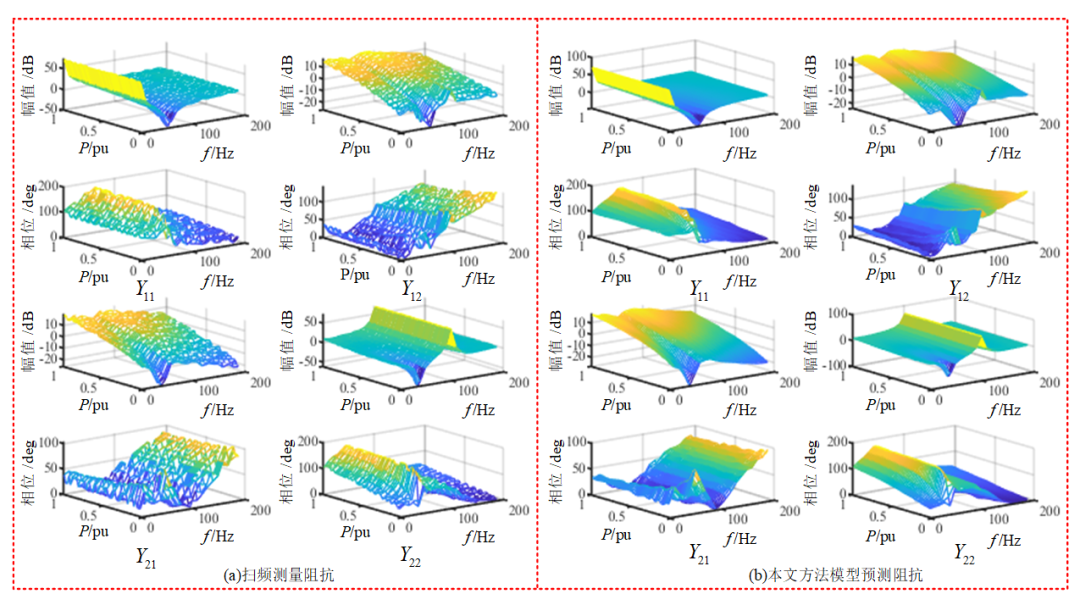
Figure 1: Admittance acquisition results under test conditions
4Conclusion
In the data-driven multi-operating-point admittance modeling of renewable energy devices, the non-zero mean of admittance measurement errors caused by voltage and current noise means that the influence of noise cannot be eliminated through averaging multiple measurements during the data preprocessing stage. This leads to the model overfitting the noise features in the admittance dataset, resulting in significant errors between the model output values and the true admittance. Although the true admittance values cannot be obtained in practice, modeling the admittance measurement errors under multi-operating conditions allows for the calculation of the mean square error between the model predicted values and the true values as a model evaluation metric. This effectively adds a measurement error term to the original objective function, allowing the neural network training to continuously adjust the weight vector to gradually converge the metrics, achieving model predicted values that continuously approach the true values.
Citation Information
Li Han, Li Meng, Wang Yaoxin, et al. Multi-operating-point admittance acquisition of renewable equipment based on data-driven considering measurement error on datasets[J]. Proceedings of the CSEE, 2025, 45(3): 948-960.
LI Han, LI Meng, WANG Yaoxin, et al. Multi-operating-point admittance acquisition of renewable equipment based on data-driven considering measurement error on datasets[J]. Proceedings of the CSEE, 2025, 45(3): 948-960 (in Chinese).
Team Introduction

The “Renewable Energy Grid Operation and Control” team at Zhejiang University currently has 8 faculty members (team leader Professor Nian Heng), relying on the “National Power Electronics Technology Engineering Research Center” and the “Key Laboratory of Intelligent Control and Conversion Technology for Electric Motor Systems in Zhejiang Province,” and is committed to the design, control, and optimization operation research of renewable energy generation systems.
Author Introduction

Li Han (1999), male, PhD student, research direction is the application of artificial intelligence in impedance measurement technology for renewable energy generation equipment, has published 3 first-author SCI papers and 5 EI papers.
Nian Heng (1978), male, professor, doctoral supervisor. He has long been engaged in research on modeling, stability analysis, and grid operation control technology of renewable energy systems, has presided over 7 national projects including the National Outstanding Youth Fund and the National Key R&D Program, and has won 4 first prizes and 7 second prizes at the provincial and ministerial levels, and has been awarded the Elsevier China Highly Cited Scholar for five consecutive years (2020-2024).
Li Meng (1997), male, PhD, research direction is stability analysis and impedance measurement technology of renewable energy generation equipment.
Wang Yaoxin (1999), male, master’s degree, research direction is modeling analysis and operation control technology of renewable AC/DC interconnected systems.
Ma Juncha (1989), male, senior engineer, main research direction is large-scale renewable energy grid control technology.
Ni Qiulong (1976), male, professor-level senior engineer, main research direction is power system safety stability analysis and dispatch operation.
Li Haipan (1997), male, PhD student, research direction is modeling and stability analysis of renewable energy generation systems.
Editor: Qiu Liping
Reviewer: Li Zerong
Statement
This article is an original work, and all text and image copyrights belong to the editorial department of the “Proceedings of the CSEE.” According to the latest regulations of the National Copyright Administration, any reproduction or excerpt of our editorial department’s works in paper media, websites, Weibo, WeChat public accounts, etc., must be contacted with our editorial department in advance. Individuals may forward and share according to the original text of this WeChat article.