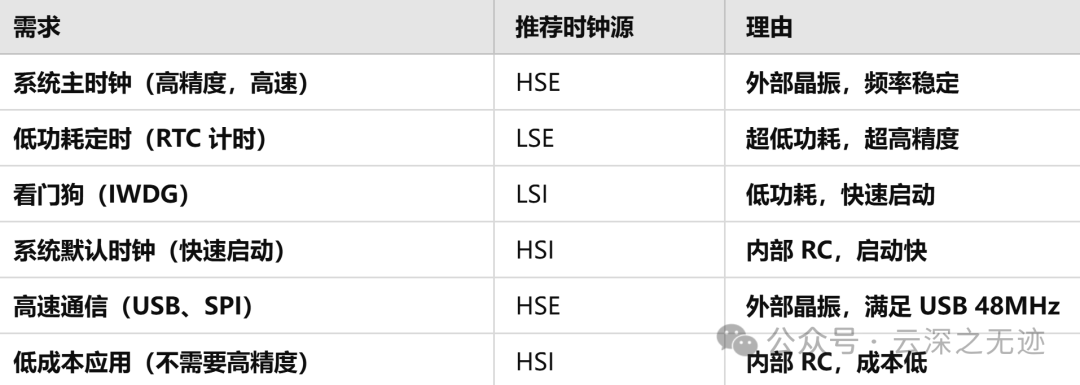
Master the STM32 clock tree in one article – taking F401 as an exampleCW32L010-M0+ clock tree overview✅ HSE / LSE (external crystal oscillator) → high precision, but higher power consumption, requires startup time✅ HSI / LSI (internal RC oscillator) → fast startup, low power consumption, but poor precision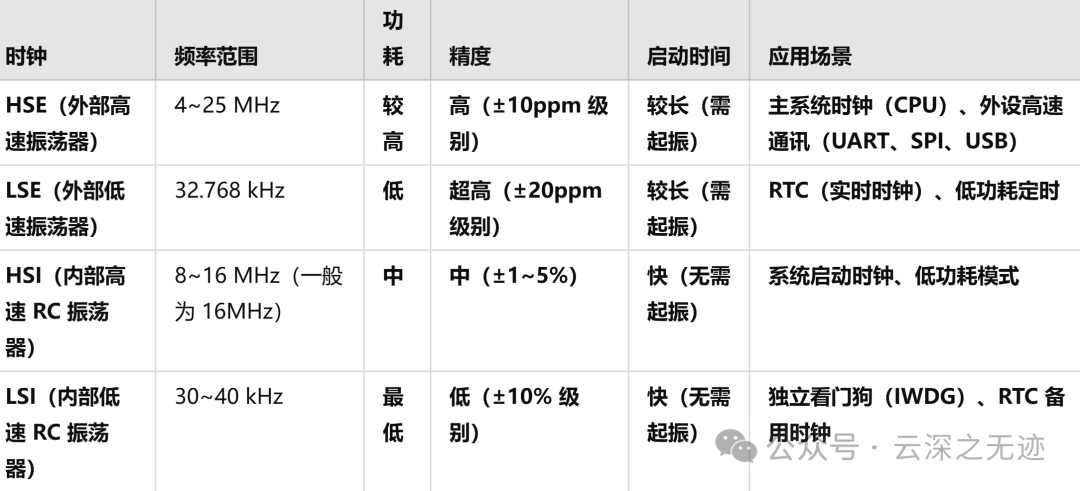 What is the RTC peripheral used for? It uses LSE (external low-speed oscillator)
- Typically uses a 32.768 kHz crystal oscillator
- High precision (±20ppm level)
- Suitable for RTC (real-time clock), low power timing
- Requires a long startup time (hundreds of ms)
- Extremely low power consumption
✅ Suitable for RTC and low power applications, ensuring long-term timing❌ Requires an additional 32.768 kHz crystal oscillator, occupying PCB spaceIf you want to remove one oscillator, it should be the internal one, HSI (internal high-speed RC oscillator).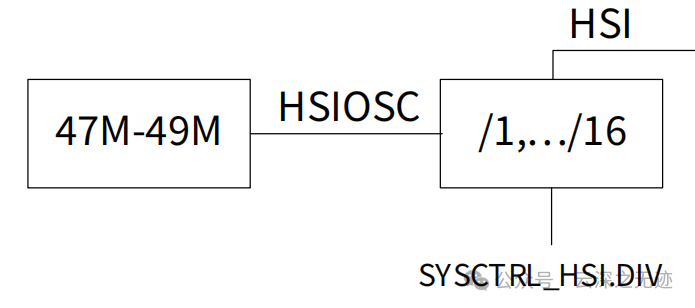 CW32 locks the internal HSI at 48M
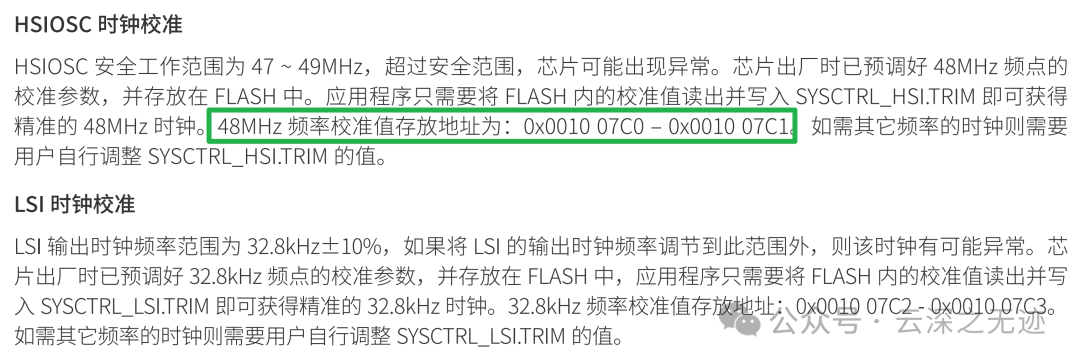 If you find it inaccurate, or if you need a larger value, you can read and write here in flash
 Modify here
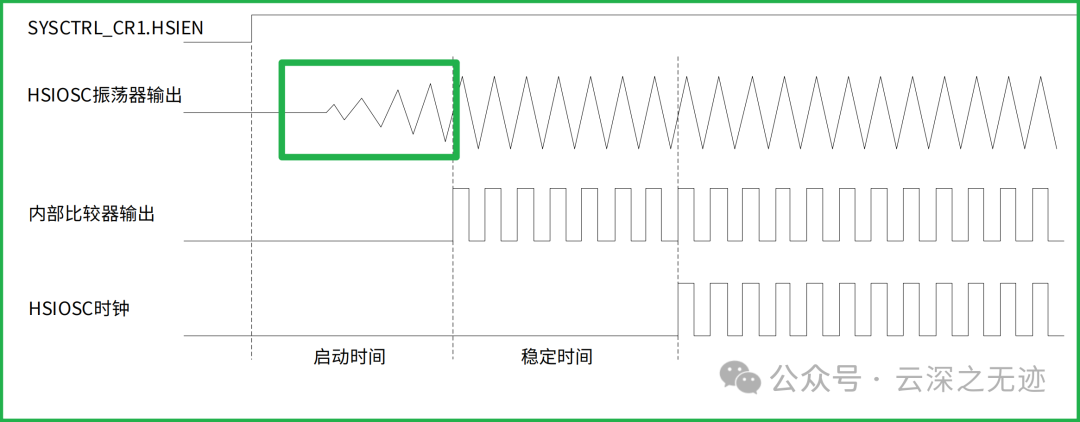 Stable time
 You can select here
- System default startup clock (after reset)
- Low-cost applications that do not require high precision clocks
- Fast wake-up applications (low power mode)
- Internal RC oscillator, suitable for I2C, UART, GPIO, and other general peripherals