📌 The quality of PCBs is crucial, from component testing to complete board testing.Whether for electronic products or smart devices, a reliable testing process and equipment are core elements to ensure product stability and reliability.
🔵 1. Incoming Material Inspection (IMT)
Purpose: Ensure all components meet design specifications to prevent defective parts from entering the production line.
Main Methods:
-
Visual inspection (packaging, model, pin integrity)
-
Specification verification (resistors, capacitors, inductors, ICs, etc.)
-
Functional testing (random sampling)
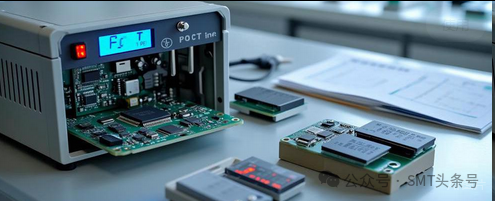
Common Equipment:
-
LCR Meter / Capacitance and Resistance Tester
-
Multifunction Tester (for testing diodes, transistors, MOSFETs, ICs)
-
Microscope / Magnifier
🟢 2. Pre-Mount Inspection
Purpose: Ensure the PCB and solder paste conditions meet requirements, preparing for SMT mounting.
Main Methods:
-
PCB visual inspection (circuit damage, copper foil integrity)
-
Solder paste printing quality inspection
Common Equipment:
-
SPI (Solder Paste Inspection)
-
Optical Microscope
🟠 3. SMT Mounting and Soldering
Purpose: Ensure correct component placement and soldering quality.
Main Methods:
-
Placement machine automatically identifies component orientation and position
-
Post-reflow solder joint inspection
Common Equipment:
-
Pick & Place Machine
-
AOI (Automated Optical Inspection)
-
AXI / X-ray Inspection
-
Reflow Oven
🔴 4. PCB Electrical Testing (ICT)
Purpose: Check the connections and electrical performance of components on the PCB.
Main Methods:
-
Measure component values
-
Check for open circuits, short circuits, and soldering defects
Common Equipment:
-
ICT Testing Machine
-
Flying Probe Tester (for small batches or without fixtures)
🟣 5. Functional Testing (FCT)
Purpose: Verify the functional integrity of the PCB or complete unit under operational conditions.
Main Methods:
-
Power on and load operational signals
-
Measure key voltages, currents, and signal waveforms
-
Test communication interfaces, sensors, and control functions
Common Equipment:
-
FCT Test Station / Test Fixture
-
Oscilloscope, Signal Generator, Logic Analyzer
🟡 6. Reliability and Life Testing (Optional)
Purpose: Identify potential failures early to ensure long-term reliability.
Common Equipment:
-
High-Temperature and High-Humidity Chamber
-
Temperature Cycling Test Chamber
-
Vibration / Drop Test Stand
🟢 Process Summary Table (Visual Reference)
| Process Stage | Testing Purpose | Main Methods | Common Equipment |
|---|---|---|---|
| 🔵 Incoming Material Inspection (IMT) | Component specifications & appearance quality | Visual inspection, functional testing | LCR Meter, Tester, Microscope |
| 🟢 Pre-Mount Inspection | PCB & solder paste preparation | Visual inspection, solder paste inspection | SPI, Optical Microscope |
| 🟠 SMT Mounting & Soldering | Placement accuracy & solder joint quality | AOI/AXI inspection, reflow soldering | Pick & Place Machine, AOI, X-ray, Reflow Oven |
| 🔴 Electrical Testing (ICT) | Circuit continuity & component values | Open/short circuit, resistance/capacitance testing | ICT Testing Machine, Flying Probe Tester |
| 🟣 Functional Testing (FCT) | PCB functional verification | Power loading, signal testing | FCT Test Station, Oscilloscope, Logic Analyzer |
| 🟡 Reliability Testing | Potential failure detection | High/low temperature, humidity, vibration | High-Temperature and High-Humidity Chamber, Vibration Table |
✨ If you find this article useful, remember to like and share it with more electronic manufacturing colleagues 👇