
Introduction

C journals generally refer to CSSCI source journals, which is the abbreviation for Nanjing University Core, known in Chinese as “Chinese Social Sciences Citation Index”. It is established by the Chinese Social Science Research Evaluation Center of Nanjing University to evaluate the inclusion of papers and citation situations in the field of Chinese social sciences, making it a landmark project in the evaluation of humanities and social sciences in China. Currently, the Ministry of Education has included CSSCI data as an important assessment indicator for evaluating national universities and research bases, award achievements, project establishment, and talent cultivation. C journals mainly consist of three series: CSSCI source journals, CSSCI source journal expanded version, and CSSCI source collected journals.
The C expansion refers to the CSSCI source journal expanded version. Since C journals are important publications among domestic journals, the selection quantity is limited, and some excellent journals cannot enter the C journal directory due to quantity restrictions. C expansion generally refers to journals whose editorial quality and academic value are somewhat lower than those of the journals that are truly included in the directory, C expansion has the expectation of entering C journals, but whether C expansion is a core journal is determined by different units themselves.
This article will recommend a compilation of 7 key topics suitable for counselors to submit to C journals in 2025, hoping to provide information guidance for counselors dedicated to improving their research capabilities.


Journal of Northeast University (Social Sciences Edition)
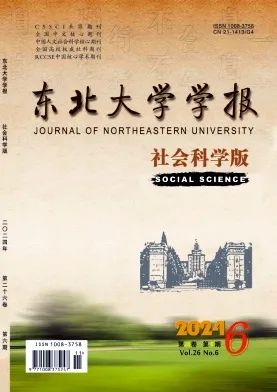
To deeply study and implement the spirit of the 20th National Congress of the Communist Party, fully leverage the role of high-quality academic journals in academic dissemination, ideological guidance, and public opinion, strengthen topic planning around major national development strategies and significant theoretical frontiers, and better enhance the academic quality and social impact of the journal, on November 1, 2024, the editorial department held a meeting of the editorial board of the “Journal of Northeast University (Social Sciences Edition)” and a planning meeting for key topics in 2025. More than 20 editorial board members and experts from institutions such as Renmin University of China, Shanghai Jiao Tong University, and Northeast University fully discussed the key topics for 2025 around the academic main line of “the impact of technological progress on human society”. Based on extensive consultation with experts inside and outside the university, the editorial board has reviewed and now announces the key topics for 2025 as follows:
Special Topic on “Interpretation of the Spirit of the 20th National Congress of the Communist Party”
● General Secretary Xi Jinping’s important discourse on further comprehensively deepening reform and promoting Chinese-style modernization
● The leadership of the Party and further comprehensively deepening reform and promoting Chinese-style modernization
● Building a high-level socialist market economic system
● Improving the system and mechanism for promoting high-quality economic development
● Improving the macroeconomic governance system
● Improving the system of whole-process people’s democracy
● Perfecting the socialist rule of law system with Chinese characteristics
● Deepening the reform of the cultural system and mechanism
● Improving the system for safeguarding and improving people’s livelihood
● Deepening the reform of the ecological civilization system
Comprehensive Revitalization of Northeast China in the New Era and High-Quality Regional Development
● Building a modern industrial system with Northeast characteristics and advantages
● Theoretical connotation of developing new productive forces according to local conditions and the path choices for old industrial bases
● Comprehensive deepening reform and the comprehensive revitalization of Northeast China in the new era
● Improving the strategic mechanism for promoting coordinated regional development
● Improving the system and mechanism for high-level opening up and creating a new frontier for Northeast opening up
● Promoting the system and mechanism for high-quality regional economic development
● Protection of arable land in Northeast China and national food security
● Evaluation of factor marketization allocation policies based on a unified national market
Science and Technology Ethics and Philosophical Reflection
● Frontier issues in the philosophy of artificial intelligence
● Frontier theories and practices in the philosophy of technology
● Frontier issues in applied ethics
Economics and Management
● Theories and practices of artificial intelligence and platform economy
● Digital economy and new productive forces
● Coordinated development of regional economy and innovation
● Rural revitalization, urban-rural integration, and coordinated regional development
● Security and stability of industrial and supply chains
● Enterprise innovation in the digital intelligence era
Politics and Public Administration
● Theory and practice of Party building leading grassroots governance
● Modernization of government governance
● Theory and practice of social governance in the digital age
● Innovation in public service in the digital age
● Public policies and practices in an aging society
● Rural land system reform and rural revitalization
● Land space governance system and governance capacity
Legal Research
● Issues in digital legal theory and practice
● Legal regulation of algorithms, data, artificial intelligence, and platform economy
● Theory and practice of contracts, torts, property rights, and their related judicial interpretations
● Practice and legal regulation of corporate governance
Marxism and Contemporary China
● Theoretical system of Chinese-style modernization
● Xi Jinping’s cultural thought
● Theoretical and practical issues related to the “two combinations”
● Accelerating the green transformation of development methods in the context of new productive forces
● Leading the great social revolution with a great self-revolution
● The system and norms of the Party’s self-revolution
Higher Education Research
● Integrated development of education, technology, and talent
● Innovation in the system and mechanisms for education evaluation, supervision, and monitoring
● AI and education evaluation
● Reform of higher education evaluation
● Innovative talent cultivation
Language and Literature
● Technology-enhanced language learning
● Integration of artificial intelligence and machine translation
● Literature and social change
● The Northeast experience and image in literature of the new era
Jianghuai Forum
The “Jianghuai Forum” is a comprehensive academic journal sponsored by the Anhui Academy of Social Sciences. Since its inception in 1958, it has adhered to the guidance of Marxist theory, emphasizing the connection between theory and practice, and focusing on original academic contributions. In 2025, this journal will continue to deeply study and interpret the Party’s innovative theory, focusing on how to adhere to the “two combinations” to promote the sinicization and modernization of Marxism; emphasizing academic and theoretical innovation, based in Jianghuai and looking at the world, showcasing high-level research results, and contributing to the accelerated construction of an independent knowledge system in Chinese philosophy and social sciences.
In 2025, this journal will focus on the following topics and sincerely invites experts and scholars from home and abroad to submit papers.
● Research on the spirit of the 20th National Congress of the Communist Party, the second and third plenary sessions
● Systematic and chemical research on Xi Jinping’s thought on socialism with Chinese characteristics for a new era
● Special research on Xi Jinping’s cultural thought
● Research on the sinicization and modernization of Marxism
● Research on Chinese-style modernization and high-quality development
● Research on deepening the reform of the Party’s construction system
● Research on improving the system of whole-process people’s democracy
● Research on the construction of digital government and innovation in public governance
● Research on the system of safeguarding and improving people’s livelihood and public policy
● Research on Chinese-style modernization and traditional philosophy
● Research on modern logic
● Research on Huizhou studies and Tongcheng culture
● Research on ecological and environmental rule of law
● Research on legal guarantees for high-quality development of the digital economy
● Research on the development of the digital economy and new productive forces
● Research on improving the system and mechanism for urban-rural integration development
● Research on coordinated regional economic development and common prosperity
● Research on rural sociology
● Research on artificial intelligence and digital society
● Research on improving the social work system and mechanism
● Research on regional culture
● Research on constructing Chinese discourse and narrative systems
● Research on the Tsinghua Bamboo Slips (Volume 14)
● Research on the “Andong Bamboo Slips”
● Research on constructing an independent knowledge system of Chinese literature
● Research on literary creation in the digital intelligence era
● Research on the mutual learning of foreign literature and civilization
● Research on constructing an independent knowledge system of Chinese education
● Research on the theory and practice of Chinese-style education modernization
Journal of Jinan University (Philosophy and Social Sciences Edition)
The “Journal of Jinan University (Philosophy and Social Sciences Edition)” is guided by Marxism, Mao Zedong Thought, Deng Xiaoping Theory, the important thought of the “Three Represents”, the Scientific Outlook on Development, and Xi Jinping’s thought on socialism with Chinese characteristics for a new era. It adheres to the correct orientation of humanities and social sciences, follows the path of linking theory with practice and academia with the times. This journal is a comprehensive academic publication in the humanities and social sciences, founded in 1936, and is one of the earliest university journals in China.
With the characteristics of overseas Chinese schools and a focus on serving the overall situation and the united front of overseas Chinese, guided by problem awareness, the “Journal of Jinan University (Philosophy and Social Sciences Edition)” will launch research on legal studies, economic and management studies, literature and linguistics studies, journalism and communication studies, Marxism and contemporary China studies, and comprehensive research in 2025. Here, we sincerely invite experts and scholars from home and abroad to submit papers, and the following are the submission guidelines:
Key Columns
● Research on Xi Jinping’s thought on socialism with Chinese characteristics for a new era
Featured Columns
● Research on General Secretary Xi Jinping’s important thought on strengthening and improving the work of the united front
● Research on literature from Hong Kong, Macau, Taiwan, and overseas Chinese (Ministry of Education’s featured column)
● Research on issues concerning overseas Chinese
Annual Key Topic Directions
● Chinese-style modernization and new forms of human civilization
● Construction of an independent knowledge system in China
● Mutual learning of civilizations and international communication
● New productive forces and high-quality development
● Innovative interpretation of digital humanities and literary classics
● Energy, environment, and ecological civilization construction
● Digital governance and urban space
● Rural revitalization
● Research on new media and platforms
● Population aging and social security
● Issues of corporate governance from a comprehensive perspective
● New issues under artificial intelligence
● Industrial chains and enterprise production efficiency
● Issues in the implementation of the Civil Code
Journal of Shandong University (Philosophy and Social Sciences Edition)
To further highlight the academic focus on “focusing on the path of Chinese-style modernization”, adhering to the development policy of “social sciences as the main focus, interdisciplinary integration, distinctive publication, and meticulous management”, in 2025, the “Journal of Shandong University (Philosophy and Social Sciences Edition)” will continue to comprehensively implement the topic system, determining major columns, featured columns, and annual key directions, and will set up a special column for the “Youth Thought Forum”. The announcement is as follows, please pay attention and submit papers.
Major Columns
Research on Xi Jinping’s thought on socialism with Chinese characteristics for a new era
● Systematic and theoretical research and interpretation of Xi Jinping’s cultural thought, economic thought, legal thought, ecological civilization thought, diplomatic thought, and other important thoughts and discourses by General Secretary Xi Jinping.
Party Leadership and Chinese-style Modernization
● Research on the spirit of the 20th National Congress of the Communist Party, major theoretical and practical issues of Chinese-style modernization, innovating and improving the Party’s leadership and governance methods, perfecting the Party’s self-revolution system and norms, improving the system of whole-process people’s democracy, and adhering to and improving China’s new type of party system, etc.
Basic Theoretical Innovation and Constructing an Independent Knowledge System in China
● Adhering to the “two combinations”, rooting in Chinese practice, summarizing and refining concepts, viewpoints, and theories that are subjective, original, and identifiable, and helping to construct an independent knowledge system in Chinese philosophy and social sciences.
Featured Columns
Cultural and Economic
● Humanistic economy, mutual promotion of culture and economy, cultural tourism industry and its digital intelligence, urban and rural cultural construction, cultural power and cultural going out, cultural resource development and protection, etc.
Empirical Research on Law and Policy
● Empirical research on important issues in legislation, law enforcement, judicial, and compliance fields, innovation in empirical research theories and methods empowered by digital intelligence technology, utilization and regulation of public data resources, policy analysis and mechanism innovation for citizen participation in grassroots governance, and data-driven public policy and government digitalization construction, etc.
Theory and Practice of Social Construction
● Social theory and local experience, social transformation in the digital age, high-quality population development, innovation and development of social work in the new era, changes in social mentality and order construction, media communication and social development, healthcare and social security, etc.
Annual Key Directions
High-Quality Economic Development
● New development concepts and new development patterns, comprehensively expanding domestic demand and boosting consumption, new productive forces and modernization of the industrial system, high-level opening up, macro policy coordination and economic system reform, resilience and security of industrial and supply chains, building world-class enterprises, systemic risk prevention and resolution, and reviewing the 14th Five-Year Plan and looking ahead to the 15th Five-Year Plan, etc.
Global Governance, National Governance, and National Security
● Challenges and changes in global governance, digital development and innovation in national governance models, urban politics and urban governance, new media communication and governance, modernization of national security systems and capabilities, protection of national overseas interests and risk prevention, etc.
Theory and Practice of Chinese-style Legal Modernization
● Legal guarantees for new productive forces, innovation in legal systems and artificial intelligence, deepening judicial reform and improving judicial efficiency, construction of the disciplinary inspection and supervision system in the new era, compilation of departmental legal codes, financial rule of law, and foreign-related rule of law, etc.
Urban-Rural Integration and Regional Development
● Basic theories of urban-rural integration and regional development, new urbanization and comprehensive rural revitalization, high-quality development of cities and metropolitan areas, land system reform, regional strategy research, and regional industrial collaboration, etc.
Digital Intelligence Era and the Future of Humanity
● Multidimensional assessment of opportunities and challenges in the digital intelligence era, sustainable development of the economy and society empowered by digital intelligence, integration of digital intelligence and human development, regulation and effective supervision of digital intelligence, and international cooperation in digital intelligence governance, etc.
Research on Building a Strong Educational Nation
● General Secretary Xi Jinping’s important discourse on education, the Party’s comprehensive leadership over education work, the laws and strategies for building a strong educational nation, promoting the spirit of educators, and the integrated development of education, technology, and talent, etc.
Special Column “Youth Thought Forum”
To promote the growth and progress of young scholars, encourage them to discover real problems in practice, propose new viewpoints, and construct new theories, achieving a dual advancement of “theory and method” and “thought and technology”, starting in 2025, this journal will set up a special column for the “Youth Thought Forum”, selecting high-quality papers from young scholars that are thoughtful, academic, and practical, which will be published after a rigorous selection and review process.
Journal of Sichuan University (Philosophy and Social Sciences Edition)
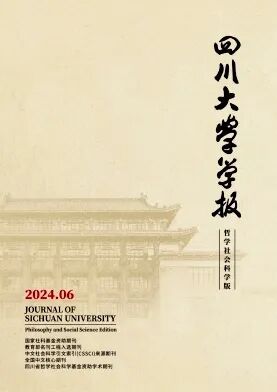
The “Journal of Sichuan University (Philosophy and Social Sciences Edition)” was founded in 1955 and is a comprehensive academic journal sponsored by the Ministry of Education of the People’s Republic of China and Sichuan University. It is currently a bimonthly publication, having published 255 issues by the end of 2024. Throughout its nearly 70 years of publication history, this journal has consistently adhered to the policy of balancing academic quality and social concern, aspiring for a rigorous and simple editorial style, and taking the promotion of domestic and international academic exchanges as its mission.
● Research on Xi Jinping’s thought on socialism with Chinese characteristics for a new era
● Research on Chinese classical studies
● Research on rewriting the history of civilization and various disciplinary histories
● Research on Marxist classics and interpretations
● Research on the theory of Chinese-style modernization
● Research on the Chinese People’s War of Resistance Against Japanese Aggression and the World Anti-Fascist War
● Research on Chinese folk culture
● Research on overseas Yan’an studies
● Interdisciplinary research in literature
● Research on the history of modern Chinese thought and culture
● Research on famous philosophers and their works in China and abroad
● Research on the world influence of Chinese philosophy and indigenous religions
● Research on the national image construction and cultural soft power dissemination in the new era
● Research on national governance in the digital intelligence era
● Research on the inheritance and regeneration of the Chinese legal system
● Research on original issues in departmental law
● Research on regional and national history
● Research on rural China and urban China
● Research on emergency management systems and capacity modernization
● Research on major issues in current economic development
News Spring and Autumn
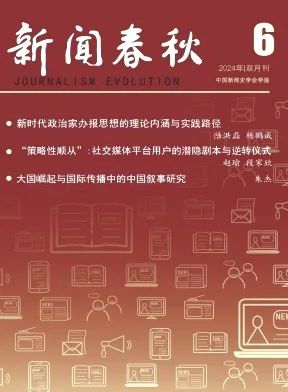
“News Spring and Autumn” is the only national first-level academic journal in the field of journalism and communication studies in China, published by the Chinese Society of Journalism History. It is a comprehensive academic journal characterized by research on the history of journalism and communication, covering theories, practices, and research methods in journalism and communication. “News Spring and Autumn” was changed to a bimonthly publication in 2019, publishing in February, April, June, August, October, and December each year. This journal implements an anonymous review system for submissions and makes decisions on acceptance, revision, or rejection based on the opinions of reviewers and the editorial department. We welcome researchers in journalism and communication studies, faculty and students from journalism and communication schools, practitioners interested in exploring theories, and enthusiasts to submit papers!
The journal’s regular columns include “Constructing China’s Independent Knowledge System Column”, “Research on Marxist Journalism View”, “International Communication Research”, “History of Journalism Research”, “Journalism Research”, “Communication Research”, “Audiovisual Communication Research”, “Publishing Research”, “Advertising and Media Economics Research”, “New Media Research”, “Media Culture Research”, “Media Ethics and Law Research”, etc. The journal’s regular columns cover various fields and related topics in journalism and communication studies, not limited to research on the history of journalism and communication.
Journal of Renmin University of China
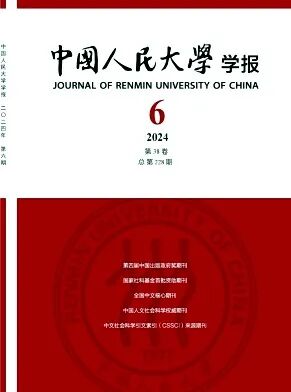
The “Journal of Renmin University of China” was officially founded in 1987 and is a comprehensive theoretical journal in the humanities and social sciences sponsored by Renmin University of China. Since its inception, it has consistently adhered to the principles of emancipating the mind and seeking truth from facts, advocating theoretical and academic innovation, and striving to achieve a unity of thought and academic rigor, theory and practice. The “Journal of Renmin University of China” is based at Renmin University of China, facing the academic community at home and abroad, and is committed to combining basic theoretical research with practical problem research, emphasizing academic research from multidisciplinary and interdisciplinary perspectives, and striving to accurately reflect the progress of research on cutting-edge and hot issues in various fields of humanities and social sciences in China. The key topics for 2025 are now announced as follows:
Chinese Principles
● Systematic and theoretical interpretation of Xi Jinping’s thought on socialism with Chinese characteristics for a new era
● Research and construction project of Marxist theory in the new era
● Construction and prospects of “Chinese-style modernization”
● Socialist ideology and core values
● Strengthening the awareness of the Chinese national community
● Building modern civilization of the Chinese nation
● Theoretical interpretation and practical path of new productive forces
● Healthy China, high-quality population development, and high-quality full employment
● Construction of an independent knowledge system in China and the “three major systems”
● Global governance and building a community with a shared future for mankind
Social Science Research
● Theory and practice of humanistic economics in the new era
● Comprehensive promotion of rural revitalization and urban-rural integration research
● Data, intelligent governance, and economic and social development
● Overall national security concept and emergency management system construction
● Modern industrial ecological system and supply chain value co-creation in China
● Artificial intelligence and enterprise innovation
● Development paths of China’s export-oriented enterprises against the backdrop of manufacturing return to the U.S.
● Basic concept research of China’s independent legal knowledge system
Humanities Research
● Research on empathy and community
● Frontier theories and new materials and methods in humanities research
● Exploration of the origins of Chinese civilization and historical and cultural research
● Development of Marxist literary theory in the context of sinicization
● Reflection and reconstruction of contemporary Chinese literary discourse
● Big data humanities research
Source: Higher Education National Training