
Textbook · Chapter
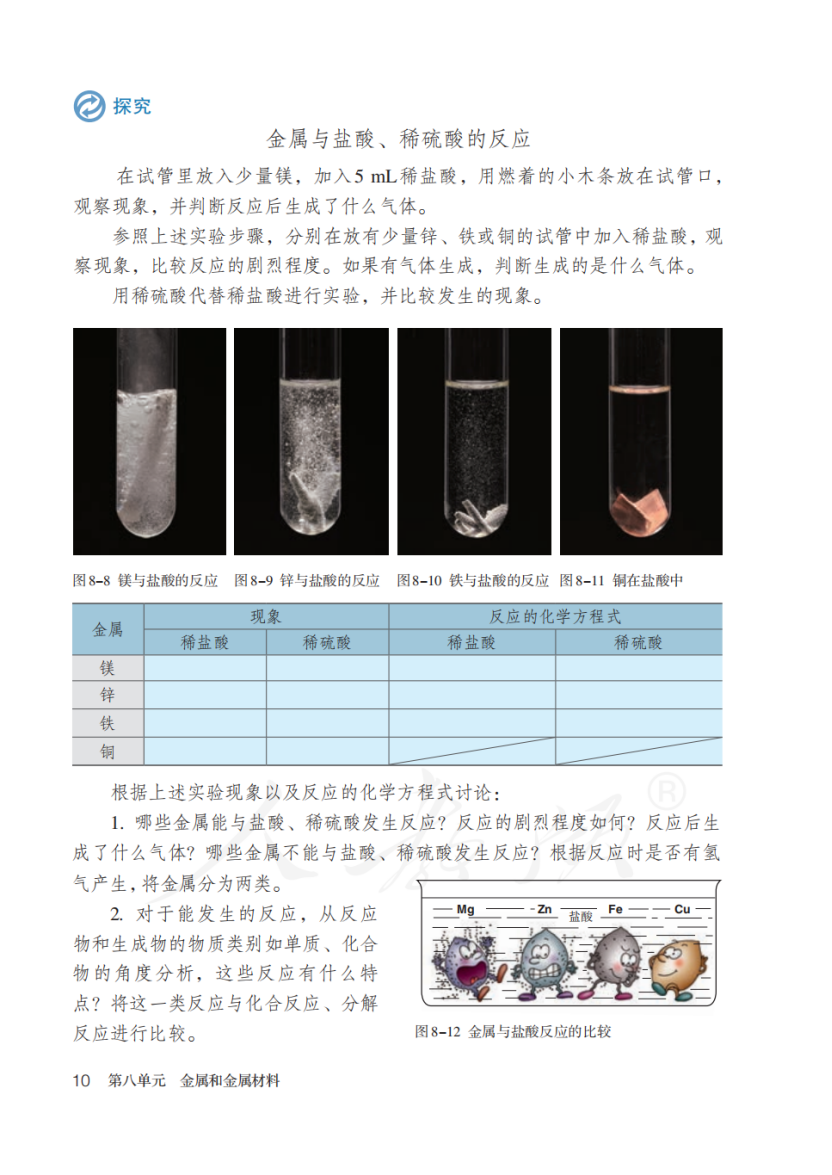
Unit 8 Metals and Metal Materials – Topic 2 Chemical Properties of Metals – 2. Reactions of Metals with Hydrochloric Acid and Dilute Sulfuric Acid – Investigation: Reactions of Metals with Hydrochloric Acid and Dilute Sulfuric Acid
 Part 01
 Experiment Objective
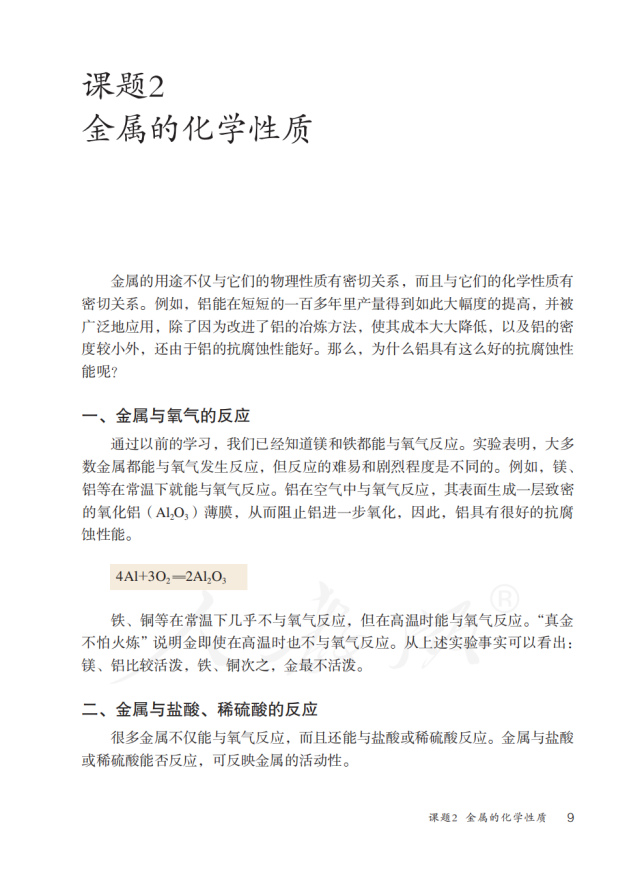
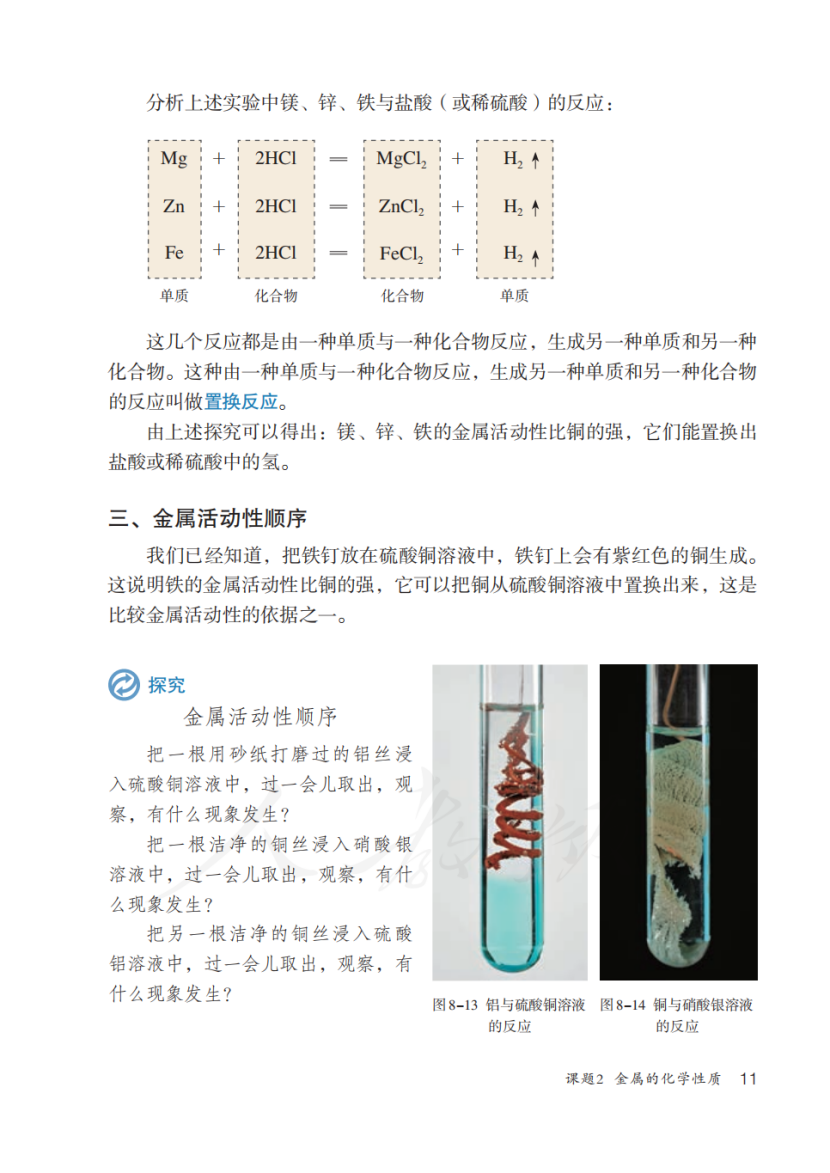
Many metals can react not only with oxygen but also with hydrochloric acid or dilute sulfuric acid. The ability of metals to react with hydrochloric acid or dilute sulfuric acid reflects their reactivity.
In traditional experiments, we judge the activity of metals by observing the intensity of bubbling during the reaction. In this experiment, we utilize the GD wireless pressure sensor to monitor the pressure changes during the reaction for comparison. Experimental InstrumentsPart 02
Experimental Reagents: 1 mol/L hydrochloric acid, magnesium and aluminum strips with approximately the same surface area.
Common experimental instruments: iron stand, large test tube, graduated cylinder, tweezers. Digital experimental instruments: GD wireless pressure sensor, computer with data acquisition software.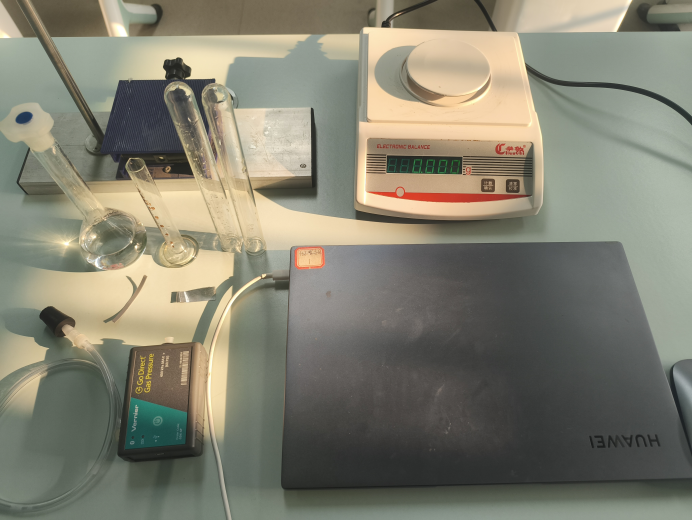
 Part 03
 Experimental Setup
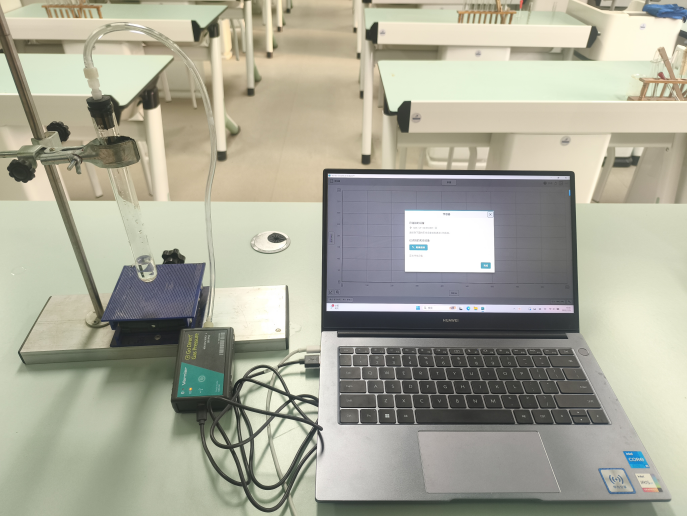
 Experimental ProcedurePart 04
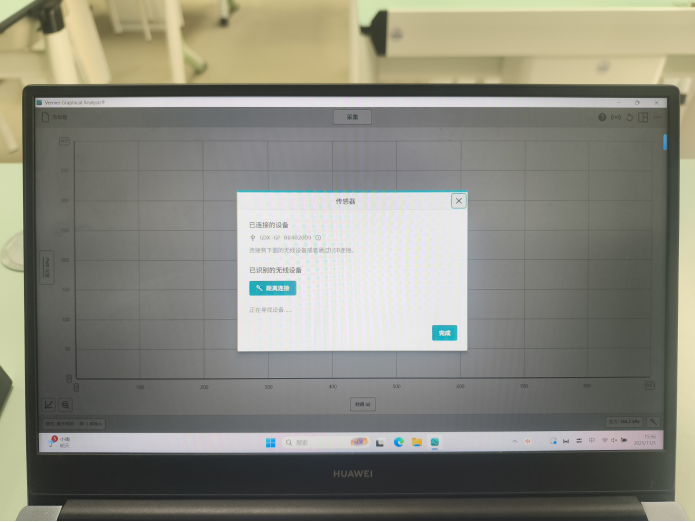
1.Connect the GD wireless pressure sensor to Vernier Graphical Analysis software.
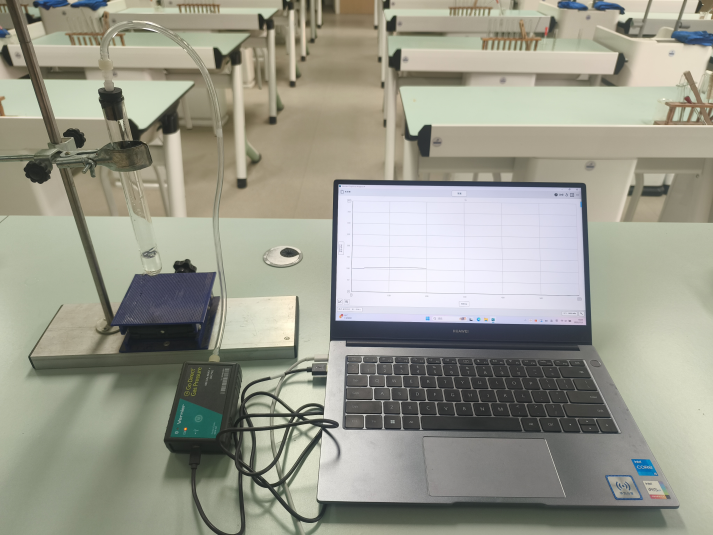
2. Clamp the large test tube on the iron stand, pre-measure the same volume of 1 mol/L hydrochloric acid and pour it into the large test tube. Connect the GD wireless pressure sensor tube and the black rubber stopper. After clicking data collection, quickly insert the metal piece, cover with the rubber stopper, and collect data for a period of time.
 Part 05
 Experimental Phenomena and Data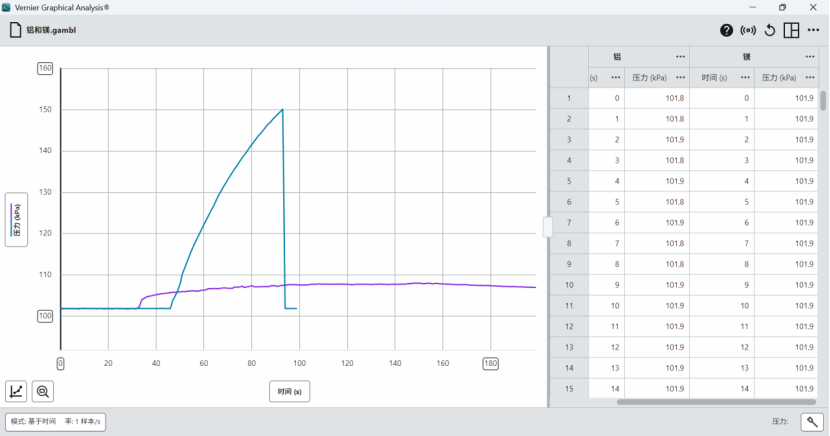
 Experimental AnalysisPart 06
1.Experimental Phenomena
Both magnesium and aluminum can react with hydrochloric acid to produce bubbles. The magnesium strip reacts quickly upon insertion, producing a large number of bubbles, while the aluminum strip reacts more slowly.
2.Experimental Principles
Magnesium (Mg)Mg + 2HCl = MgCl₂ + H₂↑
Aluminum (Al)2Al + 6HCl = 2AlCl₃ + 3H₂↑
3.Experimental Data
The pressure in the test tube with the magnesium strip rises rapidly, causing the rubber stopper to be expelled; in contrast, the pressure in the test tube with the aluminum strip rises slowly.
The above phenomena and data clearly demonstrate that magnesium is more reactive than aluminum.
.