Environmental factors (such as temperature) significantly affect the chlorophyll fluorescence signals emitted by plant leaves. However, traditional chlorophyll fluorometers typically only support the measurement of individual leaves one at a time. For chlorophyll fluorescence testing protocols like PAM, a single measurement of an individual leaf may take tens of seconds, several minutes, or even longer. In field or greenhouse environments, the ambient temperature can fluctuate significantly within half an hour. If measurements are needed for dozens or even hundreds of leaves, the entire process can take several hours. This long duration leads to systematic errors in chlorophyll fluorescence test data due to environmental temperature changes and the plant’s own biological rhythms, making it difficult to effectively compare data obtained at different times or batches.
To address this issue, Chloviw Technology collaborated with Professor Guo Ya’s research group from the School of Internet of Things Engineering at Jiangnan University to develop a chlorophyll fluorescence measurement system based on a wireless sensor network (WSN). This system has the following core advantages:
Efficient Synchronous Measurement: Supports multi-node and multi-parameter synchronous measurements, greatly enhancing data collection efficiency.
Stable Wireless Control: Achieves stable wireless signal control and data transmission within a range of 100 meters.
Convenient Deployment and Operation: After deploying all lower-level nodes on-site, users can control all nodes uniformly through upper-level software.
Multi-Functional Testing Protocols: Integrates three measurement modes: OJIP, PAM, and PRBS.
Flexible Parameter Configuration and Visualization: The upper-level software provides a rich set of parameter settings and real-time data visualization features.
This system effectively resolves the bottlenecks of traditional chlorophyll fluorescence testing equipment in terms of scalability and timeliness, significantly reducing the impact of environmental fluctuations on data comparability, thus providing more reliable and comparable chlorophyll fluorescence test data for plant physiology research and precise agricultural information perception.
 Figure 1. Chlorophyll fluorescence sensor network used for testing mature grape leaves
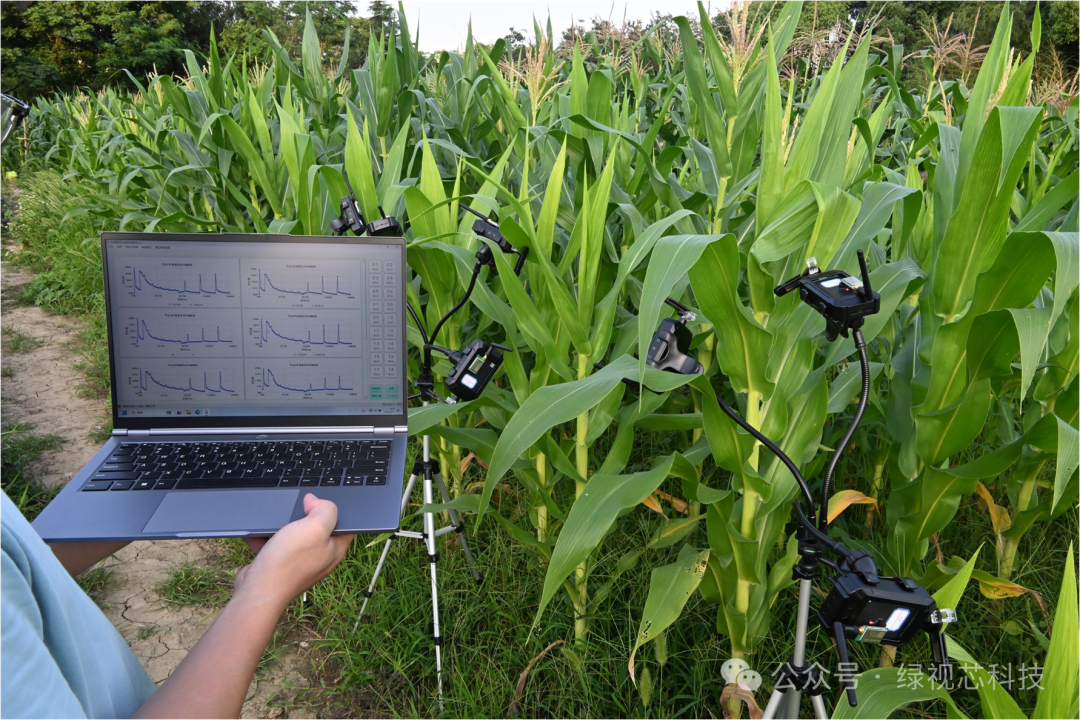 Figure 2. Chlorophyll fluorescence sensor network used for testing tasseling corn leaves
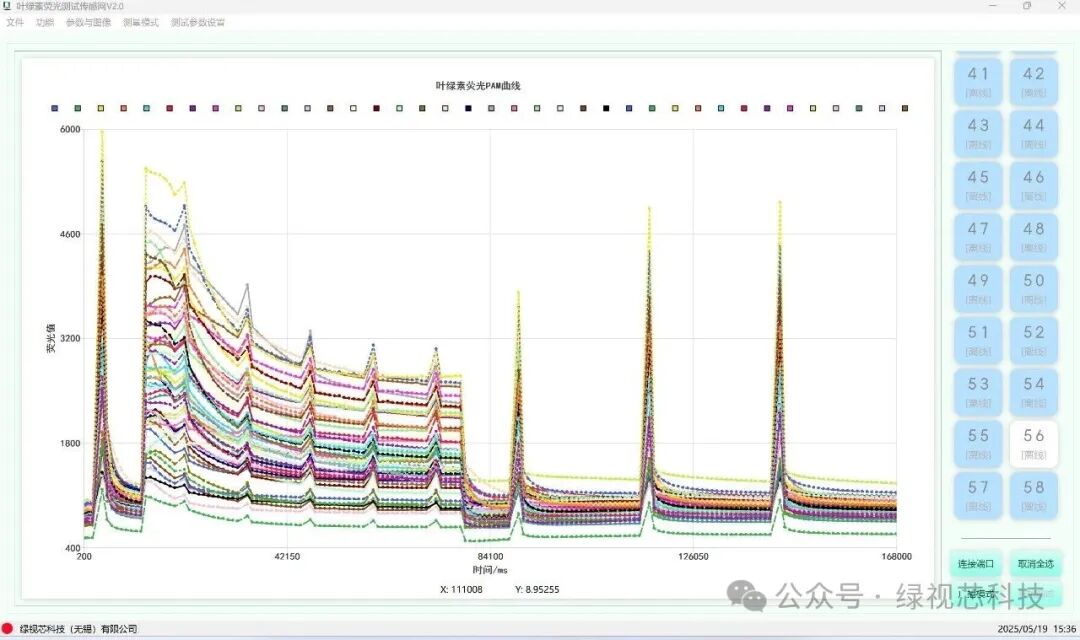 Figure 3. Visualization interface of multi-node data from the upper-level software of the chlorophyll fluorescence sensor networkENDQQ: 2593561515Email: [email protected]