Recently, under the guidance of Chief Physician Wang Ren, the orthopedics department of our hospital, in collaboration with the radiology and surgical anesthesia departments, conducted a multidisciplinary consultation to successfully complete a “3D printed guide-assisted total ankle joint replacement surgery” for a patient with talar necrosis combined with ankle osteoarthritis. The successful implementation of total ankle joint replacement surgery fills a gap in this type of surgery within the city, marking a step towards more refined and personalized treatment in the field of talar necrosis at Lixian Traditional Chinese Medicine Hospital.
1
Case Study:
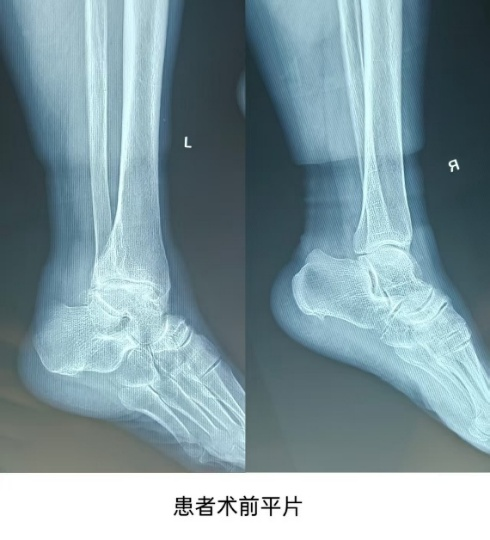
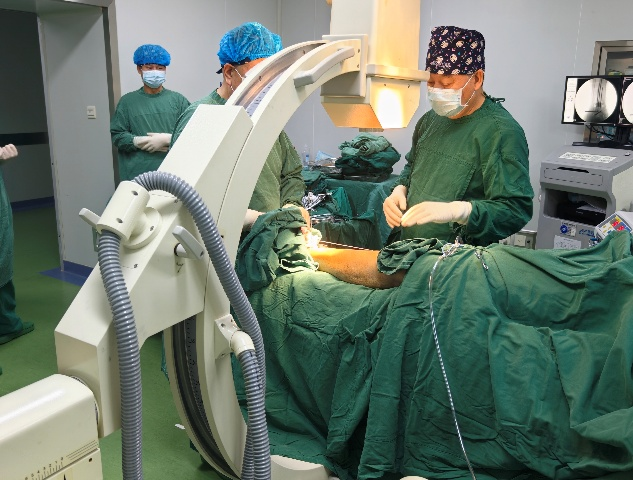
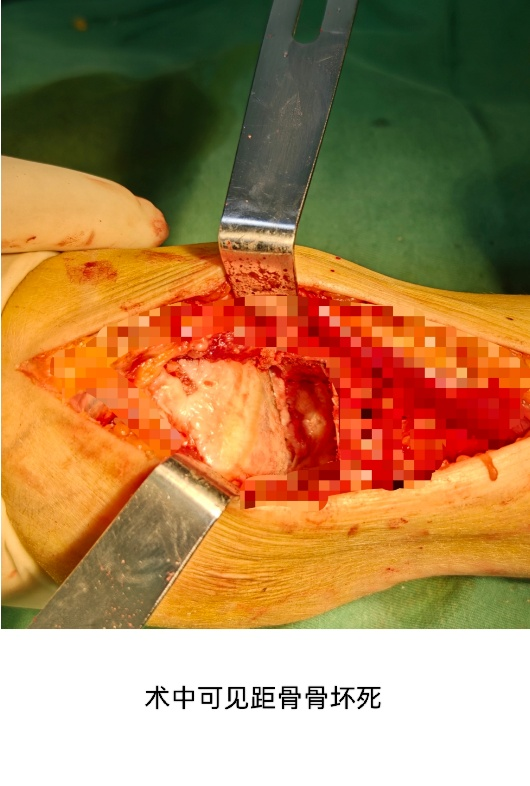
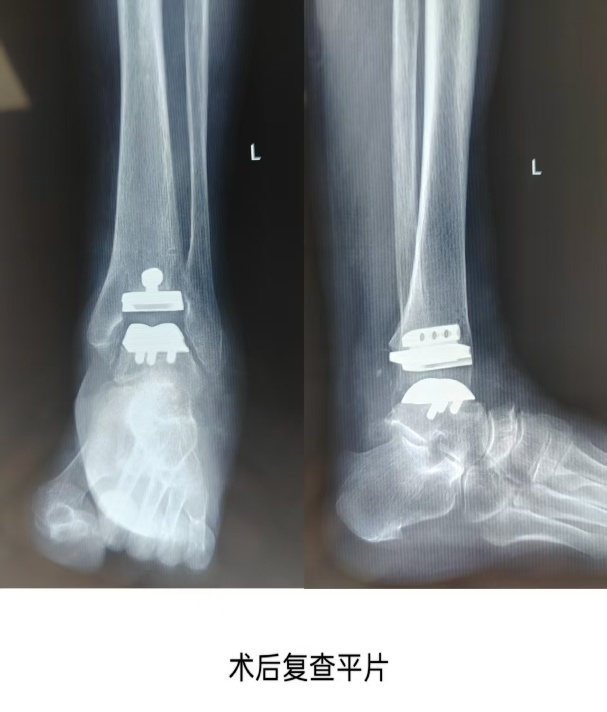
The patient, a 65-year-old female, had progressive pain in the left ankle for 5 years, which worsened with difficulty walking for 2 months. She came to our hospital for diagnosis, and after inquiring about her medical history, conducting a physical examination, and reviewing imaging data, she was diagnosed with “talar necrosis” and was admitted to the hospital. Considering the patient’s high activity demands, it was decided to perform a 3D printed guide-assisted total ankle joint replacement surgery. A multidisciplinary consultation was held with the radiology and surgical anesthesia departments, and after repeated communication with the prosthesis design engineer, the final surgical plan was confirmed and the surgery was conducted, lasting approximately 80 minutes. The patient has now been successfully discharged.

2
Talar Necrosis Overview
Talar necrosis is an orthopedic disease caused by impaired blood supply. When the blood vessels supplying the talus are suddenly interrupted due to trauma, thrombosis, or vascular occlusion, the bone cells within the talus cannot obtain nutrients, leading to a halt in metabolism and subsequent apoptosis. Over time, the dead bone tissue is gradually absorbed by the body, resulting in cystic lesions within the talus and ultimately causing overall collapse. In the early stages of the disease, the core clinical treatment goal is to restore blood circulation through drug intervention or surgical treatment to alleviate the blockage of blood vessels and prevent disease progression. However, if not effectively controlled in a timely manner, the necrotic talus can experience severe collapse in the late stages, damaging the pulley structure that maintains ankle stability, leading to severe ankle pain for the patient. If the disease continues to progress, the ankle joint may gradually develop osteoarthritis, severely affecting the patient’s normal walking and quality of life. In the terminal stage of the disease, the commonly used surgical treatments are ankle arthrodesis and total ankle arthroplasty (TAA). Early TAA has a high rate of surgical complications and failures, thus ankle arthrodesis was once considered the gold standard for treating end-stage TO. In recent years, with the continuous in-depth research on ankle biomechanics and the improvement of prosthesis design and surgical techniques, TAA has become a recognized option for treating end-stage TO, with its usage significantly increasing over the past decade.
For patients with talar necrosis combined with ankle osteoarthritis, total ankle joint replacement surgery avoids the loss of ankle function caused by ankle arthrodesis.
Department Introduction

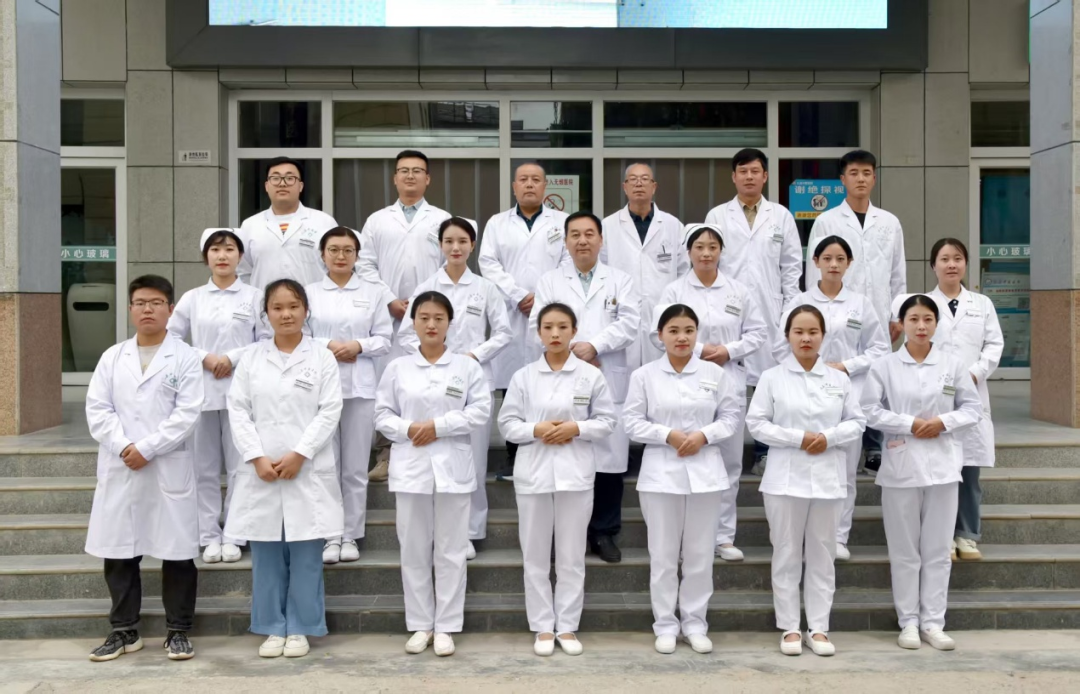
The orthopedics department of Lixian Traditional Chinese Medicine Hospital was established in July 2018, located on the fifth floor of the inpatient building, with 50 open beds and currently 9 professional technical staff (including one external expert) and a nursing team of 20. The orthopedics department is equipped with advanced equipment such as intelligent C-arms, X-ray machines, and orthopedic traction beds, capable of meeting the daily medical service needs of orthopedics. The main diseases treated include fractures of the spine, pelvis, and limbs, joint dislocations, and sports injuries; lumbar disc herniation, lumbar spinal stenosis, lumbar spondylolisthesis, cervical spondylosis, etc.; osteoarthritis, rheumatoid arthritis, suppurative arthritis, etc.; injuries to tendons, blood vessels, and peripheral nerves of the hands and feet; various acute and chronic strain diseases; and fractures and dislocations in children.
We can perform traditional Chinese manual reduction and fixation for complex fractures such as limb fractures, multiple fractures, and comminuted fractures, as well as manual reduction for dislocations and fractures of various joints, artificial hip joint replacement surgery, repair of tendon, vascular, and peripheral nerve injuries of the hands and feet, general debridement and suturing, superficial mass excision, minimally invasive internal fixation, spinal fracture reduction and internal fixation, lumbar disc nucleus removal, knee joint replacement surgery, and early hip preservation treatment for femoral head necrosis.
All medical staff in the orthopedics department adhere to the philosophy of “patient first, service foremost,” serving the general public with noble medical ethics, superb skills, and full enthusiasm.




Supervised by: Meng Xinhui, Zhao Xiwen
Reviewed by: Shang Junan
Proofread by: Wang Hangyou
Edited by: Bai Yuquan, Zhu Tong
Contributed by: Orthopedics

★National Level II Class A Traditional Chinese Medicine Hospital
★Gansu People’s Hospital Advantageous Discipline Medical Alliance
★GansuPeople’sHospital Advantageous Discipline Ear, Nose, Throat, and Neck Surgery Medical Alliance
★Member Unit of Gansu Provincial Traditional Chinese Medicine Hospital Medical Group
★Gansu Maternal and Child Health, Pediatric Specialty Alliance Unit
★Lanzhou University Second Hospital Gynecology Specialty Alliance Unit
★Lanzhou University First Hospital Medical Alliance Unit
★Tianshui First People’s Hospital Chest Pain Center Alliance Unit
★Longnan First People’s Hospital Medical Union