For manufacturers and engineers ready to move beyond the fragile basics of PLA printing, nylon is the ideal next step. While PLA is generally cheaper and easier to use, nylon offers excellent impact resistance, wear resistance, and long-term durability—making it perfect for end-use parts, gears, hinges, brackets, and mechanical components.
As 3D printer performance improves—with better hot ends, enclosed chambers with improved temperature control, and humidity-controlled filament stations—it has become easier to avoid the challenges that once plagued nylon printing, such as warping and moisture absorption. Nylon has become easier to use. It unlocks new performance levels that PLA simply cannot match, whether for building functional prototypes or end-use spare parts.
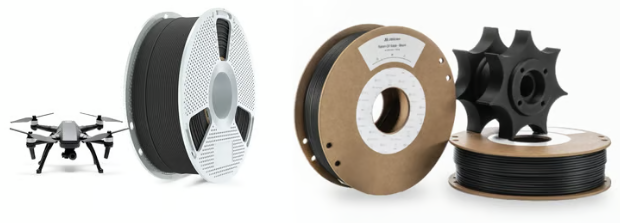
Sunlu (left) and UltiMaker nylon filaments
However, one issue is that there are many different types of nylon, technically known as polyamides (PA). There are more types of nylon than PLA, ranging from sustainable bio-based nylon made from castor oil at one end of the nylon spectrum to fossil fuel-based nylon at the other. Glass fibers, carbon fibers, and Kevlar fibers can be embedded in nylon. There are specially formulated high-temperature nylons, and even recycled nylons from commercial products (including discarded fishing nets). There are PA6, PA6/66, PA11, and PA12, with prices ranging from $30 to over $200 per kilogram.
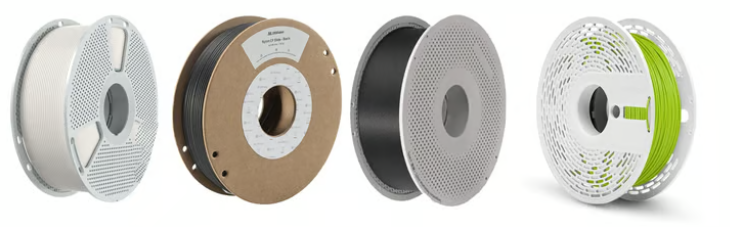
Sunlu, UltiMaker, BambuLab, and Fiberlogy nylon filaments
If you are shopping for nylon filaments, each product description sounds ultimately quite similar. All brands claim their nylon has low warping, strong interlayer adhesion; exhibits good oil, fuel, and lubricant resistance; has high impact strength and good mechanical properties; and that 3D printed parts are robust and durable with good wear resistance. These are standard properties of all nylons.
The only thing that may distinguish them is the manufacturing quality and the type of polymer blends, which lead to consistency between spools. Nylon is not just pure nylon; there are additives (often proprietary formulations) to enhance performance, thermal behavior, moisture resistance, and other properties.
Nylon Basics
Strongest/Hardest: CoPA6/66
Toughest/Flexiblest: PA11
Best Dimensional Stability: PA12
Most Affected by Humidity: PA6
Carbon fibers in nylon can increase strength and stiffness but reduce flexibility.
Glass fibers in nylon can enhance strength, stiffness, and impact resistance.
Kevlar fibers in nylon can improve impact resistance and long-term wear resistance.
01 eSun ePA Nylon
eSun ePA Nylon filament comes in a light natural color and a transparent version. The light color is great for painting, while the transparent version is suitable for applications requiring better temperature and wear resistance than PETG or PA. It also has flame retardant properties, achieving UL94-V2 rating. For first layer adhesion, a first layer print speed of 10 mm/s combined with a PVA glue stick applied to the heated bed works well. For larger models, a thicker brim and increased flow are recommended, as this filament is more prone to warping than others.
This is another nylon 6/66 copolymer with a high elongation at break of up to 175%, allowing for the printing of strong, durable, and highly break-resistant parts. eSun also produces black, high-temperature, and carbon fiber nylon.
 02 Sunlu Easy PA
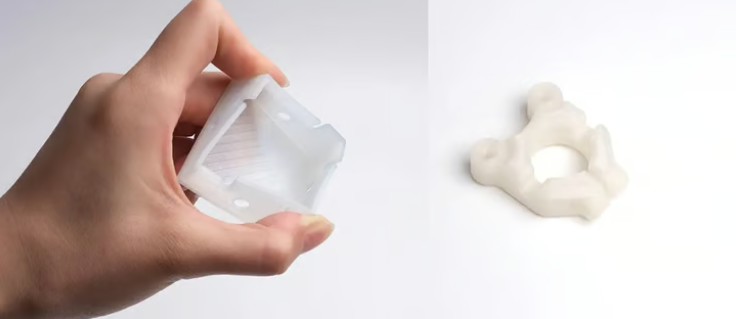
Sunlu Easy PA (or ePA) filament is a versatile material based on nylon 6/66 copolymer, meaning it is easier to print than pure PA66 and stronger than PA6.
This copolymer has good strength and impact resistance. Its durable, shock-resistant characteristics make it an ideal choice for parts that need to withstand drop impacts. It has a very low shrinkage rate during the printing process.
 03 Polymaker PolyMide CoPA
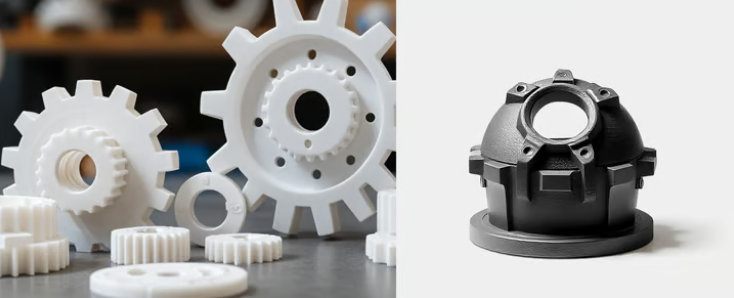
PolyMide CoPA is a copolymer of nylon 6 and nylon 6.6, combining the high tensile strength characteristics of nylon 6 with the heat resistance of nylon 6.6. Warp-Free technology allows CoPA to print easily on open hot bed printers by slowing the crystallization rate. CoPA exhibits excellent mechanical and thermal properties, suitable for parts in demanding environments.
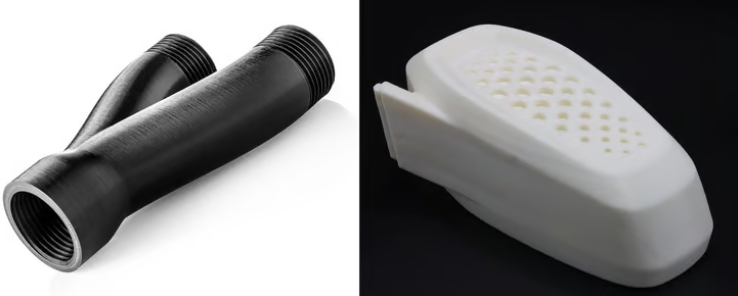 04 MatterHackers Pro Series Nylon
MatterHackers Pro Series Nylon is an affordable, high-quality, versatile filament. We have to admit that one of the reasons we like it—besides the print quality—is its range of colors. Nylon is easy to dye and paint, but if you want to skip that step, MatterHackers Pro Series Nylon is one of the few options available in blue, red, yellow, and other practical colors. Bambu Lab also offers its PA6-GF in eight colors.
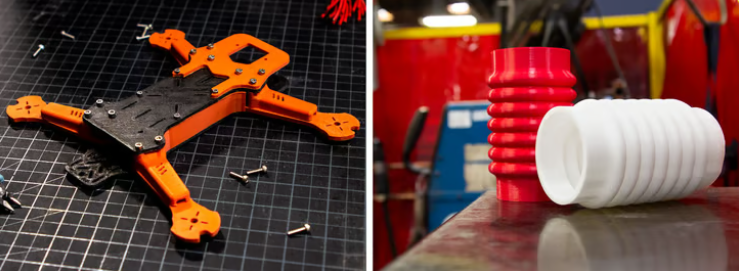 05 FormFutura Styx PA6
Styx PA6 is a nylon filament that is easier to 3D print than many PA6 filaments. It is a single material (not a blend) manufactured in the EU. We find it offers a good balance of strength, durability, and printability at this price point, making it suitable for any type of functional part.
It has good electrical insulation properties, making it suitable for manufacturing electrically insulating parts, such as enclosures for any type of electronic device.
FormFutura also produces two other Styx nylons: PA6-GF30 and PA6-CF15.
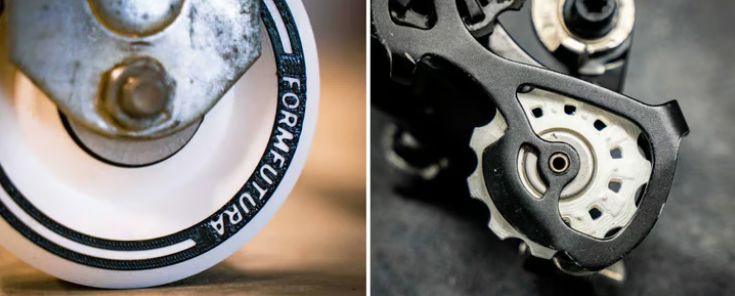 06 Prusament PA11 Carbon Fiber
Among Prusament filaments, Prusament PA11 Nylon Carbon Fiber has the best temperature and chemical resistance to date. Printed parts can withstand temperatures up to 190°C (depending on stress) and have higher resistance to many solvents. We recommend using our PA Nylon steel sheet to print polyamides, including Prusament PA11 Carbon Fiber.
This PA11 is made from castor oil, and the carbon fiber used in this material is recycled, making it our sustainable choice.
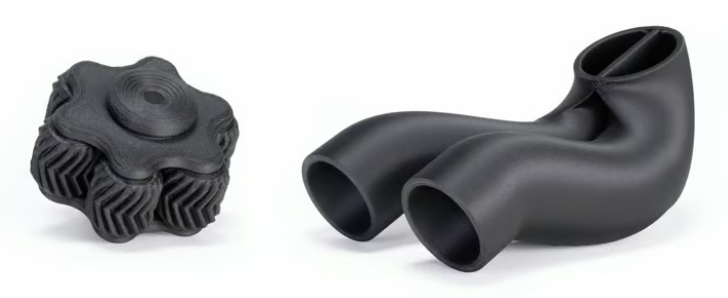 07 Bambu Lab PAHT-CF Black
Bambu PAHT-CF is a composite material of PA12 embedded with carbon fibers, where HT stands for High Temperature. Compared to regular PA-CF, the moisture absorption rate is reduced by 50%, and printed parts can avoid the inherent moisture issues of nylon, but that does not mean it can be exposed to the elements or that it never needs drying. This PAHT-CF comes with a high-temperature spool that is less prone to deformation during the drying process. In line with our philosophy of reducing plastic waste, this spool is also reusable for other Bambu filaments.
BambuLab does not specify how much carbon fiber is contained in the nylon. Perhaps 15%, perhaps less. Bambu Lab also offers three other nylons: PA6-GF (in eight colors), PA6 CF, and PPA-CF.
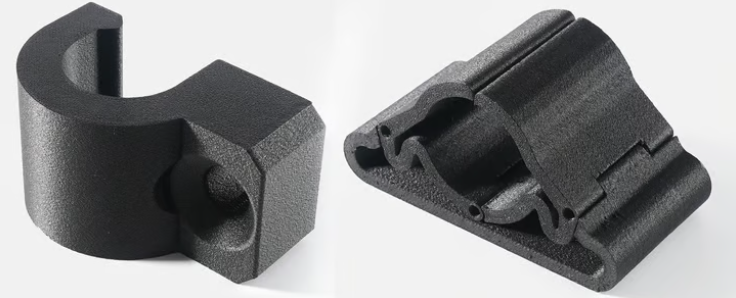 08 Fiberlogy Nylon PA12+GF15
This Nylon PA12 adds 15% glass fiber reinforcement, improving stiffness and durability compared to standard nylon filaments. It is designed for high impact resistance and parts that can withstand variable loads and impacts. The low shrinkage rate of this filament ensures high dimensional accuracy, allowing for precise printing without the need for a heated chamber (although we always recommend using a heated chamber).
It is recommended to dry before each use at 80°C for four hours.
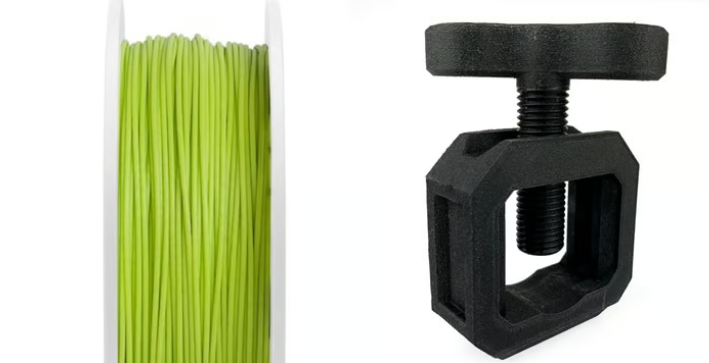 09 Forward AM Ultrafuse PAHT-CF15
This is another high-temperature (HT) nylon designed for parts that will be used in high-temperature environments. This PAHT CF15 from Forward AM (a subsidiary of Stratasys) contains 15% carbon fiber reinforcement to enhance mechanical strength and dimensional stability. Parts made with this material can withstand continuous operating temperatures of up to 150°C.
It is also suitable for applications requiring electrostatic discharge (ESD) safety. It prints well in dual-extrusion 3D printers with BVOH and HIPS as support materials, allowing for more complex geometries. This is another filament whose specific nylon type is not disclosed, but we suspect it is PA12.
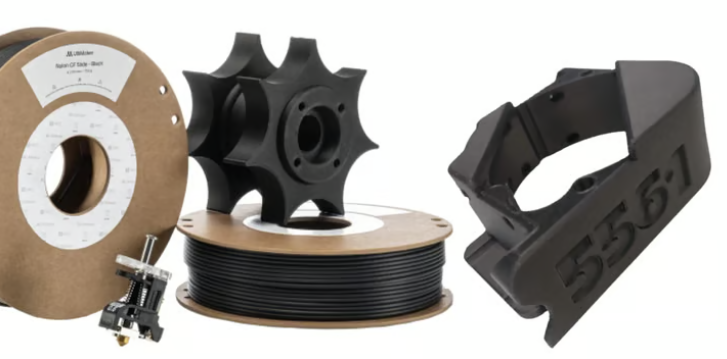
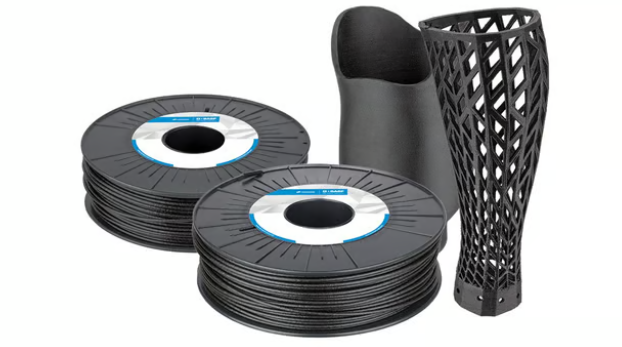 10 UltiMaker Nylon CF Slide
This is a new type of nylon composite filament just launched by UltiMaker this year. It is a unique nylon copolymer PA6/12 with carbon fibers, providing wear resistance and temperature resistance up to 180°C. It is called “Slide” due to its low friction and high wear formula, making it ideal for parts that involve sliding contact with other materials (such as stainless steel). After annealing, this filament can withstand temperatures up to 180°C, suitable for high-temperature applications.
Of course, UltiMaker filaments are only available in 2.85 mm diameter, which limits their applicability.
 END
END


 Welcome to add the editor’s WeChatto learn about the latest trends in the 3D printing industry
 About 3D Printing Technology
We integrate insights, technology trends, application scenarios, competitive strategies, and in-depth dynamics from China, the US, and globally for professionals in 3D printing and artificial intelligence, providing high-value information. We are passionate about 3D printing and welcome contributors from around the world.
Disclaimer:3D Printing Technology has no commercial cooperation, sponsorship, employment, or other interests with the companies mentioned in the text.3D Printing TechnologyImages and videos mentioned are sourced from the internet and are for auxiliary reading purposes only, with no commercial intent.All rights belong to the original authors. If there are any infringement actions, please contact the rights holder in a timely manner, and we will delete it as soon as possible. The copyright of the images in this article belongs to the copyright holder,3D Printing TechnologyThe watermark is automatically added for auxiliary reading and does not represent ownership of the image. For image usage, please consult the relevant copyright parties.3D Printing TechnologyThe article does not constitute any investment advice,3D Printing Technologyand is not responsible for any direct or indirect losses caused by the use of this information.