
Currently, artificial intelligence is sweeping through the medical field with unprecedented enthusiasm. Many believe that the seemingly omnipotent “general large model” will be the ultimate answer for intelligent healthcare. However, at the “Forum on Innovative Progress in Tumor Treatment and New Trends in Drug Development” held in Beijing in September, Professor Meng Qinghu, head of the Department of Electronic and Electrical Engineering at Southern University of Science and Technology and a member of the Canadian Academy of Engineering, based on his team’s long-term practice in medical robotics and artificial intelligence, pointed out another possibility —the truly implementable intelligence may not lie in the model’s “large and comprehensive” nature, but in a profound insight and resolution of the “scene”.
At this forum, hosted by the Lu Shixin Medical Foundation and co-organized by the National Health Commission’s Health Channel (CHTV) and Medical Forum Network, Professor Meng Qinghu systematically analyzed the real bottlenecks faced by AI technology in medical applications under the theme of “Innovations in Intelligent Healthcare Amidst the AI Wave” and proposed a pragmatic development path centered on “scene intelligence”.
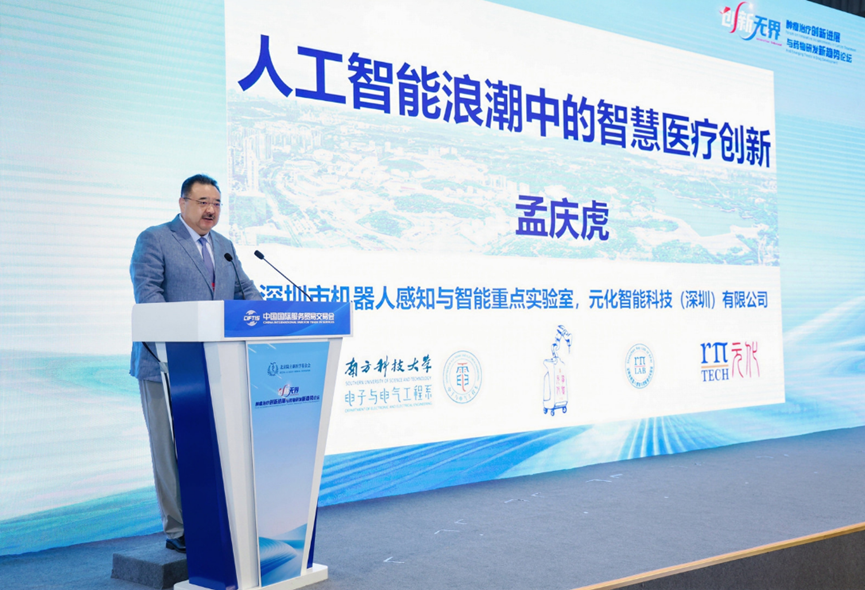
Professor Meng Qinghu
Computing Power, Algorithms, and Data:
The “Triple Dependency” and “Low-Dimensional Dilemma” of AI
Professor Meng Qinghu first pointed out that the current development of artificial intelligence heavily relies on the collaborative advancement of three key elements: computing power, algorithms, and data. However, this dependency also constructs the inherent boundaries of its capabilities, making it essentially a “low-dimensional intelligence”.
Professor Meng used human intelligence as a reference: the human brain can operate efficiently in a nearly infinite-dimensional “ordinary intelligence space” with extremely low energy consumption (about 20-30 watts). This space is trained by each person’s unique, continuous, and multi-dimensional life experience data, endowing it with powerful generalization, reasoning, and creative problem-solving abilities.
In contrast, the capabilities of existing artificial intelligence are built on carefully curated and limited digitized datasets. “The AI space is still a low-dimensional intelligence space,” Professor Meng pointed out, “it excels in certain specific dimensions (such as Go) far beyond human capabilities, but in many other dimensions, its abilities are almost zero.” He vividly illustrated its core flaw: “What it has learned, it can do; what it has not learned, it cannot do,” profoundly highlighting the current situation where AI lacks essential understanding and autonomous reasoning capabilities.
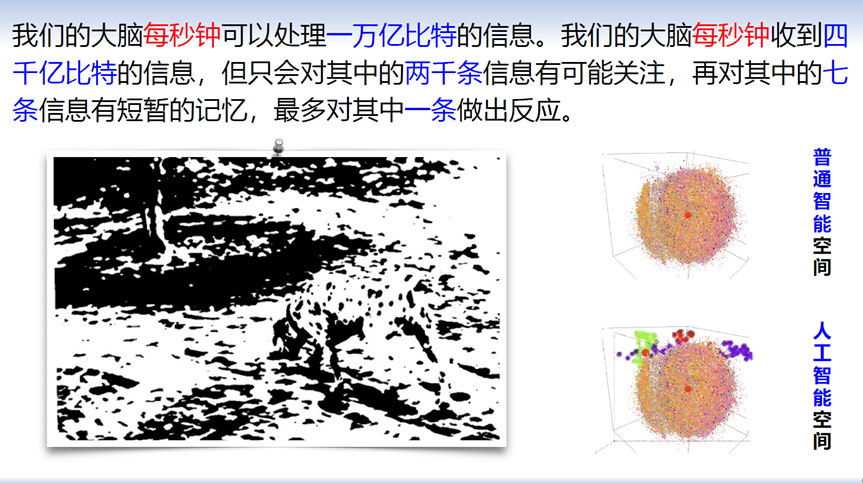
Image Source: Professor Meng Qinghu’s Presentation Slides
To further illustrate this difference, Professor Meng provided an example of a complex image that the human eye can easily interpret as “a four-legged animal moving towards the shade in the lower right corner”. No advanced AI algorithms, whether using traditional contour recognition or modern point cloud analysis methods, can correctly interpret this image. This proves that the underlying processing logic fundamentally differs from human cognitive patterns. Under the dual constraints of algorithmic mechanisms being vastly different from humans and training data representing only a tiny fraction of human knowledge, expecting AI to achieve general intelligence in complex medical scenarios that require high reasoning and situational adaptation is still unrealistic.
From “Performance” to “Functionality”:
The Challenges and Breakthroughs of Surgical Robots
Despite the high hopes placed on the field of bionic robots, its development path has not been smooth. Professor Meng Qinghu reviewed the journey from the first humanoid robot Wabot-1 developed by Professor Ichiro Kato at Waseda University in Japan in 1973 to the astonishing mobility demonstrated by Boston Dynamics and Tesla’s “Optimus”. However, he pointed out that most of these advancements remain at the “demonstration” stage, “with a serious issue of not being able to land.” He specifically mentioned that some current domestic research and development efforts are experiencing repeated investments, similar to “Boston Dynamics ten years ago”, focusing on flashy movements rather than addressing actual clinical needs.
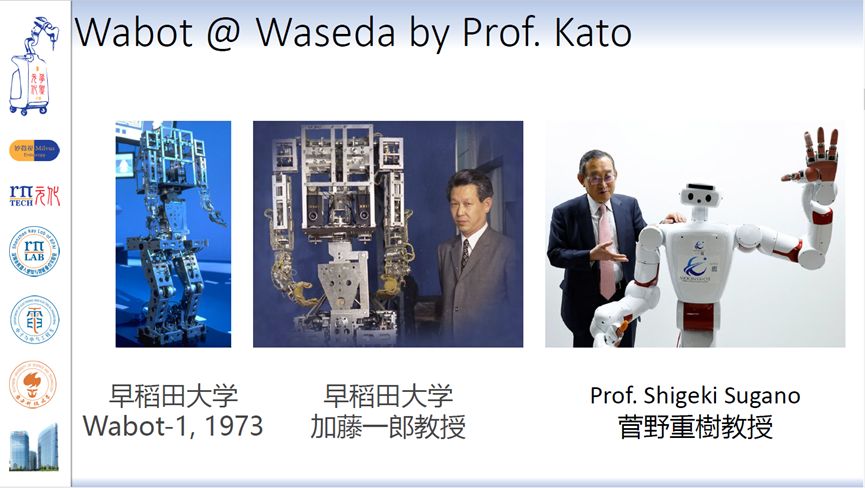
Image Source: Professor Meng Qinghu’s Presentation Slides
This “development for demonstration” mindset also permeates the field of surgical robots. Using the da Vinci system from Intuitive Surgical as an example, Professor Meng pointed out that its fifth-generation product has undergone twenty years of technological iteration with “no changes whatsoever”, with the fifth generation only adding force sensing functionality, and the overall performance improvement being “less than 40%.” More thought-provoking is that many domestic followers have fallen into the “imitation without surpassing” dilemma — “He didn’t add force sensing back then, and we didn’t add it either; when he added it, everyone rushed to add it.” This lack of foundational innovation undoubtedly restricts the technological progress of the industry.
To address this bottleneck, the team led by Professor Meng Qinghu at Yuanhua Intelligent has adopted a differentiated path. They abandoned the obsession with pursuing a general-purpose platform and focused on “specialized surgical robots”, delving into specific fields such as orthopedics and urology. Their independently developed orthopedic surgical robot is structurally distinct from mainstream international products, achieving miniaturization and specialization, “only the size of two basketballs.” More importantly, they integrated innovative “photoacoustic imaging-based soft tissue navigation” technology, capable of real-time and precise identification of cancer cell boundaries during surgery, with a penetration depth of up to 5 centimeters and an accuracy of 0.1 millimeters. This technology provides a revolutionary tool to resolve the core contradiction of “removing cancerous tissue cleanly” while “preserving more healthy tissue,” making it a global first.
The Future of Surgeons:
Will They Be Replaced by Humanoid Robots?
Regarding the question of “whether humanoid robots will replace surgeons,” Professor Meng Qinghu did not provide a direct answer but shared opposing views from two authoritative scholars in the field.
“The father of surgical robots,” Professor Russell Taylor from Johns Hopkins University believes that “it will not happen.” He recently published the world’s first study on fully autonomous robotic cholecystectomy in Science Robotics. In his view, surgical robots should be specialized devices that are rigidly connected to patients and autonomously perform operations, “since robots can perform surgeries, why do we need humans? There is no need for a humanoid robot to perform surgery.”
On the contrary, Professor Shigeki Kanno, an expert in humanoid robots at Waseda University in Japan, holds an opposing view. He revealed that Japan’s national-level Moonshot program explicitly states the goal of achieving humanoid robots performing surgical tasks in extreme environments such as space stations by 2050. The logic is that in deep space exploration, it is impossible to carry an entire medical team, and a humanoid robot capable of providing daily services can transform into a multi-specialty surgical expert by downloading software and changing tools when needed, which is an efficient solution.
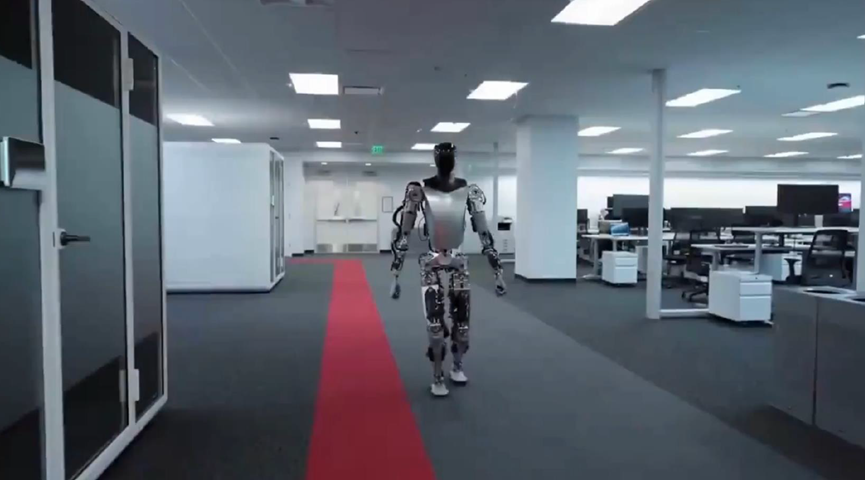
Image Source: Professor Meng Qinghu’s Presentation Slides
Based on these viewpoints, Professor Meng Qinghu further analyzed the two potential transformations that humanoid surgical robots may bring. First is “virtual consultations,” which involves algorithms gathering surgical intelligent agents from multiple top experts in the cloud to collaboratively validate complex surgical plans without the real doctors’ knowledge; second is “collective embodiment,” where a humanoid robot platform can integrate the top experiences of multiple surgical specialties, switching from “orthopedic expert” to “neurosurgery expert” by downloading different algorithms and changing tools. This suggests that future surgical capabilities may be loaded onto a general humanoid robot hardware platform in a “software-defined” manner.
Scene Intelligence:
A Pragmatic Path Towards Implementable AI in Healthcare
In response to the current limitations of general artificial intelligence (AGI), Professor Meng Qinghu proposed the development path of “scene intelligence.” He emphasized that “general large models are just an extreme value that will never truly arrive, while the truly feasible solution is to focus AI capabilities on the specific clinical scene needs.
Professor Meng Qinghu used the “active wireless capsule robot” developed by his team as an example to illustrate the application value of scene intelligence. Although this device does not possess general AI capabilities such as text recognition or facial recognition, it demonstrates world-leading professional levels in the specific scenario of gastrointestinal examinations. It can autonomously move within the gastrointestinal tract, identify all abnormal lesions, and subsequent versions can achieve functions such as sampling, excision, and drug delivery. This design approach indicates that by limiting intelligent demands to clearly defined scenarios, reliable clinical applications can be achieved without the need for super-large computing power.

Image Source: Professor Meng Qinghu’s Presentation Slides
This concept aligns closely with foundational thoughts in the field of artificial intelligence. Professor Meng Qinghu quoted Turing’s perspective from his 1947 speech at the London Mathematical Society: “What we want is a machine that can learn from experience,” emphasizing that machines should learn through experience like humans, rather than merely passively receiving data. He also mentioned the assertion of 2025 Turing Award winner Rich Sutton: “Large models have approached the boundary of human data. True intelligence should self-learn like a baby in perceptual action.” These viewpoints collectively indicate that the future direction of artificial intelligence development should be autonomous, gradual scene-based learning, rather than relying on large-scale feeding of existing data.
Conclusion:
Seeking a Balance Point for Intelligent Healthcare Between Rationality and Vision
Professor Meng Qinghu’s report provides a clear framework for the development of artificial intelligence in the medical field. He pointed out that current AI technology has obvious “low-dimensional intelligence” limitations, and the development of bionic robots and surgical robots still needs to overcome many technical bottlenecks, while “scene intelligence” represents a more pragmatic path for implementation.
For future development, Professor Meng Qinghu made clear suggestions: actively learn and master AI tools, but replace general models with scene intelligence; bionic robot doctors will eventually arrive, but will still need to undergo 5-15 years of technical breakthroughs and an additional 5-10 years of cost control; and systematically collect multi-modal clinical data to provide high-quality training resources for intelligent systems.
He particularly emphasized that while humanoid robots may eventually become surgical platforms integrating multi-specialty capabilities, the current focus should be on specialized solutions that address specific clinical problems. This pragmatic and forward-looking perspective provides a balance point for the development of artificial intelligence in the medical field, avoiding excessive hype while maintaining innovative ambition, and guiding the subsequent work of academia, industry, and research.

Source: Lu Shixin Medical Foundation