If you see visitors in the exhibition hall with two small white circles under their eyes or even heating pads on their necks, they are likely coming from the university exhibition area of the 25th China International Industrial Expo’s Technology Innovation Exhibition.
From September 23 to 27, the 25th China International Industrial Expo was held at the National Exhibition and Convention Center (Shanghai), where various universities showcased health industry-related achievements, attracting visitors to queue for experiences.
AI Diagnosis is Hot
What would it be like to have an AI robot take your pulse? There was a long line in front of the intelligent AI robot for traditional Chinese medicine exhibited by Peking University, and by the afternoon, the robot even ran out of power and “went on strike”.
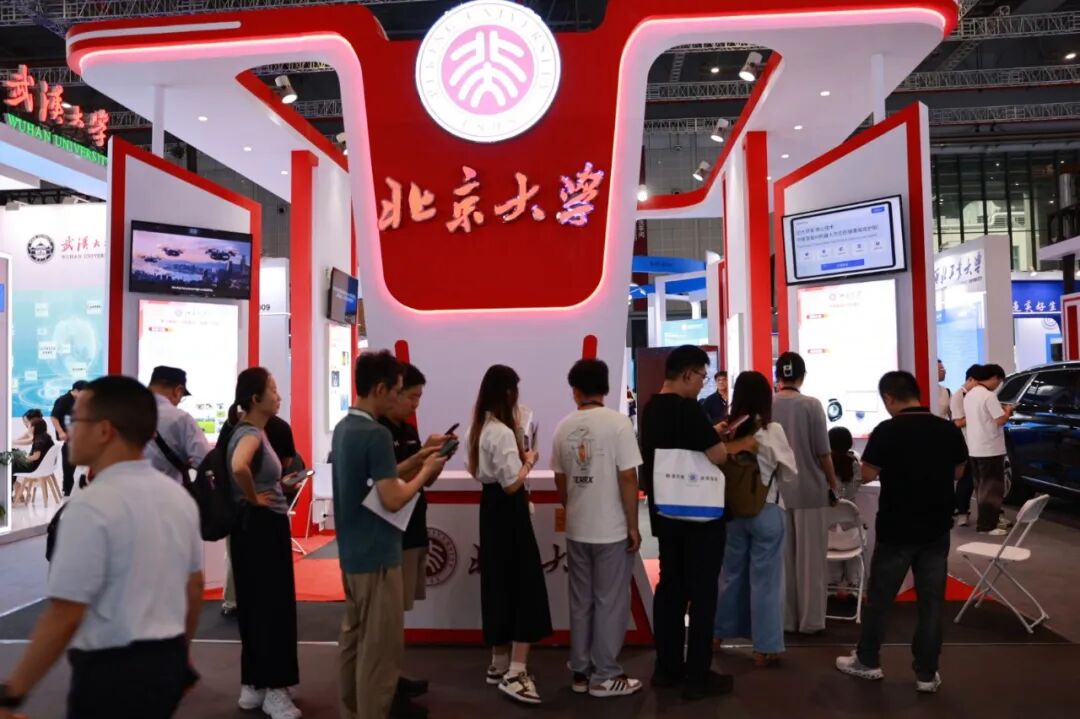
According to reports, this robot uses the latest flexible sensor chips and physical robot technology to provide patients with precise experiences in facial diagnosis, pulse diagnosis, tongue diagnosis, and inquiry, generating accurate, professional, and comprehensive traditional Chinese medicine health management reports, offering “one-on-one” intelligent traditional Chinese medicine diagnosis and treatment services.
There was also a long line in front of the Shanghai University of Traditional Chinese Medicine booth. The AI tongue diagnosis instrument developed by the research team from Shanghai University of Traditional Chinese Medicine, Stanford PhD team, and Aiyisheng Traditional Chinese Medicine team can distinguish body constitution in just one minute.
First EducationAt the scene, patients placed their faces in the designated area of the machine and opened their mouths as required, and soon the tongue diagnosis results were displayed on the device terminal. “His appearance shows that he has excessive dampness and a lot of heat, with the heat driving the dampness, presenting a state of damp-heat, which manifests as oily skin and weaker metabolic capacity.” A young man nodded repeatedly after hearing the explanation given by the staff based on the tongue diagnosis results, and he also received medical advice: “Pay attention to your daily routine and diet, and avoid eating too much heavy-flavored food.”
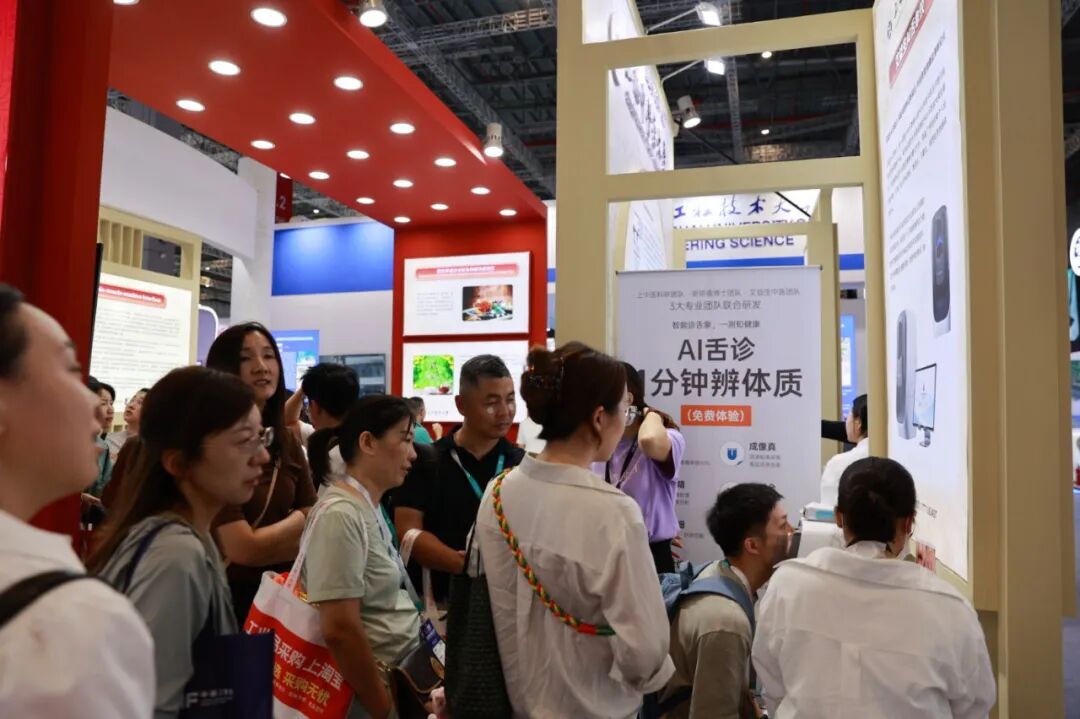
It is understood that this AI tongue diagnosis instrument is based on a vast tongue diagnosis database, with the AI model continuously learning and optimizing, improving its diagnostic capabilities with use; and through cloud-based iterative updates, it ensures that all terminals remain “fresh” and has broad application prospects.
The brain-controlled rehabilitation wheelchair developed by the Shanghai University of Traditional Chinese Medicine also attracted many people to try it out. The wheelchair, which applies brain-machine interface technology, brings new hope for patients with spinal cord injuries, ALS, and stroke-related limb dysfunction, allowing them to control movement with their thoughts.
Wearing an electrode “cap” and sitting in the brain-controlled wheelchair, the front screen of the wheelchair is designed with four visual stimulus modules for “forward, backward, left, and right”. By focusing on the flashing directional arrows at specific frequencies, the brain generates brainwave signals, allowing the user to choose the direction of movement by staring at a specific arrow.
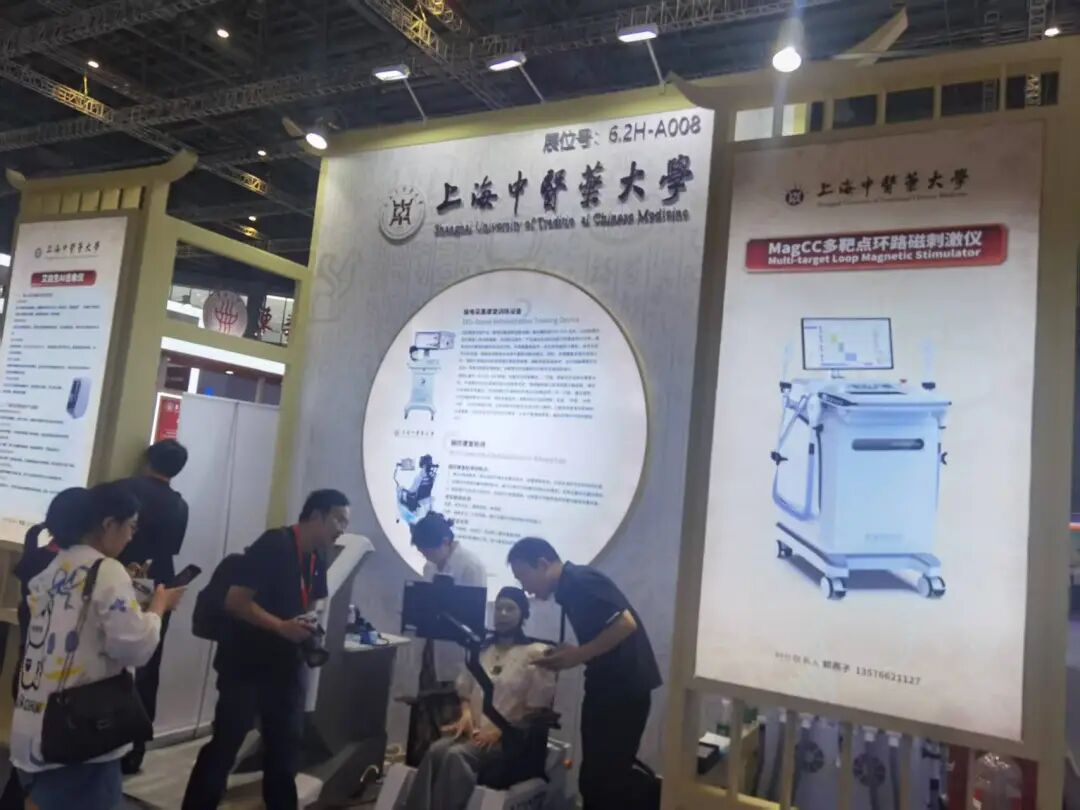
Shanghai University of Traditional Chinese Medicine also developed home-use patches such as herbal eye patches and moxibustion patches, which attracted visitors to queue for trials. Many left the booth with round eye patches under their eyes, and some had moxibustion patches on the Dazhui acupoint at the back of their necks.
Helping Paralyzed Patients Stand and Walk
At the Industrial Expo, many health-related displays from universities received attention.
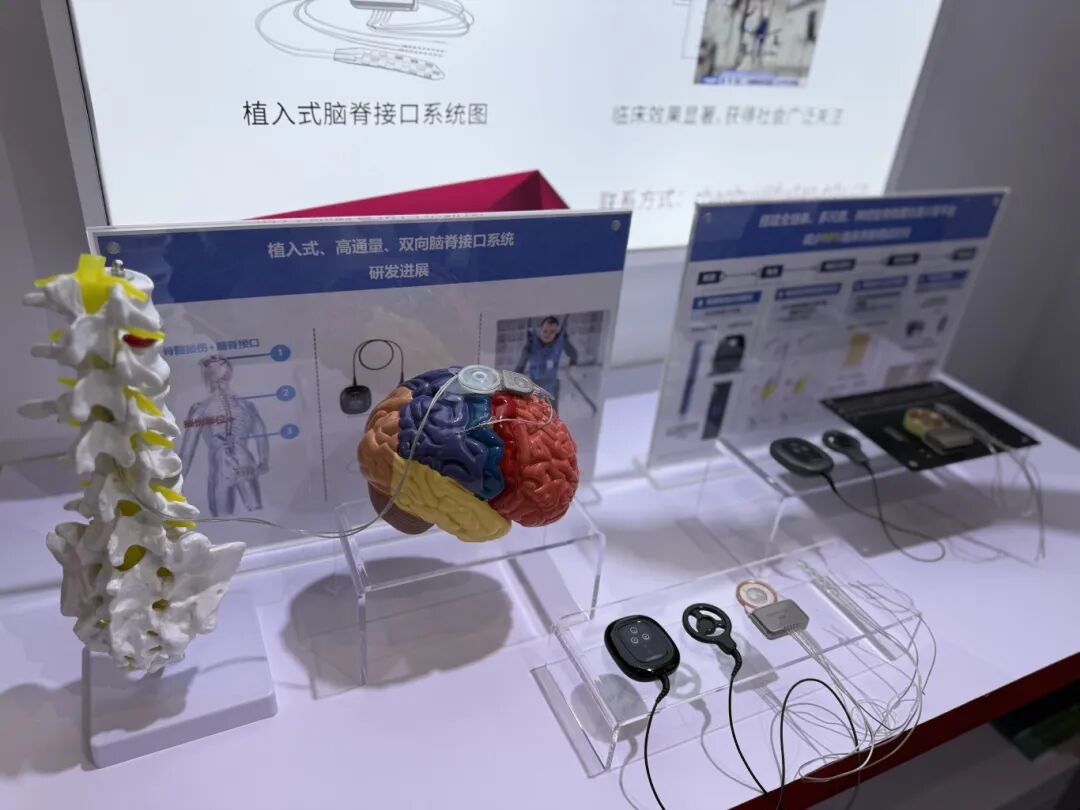
The brain-spinal interface system developed by the research team from Fudan University has broken through technical bottlenecks: two electrode chips with a diameter of about 1 millimeter are implanted in the motor cortex, and surgeries on the brain and spinal cord can be completed in about four hours. By building a “neural bridge” between the brain and spinal cord, patients with spinal cord injuries can achieve voluntary control of their lower limbs.
Project leader Zhou Zhihong introduced that this technology has been clinically validated at Fudan University Affiliated Hospital, where four patients with complete spinal cord injuries have regained lower limb motor function and have shown the first signs of spontaneous nerve recovery.
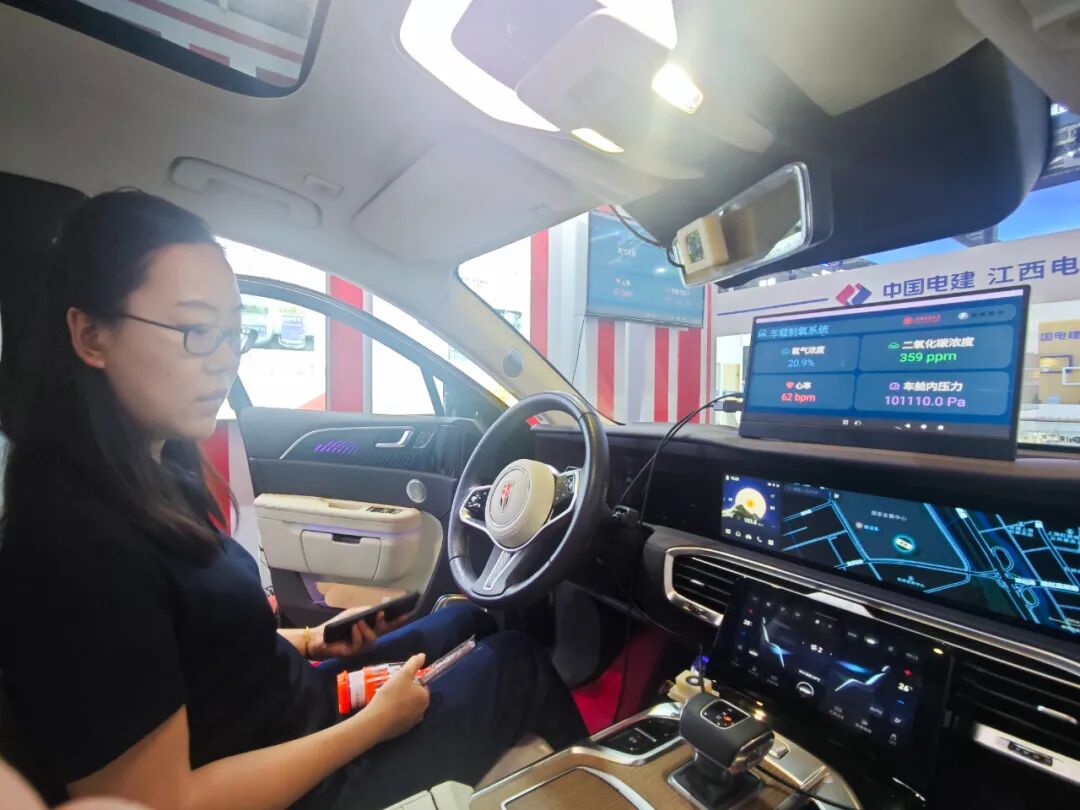
Professor Chen Jiangping’s team from Shanghai Jiao Tong University presented an all-time intelligent health cabin system, installed in a Hongqi sedan. After entering the cabin, the visitor’s heart rate, oxygen concentration, carbon dioxide concentration, and cabin pressure are displayed on the screen. Project leader Zhao Qianxiang explained that this system achieves non-invasive and precise collection of core physiological parameters such as heart rate through the integration of millimeter-wave radar and bioelectric sensor technology, with an error rate of less than 3%, reaching medical monitoring standards, providing intelligent safety guarantees for driving. Additionally, the integrated miniaturized oxygen-rich system can increase the oxygen concentration in the cabin to 23%-25% within 30 minutes, solving hypoxia problems in high-altitude and enclosed environments.
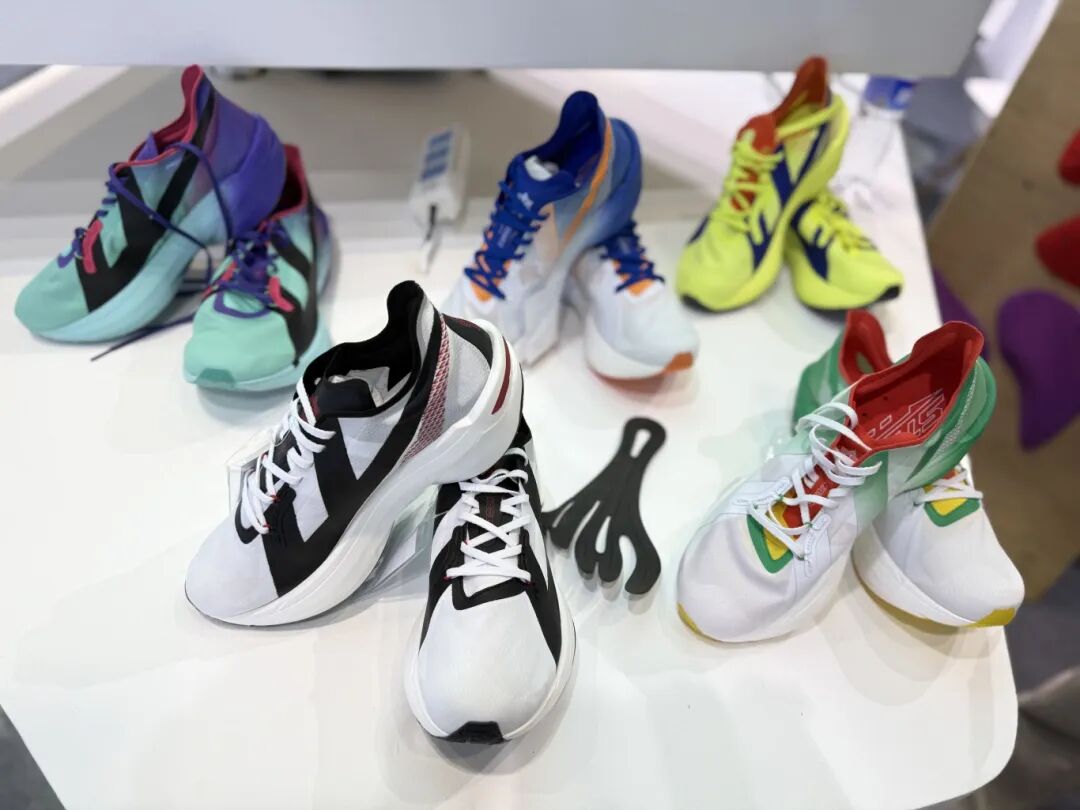
Shanghai University of Sport launched the “Huili-Shangti University” health series sports equipment, providing precise technical support and theoretical basis for the iterative development of sports shoes. Project leader Zhou Weijie introduced that the project team focuses on analyzing the physical activity patterns and gait characteristics of three core groups: running enthusiasts, the elderly, and teenagers, using this as a scientific basis to systematically promote the development and performance testing of sports equipment centered around sports shoes. Currently, carbon plate racing shoes and racing training shoes have entered mass production, and shoes for the elderly have also begun testing, with plans for mass production next year.
580 University Technology Innovation Achievements on Display
The university exhibition area at the Industrial Expo, organized by the Shanghai Municipal Higher Education Technology Development Center, showcased 580 technology innovation achievements from 68 universities, including 42 domestic “Double First Class” universities such as Peking University, Fudan University, Shanghai Jiao Tong University, Nanjing University, and Wuhan University, as well as 21 local universities in Shanghai.
With features like not exposing the face to sunlight, saving electricity in summer, not blocking warmth in winter, requiring no power source, easy installation, and a durability of up to 30 years, the “next-generation green energy-saving light-responsive color-changing glass” developed by Academician Zhu Weihong’s team from East China University of Science and Technology attracted significant attention upon its debut in the exhibition area.
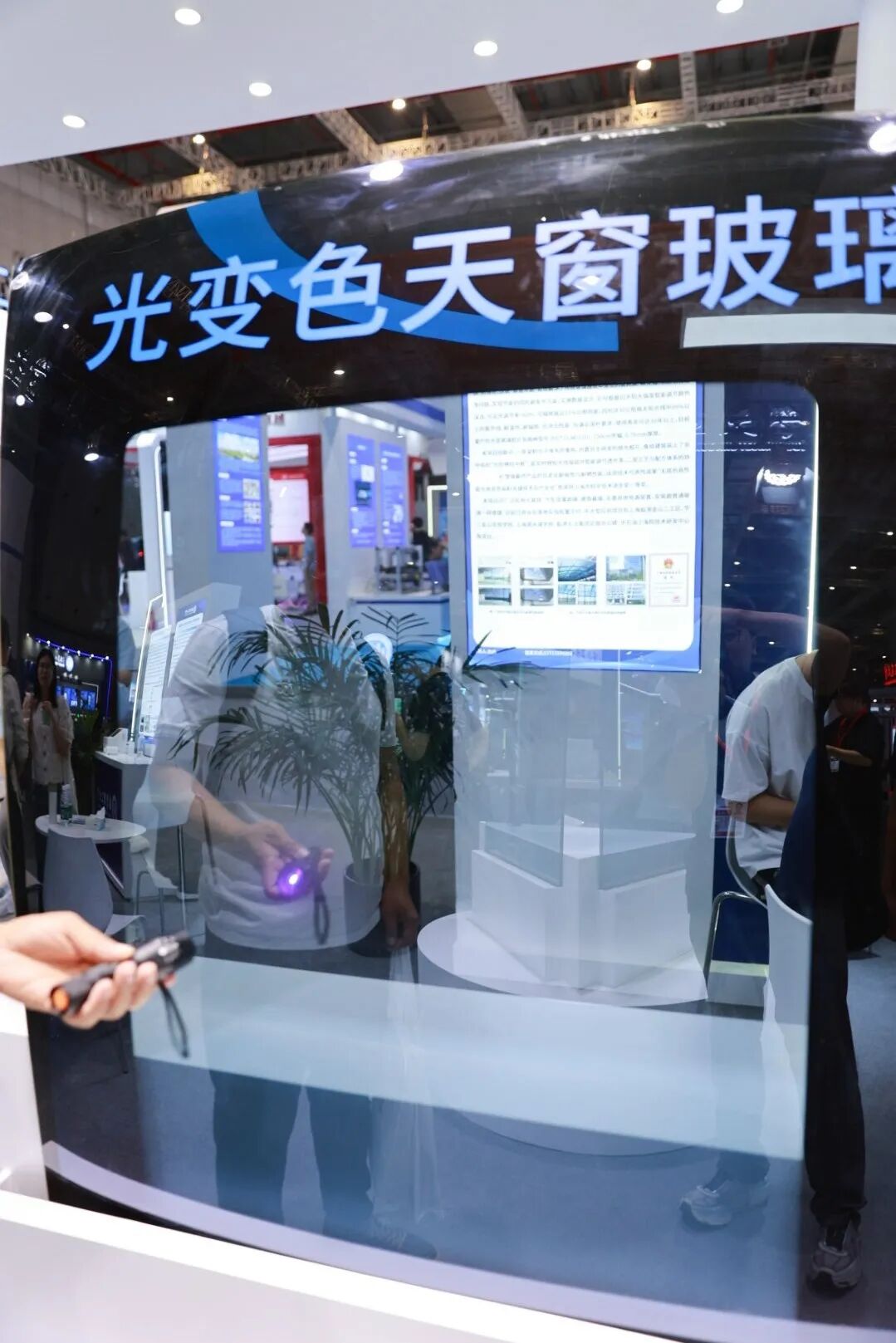
“This is a high-performance innovative product that integrates intelligence, energy-saving, and environmental protection. As the first light-responsive color-changing glass in China, it not only outperforms similar products from the United States in terms of cost but is also significantly lower than electrochromic technology, making it highly competitive in the market,” Academician Zhu Weihong explained.
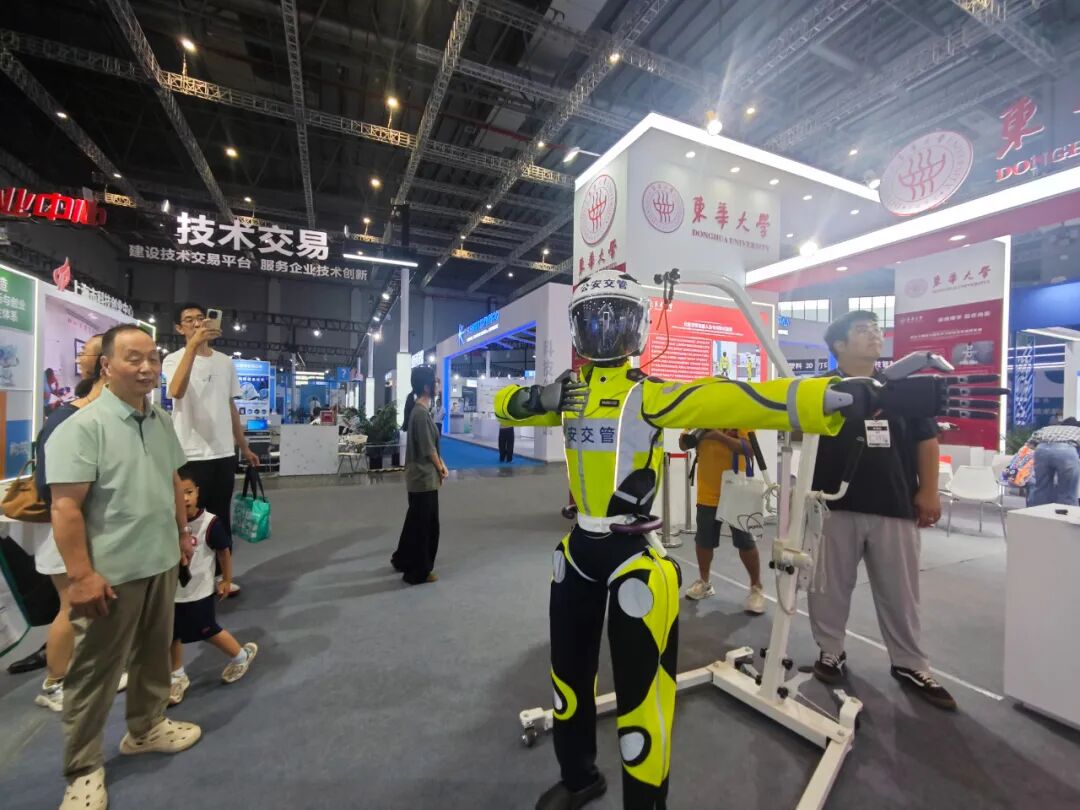
Recently, a robot in traffic management uniform appeared at the intersection of Nanjing East Road and Zhongshan East Road in Huangpu District, Shanghai: under the neon lights, next to the crosswalk, this robot, wearing a police hat and reflective vest, used standard gestures to direct traffic for vehicles and pedestrians. This public security traffic management robot, developed in collaboration with the Shanghai Public Security Traffic Management Corps, Donghua University, and Shanghai Fourier Intelligent Technology Co., Ltd., also appeared at the Donghua University booth at the Industrial Expo.
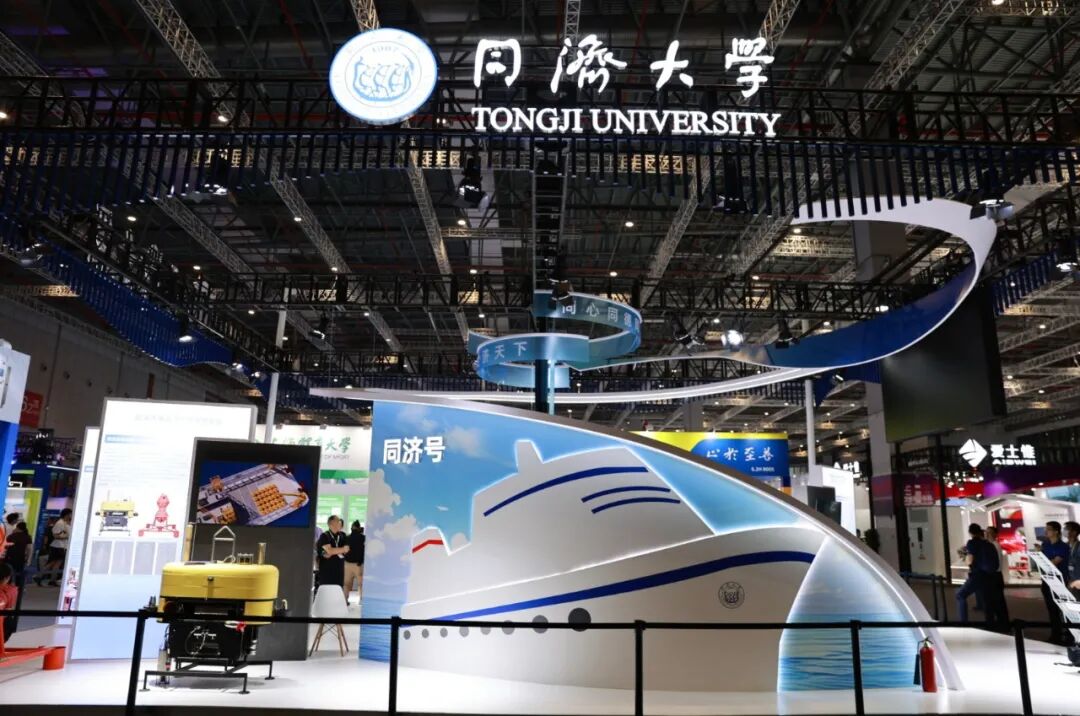
Professor Zhang Lei’s team from the School of Transportation at Tongji University, along with teams from Kasco Signal Co., Ltd. and other industry-education integration teams, has adhered to theoretical innovation and technology development, successfully developing a product system including train-mounted equipment, trackside equipment, target controllers, and dispatching systems, which has been successfully applied to nearly 100 rail transit lines in 28 countries and regions (including subways, light rail, trams, and regional rapid rail transit), improving the efficiency of adjusting automatic driving parameters for the train automatic operation system (ATO) by 30%, and achieving the first complete export of China’s fully autonomous urban rail control system.
In the past, dynamic heat dissipation of satellite electronic devices faced bottlenecks, and precise temperature control of optical components was also challenging. Professor Zhang Qixian’s team from Shanghai University successfully developed a series of carbon-based thermal conductive films and thermal conductive wires with completely independent intellectual property rights, filling the technical gap in the field of carbon-based thermal control materials for aerospace in China. This material has been applied to multiple satellites and significantly enhances the thermal management level of spacecraft, also showing broad application prospects in civilian fields such as electric control systems for new energy vehicles, 5G communication base stations, and optoelectronic integrated packaging.
The researchers from Shanghai University of Engineering Science directly addressed the pain points in quality control of welding in high-end manufacturing. The first domestic high-precision, high-reliability laser welding process multimodal intelligent detection system showcased at the Industrial Expo received rave reviews. It combines welding mechanisms and AI models to detect penetration depth and surface/internal defects (such as pores, spatter, and undercut) in real-time, solving the key bottleneck of precise control of welding quality, achieving the goals of optimizing processes and improving product quality.
Text: Cao Yishan
Photography: Gu Chao, Wang Jiayi
Editor: Zhou Zixin
Proofreader: Cao Er
Editor-in-Chief: Wu Hua
For reprinting this article, please indicate the source
Follow “First Education”
Share to Moments for more surprises!
___________________________