“The era of the Internet of Vehicles has arrived, and C-V2X technology is truly remarkable.”
To be honest, friends who have been following the Internet of Vehicles recently should have felt that the entire industry is indeed accelerating. After driving for so many years and witnessing the evolution from the initial radio to today’s smart cockpit, the emergence of technology like C-V2X is… how should I put it, truly eye-opening.
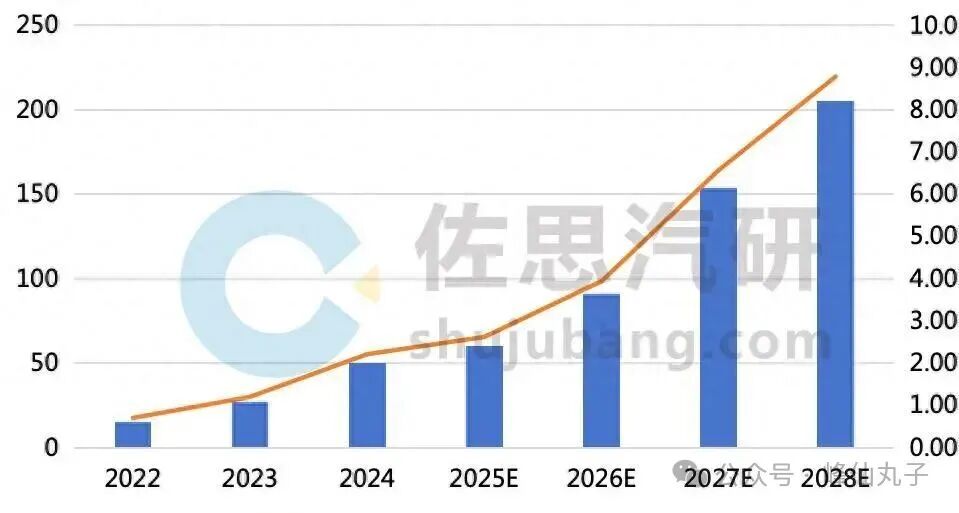
That said, the current adoption of C-V2X in vehicles in our country is still in its infancy. In 2024, the expected installation volume for passenger cars is around 500,000 units, with an installation rate of only 2.21%… It may not sound like much, but you should know that this growth rate is quite impressive. Following the current trend, by 2028, the installation volume could exceed 2 million units, with an installation rate reaching over 8%.
When I visited a 4S dealership, I noticed that many salespeople are now promoting C-V2X features. Previously, it might have been an optional feature, but now… it has truly become a selling point. Especially for new force brands like NIO and Li Auto, they have basically made the Internet of Vehicles functionality standard.
The key factor is the technological upgrade! The leap from R16 to R17 is no small feat. What does the R17 protocol support? Vulnerable road user protection, high-precision environmental perception sharing, group safety information broadcasting… It sounds quite abstract, but in practice, it indeed enhances perception.
For example, in the past, if you encountered a pedestrian suddenly crossing the road ahead, you relied entirely on your own vision and reaction. Now, with the R17 V2P functionality, you can receive collision warnings within 3 milliseconds! This speed… is definitely faster than a blink of an eye. Especially in areas around schools and intersections, the safety improvement is significant.
Another feature that impressed me is the MBS broadcasting mode. Roadside devices can simultaneously push the same data to multiple vehicles, saving 70% of the air interface resources compared to unicast mode. Imagine if an accident occurs ahead, and all vehicles receive the warning information almost simultaneously; that feeling… is incredible!
Of course, no matter how good the technology is, it must be supported by hardware. The penetration rate of 5G modules is indeed rapidly increasing, expected to reach around 18% in 2024, with a year-on-year growth of 100.73%! Just looking at this number feels exciting. However, cost remains an issue. Fortunately, domestic chip manufacturers are stepping up, with companies like ZTE Microelectronics and Chenxin Technology making efforts, and prices are sure to become more affordable.
Module manufacturers like Quectel, MEG, and Zhongxin Kezhilian are currently in fierce competition. From what I understand, everyone is racing to be the first to mass-produce the R17 protocol. Quectel’s AG59x series, MEG’s MA922 series, and Zhongxin Ke’s DMD5x series each have their own unique features.
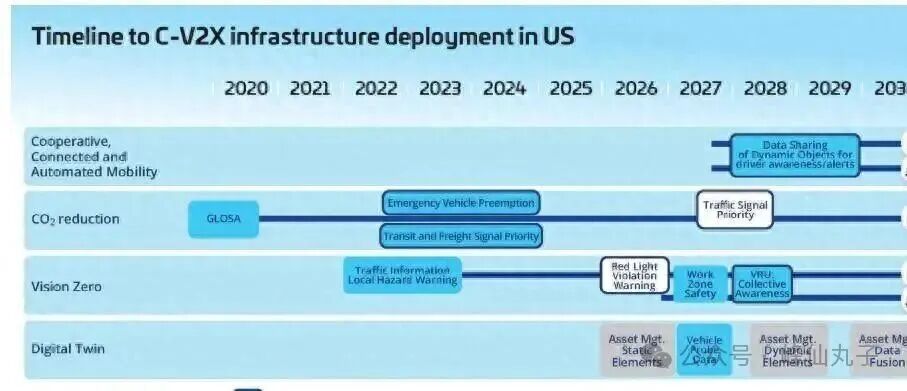
Speaking of policy drivers, the EU will require new cars to support NG-eCall starting in 2027, and our domestic AECS standard is also planned for mandatory implementation in July 2027. This timeline… is actually quite tight. OEMs are currently racing against time to make adaptations; whoever acts quickly will seize the opportunity.
However, I believe that while technological development is important, user experience is paramount. Many car manufacturers are spending billions on smart cockpits, yet they are still using 4G modules… this is somewhat unacceptable. What is the most obvious difference between 5G and 4G? When navigating and recalculating routes, 4G takes a minute, while 5G can do it in seconds. Anyone who has experienced this knows the difference.
From the supplier’s perspective, tech giants like Huawei, Baidu, and Tencent are all laying out integrated vehicle-cloud solutions. Baidu’s Automotive Cloud 3.0, Huawei’s Harmony Road Intelligent Body, and ZTE’s Tonggan Computing Integrated Architecture… each has its own killer feature. Such fierce competition is definitely a good thing for consumers.
I personally have high hopes for the development prospects of RedCap technology. Compared to traditional 5G modules, it significantly reduces costs and lowers power consumption by 20%-30%, which is completely sufficient for L2-level ADAS. High-tech companies like GM870A and MEG’s MA710A series are following this route, and market acceptance should be good.
Now, local governments are also increasing their investments, with cities like Beijing, Shanghai, and Chongqing selected as pilot areas for integrated vehicle-cloud solutions. As infrastructure construction keeps pace, the demand for onboard terminals will naturally arise. This is a mutually reinforcing process, and more and more cities will follow suit.
However, it must be said that the development of this industry still faces challenges. Inadequate network coverage, fragmented standards, and cost pressures… are all real issues. But I believe that with policy promotion and technological maturity, these problems will gradually be resolved.
When do you think C-V2X technology will truly become popular in the cars of ordinary consumers? Should we continue to wait and see, or is it time to consider changing cars now?