
Recently, due to project needs, I searched for some modules on Alibaba and was amazed by the results. This is not an advertisement; it’s just that Alibaba has become a monopoly. Whatever features or sizes we need for modules, it’s easy to find them on Alibaba, or in the Shenzhen Pearl River Delta area. Sometimes I feel that hardware engineers are undervalued because, in this region, it’s easy to take a hot feature and push it to the extreme.
While researching air purification, I discovered a type of ionization purification that uses high-voltage electricity to ionize the air, causing ions to move directionally, collecting dust and being absorbed. I found that many manufacturers in Dongguan produce these high-voltage packs for just a few dozen yuan! However, adding this feature to a Panasonic air conditioner costs nearly two thousand yuan.
Upon further investigation, I found that arc lighters made with high-voltage packs are everywhere, rechargeable and reusable, windproof and fireproof… all for just twenty or thirty yuan!
Not to mention various electronic components like LED power supplies, Bluetooth speakers, etc. Even hoverboards, which are slightly more complex, are abundant. Whether ordering or DIY assembly, it’s remarkably simple. I wonder if this is a technological advantage or a technological pity.

Getting back to multi-rotor drones.
Due to technological reasons, the most dominant products in the market (or those that are constantly being imitated) are probably DJI’s Phantom 2/3, which have minimal differences. The principle is quite similar; the core component is the flight controller. Based on my learning experience, I classify them into several levels, just my personal opinion, please don’t criticize:
1. Toy Level
2. Entry Level
3. Consumer Entry Level
4. Consumer Level
5. Professional Level
The so-called toy level refers to those all-in-one drones from Huaqiangbei that cost around a couple of hundred yuan, which are tough and can’t be easily broken or damaged. They generally use brushed motors, can fly, and look very powerful in advertisements, but the flight controller and motor drive are combined, costing only thirty or forty yuan to produce. The lifespan of such drones is only a few dozen hours, and if they fly too far, you won’t know where they went.
There are many entry-level options, generally for DIY use, like QQ flight controllers, CC3D, APM, etc. Most are copies of foreign designs because they are open-source, very powerful, and cheap. The secondary development options are usually around one hundred yuan. They can fly, but often lack hover capability, and some can stabilize, but the stability and ease of use are low, requiring high skill from the pilot. I usually end up crashing (I seem to lack balance skills; I always crash into walls when playing racing games).

Consumer entry-level drones generally cost three to four hundred yuan, and are hard to find online. Most are customized by manufacturers specializing in flight controllers for drone manufacturers, so they have simplified and stable functions, with advanced features like hovering, orbiting, and following. The performance across brands is quite similar, and using them feels similar to DJI’s flight controllers, as they all essentially copy DJI.
Consumer level drones are the professional ones among consumer models, like DJI and ZeroTech flight controllers, at the forefront of civilian drones in China, with prices ranging from four to five thousand to twenty thousand yuan. The modules are finely divided, with comprehensive functions and exquisite designs. They are well-tuned, and currently, their capabilities far exceed most flight controller manufacturers. With enough money and technology, you have an advantage, but most features are beyond the reach of ordinary people, and the costs are prohibitive. Nowadays, buying a drone can easily cost as much as several iPhones, and few people in China buy them just to play.
As for professional level drones, they are used for police, industrial, and military applications. I don’t know much about them, so I won’t comment; I once asked about a 150,000 yuan drone and was too scared to say anything and just left.
Now, back to how to assemble a multi-rotor drone, which is naturally at the consumer entry level, capable of stable flight with decent lifespan and functionality. The following content is based on my experience assembling my first imitation Phantom two years ago, for reference only. Since resources are abundant around Shenzhen, assembling a drone is very easy.
Shell
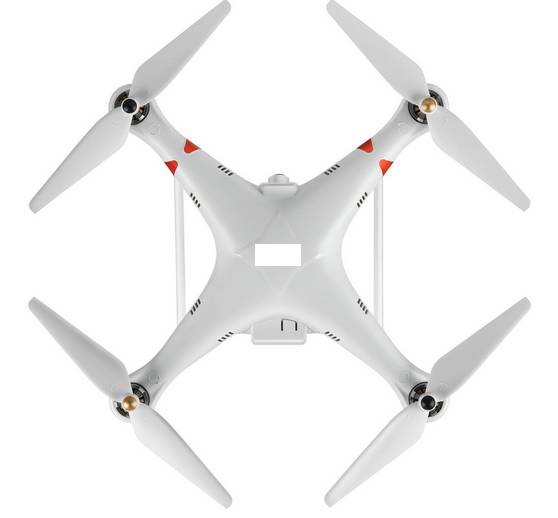
First is the shell, sourced from an innovative technology company in Shenzhen (to avoid advertising suspicion, I’ve removed the brand name). All plastic components include the upper and lower covers, light cover, battery compartment, landing gear, two sets of propellers, support plate, and all screws, costing around 130 yuan. The propellers are marked with different colors for clockwise and counterclockwise rotation. As shown in the picture, diagonal pairs are of the same color and direction.
Motor
Next is the motor, model 2212, KV1400, with threads to lock the propellers. Generally, it can last for about a thousand hours, with good ones costing around forty to fifty yuan, and cheaper ones around twenty. They match one-to-one with the propellers. This is an outer rotor brushless motor, where the rotor is fixed to the casing and rotates with it. The design with clockwise and counterclockwise threads can effectively lock the propellers tightly, as they get tighter when rotating, unlike larger propellers which use screws for fixing, making them harder to replace.
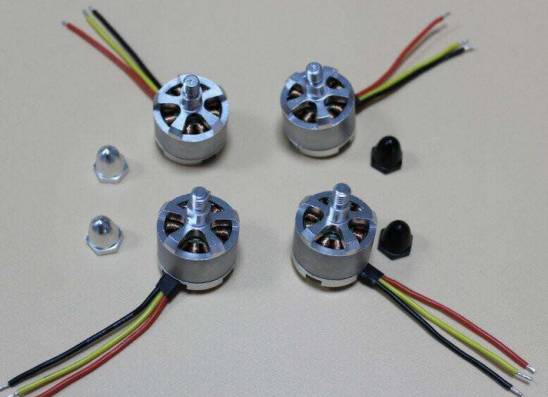
The motor wires are soldered in order to the three pads of the ESC. Since it is a brushless motor, it needs to be driven by an electronic bridge, so soldering the wires in order will result in normal rotation, while crossing one set of wires will reverse the direction. For the mature design of the Phantom model, the motors are designed for clockwise and counterclockwise rotation, so there is no need for cross-soldering; just solder them in order. This type of ESC is also a mature design, with the best ones costing around forty yuan, while ordinary ones are around twenty.
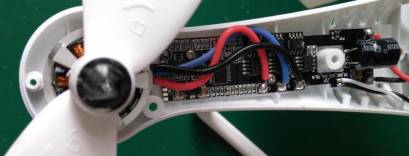
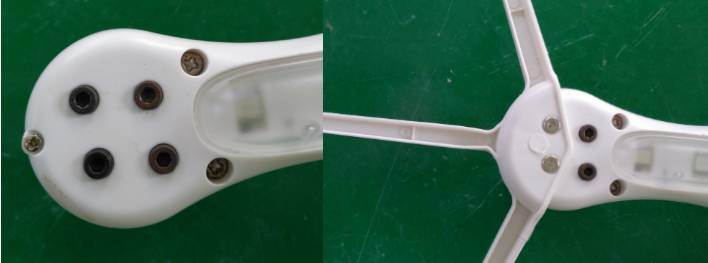
The motor is fixed to the bottom shell with four hex screws. The Phantom 2 design has the protective cover fixed to these screws, making replacement more troublesome if damaged. The Phantom 3 has switched to a snap-on design, which is much more convenient.
Flight Controller
The next step is to connect the flight controller. When buying the shell, it comes as a complete set with a support plate, which is a PCB used to separate the power supply and control signals and support various components.
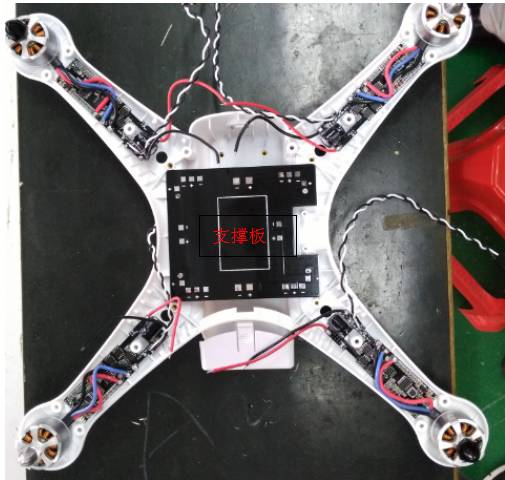
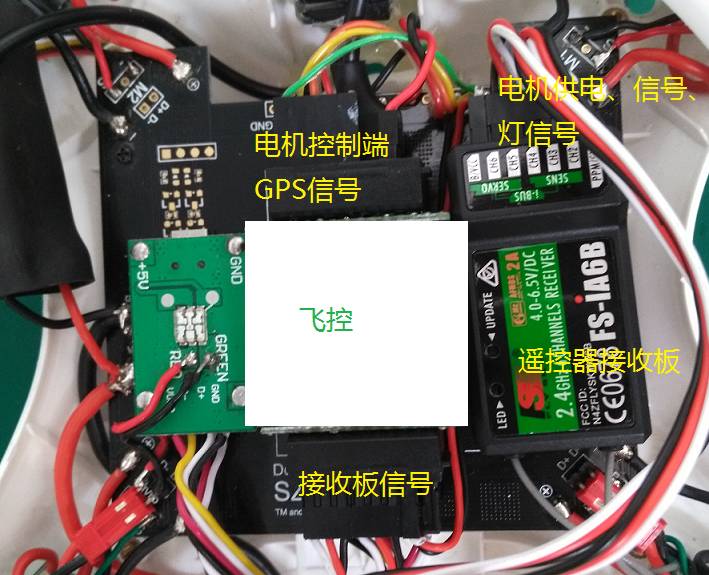
Except for the signal from the ESC, all other wiring is done with Dupont wires, just plug them in order. First, solder the power supply and control signals for the motors, then place the flight controller, power supply, and remote control receiver on the support plate, and connect the control signals and remote signals in order. It’s very simple; for example, motors are connected to M1~M4, and for multi-rotors, M6, M8, etc., are all clearly marked, and the remote control channels are also labeled for easy connection. Note that the remote control signal output needs to have the serial mode turned off, as the flight controller only recognizes parallel signals. All signals are simple square wave signals, with only the duty cycle varying. The remote controller used here is the FS-IA6B, costing over a hundred yuan, and is universal.
As for the camera, the low-end version transmits analog signals directly with an antenna, which can be received on an analog display. Better versions can attach an action camera for storage and photography, which I won’t detail here.
At this point, the electrical part is complete.

Since the design is modular, assembly is very straightforward. At this point, you just need to do a little tuning before use. Pay attention to the position and rotation direction of each motor; the casing has markings, then run each motor individually to check the direction, and wiggle the remote control joystick to determine if all directions are correct. If everything is fine, you can assemble the casing.
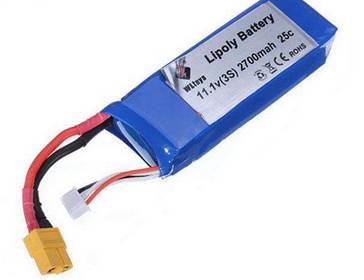
The battery used is a 2700mAh lithium battery with an XT60 connector, 3S (three lithium batteries in series), 25C. Of course, these are nominal values; those familiar with Shenzhen’s electronic environment will smile knowingly, as the actual performance is around 10C. This battery costs around a hundred yuan and has a lifespan of about 200 charge cycles, which depends on quality, as there is no protection board, so most drone batteries don’t last long.
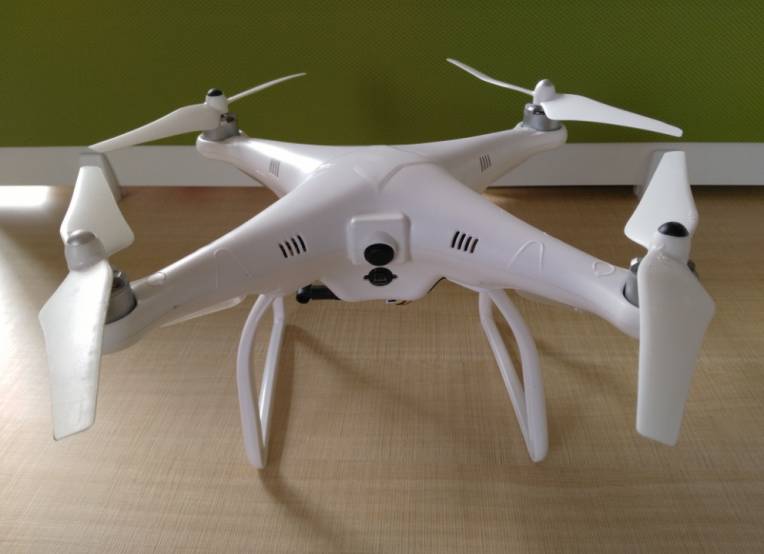
And then it’s ready to fly. The total weight is about 900g, with a payload of around 200g, and actual flight time is about 20 minutes. Overall, the cost adds up to just under a thousand yuan. Anyone who frequently disassembles electronics should have no problem with assembly; just remember to turn off the remote control during debugging and avoid grabbing the drone with your hands. Although the propellers are plastic, they can still cause injury, especially my other drone with carbon fiber propellers.
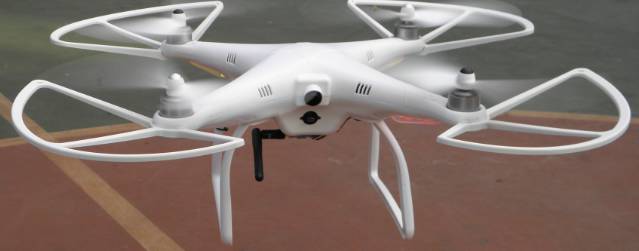
Close-up shot taken by myself; the effect is quite good.

The flashing light serves two functions: one is to indicate direction, which has become meaningless since the introduction of headless mode; the other is a warning, such as when the battery is low.
Of course, now with the real-name system in place, these drones can no longer fly. They are good for practicing and personal use. Personally, I have never been optimistic about their use; they are too noisy, and you can hear them clearly from dozens of meters away. Aside from military areas, they cannot be hidden. Not to mention another drone with a 10kg thrust propeller, which causes the entire building to shake when in use, and has low efficiency. A battery for a fixed-wing drone can fly for several hours, while a multi-rotor can only last for a few minutes; the payload ratio is also less than 20%. Agricultural drones using multi-rotors need battery changes and pesticide refills every few minutes; at the field, you need a generator to charge dozens of batteries, making it very inconvenient. The cost of batteries can exceed that of the drone itself, not to mention that the batteries can only handle about 200 charge cycles, leading to significant losses. Therefore, whether due to economic issues, controllability, or policy problems, the market for multi-rotor drones in China is rapidly shrinking.
This is to commemorate my days with drones~



This article is sourced from: Electronic Enthusiast Network, and the purpose of reprinting is to convey more information, which does not represent the views of New Materials Online® nor does it take responsibility for its authenticity. If there are any issues related to the content, copyright, or others, please contact us, and we will handle it promptly!
New Materials Online Business Cooperation
Please contact: Ms. Wang 0755-86060912 (9:00-18:30)
Click “Read Original” to sign up immediately