 This is the 315th issue shared by the platform.
 NXP, a Dutch chip company and one of the giants in the automotive semiconductor field, derives more than half of its revenue from automotive business.However, impacted by the U.S. tariffs on imported cars, the company’s revenue in the second quarter of 2025 fell by 6% year-on-year, and operating profit plummeted by 23%.Additionally, the ongoing chip inventory backlog issue that has persisted for two years has not yet been fully resolved, significantly slowing the pace of business recovery. Due to the high dependence of European chip companies on the North American market and insufficient flexibility in capacity adjustment, NXP appears particularly passive in responding to changes in trade policies.The platform has observed that since reaching a short-term peak revenue of $6.448 billion in the mid-2022 report, NXP’s mid-year revenue has been declining for three consecutive years, with the decline becoming increasingly severe.
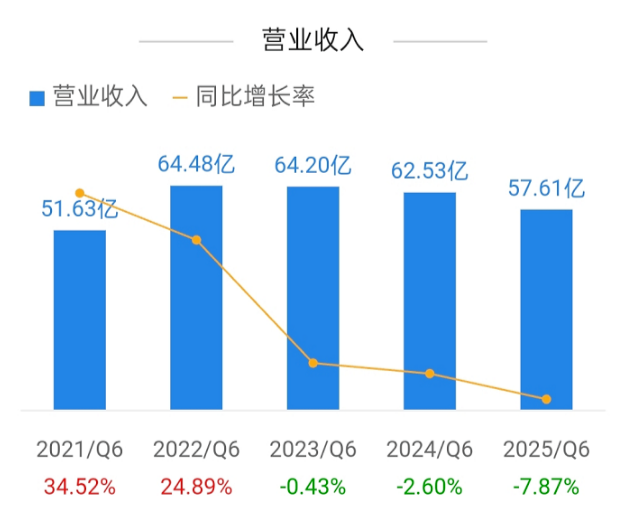 The mid-year revenue of NXP over the past five years (Source: Dongfang Wealth)Starting from January 2025, NXP has been active, launching a series of initiatives to demonstrate its determination to overcome difficulties.
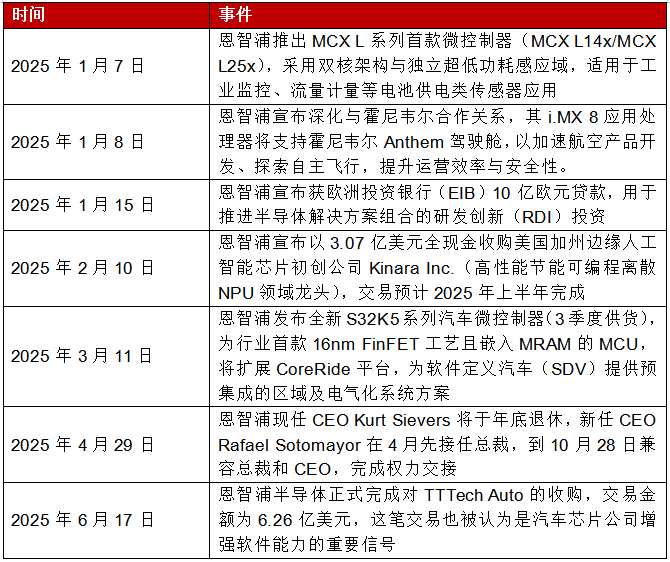 Today, the platform mainly shares some insights on the world’s first 16nm FinFET process MCU.

Product Profile
01. Product Overview
 NXP’s S32K microcontroller is based on the Arm® Cortex®-M series core, featuring high scalability, high performance, and low power consumption, suitable for body, area control, and electrification applications.The S32K MCU provides ASIL B/D level functional safety and built-in information security features, suitable for AUTOSAR® and non-AUTOSAR applications. The S32K series products analyzed by the platform include S32K144👈, S32K148👈, S32K344👈, etc.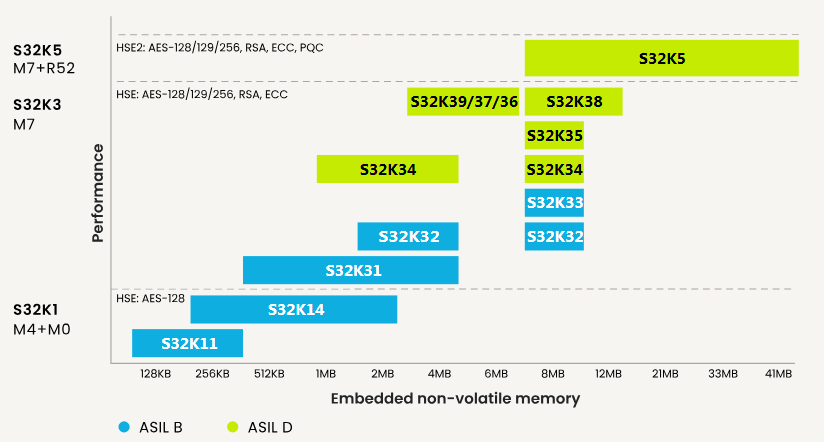
S32K Product Series (Source: NXP official website)
In March 2025, NXP launched the world’s first automotive MCU using 16nm FinFET technology with integrated MRAM – the S32K5 series, undoubtedly a significant technological innovation that showcases NXP’s strong R&D capabilities in the automotive chip field.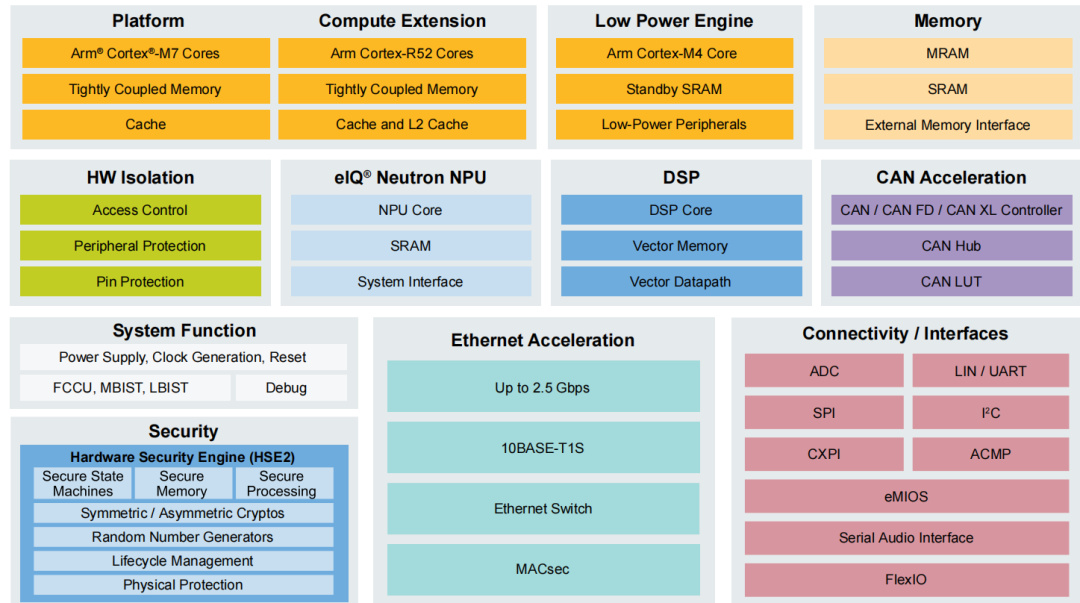
S32K5 Automotive Microcontroller Block Diagram
(Source: NXP official website)
The most striking innovation of the S32K5 series is the use of MRAM instead of traditional embedded flash memory. This choice is not coincidental but a result of the interplay between technological evolution and market demand.As the process technology advances to the 16nm node, embedded flash memory faces physical limits and is no longer a viable option. NXP directly transitioned from 40nm to 16nm, bypassing the 28nm node, reflecting the company’s strategic vision in forward-looking technology layout.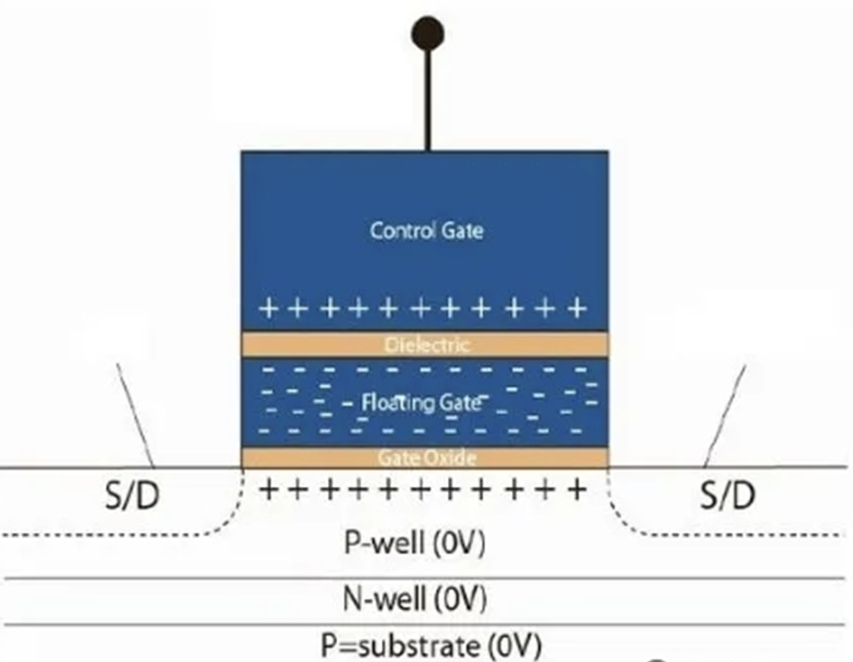 MRAM Structure Diagram (Source: Network)The 16nm FinFET process brings significant performance improvements to the S32K5. The Cortex-R52 and Cortex-M7 cores operate at speeds up to 800 MHz, providing ample computing power to handle real-time control tasks.More advanced processes also enhance energy efficiency, which is particularly important for always-on area controllers, helping to reduce overall vehicle energy consumption.
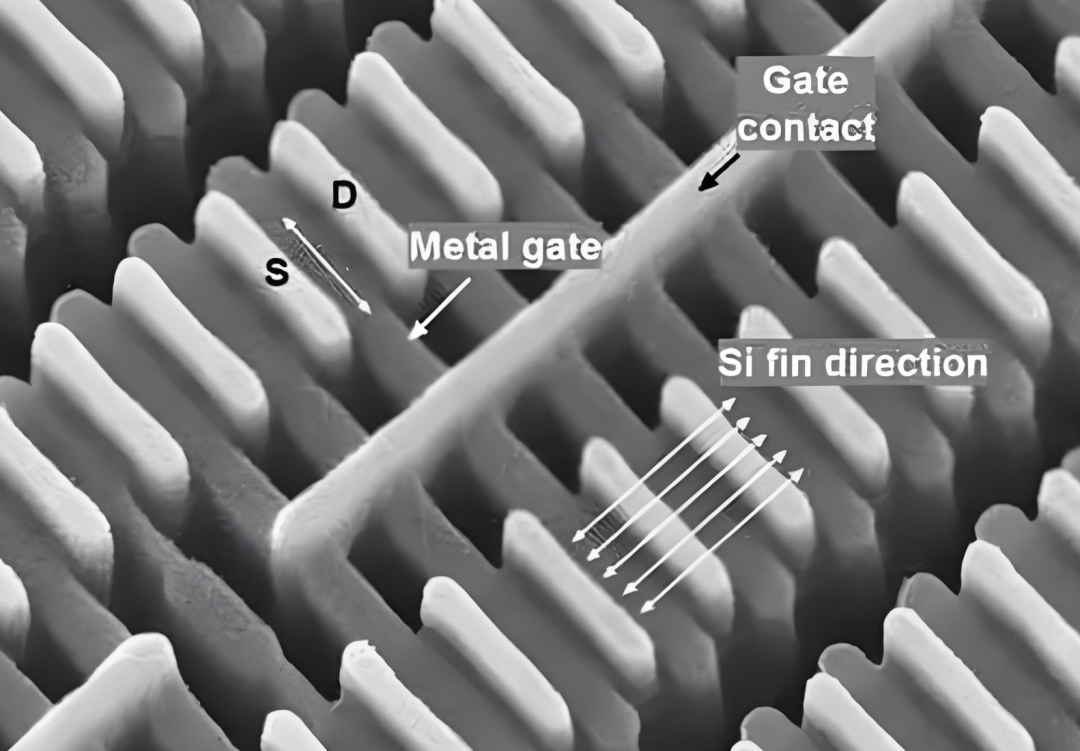 FinFET Process (Source: Network)Process advancements also allow for higher integration, with the S32K5 integrating a 2.5 Gbps Ethernet switch, CAN-XL interface, MACsec security encryption, and a dedicated neural network processing unit (NPU), achieving a high level of integration of multiple functions on a single chip, reducing the number of external components and improving system reliability.The platform has researched and summarized its main features and advantages as follows:
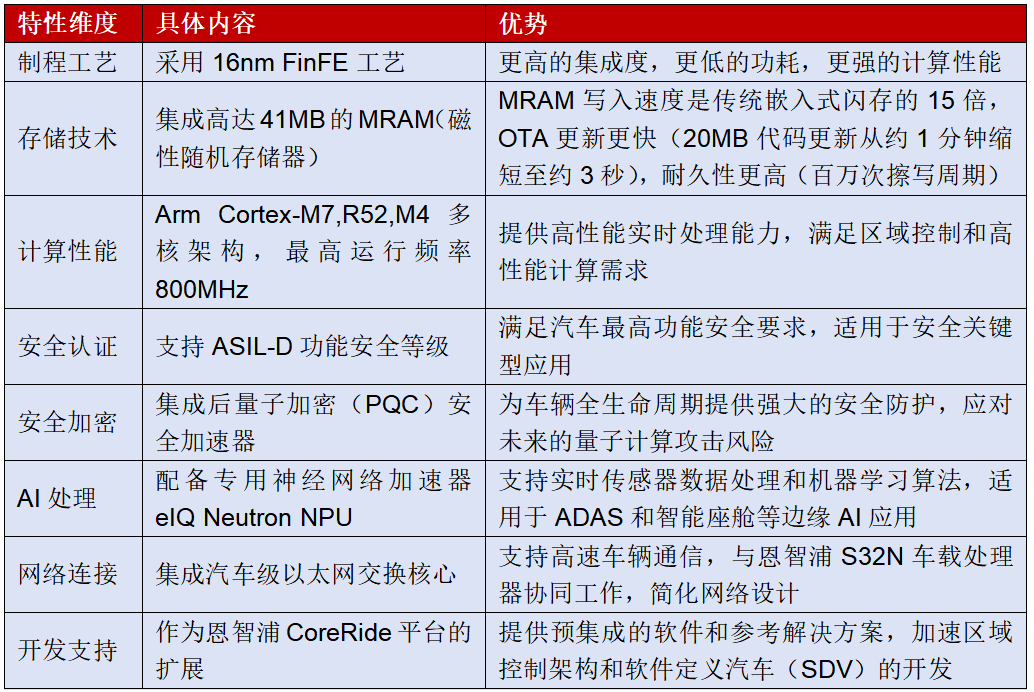 Can it help NXP “turn the tide” and consolidate or even enhance its position in the fierce market competition?
Market Background
02. Market Background
The release of the S32K5 series comes at a time of intense competition and rapid change in the automotive chip market.
Competitive Landscape
According to a report by TechInsights in 2024, Infineon ranks first among global automotive microcontroller suppliers with a market share of 13.4%, while NXP ranks second with 10.4%, followed by STMicroelectronics (8.8%), Texas Instruments (8.4%), and Renesas Electronics (6.8%).The top five manufacturers hold a significant market share, but the gap between leaders and challengers is narrowing.According to TechInsights’ latest market research, Infineon has risen to first place in the European automotive semiconductor market with a 14.1% share in 2024, up from second place in 2023, and has moved up to second place in the North American automotive semiconductor market with a 10.4% share, up from third place in 2023.Meanwhile, Infineon’s share in the global MCU market continues to rise, leading the second place by 2.7%.Additionally, Infineon remains the leader in the largest automotive semiconductor market – China, with a market share of 13.9%, and continues to lead in South Korea with a 17.7% market share, while holding second place in Japan with a 13.2% market share.
Market Pressure and the Rise of New Forces in China
The global automotive semiconductor market is projected to be $68.4 billion in 2024, down 1.2% from $69.2 billion in 2023, but is expected to grow rapidly in the long term, reaching $132 billion by 2030. This presents significant opportunities but also means more intense competition.Although the overall localization rate of Chinese automotive MCU manufacturers remains low, they are rapidly developing under policy support and market demand.Companies such as GigaDevice, BYD Semiconductor, and Chipone have made progress in the automotive-grade MCU field and are gradually entering the supply chains of well-known domestic and international automotive brands.China has also set a target of 25% localization rate for automotive chips by 2025, which will pose challenges to international manufacturers.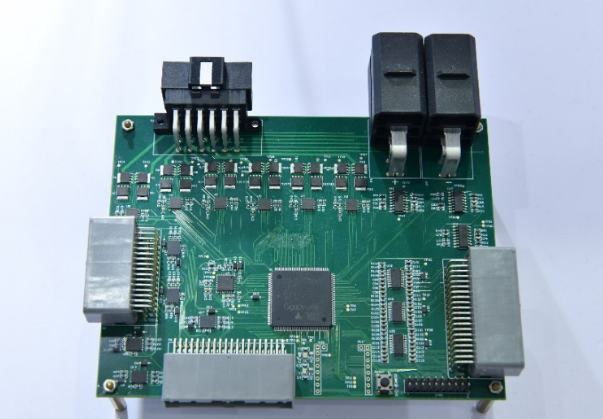 Body Control Reference Design Based on GD32A72x(Source: GigaDevice official website)
Opportunities and Challenges
03. Opportunities and Challenges
Opportunities
The S32K5 series MCU, with its advanced technology, brings the following opportunities for NXP:Technological Leadership: The advantages of S32K5 in process technology, storage technology, processing performance, safety, and OTA update efficiency provide strong competitiveness in addressing software-defined vehicles and regional architecture transformations.Entry into High-Growth Areas: Its characteristics are well-suited for emerging applications such as area controllers, high-performance gateways, smart chassis control, and electrified power systems, which are key areas for future growth in automotive electronics.Strengthening the Ecosystem: By providing pre-integrated software and reference solutions through the Core Ride platform, NXP can bind more automakers and Tier-1 suppliers, strengthening its ecosystem.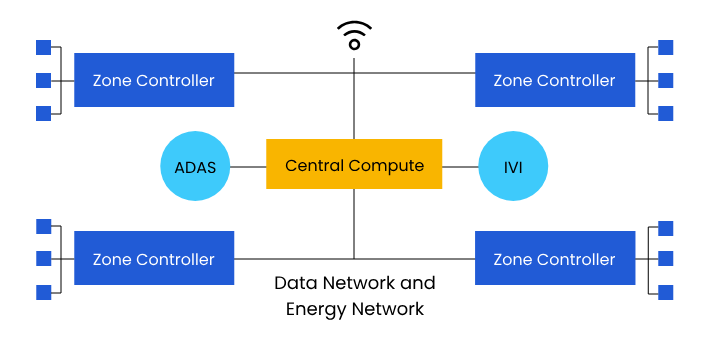 CoreRide Electronic and Electrical Architecture (Source: NXP official website)
Challenges
NXP also faces numerous challenges:Intense Market Competition: Traditional giants like Infineon, Renesas, and STMicroelectronics are strong; Qualcomm, NVIDIA, and others are powerful in high-performance computing; and Chinese manufacturers like Horizon Robotics and Black Sesame are also growing rapidly.Cost and Capacity Considerations: The advanced 16nm process and new MRAM technology may bring higher cost and capacity pressures. Automotive chips have extremely high requirements for reliability and consistency, and large-scale mass production requires time for adjustment.Technology Iteration and Market Acceptance: Although MRAM has obvious advantages, its long-term reliability and stability still need to be tested in harsh automotive environments. Automakers are usually cautious in adopting new technologies.Vertical Integration Trend: Some automakers (such as Tesla, BYD, and NIO) are beginning to develop their own chips, which may change the traditional supply chain model and pose challenges to traditional chip suppliers like NXP.
Prospect Outlook
04. Prospect Outlook
The launch of NXP’s S32K5 series MCU undoubtedly provides a powerful tool for automotive manufacturers to build more modular, safe, and efficient vehicle architectures, accelerating the transition of automotive design to partitioned architectures and promoting the development of software-defined vehicles.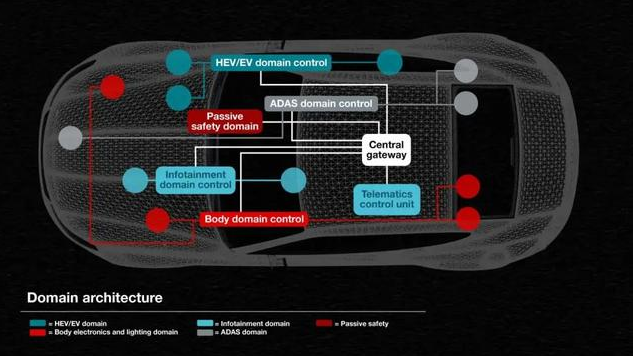 Domain Architecture (Source: Network)From a market application perspective, the S32K5 will begin sampling in the third quarter of 2025, and as it gradually enters mass production and application, it is expected to occupy an important position in the automotive electronics market, injecting new vitality into the upgrade of the automotive industry.Automakers can leverage the powerful performance and features of the S32K5 to develop more innovative and competitive automotive products, meeting the growing consumer demand for automotive intelligence, safety, and convenience.From the perspective of industry development trends, the emergence of the S32K5 sets a new benchmark for the entire automotive MCU industry, inspiring other manufacturers to increase their investment in technology R&D and innovation. NXP’s S32K5, as a significant innovation in the automotive MCU field, with its outstanding performance in process technology, storage technology, functional performance, and safety protection, opens up new avenues for the development of automotive electronics, becoming a key driver in the automotive industry’s transition to software-defined vehicles and partitioned architectures, and its far-reaching impact deserves our continued attention and in-depth discussion.
Previous Recommendations >
Previous articles
Unveiling the Power of Avita 11: The Master of Battery Control from CATL – NXP MC33771

Must-Read for Engineers! How the World’s Smallest MCU MSPM0C1104 Disrupts Compact Design?

The Hexagonal Warrior in 32-bit Entry-Level MCUs (ARM Cortex-M3 Core) – STM32F103 Series

New Releases Flooding the Automotive Market, Let’s Take a Look at the Traffic King in Automotive MCUs – S32K3