
Semiconductor manufacturing materials have long been dominated by Japan. In particular, Japan’s photoresists and high-precision silicon wafers play a crucial role in the global semiconductor supply chain. In recent years, Japan has leveraged its material advantages to exert significant influence over South Korea, a major semiconductor manufacturing nation, amid tensions in Japan-South Korea relations.
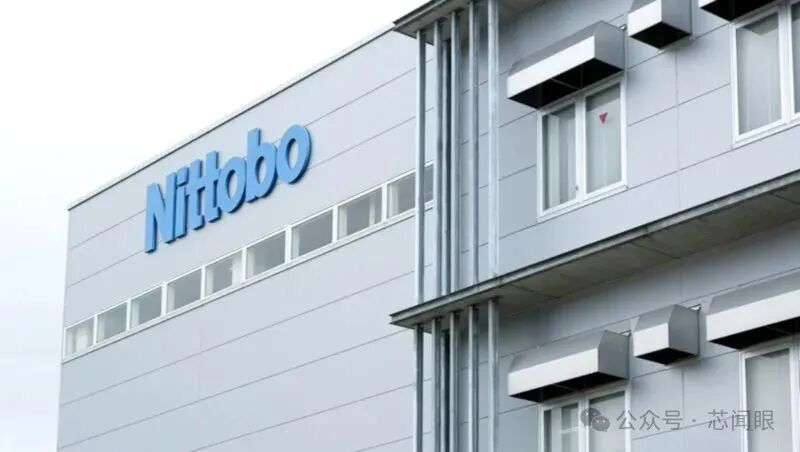
According to foreign media reports: As the global AI boom continues to heat up, a lesser-known material, low thermal expansion coefficient (CTE) fiberglass cloth T-glass, has become a key raw material that major tech giants are scrambling to acquire. This material is exclusively produced by Japan’s Nittobo and is critical for the packaging and stability of AI server chips.
Japan’s advantageous position in this material once again highlights the unique characteristics of its industry, showcasing its strong capabilities in niche sectors of critical industries.
What is T-glass?
T-glass is a high-rigidity, dimensionally stable glass cloth that effectively prevents substrate warping during advanced packaging processes, significantly improving the yield and heat dissipation efficiency of AI chips. This material is widely used in high-end chip substrates and server motherboards, serving as the foundation for high-speed data transmission and stable computing.
Currently, Nittobo is the only company in the world capable of stably mass-producing the highest-grade T-glass, supplying major AI players such as Nvidia, Microsoft, Google, and Amazon.
Surging Demand, Tight Supply Chain
According to supply chain sources, since the second half of 2023, Nittobo’s T-glass production capacity has been continuously at full load. Major PCB and chip substrate manufacturers in Taiwan, such as Unimicron, AT&S, and Kingboard, have visited Nittobo multiple times in hopes of expanding their procurement quotas, but due to resource scarcity, most companies can only passively wait for delivery.
Nittobo has announced an investment of 80 billion yen to expand production lines in Japan and Taiwan, aiming to double its semiconductor material capacity in Taiwan by March 2028.
Meanwhile, seeing the market gap left by Nittobo’s monopoly, Taiwanese glass company (Taiwan Glass) has urgently initiated production line transformation plans, with mass production of T-glass materials expected by the end of the year. Samples are currently undergoing certification processes, starting with CCL manufacturers for the first phase of testing, followed by chip substrate manufacturers, and finally certification by end customers such as Nvidia and AMD.
Insiders have indicated: “Nvidia is very anxious about the supply bottleneck, and once Taiwan Glass passes certification, the market landscape is bound to change.”
END
Compiled by:Chip News Editorial Team
Images: Internet
 Scan to Follow Us
WeChat Search: Chip News