

Clickthe blue text “Ship Machine Help” to follow us
Don’t panic about ship machine failures, consult Ship Machine Help when in doubt

Introduction
A certain offshore drilling platform’s main power station is equipped with two Wärtsilä W9L34DF dual-fuel diesel engines as its main power generators (hereinafter referred to as “main engine”).
The main engine utilizes the UNICC3 embedded engine management system, which integrates sensor signals through the Controller Area Network (CAN) bus to achieve functions such as switching between diesel/gas dual modes, knock suppression, and real-time data monitoring. This system mainly includes several components: Local Control Panel (LCP), Main Control Module (MCM), Input/Output Module (IOM), Engine Safety Module (ESM), and Power Distribution Module (PDM).
The ESM module is primarily used for basic safety control of the diesel engine and receives signals from external relevant sensors to implement protective automatic shutdown of the main engine[1].
The main engine employs external seawater cooling, which includes two levels of cooling media: the first level is seawater, and the second level is freshwater containing additives, divided into high and low-temperature water.
The low-temperature water flow is as follows:
Low-temperature water pump → Air cooler → Lubricating oil cooler → Generator end.
The high-temperature water flow is as follows:
High-temperature water pump → Cylinder liner → Turbocharger.
High-temperature and low-temperature water are interconnected through a temperature control valve.
The cooling system schematic is shown in Figure 1.
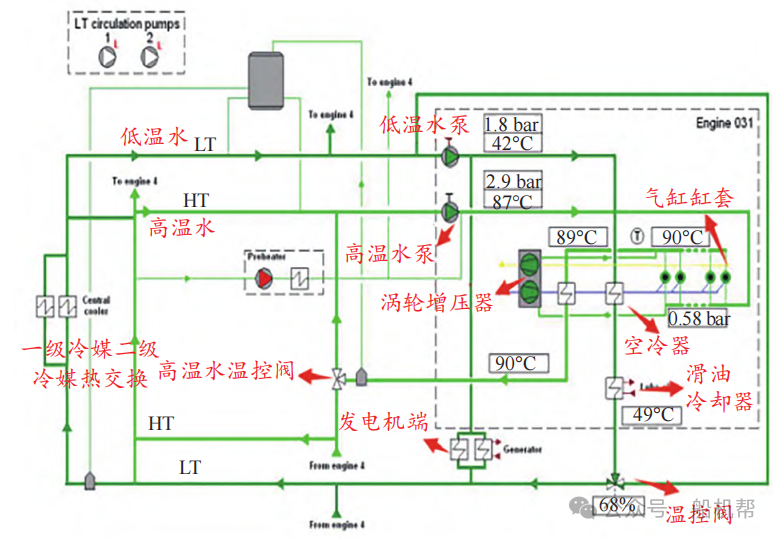
Figure 1: Cooling System Schematic of W9L34DF Dual-Fuel Diesel Engine Unit
1. Fault Phenomenon and Preliminary Analysis
1. Fault Phenomenon
The Wärtsilä W9L34DF main engine has experienced multiple shutdowns during operation due to “shutdown prewarning” (code XS7323) and “HT water temp shutdown status is 4011” (high-temperature water temperature shutdown alarm). The relevant process information is summarized as follows:
Before the main engine shutdown, the average load of the unit was approximately 780 kW (load rate about 20%), with a constant speed of 750 rad/min. The high-temperature water outlet (TE402) temperature was approximately 89.0±0.5℃, and the cylinder liner water temperature was approximately 100.0±0.3℃.
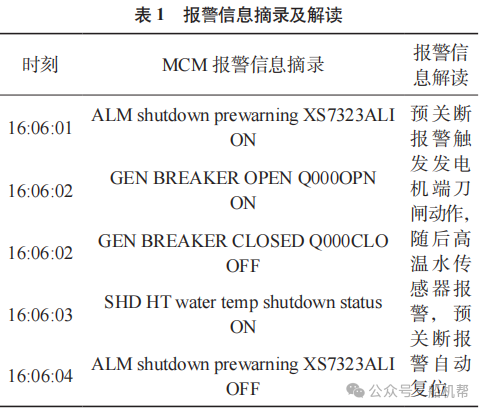
When the main engine was shutting down, the WOIS (monitoring computer) displayed a “shutdown prewarning” (shutdown prewarning, code XS7323) fault alarm trigger. After 0.01 s, GEN BREAKER OPEN (generator breaker open) and GEN BREAKER CLOSED (generator breaker closed) were triggered, followed by the triggering of “HT water temp shutdown status is 4011” (high-temperature water temperature shutdown alarm) after another 0.01 s, ultimately leading to the shutdown of the unit.
After replacing the temperature sensor TEZ402 and conducting a load test with the ESM module, the fault persisted. The relevant alarm information is excerpted and interpreted in Table 1.
2. Fault Correlation Logic Analysis
The shutdown circuit logic of the W9L34DF dual-fuel diesel engine indicates that if several shutdown signals are activated during reset, the LCP will display all activated shutdown signals.
Based on the above shutdown circuit logic and the alarm signal analysis in Table 1, the main input signals are identified as Shutdown prewarning XS7323 (pre-shutdown alarm signal) and SHD HT water temp shutdown status (high-temperature water temperature sensor temperature) signal.
By consulting the equipment manual, the triggering of the shutdown prewarning signal can be attributed to the following five possible causes:
1) HT-temperature shutdown A high-temperature water temperature sensor (TEZ402);
2) Lubricating oil pressure shutdown lubricating oil pressure signal (TEZ201);
3) Main controller shutdown main control module shutdown command;
4) OMD Shutdown oil mist probe shutdown signal output to Engine shutdown 1;
5) External shutdown 1, 2, and 3 diesel engine external signal triggers (generator end bearing temperature, main engine bearing temperature, and main engine cylinder liner water temperature signal processing results input).
The ESM module receives the above information to trigger the shutdown prewarning XS7323 signal.
For example, the ESM safety module receives the high-temperature water temperature sensor TEZ402 signal, which is converted internally and outputs a 4~20 mA current signal to MCM-1 (main control module). When the temperature exceeds the limit or the sensor fails, the ESM activates the shutdown protection logic (with a delay of 2 s). When the shutdown limit is exceeded but before executing the engine shutdown, this signal is activated (ESM safety module) and transmitted to MCM-1 (monitoring module 1), which is then transmitted via CAN to CCP (central control panel) to close the relay contact K26.
(This signal is typically used to trip the equipment when the load step exceeds the acceptance limit of the remaining generator sets.)
According to the pre-shutdown alarm signal processing mechanism, TEZ402 and TEZ402-1 collect data and take the larger value to display on the Wärtsilä Indicator Panel (WIP). The W9L34DF model only connects TEZ402 to the ESM module for voting.
The shutdown trigger conditions are as follows:
1) When the sensor fails, it generates the HT Water Temp Failure signal → triggers HT Water Temp A Shutdown during diesel engine operation → alarm displayed on the LCP panel via the MCM-1 module.
2) When the temperature exceeds the limit, the detected value ≥ 105℃ set threshold (2s filtering confirmation) → triggers HT Water Temp A Shutdown during diesel engine operation → alarm displayed on the LCP panel via the MCM-1 module.
2. Processing Procedure
1. Potential Fault Judgment
Based on the operational monitoring data of the W9L34DF engine, the cooling system faults can be preliminarily ruled out. Based on the ESM logic and signal link, the cause of the fault is initially judged from simple to complex, focusing on the following three aspects:
1) Abnormal temperature detector:
Pt100 sensor damage or poor contact;
Signal transmission line faults, poor contact, grounding faults, etc.
2) Module and systemic functional disorders:
ESM module faults, signal processing or voting logic errors.
Cooling system operation anomalies:
Internal bubbles causing localized overheating[2].
3) Causes of XS7323 pre-shutdown alarm signal:
Other signal false alarms interference.
2. Fault Troubleshooting
1) Temperature detector abnormalities
PT platinum thermistor uses a three-wire connection method.
This eliminates measurement errors caused by the resistance of the connecting wires. The internal structure is shown in Figure 2.
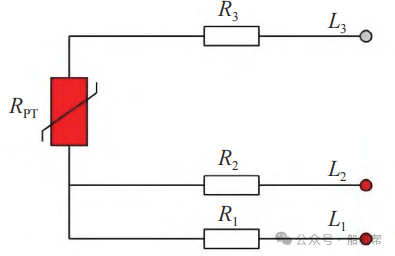
Figure 2: Internal Principle of Platinum Resistance PT100
In the main engine room, under high temperature, high-frequency vibration, and strong magnetic environments, sensors often become loose, platinum wires may break, and insulation layers may age or become damaged, potentially leading to short circuits or signal interference.
Inspection and Testing:
Upon inspecting TEZ402, slight looseness was found. After tightening, the fault persisted under a 20% load. The temperature sensor was disassembled for visual inspection, and it appeared intact with no damage, as shown in Figure 3.
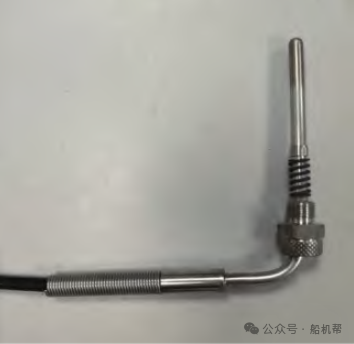
Figure 3: Old PT100 Physical Object
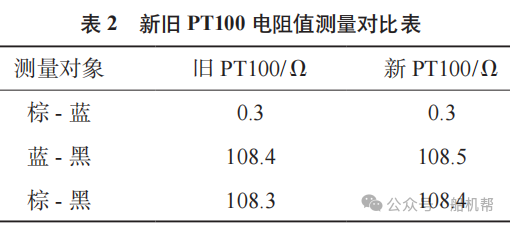
Using a multimeter to measure the resistance of temperature sensor TEZ402, the values are shown in Table 2. A new sensor was replaced (using the original wiring harness), and a test was conducted[3] under a load of 1200 kW (30% load), with a speed of 750 rad/min. The temperature sensor data was checked for drift, comparing the temperature displayed on the WIP (digital screen) for TEZ402 with the temperatures of the cylinder liner outlet temperature sensor TEZ402-1 and TE402 displayed on the LCP. The high-temperature water temperature remained stable (inlet 87℃, outlet 90~91℃) for 2 hours.
The alarms SHD HT water temp shutdown status and ALM Shutdown prewarning were triggered.
The new probe and new wiring harness were directly connected to the ESM module, and it operated stably under a 20% load for 24 hours.
Comparative measurements of the new and old resistances from the ESM module were taken, as shown in Table 3.
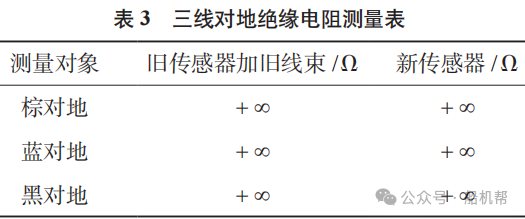
Comparing the grounding resistance values revealed no grounding faults.
Reconnecting the new probe with the old wiring harness under a 20% load test still resulted in the same fault, indicating a possible grounding fault in the wiring harness.
Verification:
The old PT100 was directly connected to the ESM module using a new armored soft wire, and it operated under a 40% load for 24 hours without faults. The root cause was identified as a grounding fault in the old wiring harness, which was confirmed by finding slight damage at the bend of the old sensor wiring harness.
2) Module and systemic functional disorders
Module faults:
After replacing the ESM module and running under a 20% load, the same alarms were still triggered, ruling out hardware faults in the module.
Cooling system operation anomalies:
External inspection of the cooling water circuit was conducted, checking the machine body, intercooler, and expansion tank. The vent pipe valve was fully open, and the cooling water tank level was 1m (greater than 0.32 m), ruling out cooling water level interference.
The pressure of the first-level refrigerant (seawater) was 0.8 bar, with both the first-level and second-level refrigerant valves fully open. The inlet temperature of the first-level refrigerant (seawater) was 26℃, and the outlet temperature was 30℃. The inlet temperature of the second-level refrigerant (freshwater) was 52℃, and the outlet temperature was 26℃, all within normal ranges. The high and low-temperature water operation temperatures in the main engine were normal, and the vent pipe of the cooling water circuit was fully open, ruling out cooling system flow interference.
3) XS7323 pre-shutdown alarm signal
The priority of alarm types for the W9L34DF model is HT Water temp A Shutdown > ALM. Shutdown prewarning. Based on the shutdown circuit logic, other signal false alarm interferences can be ruled out.
3. Conclusion
1. Fault Mechanism
The TEZ402 sensor wiring harness aging and damage, under the vibration of the machine body, caused a grounding fault, leading to signal drift of the sensor and triggering the protective shutdown mechanism of the W9L34DF diesel engine ESM safety module.
2. Management Optimization Suggestions
1) Adjust maintenance strategies:
According to Wärtsilä’s announcement, replace IOM/ESM modules every five years to avoid signal anomalies caused by aging electronic components. Sensors such as lubricating oil pressure sensor TEZ201, speed sensors ST173/ST174, and high-temperature water TEZ402 have a lifespan (flashing times / years), and a regular equipment ledger should be maintained for timely replacements.
2) Mode adjustments:
For W9L34DF units not using gas mode, it is recommended to disable the ignition oil circuit function through MOC (Management Change) to reduce the risk of redundant system sensor faults.
3) Optimize logical judgment:
It is suggested to modify the voting logic of the ESM module to include TEZ402-1, adopting a two-out-of-one voting logic to improve fault tolerance of the sensors.
4) LCP control cabinet optimization[4]:
The W9L34DF main engine adopts a modular design with a high degree of integration and compact structure. However, the I/O, IOM, and MCM modules are located on the machine body, where high temperatures and vibrations can accelerate module aging and cause loose connections.
Therefore, a control cabinet should be specially designed near the machine body to reduce the impact of high temperatures and vibrations.
3. Quick Fault Troubleshooting Summary
(1) System-level fault localization
1) When the equipment experiences an abnormal shutdown, immediately retrieve the historical alarm records from the LCP Human-Machine Interface (HMI) (including alarm codes, trigger times, and priority information).
2) Physically check the status of the ESM: observe the sequence of status indicator lights on the back of the module (including power status, CAN bus communication, I/O channel abnormal indicators), and verify the voltage fluctuation range of the dual-redundant power supply system (required within ±5%).
(2) Multi-channel signal anomaly handling plan
When the detection system shows ≥3 measurement points with simultaneous alarms (typical such as lubricating oil pressure, cylinder liner water temperature, fuel pressure, etc.), prioritize execution.
1) Ground integrity testing:
Quickly determine by adjusting delays and grounding resistance values, using a megohmmeter to measure the insulation resistance of the sensor shielding layer to ground (standard value > 100 MΩ/500 VDC).
2) Common-mode interference elimination:
Incorporate differential isolation modules into the signal circuit to detect common ground voltage offsets (threshold < 50 mV).
References
[1]Ding Zhengqian, Li Jianlun. Analysis of Overspeed Alarm Fault in Wärtsilä Diesel Engine[J]. Internal Combustion Engine and Accessories, 2024 (10): 82-84.
[2]Jian Xingwang. Analysis of Abnormal Water Temperature Causes in Wärtsilä 6R22/26 Diesel Engine[J]. Guangdong Shipbuilding, 2003 (2): 25-26.
[3]Cao Guangpeng. Field Calibration of Thermistors and Their Digital Display Instruments[J]. China Standardization, 2024 (24): 213-216.
[4]Sheng Weiming, Zhang Jiahong. Fault Characteristics and Analysis of Wärtsilä W38 Main Engine Monitoring System[J]. China Equipment Engineering, 2019 (9): 72-74.
The original author is:
China National Offshore Oil Corporation (CNOOC) Shenzhen Branch
Pan Jianren, Yang Zuming, Ding Zhengqian

·END·