
On December 16, after 7 months, the first “Dream Cup” National College Student Smart Hardware Design Competition quietly concluded. In this competition, a total of 840 teams from 274 universities across the country participated in fierce competition, with 111 undergraduate teams standing out in the preliminary round and successfully entering the finals. Students from the School of Medical Information Engineering performed excellently, with one team winning the national second prize, one team winning the national third prize, and three teams receiving national excellence awards.
Introduction to the “Dream Cup”
The first “Dream Cup” National College Student Smart Hardware Design Competition is hosted by the China Electronics Society, organized by Beihang University and Shenzhen Information Vocational Technology College, co-organized by Beijing Jiechuan Yongheng Technology Co., Ltd., Shenzhen Jialichuang Technology Development Co., Ltd., Fengke (Shenzhen) Technology Co., Ltd., and Electronic Enthusiast Network, with media support from China Education Television. The competition is divided into five regional divisions: East, West, South, North, and Central.
The competition aims to align with the development trend of the smart hardware industry, stimulate young students’ enthusiasm for smart hardware technology research and study, and cultivate high-quality talents for China’s innovation-driven development strategy. It is oriented towards actual social needs and focuses on cutting-edge industry technologies. The competition includes online written tests on basic knowledge, simple circuit design, and programming assessments, covering knowledge in circuits (analog circuits, digital circuits, PCB design), processors (Arduino, microcontrollers, Raspberry Pi, embedded systems, FPGA, pocket machines), and interface modules (sensors, IoT, motor control), among others.
The competition is held every two years, with the finals adopting an open topic format, focusing on engineering innovation and product development. Through collaborative design of software and hardware, product prototypes are created to achieve intelligent data processing and information interaction. The entries are evaluated based on practicality, user-friendliness, innovation, and leadership, aiming to cultivate college students’ innovative practical abilities and instill a sense of national pride and mission in science and technology.
National Finals Award List
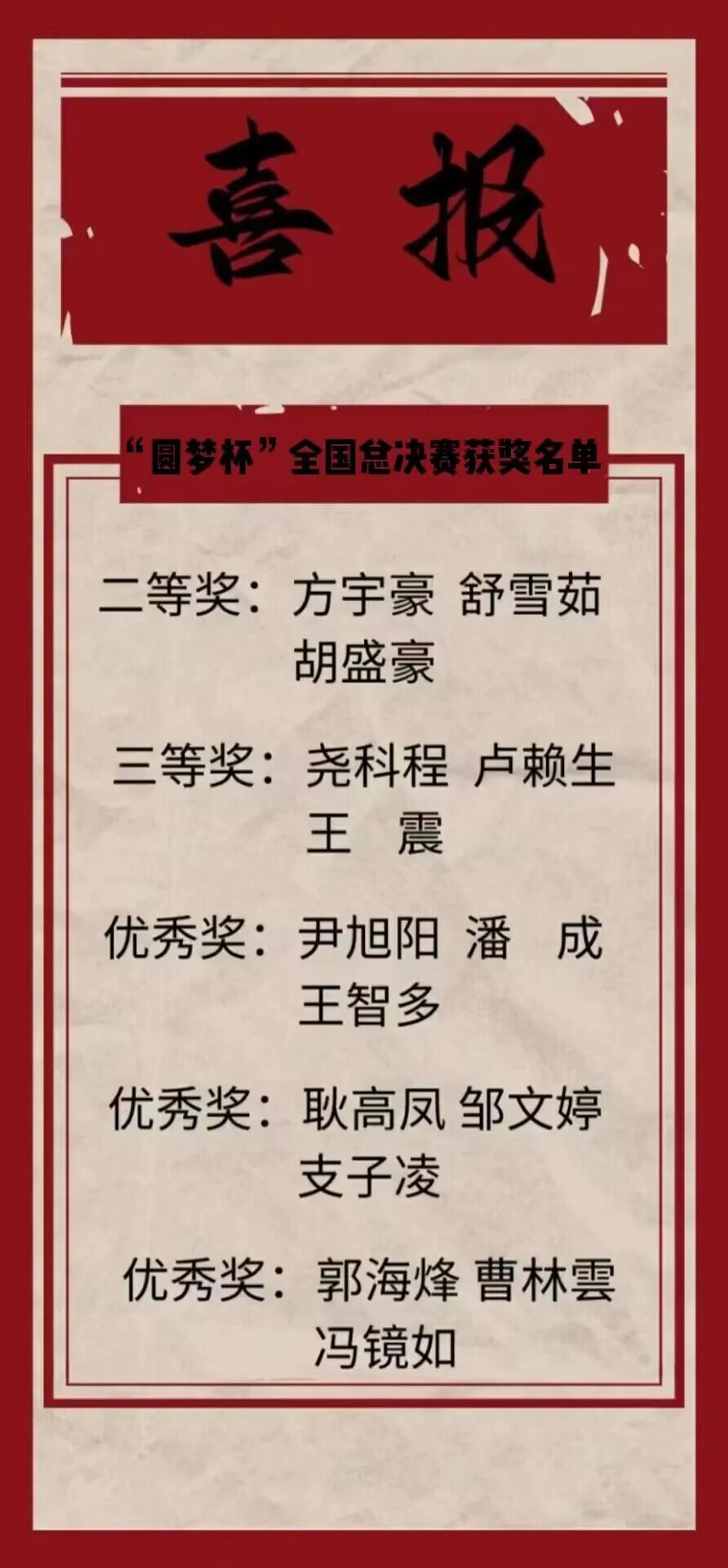
Second Prize
“Portable Heart Rate and Blood Oxygen Measurement Device”
Awarded Students: Fang Yuhao, Shu Xueru, Hu Shenghao
Third Prize
“Mobile Temperature Measurement Car”
Awarded Students: Yao Kecheng, Lu Laisheng, Wang Zhen
Excellence Award
“Intelligent Epidemic Prevention Access Control System”
Awarded Students: Yin Xuyang, Pan Cheng, Wang Zhido
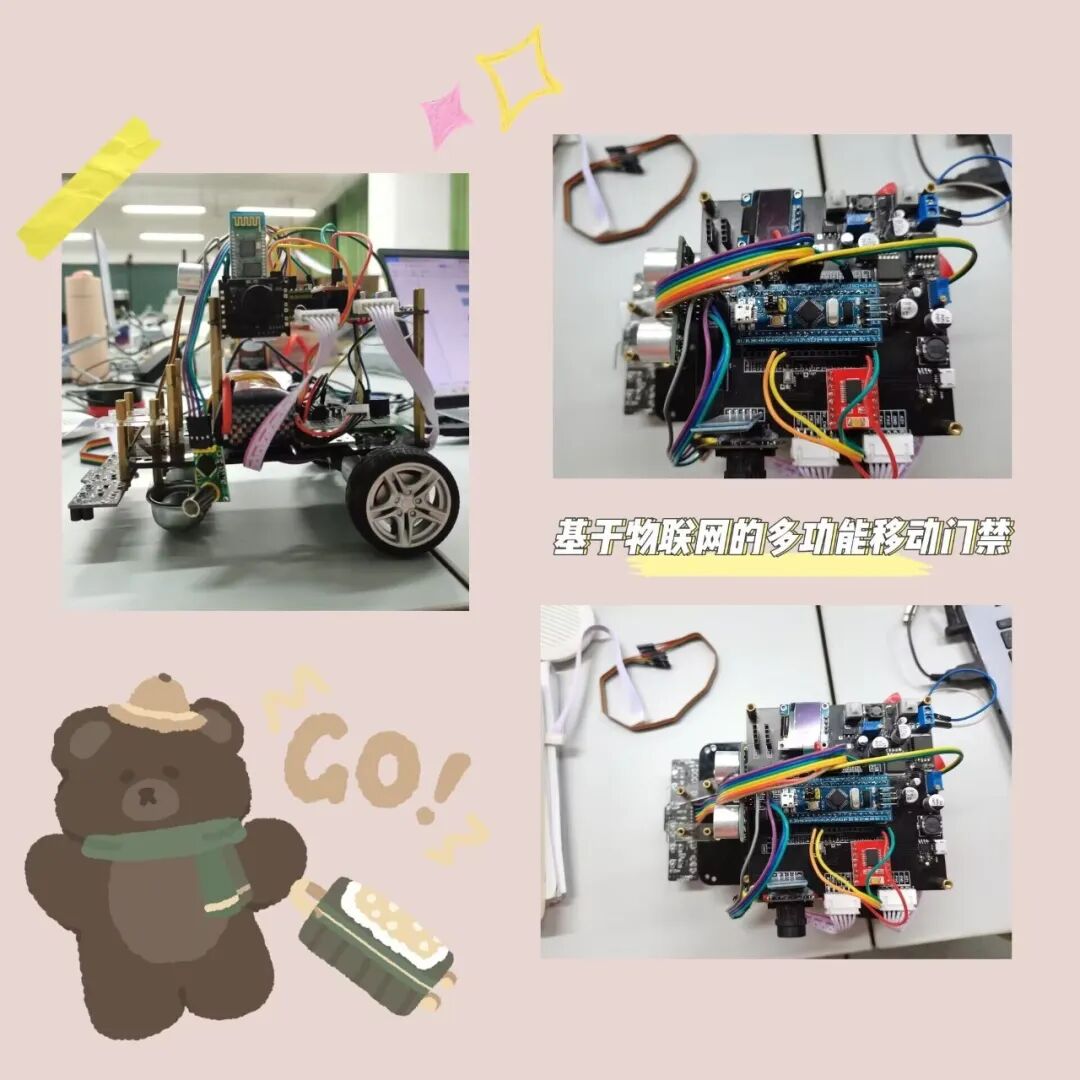
“IoT-Based Multifunctional Mobile Access Control”
Awarded Students: Geng Gaofeng, Zou Wenting, Zhi Ziling
“Portable Human Infrared Temperature Measurement Device”
Awarded Students: Guo Haifeng, Cao Linyun, Feng Jingru
Awarded Works
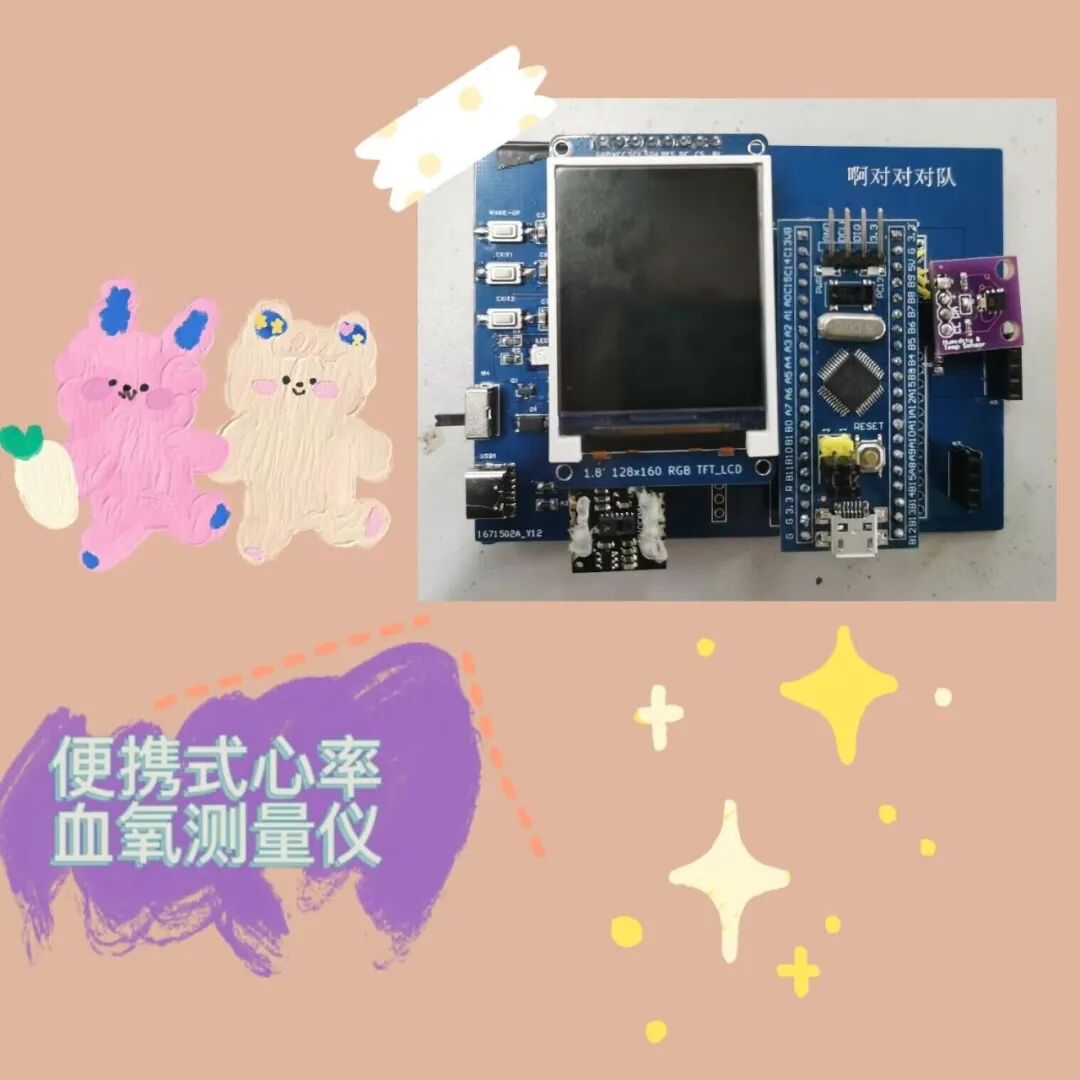
“Portable Heart Rate and Blood Oxygen Measurement Device”
Two functions in one device, portable for daily life, intelligent innovation. This product is based on the STM32F103C8T6 main control chip, consisting of a MAX30102 heart rate and blood oxygen detection sensor, an LCD display module, and an HTU21D temperature and humidity sensor, with a 3D printed shell for portability. The MAX30102 sensor detects heart rate and blood oxygen data, which is transmitted to the chip. The chip processes the data and calculates accurate heart rate and blood oxygen values using algorithms, which are then displayed on the LCD screen, achieving a heart rate and blood oxygen interface. The HTU21D sensor detects the environmental temperature and humidity, and similarly calculates accurate values displayed on the LCD. Users can switch between the two interfaces using buttons on the product.
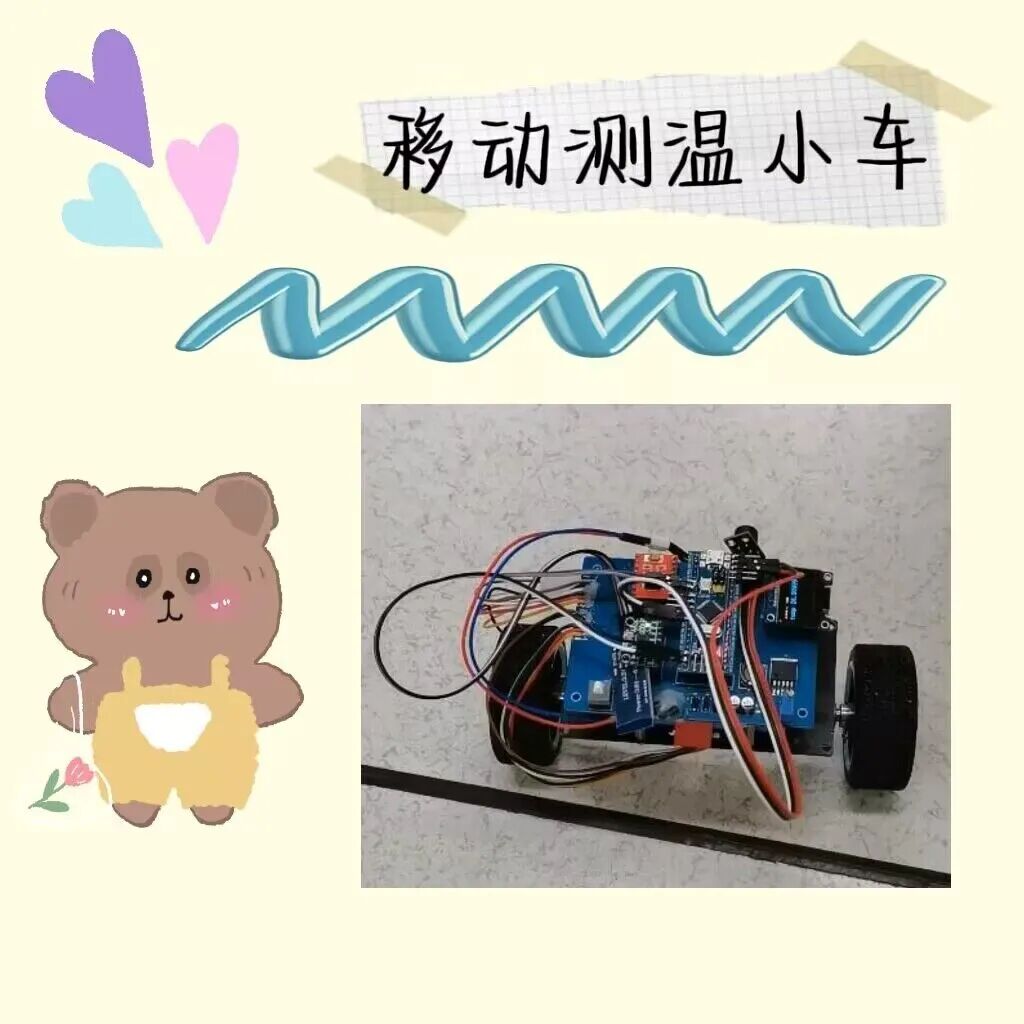
“Mobile Temperature Measurement Car”
Using the STM32F103C7T6 as the main control chip, equipped with various modules such as an OLED module for temperature display, a temperature measurement module, a Bluetooth module, and a TB6612 module to achieve various functions. This project can control the car’s movement via Bluetooth and measure human body temperature, allowing for remote temperature measurement to reduce the risk of infection.
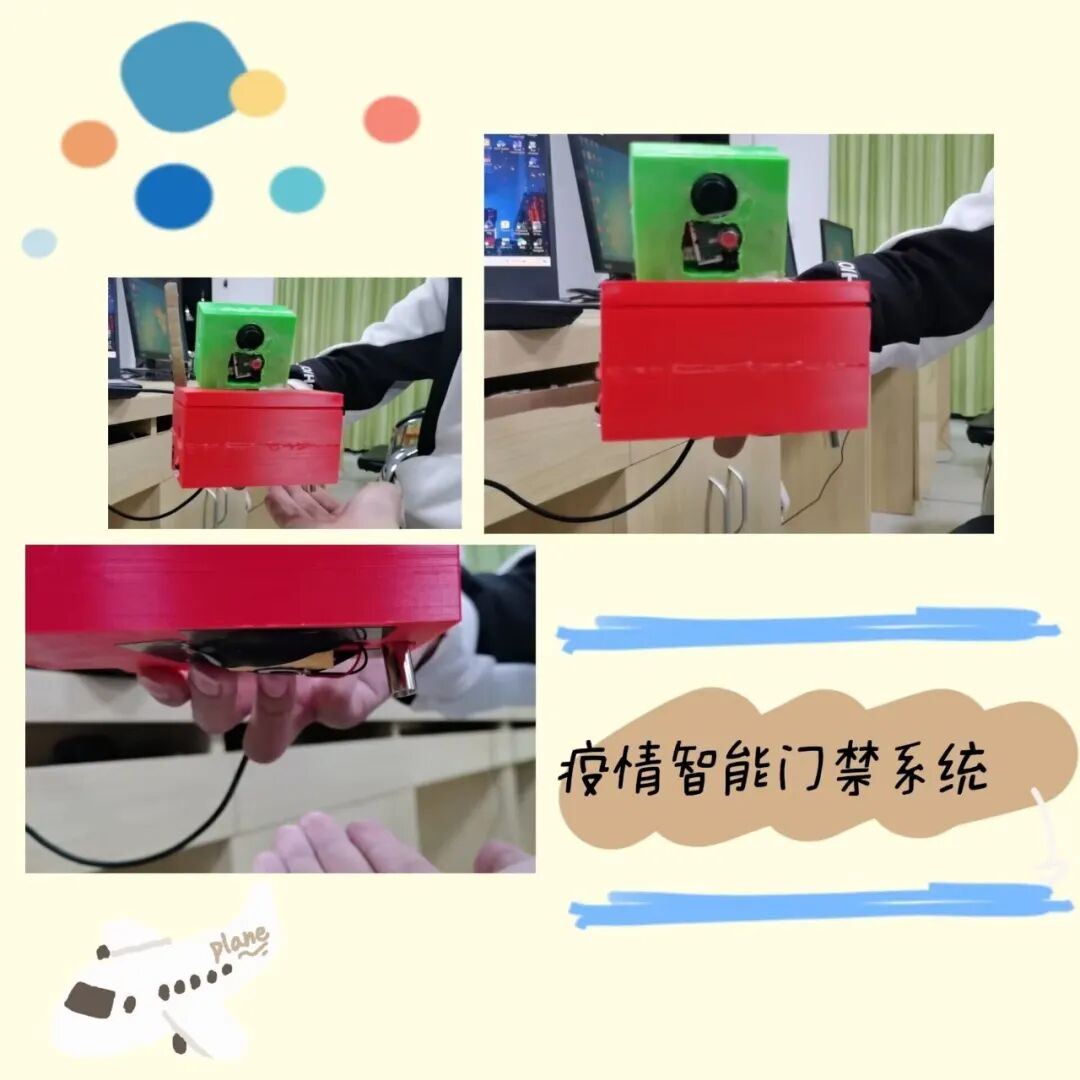
“Intelligent Epidemic Prevention Access Control System”
When a person is detected in front of the camera, the camera will perform mask recognition. The person can undergo contactless temperature measurement outside the door, and if the body temperature exceeds 37.7 degrees, an alarm will be triggered. The person can also undergo contactless disinfection outside the door. If the person is wearing a mask and has a normal temperature, the intelligent epidemic prevention access control will automatically open the door.
This project uses the STM32L431RCT6 as the main control chip, with OpenMV for automatic detection of whether the person is wearing a mask, a DS3120 servo to simulate automatic door opening, and a LU90614 human infrared temperature measurement module for contactless automatic temperature measurement, along with a USB atomization module for contactless automatic disinfection.
“IoT-Based Multifunctional Mobile Access Control”
Using the STM32F103C8T6 development board as the control core of the device, various sensors in the device collect data. Data is transmitted to the development board via the USART port, allowing the device to generate different feedback based on different data. It breaks the limitations of traditional access control, enabling temperature measurement, detection, and recognition, greatly enhancing the flexibility and multifunctionality of the access control system.
“Portable Human Infrared Temperature Measurement Device”
Based on the STM32F103C8T6 main control chip, it uses the MLX90640ESF_BAA/BAB 32*24 pixel infrared temperature sensor to collect infrared data and send it to the chip. After processing the infrared data, the chip displays images and human body temperature on the LCD screen. It can measure high-temperature, radiative, high-purity objects, as well as objects with poor thermal conductivity, small heat capacity, and tiny targets. It can also measure moving objects and the surface temperature of solids and liquids. It features fast response, wide measurement range, high sensitivity, no interference with the measured temperature field, and minimal thermal inertia error, making it suitable for microscopic and long-distance measurements.

In recent years, the college has actively encouraged students to participate in various subject competitions, promoting learning through competition and project-driven approaches to enhance students’ interest in learning, cultivate self-learning abilities, and foster innovative practical skills. In multiple competitions, students have demonstrated excellent innovation capabilities, hands-on skills, and team spirit, achieving remarkable results.
Contributed by | Xie Xinyi
Typeset by | Zhang Wenxin
Initial Review by | Liu Can
Re-review by | Xie Sijia
Final Review by | Liu Zhengliang
