We will explain the technical differences, the variations in practical scenarios, as well as the similarities between the two products and their future development directions.We are constantly exploring intelligent products to make “artificial stupidity” a thing of the past.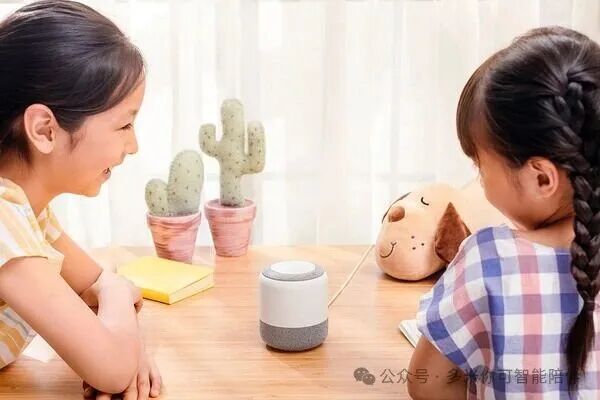
(Image source: Internet)
As smart devices become more prevalent in homes, on one side we have AI toys that can chat and tell stories with children, and on the other side, smart speakers that can control home appliances and provide information with just a voice command. Both carry the “smart” label and have attracted countless fans through voice interaction. Some believe that AI toys exhibit greater intelligence through empathetic interaction, while others argue that the ability of smart speakers to control the entire home is the core of intelligence. Today, we will analyze these two popular smart hardware products from three dimensions: interaction logic, functional scenarios, and technical core, to see which one is truly smarter.
Interaction Logic: Unidirectional Command Response vs Bidirectional Emotional Resonance
The core of judging intelligence often lies in the details of human-computer interaction, which is also the most intuitive difference between AI toys and smart speakers.
(Image source: Internet)
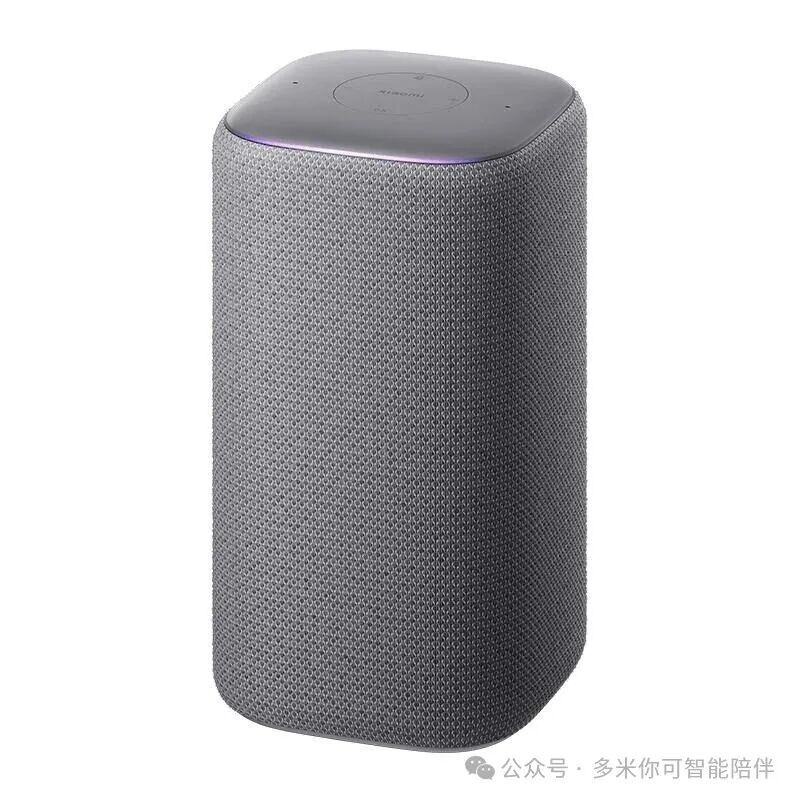
Smart speakers follow a “command – execute” unidirectional and efficient route. When you say, “Xiao Du, play children’s songs,” it starts playing; when you say, “Set an alarm for 7 AM tomorrow,” it completes the setting, and the interaction basically remains within a closed loop of single command and single feedback. Even for complex commands, such as “Set the living room air conditioner to 26 degrees and close the curtains,” it is essentially a combination of multiple functional commands, lacking the ability to actively continue a topic or perceive emotions. If you casually say, “I’m so tired from work today,” it will mostly respond mechanically with, “Make sure to rest,” making it difficult to form a warm ongoing conversation.
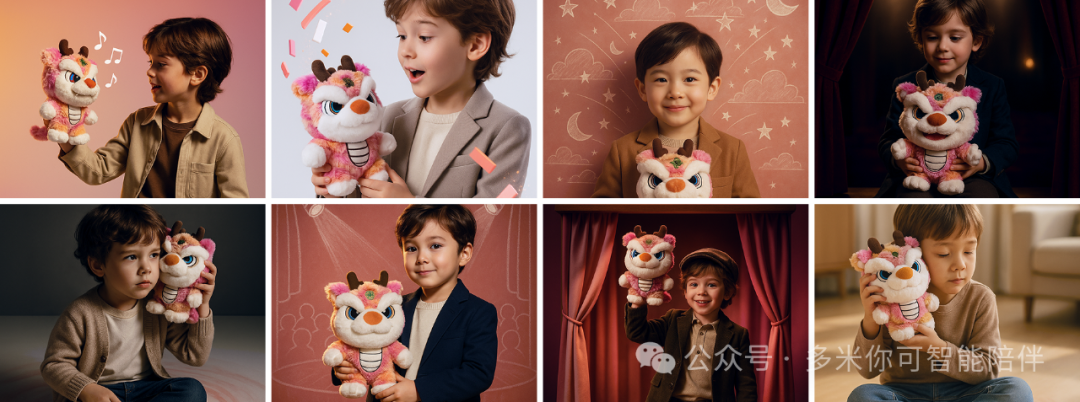
AI toys, on the other hand, break through this tool-like interaction and evolve into a “emotional companionship” interaction model. High-end AI toys equipped with emotional companionship agents can achieve a complete chain of “real-time dialogue – emotional recognition – historical analysis – interactive feedback”. For example, if a child says, “I drew a picture today,” it won’t just give a simple compliment but will ask, “Does the picture have little animals? Is it like the little rabbit you mentioned last time?” If the child sadly says, “I don’t want to do homework,” it will first empathize, saying, “Doing homework can indeed be a bit boring,” and then guide, “How about we listen to a space story for 5 minutes to gather some energy before writing?” Some AI toys can even recognize frowning, looking down, and other micro-expressions through a camera, combining voice tone to judge emotions, and when the child is sad, they may even simulate a “gentle pat” through vibrations, transforming companionship from “audible” to “perceptible”.
This difference is backed by a significant disparity in memory capabilities. AI toys use an incremental storage model, allowing them to remember user preferences and past conversation details, and even months later, they can still respond to previous topics; whereas smart speakers’ memory is often short-term and fragmented, making it difficult to form long-term user profile associations.
Functional Scenarios: Whole Home Control Hub vs Vertical Scenario Expert
The value of intelligence ultimately needs to be realized in specific usage scenarios, and the functional designs of the two target completely different family needs.
Smart speakers are undoubtedly the household “jack of all trades,” with their core advantage lying in the breadth of scenario coverage. As the central hub of smart home systems, they can be compatible with various IoT protocols such as Wi-Fi and Bluetooth, connecting hundreds of devices like smart lights, air conditioners, and door locks, creating whole home intelligence with just one command. In terms of life services, they can report news, check the weather, translate words, and connect to music platforms and audiobooks, meeting the entertainment and information needs of the entire family, young and old. Whether checking recipes while cooking or listening to podcasts while doing chores, they can seamlessly adapt, making them a great helper in enhancing family life efficiency.
AI toys, however, delve deeply into vertical scenarios, maximizing intelligence in niche areas, especially focusing on children’s education and emotional companionship. Given children’s unclear pronunciation and frequent use of reduplicated words, their voice recognition models are specially optimized to accurately understand children’s “childish language.” In education, they can push content like ancient poems, science, and picture books based on the child’s age, and can generate growth reports, marking details like “This week, the child frequently discussed space topics, showing signs of abstract thinking,” providing educational references for parents. Some AI toys aimed at elderly care even support voice cloning of family members, requiring only 30 seconds of voice material to restore over 95% of the voice tone, allowing distant elderly relatives to hear their family’s voices at any time, a form of emotional value that smart speakers find hard to replace.
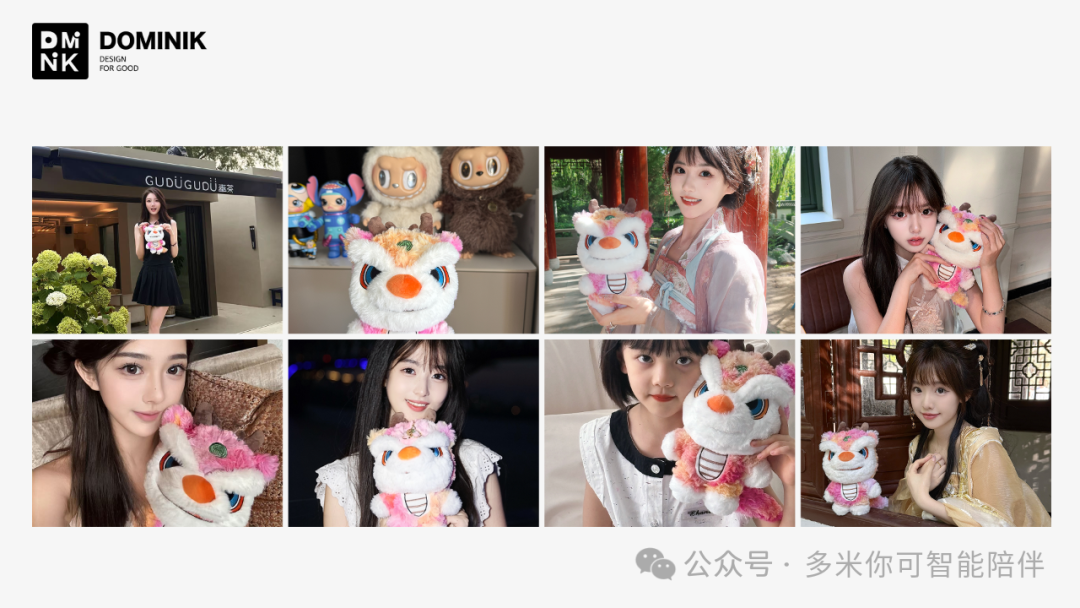
However, the limitations are also evident; most AI toys’ functions are confined to companionship and education, and they are almost unable to connect with smart home devices, making their scenario extensibility far inferior to that of smart speakers.
Technical Core: General Efficiency First vs Specialized Experience Deepening
From a technical perspective, both utilize AI technologies such as voice recognition and natural language processing, but their optimization directions are completely different, resulting in different “intelligent qualities.”
The technical focus of smart speakers is on response speed and compatibility. To adapt to noisy home environments, they use multi-microphone arrays and beamforming technology, akin to having a “hearing spotlight” that can accurately capture user voices; the wake word response speed is typically controlled within 1.5 seconds, and intelligent interruption responses can also react quickly, avoiding conversation stalling. At the same time, they need to integrate a vast array of third-party service APIs, from music platforms to food delivery interfaces, from weather data to smart home protocols, with the core technology ensuring stable collaboration across multiple functional scenarios.
AI toys, on the other hand, focus on emotional perception and personalized adaptation. In semantic understanding, they employ a dual-layer semantic parsing model that can handle both the surface meaning of words and analyze emotional tendencies through an emotional keyword library and temporal models, achieving an emotional recognition accuracy of over 92%. To realize long-term memory, they dynamically update interaction data, ensuring that even details from conversations six months ago can be responded to with a delay controlled within 1-3 seconds. For their target audience, they also make customized optimizations, such as automatically slowing down speech and increasing volume when recognizing elderly voices, or switching to a lively tone when recognizing children’s voices, making them appear more “understanding” in specific scenarios.
Conclusion: There is No Absolute King, Only Choices That Fit Needs
In fact, the “intelligence” of AI toys and smart speakers has never been a competition of the same dimension.
The intelligence of smart speakers is “the wisdom of efficiency”, building the foundational framework for smart living at home with broad functional coverage and stable interactivity, suitable for families seeking convenience and wanting to create a smart home ecosystem.
On the other hand, the intelligence of AI toys is “the wisdom of empathy”, filling the gap of companionship in families, especially suitable for families with children or elderly living alone.
As technology develops, both are also borrowing and integrating from each other—some smart speakers are starting to include child modes, while AI toys are attempting to connect to basic life services. Rather than getting caught up in who is smarter, it is better to use them according to your family’s needs. After all, true intelligence has never been about how powerful the device is, but whether it can appropriately adapt to every need in life.
Which do you use more often at home, AI toys or smart speakers? Feel free to share your experiences in the comments!