Have you noticed that there is a very obvious difference between the current AI bubble and the internet bubble of 2000? During the internet bubble, social employment expanded significantly, and major companies were frantically hiring; in contrast, the current AI frenzy is leading to a significant reduction in social employment, with companies aggressively cutting jobs.Comrades, this is afundamental paradigm shift in human economic history.The internet bubble of 2000 was essentially an incremental revolution in industry. Companies built new websites, developed e-commerce, created online media, and established backend management systems outside the old world, all of which required a massive labor support system. Whether it was programmers, marketing, operations maintenance, customer support, or thousands of basic positions, the expansion of the internet was a construction from nothing to something. Although the bubble was exaggerated, it was genuinely a process of paving and building cities. However, today’s AI bubble represents a revolution from having to not having. Every breakthrough in AI is not aimed at creating new jobs but at eliminating existing ones; companies are not expanding departments but are instead focused on cutting costs, eliminating redundancies, and improving efficiency.All the value of AI comes from replacement, not creation. While the internet needed thousands of people to come in and build the roads, today’s AI is systematically removing those who originally built the roads.The difference and significance here are enormous.So what you see is not just two different bubbles but a fundamental difference in the logic of two eras.In the internet era, the more money companies burned, the more they needed to hire; in the AI era, the more companies want to make money, the more they must lay off workers. The prosperity of the internet was a collaboration between humans and machines; the prosperity of AI is the replacement of humans by machines.Humans invented AI, only to find themselves replaced by it. Isn’t that interesting?This paradigm revolution has a tremendous impact on ordinary people.Do you think it’s competitive now? OK, it will be even more competitive in the future, because what you will be competing against is not other ordinary humans like yourself, but robots that can work 24 hours a day without eating or drinking, only needing to recharge. This is unplayable.For the past forty years, we have instinctively believed that as long as we are willing to learn and accumulate knowledge, we can always stand firm in our industries. This belief is ingrained in us. There is a mutual selection between people and jobs; you need it, and it needs you too. However, the emergence of AI has quietly rewritten this relationship.AI does not require humans to become better; instead, it makes many people’s advantages disappear in an instant. Many professions that rely on memory, experience, and processes will first become marginal and then gradually exit the stage. Hard work becomes meaningless, and experience is unlikely to yield a premium; the lifecycle of careers will shorten to the point where you are caught off guard.There is another layer of impact, which is the re-differentiation of income structure. Companies enhance profits by reducing labor costs rather than expanding scale. The entire social employment pie is shrinking, and those who remain may work harder but find it difficult to increase their income.A deeper impact is on the psychological level. People will feel increasingly uncertain; career planning will resemble a sprint rather than a marathon, and any industry may experience a sudden shift in direction within months. Stability and security become scarce, and the pressure to self-update hangs over everyone.This unprecedented revolution in history will widen the gap between the rich and the poor and leave ordinary people in despair. In the future, how will this social sentiment be resolved? I don’t know. It may even be unsolvable, as your resistance may be suppressed by emotionless robots.In the past, human society could rely on collective action to change its fate, but future conflicts may face the force of automation. The stronger the technology, the more concentrated the power, and the higher the cost of resistance.
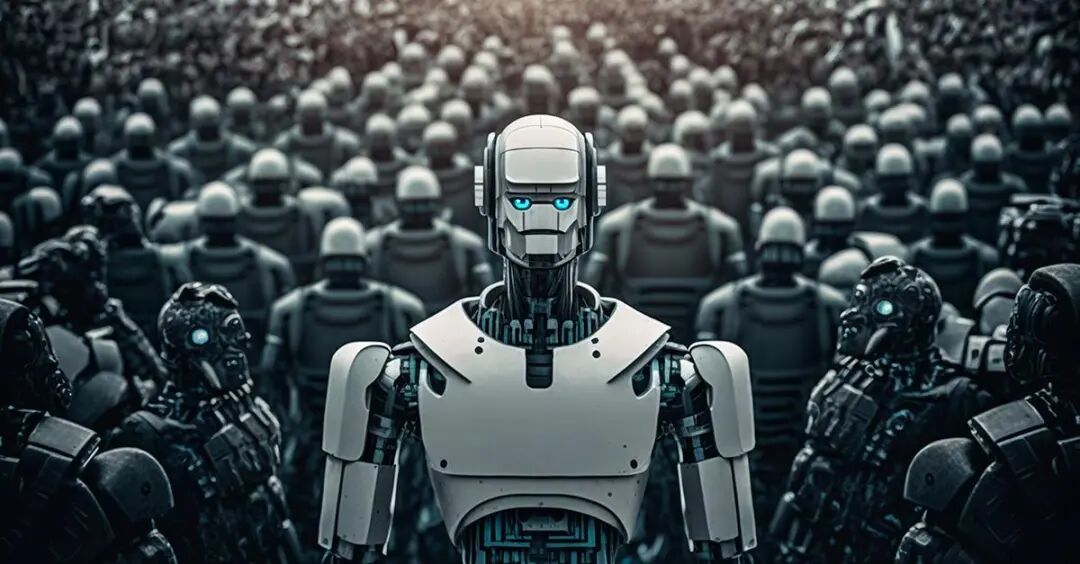 Thus, people are increasingly anxious, and this sentiment is not unique to China; it is felt in the United States, Canada, Europe, and Japan. The days of happiness and prosperity are gone forever.So you see, the global political climate is visibly changing. At first glance, countries are moving towards strongman politics, the rise of the far-right, greater media control, and decreased social tolerance, which seem to be independent events. However, when placed on the same timeline, you can see a clear trend:The entire world is racing towards dictatorship.Russia and North Korea are obvious examples; they are just ahead of the curve. The polarization and distrust within the United States have reached a level of tearing that is difficult to mend, with laws, systems, and public opinion in fierce conflict.Many European countries are regressing at a speed far beyond our imagination. Inthe UK, criticism is no longer free; saying the wrong thing online can lead to arrest.Elon Musk has criticized the UK’s Online Safety Bill passed in 2023, stating that it poses a threat to freedom of speech.The democratic system, once regarded as a benchmark of civilization, seems to be failing.This change did not happen suddenly.In the AI era, democratic systems face an unprecedented dilemma; their response speed cannot keep up with technological development, decision-making costs are enormous, and social consensus is difficult to form, while technology can quickly and easily tear society apart. AI does not bring more choices but more uncertainty and anxiety. Issues like unemployment and information overload can lead to overload and collapse. The more anxious society becomes, the more it hopes to find a force that can make decisions and quickly resolve issues. The more powerless voters feel, the more they tend to concentrate power, hoping for a strong government to maintain order. In this psychological state, democracy is inherently at a disadvantage because it requires time, discussion, and patience, and patience is the most lacking quality in modern society.AI has shortened society’s tolerance for these processes. A governance model with more concentrated power seems to match the rhythm of this era.Concentrating power is not a romantic choice made voluntarily by humans but an instinctive response to a complex world.Institutions are not something that falls from the sky; their shape often depends on where the threats come from. The institutional choices brought about by China’s geographical structure are a typical example.If the northern part of the East Asian continent did not have that vast grassland, and if there were no nomadic peoples riding horses, coming and going like the wind and impossible to kill or drive away, China would not have developed the tradition of unification.Agricultural civilization does not allow for too many political structures to be tested; it cannot tolerate long-term division and cannot afford a slow-reacting system. Thus, centralization became the only path forward.Historical institutional choices are often not because humans suddenly realize some philosophy but are forced to make the most realistic response under pressure.In the face of threats from the Huns, Turks, and Mongols, relying solely on scattered small states cannot survive.
 Putting this logic back into today’s world, you will find a certain hidden similarity. The emergence of AI has caused the speed of change to far exceed the processing capacity of institutions. In the face of this speed, human society instinctively tends to seek a force that can respond quickly, such as centralization and strongman politics.Of course, strong power does not necessarily bring stability, but in the face of fear and uncertainty, it is often the easiest arrangement for people to accept.History has repeatedly proven that the degradation of institutions does not require many reasons; it only needs sufficient pressure. And what AI brings is precisely this ubiquitous pressure.So, when you see the world rapidly sliding towards more centralized structures, do not just look at the political surface but see the underlying force. The more complex the world becomes, the harder it is to predict threats, and the easier it is for power to concentrate. This is an ancient logic that has been revived in the technological age.The question is, concentrating power does not necessarily lead to better outcomes.Strong governance is more like a stress response, the most direct choice in the face of great change, but it cannot solve the core contradictions brought about by technology.AI replaces jobs, AI exacerbates differentiation, and AI disrupts the authenticity of information; these issues cannot be solved by a single political party, nor can they be suppressed by strongman politics.There is no standard answer for the future. But one thing is certain: this is not a dilemma for a single country, nor is it a dilemma for a particular system; it is a question that all humanity must face in this era.My article “Why Hong Kong Burned Like This” published on my account “Dock Youth” was heavily regulated after surpassing 100,000 views and met a tragic end. I originally wanted to publish the article on this account, but it could not be posted. I didn’t expect Hong Kong also has WXB. The article can still be found on my knowledge planet and Weibo “Border City Butterfly Dream”.Join “Dock Youth Knowledge Planet” where much of the information and thoughts you encounter are not accessible elsewhere; welcome to join.