At Zhangjiang High-Tech Experimental Primary School, students break the boundaries of classroom time and space through the “Rongchuang Co-creation” AI platform, obtaining personalized learning resources after class and completing experiments in a virtual laboratory. At Haitong Primary School’s “AI + History” back-to-school event, the first open-source humanoid robot Fourier N1, dressed in a school uniform, warmly welcomes each returning student beside an interactive smart electronic screen. In the new academic year, Haitong Primary School will deeply integrate artificial intelligence into daily teaching, creating an immersive and interactive smart learning environment for students.
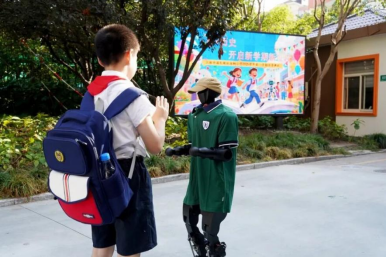
At the beginning of the school year, the abundance of “science” in the Pudong campus reveals that technology is quietly reshaping students’ learning methods. What hard technologies are making their debut this school season? Let’s take a look with Ke Way.
Boundary-less Classrooms,
Smart Boards Redefining Teaching Spaces

The “four walls” of traditional classrooms have been completely broken down. Teachers can touch the smart board, and the microscopic images from the laboratory instantly appear in the classroom; the 4K live broadcast from the academic report hall’s LED giant screen seamlessly integrates into group discussions; the electronic class signs in the corridors transform into dynamic knowledge exhibition halls… These scenes are no longer the imagination of science fiction movies but the real daily life of the campus.
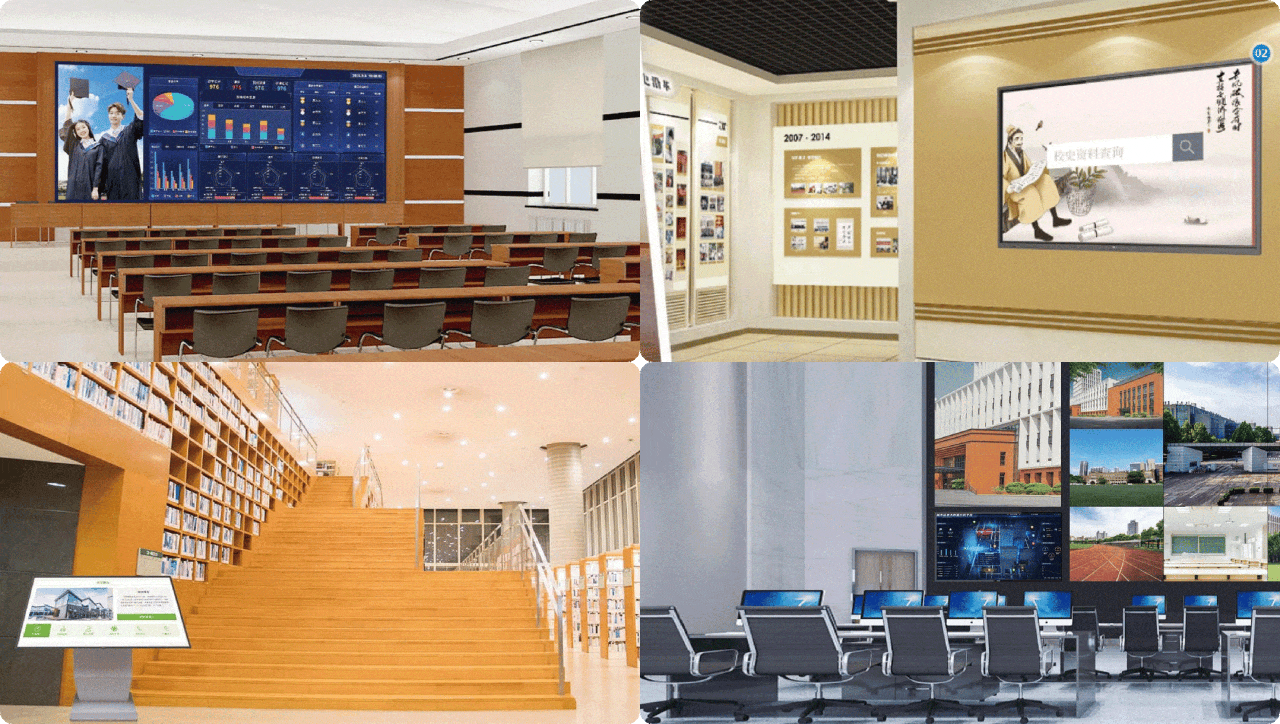
According to industry consulting firm DISCIEN, the LED display replacement rate in the higher vocational education market will surge by 40% by 2025, marking the entry of educational display into the era of “full-scene digital ecology”. The integrated solution of “hardware + software + ecology” allows teaching resources to flow across spaces, reconstructing fragmented campuses into “boundary-less classrooms”. This trend of spatial integration has led to a surge in demand for large screens over 86 inches.
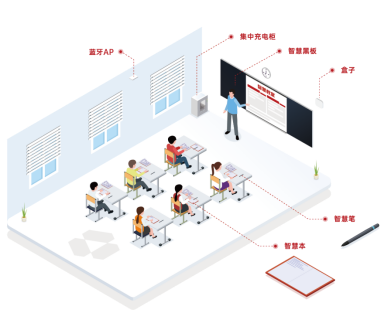
These large screen devices are no longer just tools for presenting information but are the AI-powered smart teaching hubs.Interactive smart electronic screens have become standard in classrooms, supporting multi-touch, instant writing, and collaboration features, while also integrating immersive digital whiteboard systems and cloud tools.
Robot Assistants, Stepping from Laboratories into Classrooms

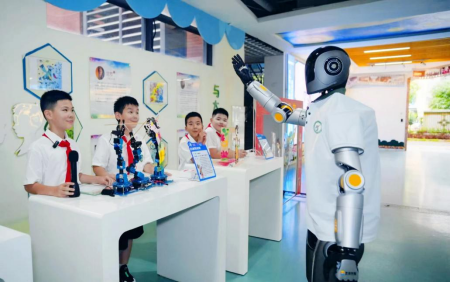
Humanoid robots are becoming “teaching assistants” in classrooms, “welcome ambassadors” on campuses, and “living textbooks” in the eyes of students.
At the Jiuliting Foreign Language Experimental School in Songjiang District, Shanghai, students carrying backpacks were pleasantly surprised to find that, in addition to the principal and teachers, robots were also welcoming everyone at the school gate. The robots handed out bookmarks of ancient poetry to each student entering the school.
Shanghai Maritime University’s affiliated Beicai Senior High School invited intelligent robots to vividly perform the “first AI class of the school year,” igniting the enthusiasm of AI student club members for artificial intelligence.
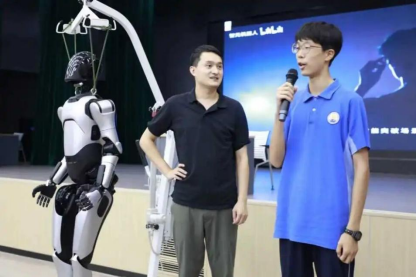
Coincidentally, in 20 primary and secondary schools in the East Lake High-tech Zone of Wuhan, robots simultaneously entered the “first class of the school year,” engaging in conversations, dancing, and practicing Tai Chi with students. The robots not only performed but also interacted with students. When asked, “If you were my deskmate, what would you do?” a humanoid robot named “Dazhuang” replied, “I would become your all-round little assistant, helping you take notes in class, telling jokes after class, and accompanying you to solve problems…”
Intelligent Learning Tools,
Technological Transformation of Traditional Learning

Smart Pen and Paper System focuses on “accompanying data collection” and combines smart pens, customized teaching aids, AI learning machines, and intelligent grading systems to create a complete teaching loop. The smart pen, as the student learning terminal, is equipped with high-precision sensors that can collect writing trajectories and answering times, and can store data even offline, automatically syncing once reconnected. The accompanying dot matrix teaching materials cover multiple core subjects. Students can unlock various functions by lightly tapping the smart pen on the teaching materials: detailed knowledge explanations, problem analysis, AI-recommended exercises, error collection, and listening point reading.
AI Learning Machines represent a new height in learning tools. From the initial dictionary pens to the current scanning learning machines, these devices address many pain points in the student learning process. Current AI learning machines are equipped with wide-screen retina displays, capable of scanning multiple lines of text, and with algorithm optimization, they can accurately recognize text even in colorful textbooks and picture books.
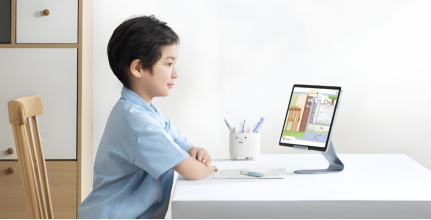
AI technology can achieve natural dialogue, correct handwritten answers, outline problem-solving ideas, and even recognize children’s emotions and respond, creating an experience of “super anthropomorphic intelligent companions.” Some devices can also analyze learning situations through AI, generating course mind maps and filtering common mistakes to avoid ineffective practice. Students can use intelligent education apps on their phones for homework correction and speaking practice.
These innovative products not only enhance learning efficiency but also make the learning process more enjoyable.
Pudong’s New AI Education Landmark,
Five Major Projects Empowering Technological Education

Utilizing digital humans to create immersive moral education classes, transforming originally dull “old lessons” into “new experiences”; cleverly using AI “add-ons” to enhance student activity effects; employing AI teaching software to skillfully resolve complex knowledge points, while using AI grading tools to generate personalized error analyses, achieving efficient “targeted teaching”… The wave of technology is sweeping in, and AI technology is accelerating its integration into educational activities.
Technology not only changes teaching methods but also redefines the learning space itself. The Pudong New Area Youth Activity Center’s “Youth AI Experience Center” has completed its 3.0 upgrade, establishing four functional modules: teaching area, autonomous driving experience area, bionic robot experience area, and exhibition area.
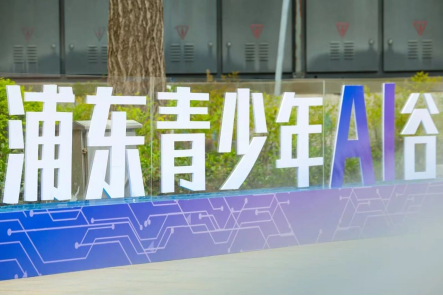
Here, students can wear exoskeleton devices to experience strength beyond human limits, and in the DeepRacer classroom, feel the speed and excitement of laser radar cars. The experience center includes over 20 interactive devices such as mechanical exoskeletons, medical robots, robotic dogs, logistics vehicles, and tactile dexterous hands.
At the opening ceremony of this year’s Pudong New Area Youth Science and Technology Festival, the Pudong New Area Youth AI Growth Plan was officially launched, comprehensively empowering youth technology education with the “5 100 Project”:
—— Covering 100 primary and secondary schools, bringing artificial intelligence education into various schools in Pudong
—— Launching 100 micro-classes, featuring “short, fast, and fun” to lower learning barriers
—— Creating 100 experiential projects, transforming abstract AI principles into tangible practical scenarios
—— Training 100 teachers to build a high-level artificial intelligence education teacher team
—— Cultivating 100 AI seedlings, discovering outstanding students with innovative potential in artificial intelligence
From robot assistants practicing Tai Chi to AI learning machines that automatically grade homework, from smart pen systems to immersive VR classrooms, these high technologies are no longer just teaching aids but have become an indispensable part of the learning environment. From research results in laboratories to production applications in industrial parks, from textbook knowledge learning to hands-on practical operations, technological innovation is becoming tangible and perceptible. Students immersed in the campus’s “black technology” excitedly say, “I want to be a robot designer when I grow up!” This is the most beautiful echo of technology education.
Text by丨Lian Yuan
Design by丨Xiao H
Submission Email丨[email protected]