CPUs and GPUs are like a pair of noisy roommates, one responsible for logical processes (CPU) and the other for crazy parallel computations (GPU). The data exchange between them (PCIe channels) is like a narrow hallway at the door, often becoming a performance bottleneck.
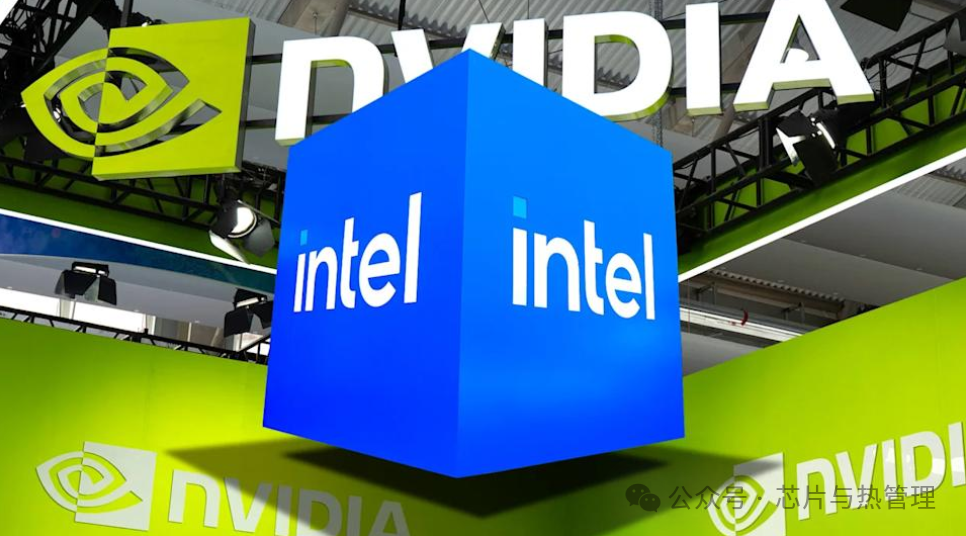
Now, imagine this pair of roommates suddenly announcing: “We’ve decided to tear down the wall and merge into one super room!” Last Thursday, a groundbreaking event occurred in the semiconductor industry: NVIDIA invested $5 billion in its old rival Intel. This is not just a financial investment but a significant “declaration of technological cooperation”.
1. Cooperation Details
The core of this cooperation is “hardware-software synergy and full-stack optimization”.
-
Hardware Level: Customized x86 CPUsNVIDIA will no longer solely rely on standard Intel or AMD CPUs. Intel will customize x86 architecture CPUs for NVIDIA, specifically designed to optimize its GPU computing platform. It’s like NVIDIA can finally have a “CPU chair” built to its exact specifications (NVLink, high-speed interconnect protocol) by Intel, the “top carpenter,” allowing the heavyweight GPU to sit more comfortably.
-
Ecological Level: Integration of the x86 Empire and CUDA EmpireJensen Huang’s statement is to the point: this is “the fusion of two world-class platforms”. Intel possesses the largest x86 software and hardware ecosystem on Earth, while NVIDIA dominates the software (CUDA) and hardware (GPU) ecosystems for AI computing. The goal of this combination is to provide a seamless, high-performance, and completely American-controlled solution for AI computing from data centers to personal PCs.
-
Manufacturing Level: A “Vote of Confidence” in Intel’s ProcessesAlthough Intel (IFS) faces challenges in catching up with TSMC and Samsung in advanced processes (like Intel 18A), NVIDIA’s investment and cooperation undoubtedly serve as a huge vote of confidence for Pat Gelsinger and Intel’s manufacturing business. In the future, we may see some NVIDIA chips manufactured by Intel, opening new possibilities for advanced chip manufacturing in the U.S.
2. Far-reaching Impacts
The combination of NVIDIA and Intel has nuclear-level implications!
-
For Intel: A Boost, but Pressure Remains
-
Reputation Recharge Successful: In recent years, Intel has been eroded in the data center market by AMD (EPYC) and crushed in the AI field by NVIDIA, with its manufacturing business also struggling. This cooperation essentially certifies Intel’s value by NVIDIA—your x86 design and manufacturing capabilities are still crucial in my blueprint for the future. A 30% surge in stock price is the market’s most direct response.
-
Clear AI Roadmap: Intel has finally secured a VIP ticket to the main stage of the AI feast, no longer needing to sell its Gaudi accelerator cards at the door. Binding with the NVIDIA platform means its CPUs have become the “official designated vehicle” for AI solutions.
-
For NVIDIA: Filling the Last Gap, Consolidating the Throne
-
Breaking Free from Dependency: Although NVIDIA is powerful, it has always been constrained at the CPU level (by Intel and AMD). Through this cooperation, NVIDIA gains chip-level customization capabilities, allowing better control over the entire data path, optimizing latency and bandwidth, and further reducing customer TCO (total cost of ownership).
-
Ecological Closed Loop: Jensen Huang’s ambition has always been to build an absolutely dominant ecosystem from hardware to software, from cloud to edge. Deep cooperation with Intel brings him one step closer to this goal.
-
For Competitors: A Nightmarish “Dimensionality Reduction Strike”
-
AMD (Lisa Su): This may be the most affected party. In recent years, AMD has been seizing market share from both Intel and NVIDIA with its Zen architecture EPYC processors and Instinct GPUs, promoting “cost-effectiveness” and “full-stack solutions.” Now, with these two rivals suddenly joining forces, AMD faces increased pressure from both giants.
-
TSMC: Although its position is solid, it is no longer safe. Intel Foundry Services (IFS) has gained a potential top customer endorsement from NVIDIA, and while it cannot shake TSMC in the short term, the long-term competition in global advanced processes has added a terrifying variable.
-
ARM Camp: This move significantly strengthens the leadership of x86 in the data center and AI fields, raising the barriers for players attempting to challenge x86 through ARM architectures (like Ampere, Amazon Graviton).
3. Impact on China
In the context of global competition, especially the Sino-U.S. AI race, the strategic significance of this cooperation far exceeds its commercial aspect.
-
Widening Technological Gap: The collaboration between a U.S. giant controlling top AI computing power (NVIDIA GPU) and another controlling core computing architecture (Intel x86) means that the fundamental computing foundation gap with Chinese companies may further widen. Chinese manufacturers like Huawei and Haiguang will face a more powerful and coordinated “alliance-style” opponent.
-
Supply Chain Risks: The U.S. government’s involvement (investing $9 billion) is evident. This indicates that the cooperation has strong national strategic implications, aiming to firmly control the most critical chip design and manufacturing capabilities within the U.S. In the future, the threshold for China to obtain advanced computing power may become higher and the environment more complex.
-
Catalyzing China’s Independent Ecosystem: Pressure also serves as motivation. This heavy blow will only strengthen China’s determination to develop controllable CPUs (LoongArch, RISC-V), GPUs (Birun, Moore Threads, etc.), and a full-stack AI ecosystem. Although the road ahead is long, there is no alternative.
Conclusion:
This is undoubtedly a technological advancement that may give rise to higher performance and lower latency AI computing platforms, providing us engineers with more powerful tools.
However, we also clearly see that the tech industry is shifting from “free competition” to “camp confrontations.” The political color of the global supply chain is becoming increasingly pronounced, and the technological race is no longer smooth.
Regardless, a great show has already begun. For us, staying focused and deepening our technical expertise is always the best way to respond to changes.
Note:This article is compiled by the author based on publicly available information, aiming to share and discuss. The rapid development of the tech industry may lead to omissions or debatable points in the content. If there are any errors or differing opinions, experts and readers are welcome to provide corrections and engage in discussions for mutual progress.