Recently, two insiders revealed that the U.S. government secretly installed trackers in AI chips exported to ensure these chips do not end up in sanctioned regions. Reuters published this significant news on August 13.
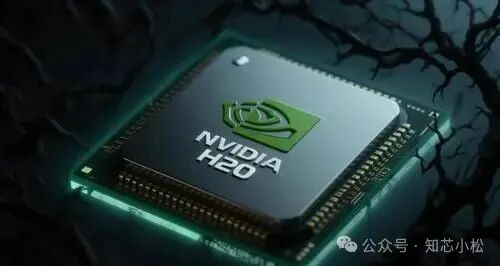
Ban on H20 Chip Creates Opportunities for Domestic Alternatives
According to reports, the Chinese government has requested domestic companies, especially those involved in national security, to stop using NVIDIA’s H20 chip. This provides a new opportunity for the development of domestic chips.
Since 2022, the U.S. has implemented strict restrictions on the export of advanced chips to China. The recent secret tracking device is seen as the latest action by Washington to strengthen its blockade on Chinese chips.
As early as the end of July, relevant departments in China had summoned NVIDIA to explain the vulnerabilities and potential security risks associated with the H20 computing chip. Although NVIDIA denied the existence of backdoor designs in the chip, this has not alleviated security concerns.

Details and Background of the Trackers
These trackers are a type of investigative tool used by U.S. law enforcement for many years, recently employed to combat illegal semiconductor transport. They are typically hidden within packaging or inside servers, with some being close to the size of a smartphone.
Several related companies, including Dell, Supermicro, and chip manufacturers NVIDIA and AMD, are involved. However, when the media sought confirmation, Supermicro chose to remain silent, while Dell stated it was unaware of the situation.
The H20 chip was specifically customized for the Chinese market to comply with U.S. export controls, and while it is suitable for certain applications, it cannot support large-scale model training.

Security Risks Become a Core Concern
In China, data confidentiality is crucial. Any potential security vulnerabilities could lead to severe consequences, including information leaks or system failures.
Therefore, the preventive measures taken by the Chinese government regarding the H20 chip are not only reasonable but necessary to prevent external threats.
From an industrial development perspective, this incident marks an important turning point for China to reduce its dependence on external supply chains. For a long time, China has had a large volume of chip imports, with weak influence in the global market, facing risks of supply disruptions and technological blockades.
In recent years, domestic chip manufacturers such as Huawei’s Ascend and Cambricon have made significant progress, reaching international standards in certain fields, providing strong support for the autonomy of Chinese enterprises.
Promoting Healthy Development of the Domestic Chip Ecosystem
Reducing dependence on products like the H20 chip will help domestic companies invest more resources into the research and development of domestic chips, thereby accelerating the formation of a self-controlled industrial chain.
In the context of increasingly fierce global technological competition, only by increasing investment in core technology research and development can we truly break external constraints.
So the question arises, can domestic chips seize this opportunity to achieve a leapfrog development? What role will we play in the future technological landscape? We look forward to your views.