Jiwei Network · Love Jiwei APP, available for download in major app stores
In May of this year, Nvidia CEO Jensen Huang hosted a private supplier banquet in Taiwan, gathering many giants from the global electronics industry. The chairmen of TSMC and Foxconn were present, surrounded by numerous manufacturing leaders from Taiwan.
In a group photo taken at the event, a man in a dark shirt sitting in the back row stood out, almost unrecognized: Chen Tao.
Underneath his low-key appearance lies a growing influence. The 53-year-old former soldier, who served in the Taklamakan Desert in China, has now become one of China’s wealthiest AI billionaires—his fortune built on the endless global demand for this technology and a key partnership with Nvidia.
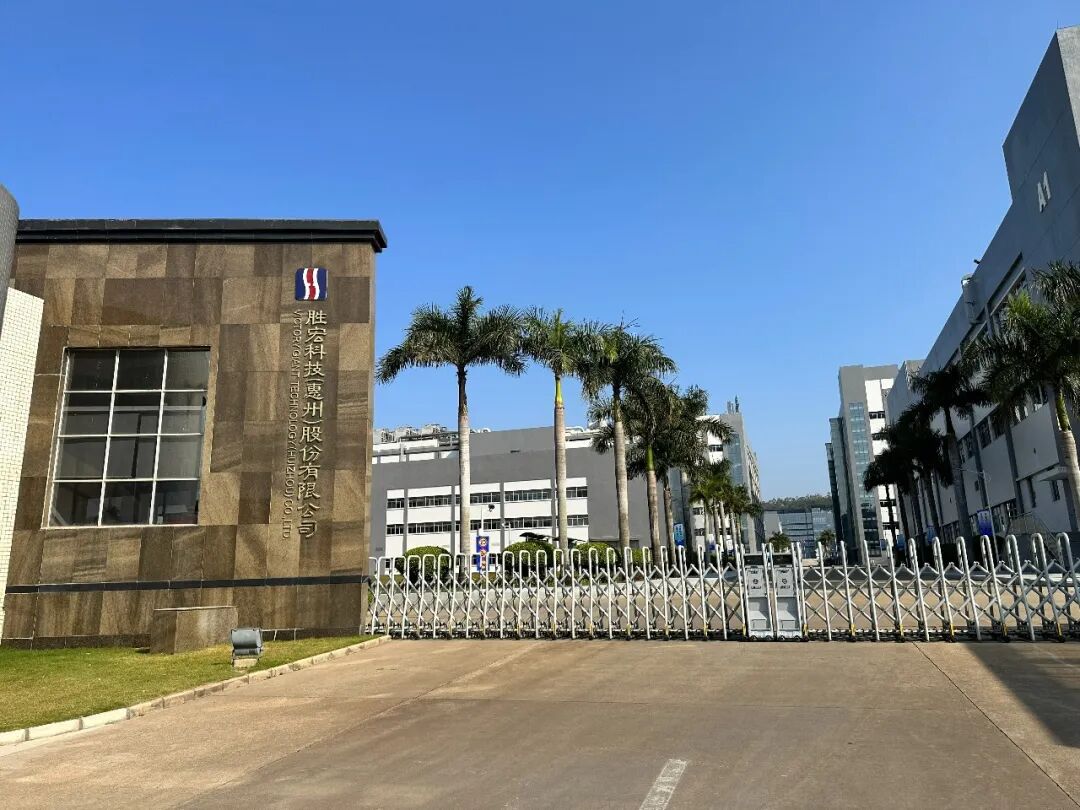
Mr. Chen is the founder and chairman of Huizhou Shenghong Technology, a company that produces printed circuit boards (PCBs), which are core electronic components of AI servers. As Nvidia’s GPUs become the engine of the AI revolution, Shenghong Technology, located in Huizhou, Guangdong Province, has become one of its core suppliers.
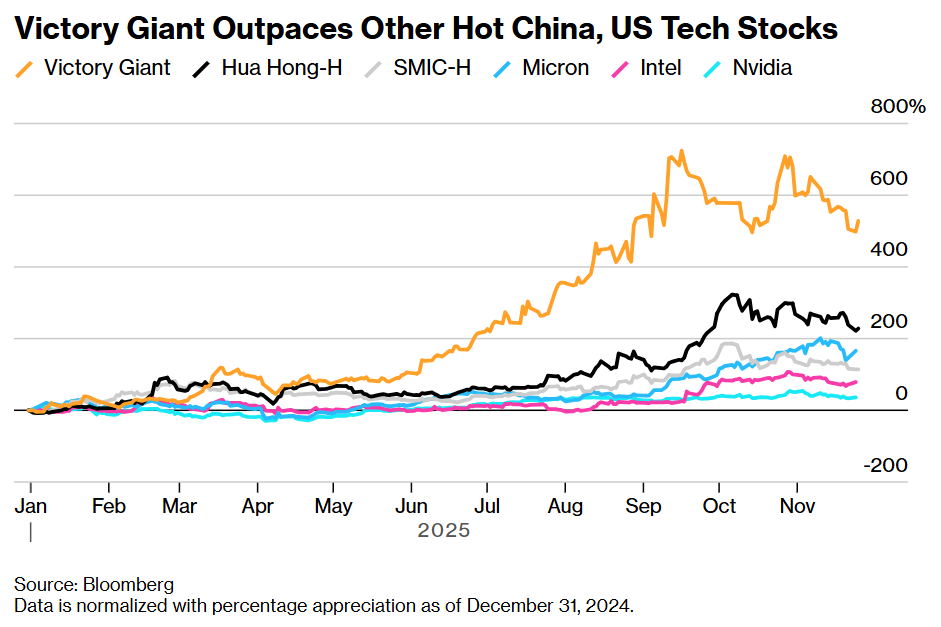
Market demand has driven Shenghong Technology’s stock price to soar, making it the best-performing stock in the MSCI Asia-Pacific Index this year, with an increase of over 530%. Although its valuation is 32 times expected earnings, this is just a drop in the bucket compared to the over 100 times price-to-earnings ratio of other local chip manufacturers.
According to the Bloomberg Billionaires Index, as of the market close on November 25, Mr. Chen and his wife Liu Chunlan have a combined net worth of $9.1 billion, surpassing billionaires such as Bill Ackman, founder of Pershing Square Capital Management, and Jonathan Gray, president of Blackstone Group. The couple’s wealth comes from their 27% stake in the company.
Mr. Chen and his company did not respond to requests for comment.
Nvidia Wave
Chen was born in 1972 and became a civil servant after retiring in 1991. However, a visit to Shenzhen, the center of China’s economic reform, changed the trajectory of his life. He gave up his “iron rice bowl” (a Chinese slang term for a lifelong job) and moved to Guangdong Province.
In 1996, he became a salesman at a Taiwan-funded PCB factory. Realizing the huge market demand for circuit boards, he founded Shenghong Technology in 2003 and went public in Shenzhen in 2015. According to the company’s 2024 annual report, his wife is a Chinese citizen with long-term residency in Australia and serves as a director of the company.
According to John Lin, Chief Investment Officer of UBS Emerging Markets Value Stocks and China Stocks, Shenghong Technology has been one of the low-profile companies that have “quietly but significantly benefited from this expansion” over the years.
As early as 2019, before the AI boom began, Mr. Chen established the company’s High-Density Interconnect (HDI) division. This move bet on the complex high-end circuit boards required for gaming graphics cards. This bet has proven to be rewarding. According to local media, by 2024, Shenghong Technology had begun supplying Nvidia with H-series AI accelerator cards and has developed into a core supplier for Nvidia.
The partnership with Nvidia is crucial. Sumeet Singh of Aequitas Research estimates that, given Shenghong Technology’s expertise in high-end fields, 60% of the company’s overseas sales may come from Nvidia.
Geopolitical Crisis
However, if geopolitical tensions escalate or Shenghong Technology’s production capacity underperforms, major clients like Nvidia may turn to other competitors.
Victoria Mio, head of Greater China equities at Janus Henderson, noted that these competitors include Taiwan’s Unimicron Technology Corporation and Zhen Ding Technology Holding Limited. She pointed out that over-reliance on Nvidia and domestic production in China increases earnings volatility and regulatory risks.
“Capacity outside of China is crucial,” she said. “The tensions between China and the U.S., export controls, and the demands for diversification from U.S. tech giants are real.”
Shenghong Technology stated in a filing to the Hong Kong Stock Exchange that if trade restrictions further escalate, the company may face additional risks such as supply chain disruptions, restricted access to key markets, strained customer relationships, and lost market opportunities.
Chen is committed to realizing a global vision. Shenghong Technology currently operates in major markets including mainland China, the U.S., Japan, Europe, and South Korea, serving over 350 international clients. Such massive demand has raised a new urgent issue: insufficient production capacity.
To address this, the company has launched an aggressive “overseas capacity expansion” strategy. In July of this year, the company announced a $250 million investment in its factory in Thailand. Previously, the company had announced plans to build a new factory in Vietnam by March 2025, focusing on the production of high-end HDI boards.
According to Mio, the company hopes to leverage its factories in Thailand and Vietnam to serve Western clients sensitive to exports and reduce risks associated with China.
To lead the globalization strategy, Mr. Chen restructured the executive team. Last August, he stepped down as president, handing over the reins to 48-year-old Zhao Qixiang. Zhao rose from company secretary to chairman, holding a Hong Kong ID, reflecting the company’s strategic need for globalization. The company stated in a filing.
Additionally, the company has hired 66-year-old New Zealand technology expert Victor J. Taveras as Chief Technology Officer, who joined the company in August 2024, primarily valued for his experience and technical expertise in building factories in the U.S., Malaysia, China, and Vietnam.
Shenghong Technology faces challenges from competitors such as Ibiden Co. Ltd. from the U.S. and Unimicron from Taiwan. These companies are also actively expanding their capacity in Southeast Asia to meet competition.
But for now, Shenghong Technology’s profitability continues to grow: a filing shows that the gross margin for HDI boards in the first quarter of 2025 was 38.8%, far exceeding the 8.3% from the same period last year.
Friendly Reminder:According to the latest rules of the WeChat public platform, it is recommended to click “like, view, and save” more often to become a regular reader and receive the latest industry dynamics in real-time. Welcome to set the “MCA Mobile Alliance” public account as a ★star to receive push messages promptly. At the same time, feel free to leave comments and engage in discussions, treating this as a platform for expressing opinions and exploring the industry.If you find our content valuable, feel free to share it widely. Thank you~