When it comes to the origins of cloud computing, the public generally believes that former Google CEO Eric Schmidt was the first to propose the concept of cloud computing.
On August 9, 2006, at the Search Engine Strategies (SES San Jose 2006), he introduced the concept of “cloud computing”.

Eric Schmidt
Some also believe that Amazon, the current leader in the cloud computing market, officially launched its Elastic Compute Cloud (EC2) service earlier in March 2006, making it the de facto pioneer of cloud computing.

In fact, to be precise, neither Google nor Amazon invented cloud computing. The concept of cloud computing was proposed much earlier than we imagine.
In today’s article, we will thoroughly explore the roots of cloud computing.

▉ Part 1: Public Computing – The Sprouting of Cloud Computing Theory
Everyone should remember that our computer science textbooks mentioned that the world’s first electronic computer was ENIAC.
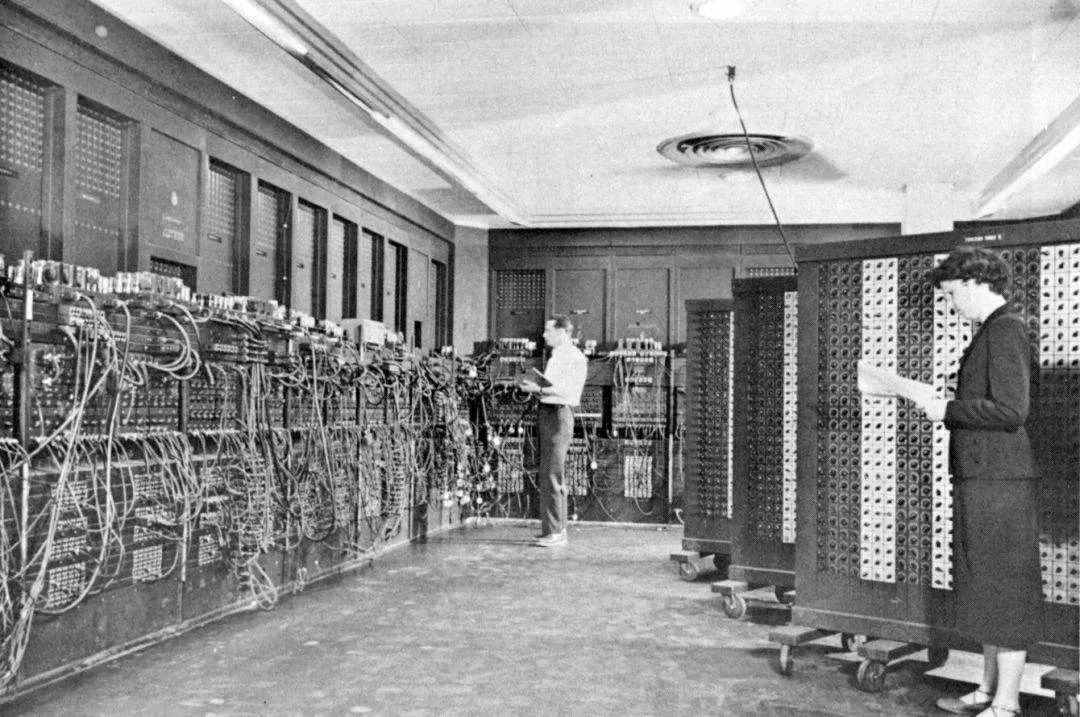
Electronic Numerical Integrator And Computer
In fact, rigorously speaking, ENIAC can only be considered the second electronic computer in the world. Before it, there was another computer called the Atanasoff–Berry Computer, abbreviated as ABC. However, this ABC computer was not programmable, so ENIAC is recognized as the first general-purpose electronic computer.
The emergence of ENIAC marked the beginning of the computing era, opening the door to the world of computers for humanity.
Early computers like ENIAC were enormous, expensive, and had very limited computing power. Most importantly, they lacked multi-user capabilities, meaning only one person could use them at a time. If everyone wanted to use it, they had to wait in line.
In 1955, Professor John McCarthy from the Massachusetts Institute of Technology (MIT) proposed the concept of time-sharing technology, hoping to meet the demand for multiple users to use a single computer simultaneously.
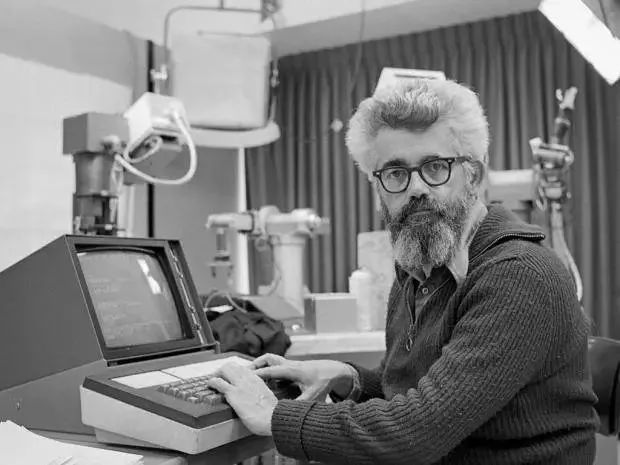
John McCarthy (1927-2011)
This John McCarthy should look familiar; indeed, he is the proposer of the concept of Artificial Intelligence (AI), recognized as the father of artificial intelligence, and later received the Turing Award in 1971.
Coincidentally, in June 1959, British computer scientist Christopher Strachey presented a paper at the International Conference on Information Processing, also about shared use of mainframes, titled “Time Sharing in Large Fast Computers”.
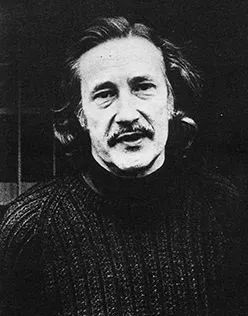
Christopher Strachey (1916-1975)
In this paper, the concept of virtualization was first introduced. Now we all know that virtualization is the cornerstone of today’s cloud computing architecture. That paper was truly remarkable.
By 1961, our great John McCarthy, at the centennial celebration of MIT, first proposed the concept of Utility Computing:
“If the kind of computer I envision (note: a time-sharing computer that supports multiple users simultaneously) could become a reality, then computing might someday be organized into a public service like the telephone… Utility Computing will be the foundation of a new and important industry.”
The translation of Utility Computing is somewhat controversial in the industry. Utility means “public service, practical, utility”; some translate it as public computing, while others translate it as utility computing.
McCarthy’s idea actually borrowed from the traditional power plant model.
In simple terms, it treats computing resources as energy resources like electricity. Users can use computing resources anytime and anywhere, just like plugging a light bulb into a socket, and pay based on usage.
Influenced by McCarthy’s viewpoint, MIT and DARPA (Defense Advanced Research Projects Agency) under IPTO (Information Processing Techniques Office) jointly launched the famous MAC (Multiple Access Computing) project. DARPA even provided about $2 million in project funding.
The goal of the MAC project was to develop a “computer system that can be used simultaneously by multiple users.” In fact, this was the prototype of “cloud” and “virtualization” technology.
In 1964, The Atlantic Monthly published an article titled “The Computers of Tomorrow,” which detailed the similarities and differences between public computing services and public electricity grids.
The article pointed out that for computing to become a public service like the electricity grid, three issues need to be addressed:
-
Interface – How do users interface with resources?
-
Service Devices – What devices do users use to convert resources into services?
-
Product Homogeneity – Electricity is always electricity, while computing is a complex service with diversity, different programming languages, and hardware. How to ensure compatibility and interaction?
In 1965, influenced by “The Computers of Tomorrow,” the MAC project group began developing the Multics time-sharing multitasking operating system. In this process, GE (General Electric) was chosen as the hardware supplier, and IBM was out.
In 1965, IBM, which exited from MAC, began developing the CP-40/CMS time-sharing operating system, which was released in 1967, and was the first virtual machine system in history.
In 1969, unable to bear the slow progress of Multics, Bell Labs exited the MAC project and began developing the Unix operating system (released in 1970).
In 1969, driven by J.C.R. Licklider (head of IPTO), ARPA (Advanced Research Projects Agency) researched and developed the computer network ARPANET.
I believe everyone knows ARPANET; indeed, this is the precursor to the Internet.
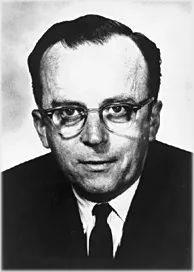
Joseph Licklider (1915-1990)
Since then, the three underlying technologies that cloud computing relies on have all emerged:
-
Operating systems for managing physical computing resources
-
Virtualization technology for allocating resources for simultaneous use by multiple users
-
The internet for remote access
▉ Part 2: Grid Computing – The Revival of Cloud Computing Concepts
Although the foundational technologies for cloud computing emerged, during the 1970s and 1980s, people were immersed in the prosperity of the PC market, focusing mainly on software and networks, thus neglecting attention to Utility Computing.
In 1984, John Gage, co-founder of SUN Microsystems, proposed the important hypothesis that “The Network is the Computer”, describing the new world brought by distributed computing technology. Cloud computing is essentially a form of distributed computing.
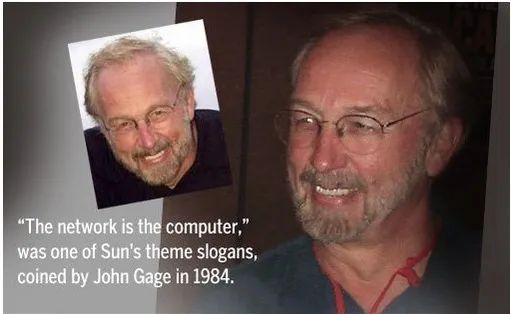
John Gage
However, people still did not pay enough attention to cloud computing.
It wasn’t until the 1990s that cloud computing concepts returned to people’s attention. However, this time it adopted a simpler name, called Grid Computing.
The term Grid is quite different from our daily understanding of “grid management”; it is directly borrowed from the concept of an electric power grid. Its essential purpose is still to integrate a large number of machines into a virtual super machine for people distributed around the world to use, which is public computing service.
In 1996, a group of technical executives at Compaq first used the term Cloud Computing while discussing the development of computing business, believing that commercial computing would shift towards Cloud Computing.
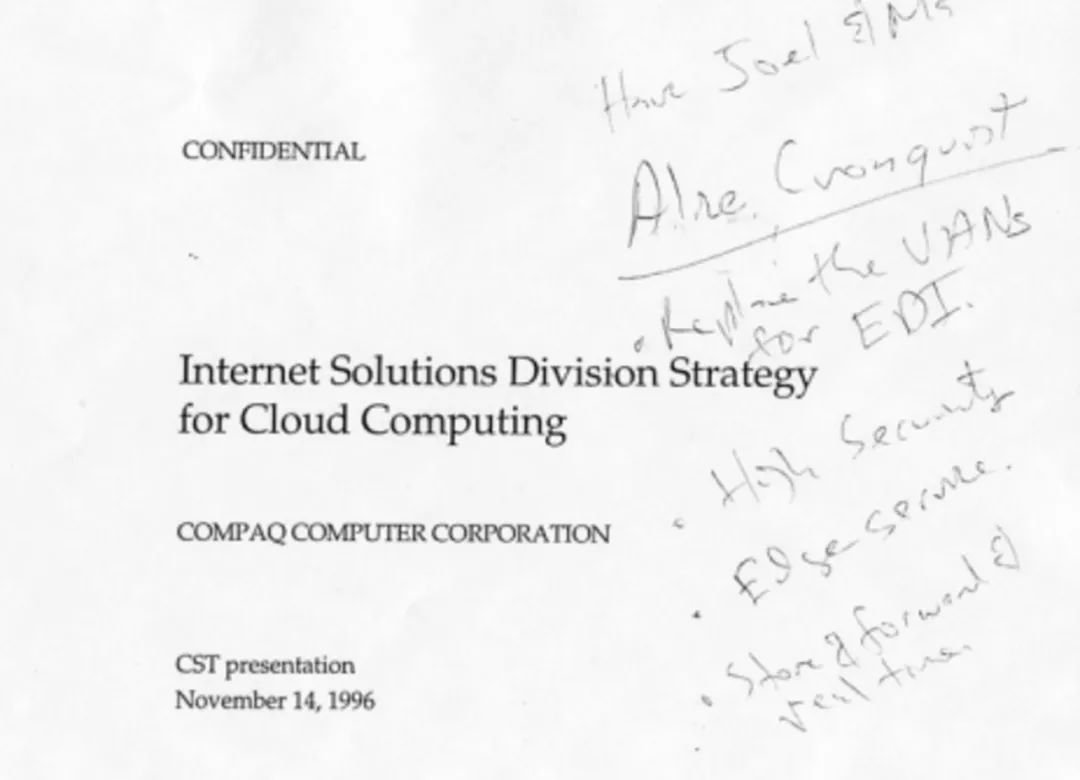
On November 14, 1996, Compaq’s business plan regarding cloud computing marked the true first appearance of the concept of Cloud Computing.
In 1997, American professor Ramnath K. Chellappa made the first academic definition of “Cloud Computing”: “A computing model where boundaries are determined by economics rather than solely by technology.”

Ramnath K. Chellappa (of Indian descent)
Following this, the development of cloud computing saw a small surge –
In 1997, InsynQ launched on-demand applications and desktop services based on HP’s equipment.
In 1998, VMware was founded and first introduced X86 virtualization technology. That same year, HP established a public computing division.
In 1999, Marc Andreessen founded LoudCloud, the world’s first commercial IaaS platform.
That same year, salesforce.com was established. This company is now recognized as a pioneer in cloud computing, founded by several former Oracle executives.
From the outset, they proclaimed the slogan “No Software,” announcing the beginning of the “end of software” revolution.

They provided customer relationship management (CRM) software systems to businesses through their website, eliminating the need for businesses to deploy their own software systems for customer management. This was the earliest Software as a Service (SaaS) model.
In 2000, Sun released Sun Cloud.
In 2001, HP released public data center products.
…
At this moment, cloud computing was on the verge of emergence.
▉ Part 3: Amazon & Google – The Official Birth of Cloud Computing
In 2000, the American e-commerce company Amazon was developing an e-commerce service platform called Merchant.com, aimed at helping third-party companies build their own online shopping websites on Amazon.
However, due to issues with architecture design capabilities and management processes, this project progressed slowly.
As a result, Amazon’s management began to consider whether they could decouple the existing code and design it into independent API services, allowing internal or external applications to call these services. This would save development workload and enhance system flexibility and reusability.
Thus, in 2002, Amazon launched the Amazon Web Services (AWS) platform. At that time, this free service allowed businesses to integrate Amazon.com’s features into their own websites.
In 2003, Andy Jassy, then the secretary to Jeff Bezos (founder of Amazon) and now the CEO of AWS, held a management meeting at Bezos’s home. At the meeting, they decided to extract the common components of application development and create a public infrastructure service platform, allowing internal and external developers to build their own applications based on this platform.

Andy Jassy
They then organized a series of candidate modules that could become public services, starting with servers, storage, and databases. Not only because these three had the highest demand, but also because Amazon was most proficient in these areas, given that their low-margin business model had accumulated considerable experience in reducing data center operational costs.
In 2006, Amazon launched two heavyweight products, S3 (Simple Storage Service) and EC2 (Elastic Cloud Compute), establishing the foundation of its cloud computing services (which remains unshaken to this day).
During that period, Google was also busy. Founded in 1998, this young company published four significant papers from 2003 to 2006, covering Distributed File System (GFS), Parallel Computing (MapReduce), Data Management (BigTable), and Distributed Resource Management (Chubby).
These key technologies not only laid the foundation for Google’s own cloud computing services but also pointed the direction for the development of cloud computing and big data worldwide.
In 2006, 27-year-old Google senior engineer Christoph Bischoff first proposed the idea of “cloud computing” to Google chairman and CEO Schmidt. With Schmidt’s support, Google launched the “Google 101 Project” and officially introduced the concept of “cloud”.
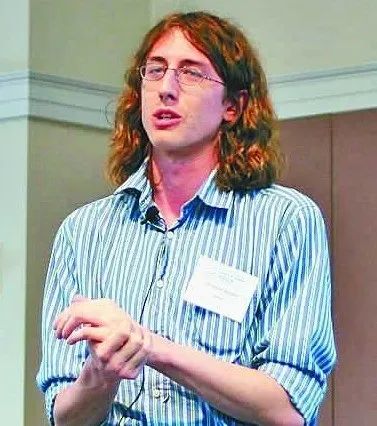
Christoph Bischoff
Later, Fortune magazine awarded him the title of “smartest engineer” among the top ten most brilliant minds.
Thus, we have the speech made by Schmidt at the beginning of this article.
At this point, cloud computing unveiled its mysterious veil and officially came to the public. The subsequent cloud computing entered a phase of rapid development, ultimately permeating various aspects of our work and life.
—— The End ——
References:
1. A Brief History of Cloud Computing Over Twenty Years, Dr. Goose
2. AWS Killed Cloud Computing: A 40-Year History of Cloud Computing, Guo Hua, Titan Media
3. The Origins and Development of Cloud Computing, Ping Gao Cloud
4. An Article to Help You Understand the Past, Present, and Future of Cloud Computing, Lei Feng Network
5. Cloud Computing Profoundly Changes the Future, Zhang Weimin
6. The History of Cloud Computing, Hua Zhu Mutton, Jian Shu
Original Title:Who Really Invented Cloud Computing?
Source: Fresh Date Classroom
Editor: Dannis
Recent Popular Articles Top 10
↓ Click the title to view ↓
1. The Entire Process of Plastic Trash Invading the Human Body Exposed
2. Is 0.999… Really Equal to 1?
3. How Difficult is it to Make the Blue Fireworks in “Thirty Only”?
4. The “World’s Best Steel” Lost for Nearly 300 Years Makes a Comeback! Scientists 3D Print Damascus Steel
5. To Fit the Most Soda in the Smallest Box, Mathematicians Studied to 24 Dimensions!
6. “This is a couple, and this couple has the hardest long-distance relationship in history.”
7. To Protect Your Skin, Do You Know How Hard Melanin Works?
8. Don’t Throw Away the Soda Bottle You Just Drank; Stick a Straw Inside, and the Neighbor’s Kid Will…
9. How Many Times Have You Been Robbed by Verification Codes Saying “Next Time for Sure”?
10. Today’s Article is Really Water…
Click here to view all previous popular articles