In the 1980s, the rapidly evolving computer technology once led the advancement of science and technology. There were numerous computer products, a wide range of application fields, and many achievements in applications. Many people were learning about computers, and naturally, computer companies were ubiquitous in towns across the country. Every aspect of society was progressing every moment, but there were always moments of significant breakthroughs. The year 1984 was a year of great leaps in computer applications in China, and computers became known to all sectors of society.
This article includes many valuable old photographs, allowing those who experienced this era, now retired, to share the powerful impact of social progress with younger generations.
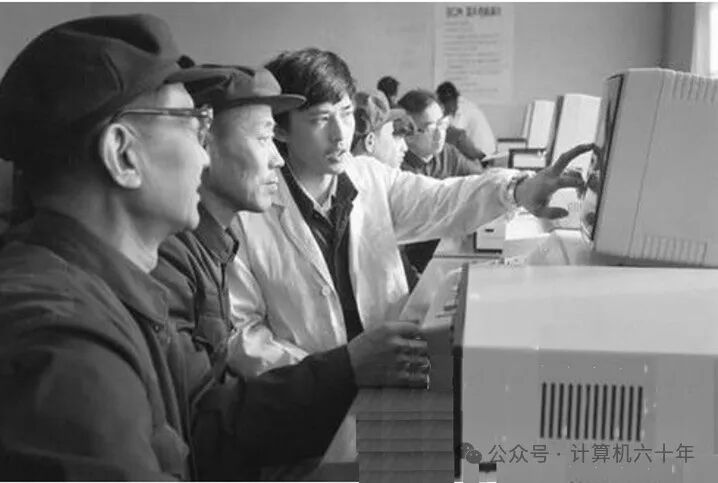
The Beijing Large Scale Integrated Circuit and Computer Leading Group held the second technical popularization class for microcomputers for leaders of the Beijing Economic Commission system, which officially started on January 20, 1984. There were a total of 30 students in this class, who would learn over three days to grasp the general application principles and basic operational methods of “microcomputers.” This is the teacher leading the students in practical operations of microcomputers.
The “Overview of China’s Computer Industry” (1985) states: The computer industry in our country must serve the socialist construction with relatively advanced industrial products to promote the development of our national economy, which is the responsibility and historical mission of the computer industry.
What insights can we gain from the experiences of foreign development?
First, we must recognize the position and role of computers in future society from a strategic height, understand the new trends in world development, and clarify the relationship between new changes and the dependence on computers.
From the historical facts of the past few decades, we can see the enormous impact that computers have already had on human society. This impact should not be taken lightly.
Our country has rich intellectual resources and advantages in mental labor; however, have we considered that if we do not effectively utilize “computers” simultaneously as society develops to this day, the advantage of this “human brain” will be lost? In other words, those who do not understand how to utilize “computers” will fall behind those who have “computers” as auxiliary tools.
By elevating our understanding to the level of its impact on society as a whole, we can make strategically significant plans and comprehensive technical policies, ensuring that the computer industry can develop steadily.
Second, we must timely grasp the pivotal events in the development of computers and be able to detect and determine our direction and countermeasures at the budding stage.
Third, we need to strengthen our adaptability and build a computer industry with Chinese characteristics and independence.
Fourth, we should fully utilize the good experiences of collaboration between research institutions and manufacturers.
Fifth, we must seriously address the issues of components and devices.
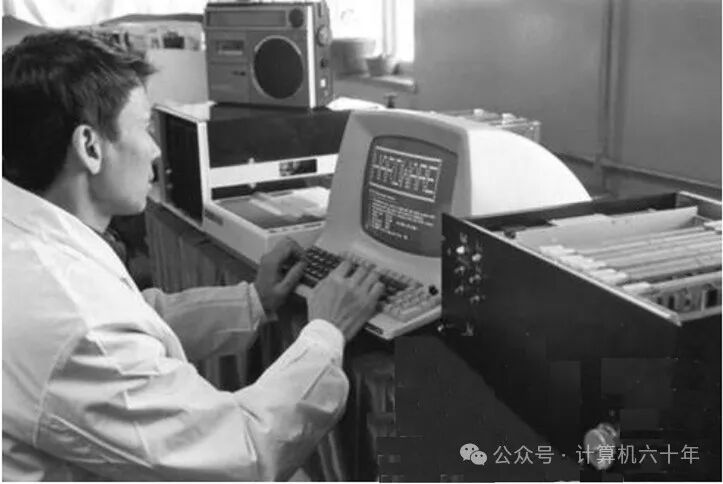
China’s first ruggedized 16-bit microcomputer system has been successfully developed by the Lishan Microelectronics Company of the Ministry of Aerospace Industry and has recently passed national certification. This microcomputer system is composed of domestic components and large-scale integrated circuits. The main unit has strong adaptability, is moisture-proof, salt fog-resistant, and shock-resistant, and is widely applicable for testing in harsh environments, industrial automation production, and time control systems, etc. (January 23, 1984)
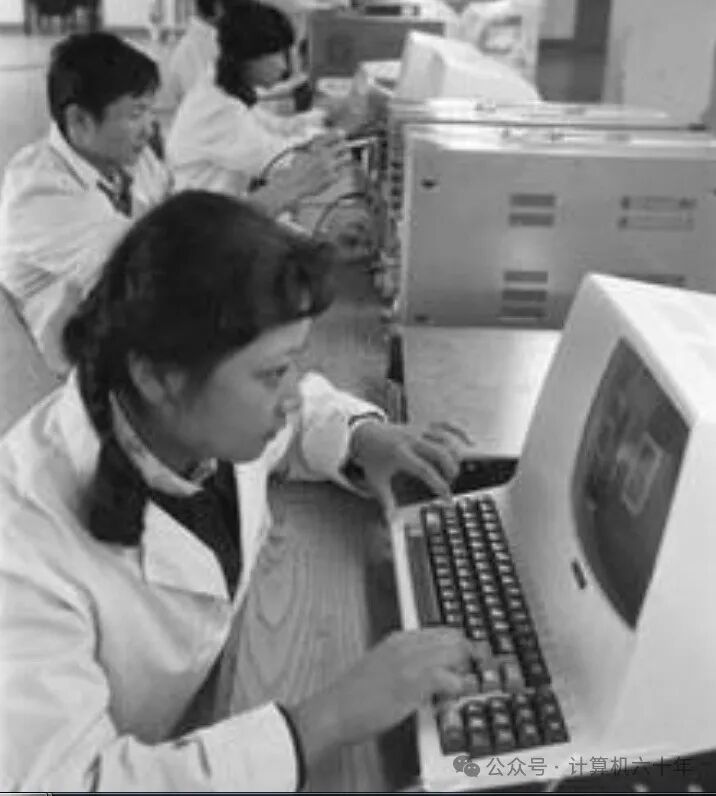
Shenzhen Economic Special Zone Aihua Electronics Company has successfully trial-produced a high-performance, multi-purpose microcomputer using advanced technology introduced from abroad, and it is about to enter mass production. (January 16, 1984)
In summary, China’s computer industry faces a severe situation in the world; looking back domestically, the development of computers has created an unprecedented favorable environment. This means that we are shouldering a historical burden under many favorable conditions.
In addition to the arrangements made by the National Computer and Large Scale Integrated Circuit Leading Group, there are also material conditions and human resources that are conducive to a significant leap forward.
First, since the construction that began in 1956, the computer industry has reached a certain scale. Including central and local levels, there are a total of 132 enterprises and institutions, among which there are 8 product research institutes, 111 manufacturers, and 13 application service units; the total number of employees is 90,000, including more than 16,300 engineering and technical personnel.
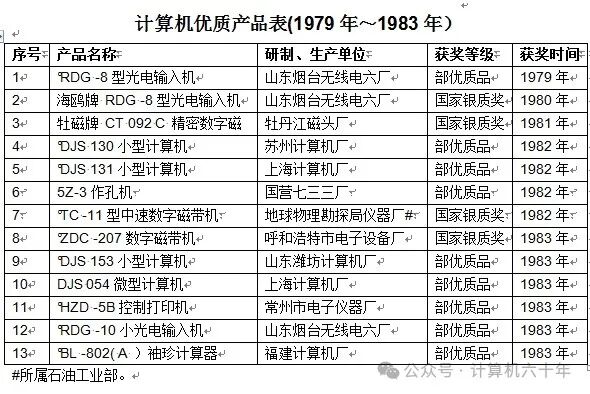
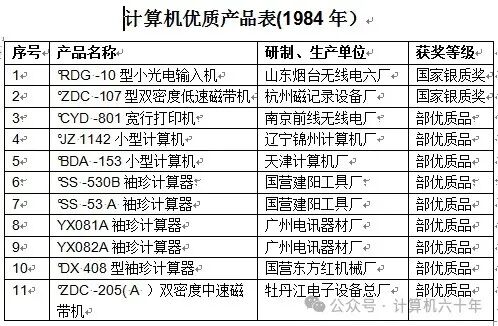
From 1979 to 1983, the state identified 13 high-quality products over five years, while in 1984, 11 high-quality products were identified in just one year.
Second, before 1966, the number of students enrolled in computer majors nationwide reached over 7,000. After nearly 20 years of development, higher education institutions offering computer majors have spread across all provinces and cities.
The first batch of universities (from 1956 to 1958) that established computer and computational mathematics majors included 19 institutions: Tsinghua University, Peking University, Harbin Institute of Technology, Chengdu University of Information Technology, Beijing University of Technology, Beijing University of Aeronautics and Astronautics, University of Science and Technology of China, Shanghai Jiao Tong University, Military Engineering Institute, Military Telecommunications Engineering Institute, Northwestern Polytechnical University, Jilin University, Xi’an Jiaotong University, Tianjin University, Wuhan University, Nanjing University, Sichuan University, Northeast University of Technology, and Fudan University.
Subsequently, universities that established computer and computational mathematics majors included:
1959: Nanjing Aeronautics Institute, Chongqing University;
1960: Nanjing Institute of Technology, South China Institute of Technology, Central South University of Technology, Beijing Normal University, Dalian Maritime University, Dalian Institute of Technology;
1966: East China Engineering College.
By 1984, there were 89 higher education institutions offering computer or computational mathematics majors. The distribution was as follows: North China: 17; Northeast: 19; East China: 29; West: 24.
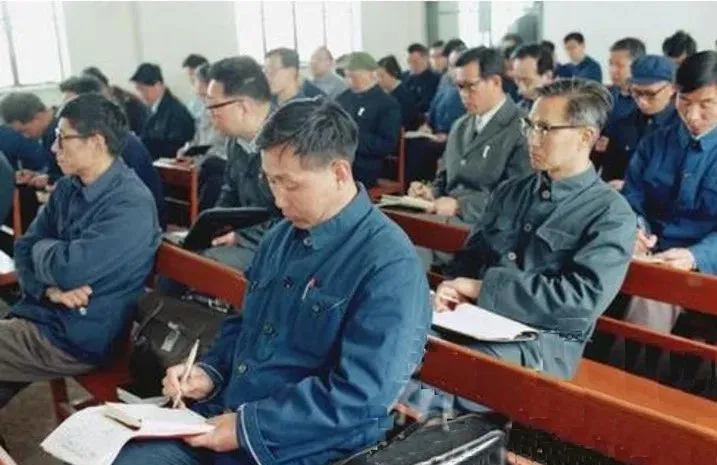
The National Economic Commission and the China Enterprise Confederation jointly held a pilot training class for electronic computer technology in Shanghai, which opened on April 20, 1984, at Fudan University. A total of 60 factory directors and managers from 28 provinces, cities, and autonomous regions learned the basic knowledge of electronic computers and how to use electronic computers for auxiliary management, design, and production. The National Economic Commission plans to train approximately 15,000 factory directors and managers from about 3,000 large and medium-sized backbone enterprises nationwide over three years.
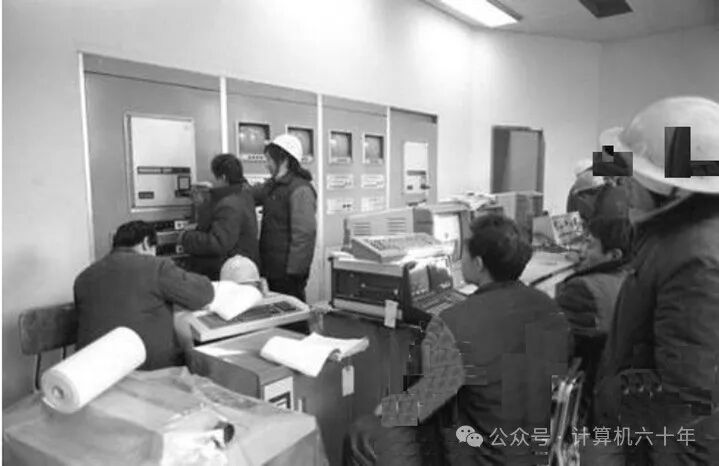
In early August 1984, the Capital Iron and Steel Company achieved the computer networking of the company and its main production plants and mines, which was officially put into use. This project connected 5 computers and 56 remote and local terminals, forming a system that can store, classify, organize, and quickly provide information, marking a step forward in the scientific management of Shougang. (August 18, 1984)
After the college entrance examination was restored in 1977, students began to graduate in the early 1980s. Regardless of their major, computers found applications in various fields, accommodating a large number of computer talents. It was a time of passion and prosperity.
Netizen Liu Ping commented that 1984 was the best era for China’s computer industry and application development, marking the first leap since China’s reform and opening up! Especially in the development and application of microcomputers, the imitation work, particularly the Chinese character systems, and various external devices, sprang up like mushrooms after rain…!
Computer exhibitions and user associations were active. The Beijing Microcomputer Association was established at the Qinhuangdao Seamen’s Base, which later became the Beijing Information Industry Association!
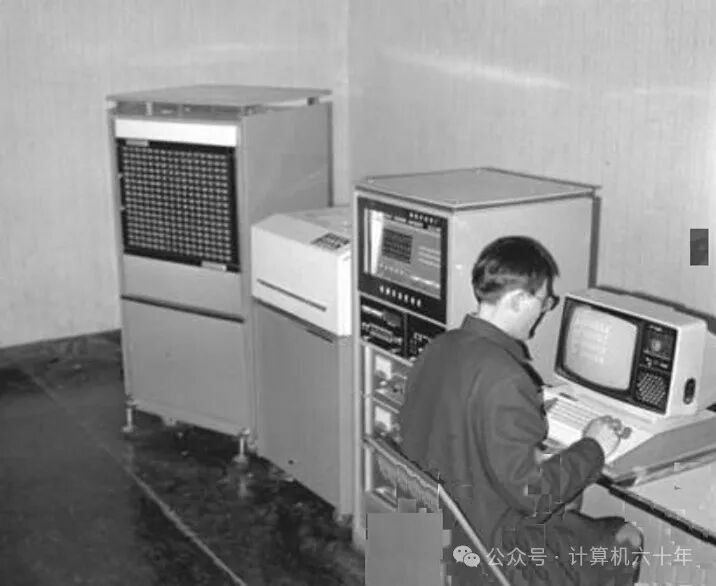
Nantong Cotton Mill No. 2 in Jiangsu Province was the first to apply microelectronic computer automatic devices, with 252 looms utilizing new microcomputer technology, establishing a “loom microprocessor detection system,” which brought significant changes to production management and improved the production efficiency of each loom by 2.2%. (February 8, 1984)
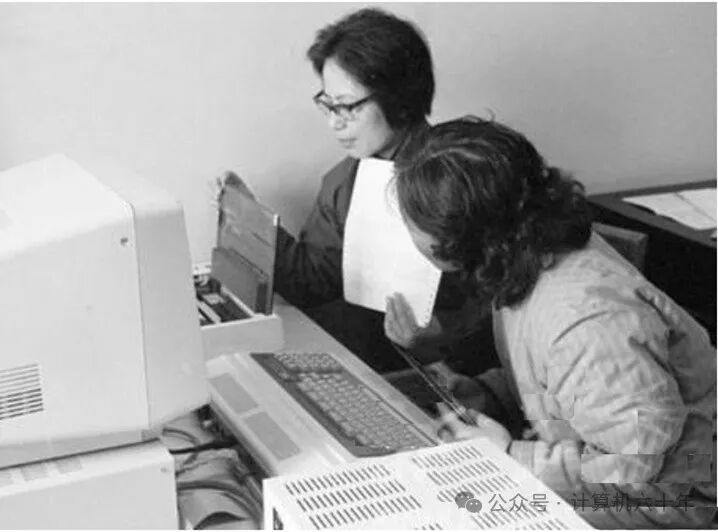
The Gansu Meteorological Bureau’s Lanzhou Central Meteorological Station’s numerical forecasting team used electronic microprocessors for weather forecasting calculations, providing timely and accurate results. (February 25, 1984)
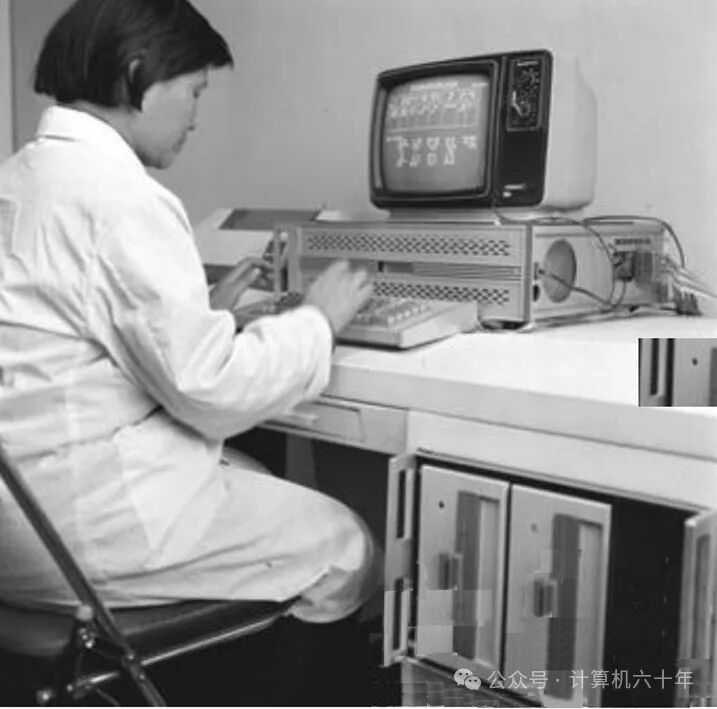
The Tianjin Second Cotton Spinning Factory applied microcomputers for cotton blending, improving the quality of cotton yarn and saving 140,000 yuan in expenses annually. (March 4, 1984)
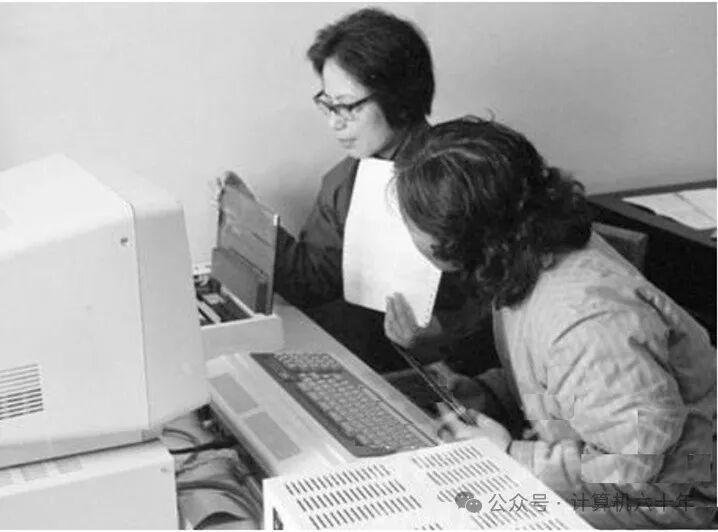
The Urumqi Power Supply Company and the Xinjiang Electronic Research Institute successfully developed a computer management system for calculating line losses in the distribution network, using microcomputers to calculate and manage line losses, providing accurate data for power grid management quickly. (March 4, 1984)
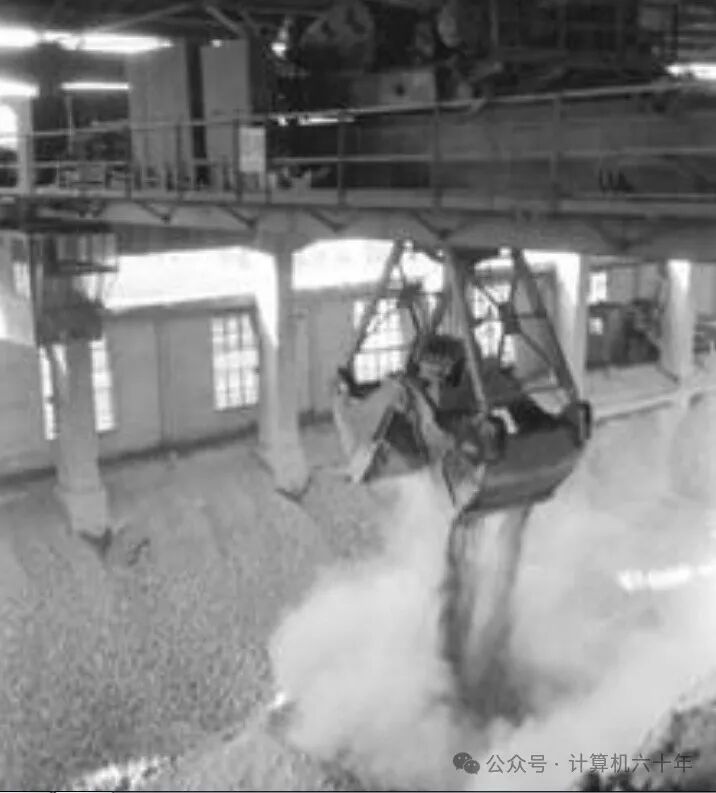
China’s first electronic scale controlled by a microcomputer for dynamic weight measurement has been successfully developed by the Provincial Electronic Technology Research Institute and Mudanjiang Cement Factory. The crane equipped with a microcomputer can continuously measure weight over a thousand times during load operation and select the average value from the best measurement data, printing the data immediately. It can replace four general electronic scales, saving an investment of 320,000 yuan. (February 8, 1984)
(End)
More exciting content:
Yan Shi | A Review and Prospect of Computer System Capability Cultivation
Discussion on the Concept of “Student-Centered” Teaching and Its Implementation Path
Call for Papers for the 2024 China Higher Education Computer Education Conference (CCEC2024)
Interview with the Principal | Promoting Interdisciplinary Integration to Cultivate Innovative Talents in the New Era – Interview with Professor Ni Mingxuan, Founding Principal of Hong Kong University of Science and Technology (Guangzhou)
New Year Message from the Seventh Editorial Committee
Teaching Guidelines for Ideological and Political Education in Computer Disciplines
Academician Chen Guoliang | Cultural Construction of the Virtual Teaching and Research Office for Computer Courses
Professor Chen Daoxu from Nanjing University | Change and Constancy: The Dialectics in the Learning Process
Yan Shi | Thoughts and Suggestions on the “Dilemma” of Young Teachers in Higher Education
Xu Xiaofei et al. | The Metaverse Education and Its Service Ecosystem
[Directory] “Computer Education” 2024 Issue 5
[Directory] “Computer Education” 2024 Issue 4
[Directory] “Computer Education” 2024 Issue 3
[Editorial Message] Professor Li Xiaoming from Peking University: Reflections on the “Year of Classroom Teaching Improvement”…
Professor Chen Daoxu from Nanjing University: Teaching students to ask questions and teaching students to answer questions, which is more important?
[Yan Shi Series]: Trends in Computer Discipline Development and Their Impact on Computer Education
Professor Li Xiaoming from Peking University: From Interesting Mathematics to Interesting Algorithms to Interesting Programming – A Path for Non-Majors to Experience Computational Thinking?
Reflections on Several Issues in Building a First-Class Computer Discipline
New Engineering and Big Data Major Construction
Learning from Others – A Compilation of Research Articles on Computer Education at Home and Abroad