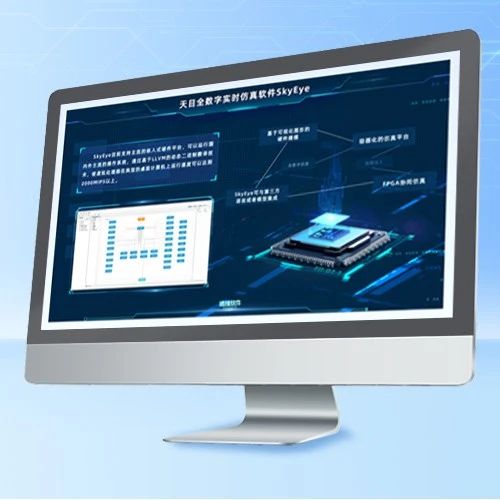
What is the Difference Between MCU and SOC?
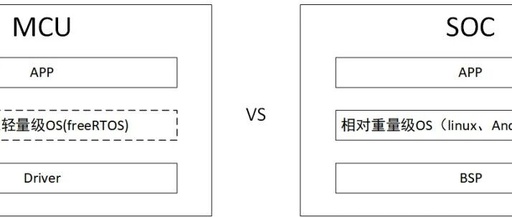
What is the Difference Between MCU and SOC?

The most commonly used main chips in automotive controllers are MCUs and SOCs. Traditional vehicles primarily use MCUs, while smart vehicles, due to the increasing number of functions, are gradually starting to use SOCs. For example, the architecture commonly used in domain controllers is MCU + SOC. So, what exactly is the difference between MCU … Read more
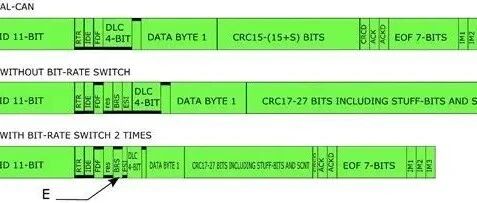
Differences Between CAN FD and Traditional CAN

Differences Between CAN FD and Traditional CAN

Click the blue text Follow us Abstract: What exactly are the differences between CAN FD and traditional CAN? How do they differ in terms of data transmission and real-time performance? With the rapid development of automotive electronics and industrial automation, the number of devices and data volume on the CAN bus has greatly increased, posing … Read more

Exception (Interrupt) Masking Mechanism of ARM Cortex-M3/M4

Exception (Interrupt) Masking Mechanism of ARM Cortex-M3/M4

The interrupt system of Cortex-M3 is central to its implementation of real-time performance and efficient task scheduling, integrating advanced features of the ARMv7-M architecture. In certain application scenarios (such as critical sections), interrupt masking operations are often required to prevent the program from being interrupted during specific operations, similar to atomic operations. Therefore, interrupt masking … Read more

How Powerful Is EtherCAT Bus?

How Powerful Is EtherCAT Bus?

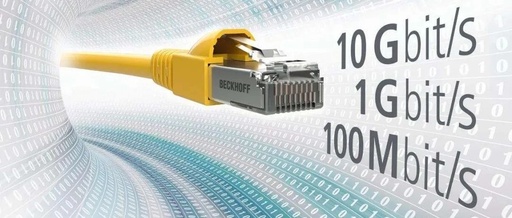
Industrial Control Classroom Industrial Control Classroom【www.gkket.com】Essential Website for Engineers Add WeChat:gkket123 Join the 500-person WeChat group Electrical Industrial Control Automation – Free Materials Worth Over 10,000 Yuan Click to Download for Free (DownLoad) Overview EtherCAT was originally developed by Beckhoff in Germany. EtherCAT sets a new standard for the system’s real-time performance and topology flexibility, … Read more

Understanding the Differences Between CAN Bus and RS-485 Bus

Understanding the Differences Between CAN Bus and RS-485 Bus

For a long time, I couldn’t distinguish between the CAN and RS-485 buses because I felt there was no significant difference in the circuits; both are differential and connect to conversion chips. RS-485 basically requires only a serial port, while CAN requires a proprietary interface. I have used CAN bus once, but I have used … Read more

Scheduler Fairness and Real-Time Performance: Golang vs Erlang

Scheduler Fairness and Real-Time Performance: Golang vs Erlang

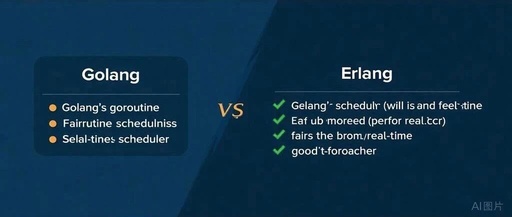
Scheduler Fairness and Real-Time Performance: Golang vs Erlang Overview This codebase contains a comparative analysis of scheduling fairness and real-time performance between Golang and Erlang. Tests indicate that the performance of Golang’s goroutine scheduler is subpar — it is coarse, unfair, and lacks good real-time capabilities. In contrast, Erlang’s scheduler excels in both fairness and … Read more

Choosing the Right Real-Time Operating System for Your Embedded System

Choosing the Right Real-Time Operating System for Your Embedded System

Selecting the correct Real-Time Operating System (RTOS) is crucial for the performance, reliability, and efficiency of embedded system development. This article will guide you through understanding RTOS, its components, advantages and disadvantages, and types, as well as how to choose the best real-time operating system for your application. This article serves as a guide, providing … Read more

Technical Communication | Discussion on Embedded Real-Time Operating Systems

Technical Communication | Discussion on Embedded Real-Time Operating Systems

01 Overview An Embedded Real-Time Operating System (RTOS) refers to a type of lightweight operating system that operates in resource-constrained environments (space and time) and can respond to external events within a defined time frame while executing functions. Since the release of the first embedded real-time kernel VRTX32 by Ready System in 1981, the RTOS … Read more

Technical Research and Analysis of Robot Domain Controller DCU Embedded Linux + ROS System

Technical Research and Analysis of Robot Domain Controller DCU Embedded Linux + ROS System

1. Mainstream Market Systems 1.1 Technical Positioning and Industry Status In the field of humanoid robot main controllers, Embedded Linux and ROS (Robot Operating System) form a layered collaborative architecture: Embedded Linux serves as the foundational operating system with enhanced real-time capabilities, handling low-level functions such as hardware drivers, task scheduling, and resource management; ROS … Read more