August Collection (Part 2) | Multi-SIM Tackles Dual Challenges: New Antibacterial Drugs and Nanotherapy for Brain Injury

August Collection (Part 2) | Multi-SIM Tackles Dual Challenges: New Antibacterial Drugs and Nanotherapy for Brain Injury

In the face of complex diseases, traditional research methods often struggle to capture the critical instantaneous pathological processes. This issue features two groundbreaking studies that successfully freeze the key moments of disease occurrence, leveraging the ultra-fast, ultra-high-resolution imaging capabilities and multi-dimensional analysis advantages of Multi-SIM X. GP Targets FarR Protein to Eliminate MRSA Persisters New … Read more
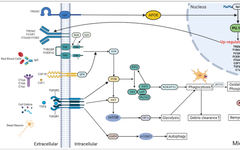
Blocking the C/EBPβ-Fcgr1 Regulatory Axis Inhibits Microglial Pyroptosis and Improves Neurological Recovery

Blocking the C/EBPβ-Fcgr1 Regulatory Axis Inhibits Microglial Pyroptosis and Improves Neurological Recovery

PMID: 39891259 DOI: 10.1186/s12974-024-03171-yIF: 11.7 Q1 Abstract CAAT/Enhancer Binding Protein β (C/EBPβ) is associated with the inflammatory response in neurodegenerative diseases, particularly in the brain. However, the regulatory role of C/EBPβ in spinal cord injury (SCI) and its impact on neurological recovery remain unknown. In this study, the research team observed a significant upregulation of … Read more

Spi1 Regulates Inflammatory Response of Microglia/Macrophages After Intracerebral Hemorrhage via PI3K/AKT/mTOR Pathway

Spi1 Regulates Inflammatory Response of Microglia/Macrophages After Intracerebral Hemorrhage via PI3K/AKT/mTOR Pathway

PMID:37488863 DOI:10.4103/1673-5374.375343 Abstract Research indicates that microglia and macrophages participate in the multifaceted brain injury repair process following intracerebral hemorrhage (ICH). The E26 transformation-specific sequence-related transcription factor Spi1 regulates the polarization and maturation of microglia/macrophages. However, the role of Spi1 in ICH is unclear. In this study, the researchers found that Spi1 may regulate the … Read more