TinyML on ESP32: Create Your Micro Machine Learning Tool in Just a Few Steps!

TinyML on ESP32: Create Your Micro Machine Learning Tool in Just a Few Steps!

In recent years, artificial intelligence (AI) technology has developed rapidly; however, the high power consumption and cost associated with high-performance hardware have limited its application in edge devices. TinyML has emerged to bring the powerful capabilities of machine learning to resource-constrained microcontrollers, such as the ESP32. This article will take you deep into the tinyml-esp … Read more

Using the ESP32 MicroPython File System

Using the ESP32 MicroPython File System

1. Overview of the File System The MicroPython on ESP32 uses the FAT file system by default, stored in internal flash memory or on an external SD card. The main operations include file reading and writing, directory management, and retrieving file information. 2. Common APIs <span>os.listdir()</span>: List directory contents <span>os.mkdir(path)</span>: Create a directory <span>os.rmdir(path)</span>: Remove … Read more

ESP32 MicroPython UART Testing

ESP32 MicroPython UART Testing

1. Key Points of UART Hardware Resources and Configuration UART Resources of ESP32ESP32 supports 3 UART controllers (UART0, UART1, UART2), but actual availability is limited by pin conflicts: UART0: Default for REPL debugging (flashing and serial monitoring), using GPIO1 (TX), GPIO3 (RX) UART1: Some development boards connect to external Flash/SD cards (conflicts should be avoided), … Read more

ESP32 MicroPython WiFi Testing

ESP32 MicroPython WiFi Testing

Development Steps: Connection Process 2. Core Functions Station Mode (Connect to Router) AP Mode (Create Hotspot) Network Scanning HTTP Requests Socket Communication Test Code: 1. Connect to WiFi (Station Mode) import network import time # Configure WiFi SSID ="your_wifi_ssid" PASSWORD ="your_wifi_password" sta_if = network.WLAN(network.STA_IF) sta_if.active(True) if not sta_if.isconnected(): print("Connecting to WiFi…") sta_if.connect(SSID, PASSWORD) # Wait … Read more

MicroPython: The Mini Power of Embedded Systems!

MicroPython: The Mini Power of Embedded Systems!

▼ Click the card below to follow me ▲ Click the card above to follow me MicroPython: The Mini Power of Embedded Systems Is Python getting slim? That’s right, MicroPython is here to do just that. The originally large Python has transformed, putting on a slim suit and fitting into various compact hardware. What is … Read more

MicroPython: The Mini Power of Embedded Systems!

MicroPython: The Mini Power of Embedded Systems!

▼ Click the card below to follow me ▲ Click the card above to follow me —— Another “universe” for Python enthusiasts Today, we won’t talk about elephants dancing or the myriad of web development topics; instead, let’s dive straight into a niche but super cool topic—MicroPython. This is like a “mini clone” of Python, … Read more

MicroPython: The Mini Powerhouse of Embedded Systems!

MicroPython: The Mini Powerhouse of Embedded Systems!

▼ Click the card below to follow me ▲ Click the card above to follow me A USB cable, a small development board, plug it into the computer, open the IDE, and a string of “Hello, world!” lights up quietly on the screen. MicroPython, a name that sounds extraordinary, is the “mini” version of Python, … Read more

Creating an AI Companion that Chats with You Using ESP32S3!

Creating an AI Companion that Chats with You Using ESP32S3!

Step-by-step guide to building an offline intelligent dialogue robot, complete with open-source code. 1. Introduction (Scenario Introduction) “When you wake up in the morning, your desktop robot actively reports the weather; during work, it helps you look up information; in the evening, it can chat with you about sci-fi movies… Today, I will use an … Read more

MicroPython: The Mini Power of Embedded Systems!

MicroPython: The Mini Power of Embedded Systems!

▼ Click the card below to follow me ▲ Click the card above to follow me MicroPython: The Mini Power of Embedded Systems! In today’s rapidly developing Internet of Things (IoT) and smart devices landscape, there is an urgent need for a lightweight and efficient programming language to drive small devices. MicroPython has emerged as … Read more

Implementing a Clock Dial on the ESP32 Handheld Device Using LVGL

Implementing a Clock Dial on the ESP32 Handheld Device Using LVGL

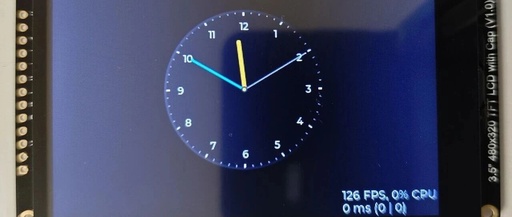
Previously, we introduced how to flash the <span>LVGL-Micropython</span> firmware onto the Little Cat handheld device, showcasing effects such as displaying GIF images, bar graphs, line graphs, zooming and rotating images, and simple dashboards. This note will continue to share how to implement a clock dial based on <span>LVGL-Micropython</span>. 1. Development Board Introduction This handheld device … Read more