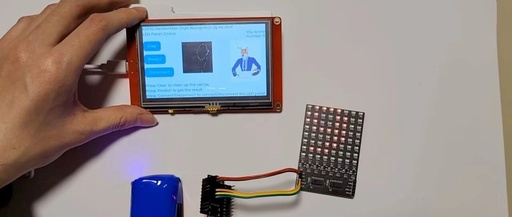
Simple Implementation of Home Intelligent Control Platform Using Python

When it comes to smart homes, people might first think of impressive products from various major companies or innovative products. Just thinking about it feels complex; some use industrial control machines, some use Raspberry Pi, and others use Arduino. Regardless of what is used, it always involves a server for control, such as the Yeelink … Read more

PiCalc: DIY OLED Screen Calculator Based on Raspberry Pi Pico

PiCalc: DIY OLED Screen Calculator Based on Raspberry Pi Pico

MAKER:Makertronics/Translated By:Fun Without End Hello everyone! Today is Pi Day of 2022. Let’s introduce a Pi calculator! This is a calculator made with Pico, which I call PiCalc. This tiny calculator may be small in size, but it has all the necessary functions. It supports decimal numbers and expressions with parentheses priority. Just pull it … Read more

Getting Started with MicroPython: A New Choice for Embedded Systems Development

Getting Started with MicroPython: A New Choice for Embedded Systems Development

Introduction: A New Era in Embedded Development In the field of embedded systems development, a remarkable new star is rising—MicroPython. As a streamlined and powerful implementation of Python, MicroPython brings the convenience and flexibility of a high-level programming language to embedded devices. This article will explore the features, applications, and how to get started with … Read more

Simulating MicroPython Programs in Proteus

Simulating MicroPython Programs in Proteus

As many may know, Proteus is an EDA software that supports the simulation of microcontrollers. It has previously been used to simulate 51, AVR, PIC, MSP430, etc. Over time, it has gradually added support for Arduino, Raspberry Pi, and STM32. In the latest version (v8.17 sp4), Proteus has started to support MicroPython simulation. Below, I … Read more

Getting Started with MicroPython on F1C200s

Getting Started with MicroPython on F1C200s

Attempt 0001 sudo apt update sudo apt install gcc-arm-none-eabi arm-none-eabi-gcc –version sudo apt install make make –version sudo apt install python3 python3-pip python3 –version git clone https://github.com/micropython/micropython.git cd micropython/ports/minimal/ Based on your information, you already have an embedded Linux environment based on F1C200s and can access it via serial. This is a great starting point! … Read more

Create a Business Card Running Linux and Python for $20

Create a Business Card Running Linux and Python for $20

“Hello, I am George, this is my business card.”” “Oh? Does this business card have a USB port and a chip?” “Yes, this business card runs Linux. You plug it into the computer’s USB port, and Linux will boot in 6 seconds. Then you can log in through a virtual serial port and access the … Read more

MicroPython MQTT: A Non-blocking Way to Communicate with MQTT Broker

MicroPython MQTT: A Non-blocking Way to Communicate with MQTT Broker

The MicroPython MQTT library is designed for developers using MicroPython, providing a non-blocking way to communicate with an MQTT Broker. This library supports various small devices, such as ESP8266, ESP32, and Pyboard D, allowing developers to easily handle message passing between devices and achieve data exchange through a publish/subscribe model. Basics of MQTT Protocol MQTT … Read more

MicroPython: A New Era in IoT Device Programming

MicroPython: A New Era in IoT Device Programming

Article Title: MicroPython: A New Era in IoT Device Programming Introduction: With the rapid development of Internet of Things (IoT) technology, embedded systems play an increasingly important role in smart homes, industrial automation, and environmental monitoring. MicroPython is a Python implementation designed specifically for microcontrollers and microprocessors, allowing developers to use Python for hardware control … Read more

What Is Python Programming Hardware?

What Is Python Programming Hardware?

Python itself is a programming language that does not require specific hardware to run, but different application scenarios may involve different hardware requirements. Here are several common hardware scenarios related to Python programming: Personal computers (PCs) and laptops: Most Python developers use regular personal computers or laptops for programming. These devices typically run Windows, macOS, … Read more

Using TM1637 4-Digit Display Module on Raspberry Pi Pico

Using TM1637 4-Digit Display Module on Raspberry Pi Pico

This tutorial focuses on how to use the TM1637 4-digit display module on the Raspberry Pi Pico. Required Components – Raspberry Pi Pico or Pico W– TM1637 4-digit display module– Breadboard and jumper wires– microUSB data cable TM1637 is an LED (Light Emitting Diode) driver control circuit with a keyboard scanning interface, integrating MCU digital … Read more