What Happens When the Minimum Value of I2C Pull-Up Resistors Exceeds the Maximum Value?
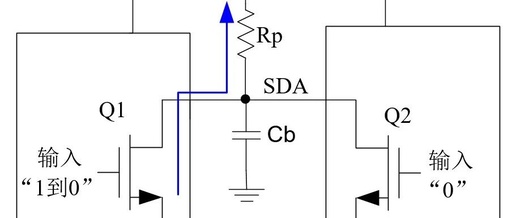
What Happens When the Minimum Value of I2C Pull-Up Resistors Exceeds the Maximum Value?

When using I2C, have you encountered the following issues: An I2C bus that communicates without issues, but adding a few slave devices causes communication problems. An I2C bus that communicates without issues, but adding a level shifting circuit results in poor communication. An I2C bus that communicates without issues, but adding an ESD protection TVS … Read more
Mastering Hardware Design in Fifty Days – I2C (Day Ten)

Mastering Hardware Design in Fifty Days - I2C (Day Ten)

Introduction The I2C (Inter-Integrated Circuit) bus is a two-wire serial bus developed by PHILIPS for connecting microcontrollers and their peripheral devices. It is a widely adopted bus standard in the field of microelectronic communication control. It is a special form of synchronous communication, characterized by fewer interface lines, simple control methods, small device packaging, and … Read more

How Do MCUs Communicate with Different Voltage Levels?

How Do MCUs Communicate with Different Voltage Levels?

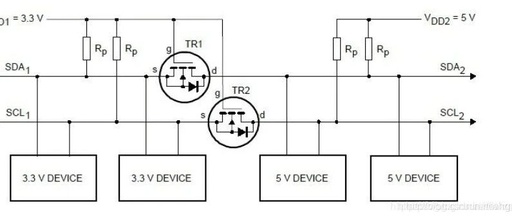
Today, we will discuss the “level shifting” circuit below, which is quite enjoyable to understand. Circuit design can actually be very interesting. First, let’s talk about the purpose of this circuit: when two MCUs operate at different working voltages (for example, MCU1 operates at 5V and MCU2 operates at 3.3V), how can MCU1 and MCU2 … Read more

The Wealthy in Embedded C Language: Division and Shifting

The Wealthy in Embedded C Language: Division and Shifting

The term “wealthy” is perfectly suited for the upcoming discussion on C language. They dominate the embedded C language with luxury, but we ultimately need a more economical micro-ecosystem. Here, I will briefly analyze the use of division and shifting in embedded C language programming. Division Wealthy Division can be considered a major consumer in … Read more

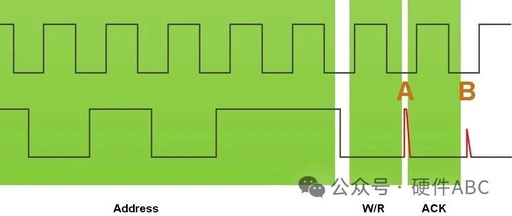
Causes of I2C SDA Glitches/Half-High Levels and Their Impact on Applications

Causes of I2C SDA Glitches/Half-High Levels and Their Impact on Applications

During the use of I2C, we may observe half-high levels or glitch phenomena. This article attempts to explain the causes of these phenomena and their impact on applications. The main content is as follows: 1. Glitch/Half-High Level Phenomenon 2. Characteristics of Glitches/Half-High Levels 3. Causes of Glitches 4. Is the Existence of Glitches Reasonable? 5. … Read more

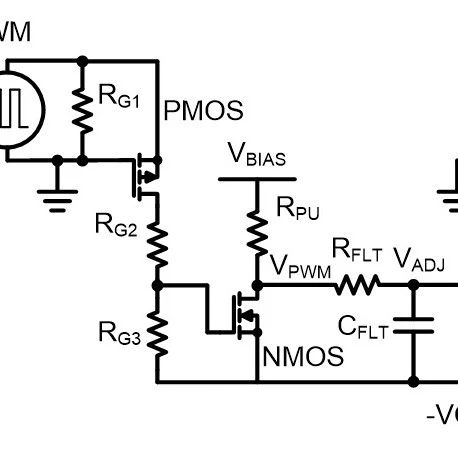
How to Dynamically Adjust Negative Output Voltage Using a Simple Circuit

How to Dynamically Adjust Negative Output Voltage Using a Simple Circuit

We currently have standard techniques for generating negative output voltages and methods for dynamically adjusting output voltage. In this article, I will introduce the missing link between these two technologies—a level-shifting circuit that combines them. Applications requiring negative output voltage include: testing and measurement, aerospace and defense, automotive, and medical. A common method to create … Read more