Why Use Open-Drain Output and Pull-Up Resistors in I2C?

Why Use Open-Drain Output and Pull-Up Resistors in I2C?

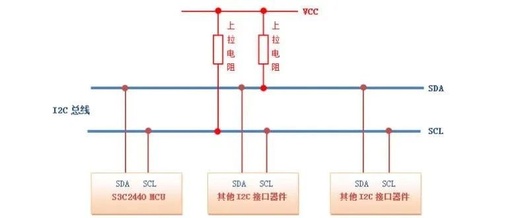
Why do we need pull-up resistors in I2C? Because it uses open-drain output. Why is it open-drain output? The I2C protocol supports multiple master devices and multiple slave devices on a single bus. If push-pull output is used instead of open-drain output, it could lead to short circuits between master devices. Therefore, the bus generally … Read more

10 Challenges in Microcontroller Circuit Design

10 Challenges in Microcontroller Circuit Design

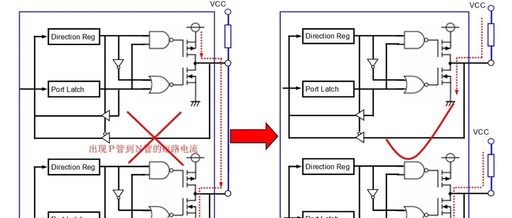
The microcontroller is the core component of embedded systems, and circuits using microcontrollers are much more complex. However, when modifying and adding new features, circuits with microcontrollers are easier to implement, which is why electronic devices use microcontrollers. So, what are the challenges to pay attention to in the design of microcontroller circuits? 1. Selection … Read more

I2C Bus Design

I2C Bus Design

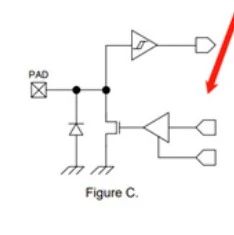
1. First, let’s discuss open-drain output and push-pull output First, watch the video explanation: The following video is from Guo Tianxiang Push-Pull Output Structure and Principle: A push-pull output circuit consists of two complementary transistors (usually an NPN transistor and a PNP transistor). In this structure, when the input is high, the upper transistor (like … Read more

Discussion on Embedded Hardware: Push-Pull, Open-Drain, High-Z State, and Pull-Up Resistors

Discussion on Embedded Hardware: Push-Pull, Open-Drain, High-Z State, and Pull-Up Resistors

In the vast knowledge system of embedded hardware, there are many discrete knowledge points that can easily be overlooked. Therefore, this article aims to organize these easily forgotten or misunderstood concepts for reference and learning. The focus will be on the learning of push-pull, open-drain, high-Z state, and pull-up resistors. Basics of GPIO The following … Read more

Application of Pull-Up Resistors in Microcontrollers and Principles for Value Selection

Application of Pull-Up Resistors in Microcontrollers and Principles for Value Selection

Principles of Pull-Up Resistor Application1. When a TTL circuit drives a CMOS circuit, if the high level output from the TTL circuit is lower than the minimum high level of the CMOS circuit (generally 3.5V), a pull-up resistor is needed at the TTL output to increase the high level output value. ……………………….2. An OC gate … Read more

How to Choose Pull-Up and Pull-Down Resistors for RS-485?

How to Choose Pull-Up and Pull-Down Resistors for RS-485?

The RS-485 bus is widely used in communication, industrial automation, and other fields. In practical applications, it is common to encounter questions about whether pull-up and pull-down resistors are needed and what resistance values are appropriate. Below, we will analyze these issues in detail. 1. Why are Pull-Up and Pull-Down Resistors Needed? 1) When the … Read more

Selection of Pull-Up and Pull-Down Resistors for RS-485

Selection of Pull-Up and Pull-Down Resistors for RS-485

The RS-485 bus is widely used in communication, industrial automation, and other fields. In practical applications, one often encounters the question of whether to add pull-up and pull-down resistors and what resistance values are appropriate. Below, we will analyze these issues in detail. 1. Why are Pull-Up and Pull-Down Resistors Needed? 1) When the differential … Read more

Detailed Analysis of Pull-Up and Pull-Down Resistor Selection for RS-485

Detailed Analysis of Pull-Up and Pull-Down Resistor Selection for RS-485

The RS-485 bus is widely used in communication, industrial automation, and other fields. In practical applications, one often encounters the question of whether to add pull-up and pull-down resistors and what resistance values are appropriate. Below, we will conduct a detailed analysis of these issues. 1. Why are Pull-Up and Pull-Down Resistors Needed? According to … Read more

Unveiling I2C Pull-Up Resistor Value Techniques: 5 Key Design Points and Practical Cases

Unveiling I2C Pull-Up Resistor Value Techniques: 5 Key Design Points and Practical Cases

Unveiling I2C Pull-Up Resistor Value Techniques: 5 Key Design Points and Practical Cases Introduction: Why Must I2C Be Equipped with Pull-Up Resistors? In the communication between the main control chip and other modules (such as cameras, sensors, etc.) in embedded systems, the I2C bus is widely used due to its simplicity, reliability, and low cost. … Read more

I2C Bus Communication Protocol

I2C Bus Communication Protocol

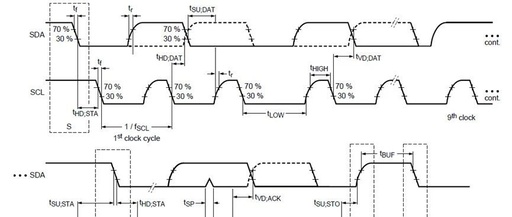
I2C Bus (Inter-Integrated Circuit)is a two-wire serial bus developed by PHILIPS for connecting microcontrollers and their peripherals. It is a widely adopted bus standard in the field of microelectronics control. It is a special form of synchronous communication, characterized by fewer interfaces, simple control methods, fewer device packaging forms, and high communication rates. The I2C … Read more