Oscilloscope Input Impedance Matching Issues – Experience Sharing
Oscilloscope Input Impedance Matching Issues - Experience Sharing

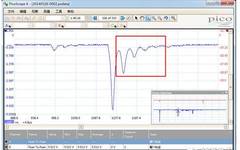
When testing a signal with an output impedance of 50Ω using a Pico oscilloscope, a 50Ω to 1MΩ direct terminal is required. Recently, during an on-site test with a client, I found that the waveform oscillated severely, as shown in Figure 1 (red box), making it impossible to conduct accurate data analysis. Figure 1 Severe … Read more
Why Add 22Ω or 33Ω Resistors to SPI Signal Outputs?

Why Add 22Ω or 33Ω Resistors to SPI Signal Outputs?

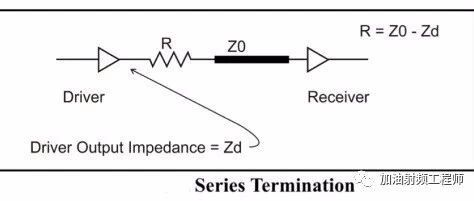
Click the blue text above to follow us The main reason for adding a 22Ω or 33Ω resistor in series when a microcontroller uses SPI to connect to a sensor or controller is to suppress reflections and ringing. 1 Principle of Reflection and Source Matching In high-speed digital signal transmission, when the signal driver (such … Read more

Why Add 22 or 33 Ohm Resistors to SPI Signal Outputs?

Why Add 22 or 33 Ohm Resistors to SPI Signal Outputs?

For more experience sharing, follow RF Engineer When a microcontroller or FPGA sends SPI control signals to a phase-locked loop chip, it often requires a series connection of a 22 ohm or 33 ohm resistor. What is the reason for this? Impedance discontinuities can cause electromagnetic wave reflections, which in turn lead to signal distortion. … Read more