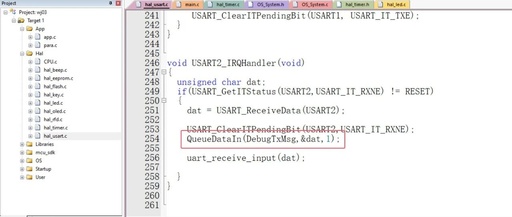
The Cornerstone of Embedded Real-Time Systems: Practical Design of ARM+Linux Interrupts

The Cornerstone of Embedded Real-Time Systems: Practical Design of ARM+Linux Interrupts

In today’s digital age, efficient computing is the core driving force behind technological development. The ARM and Linux interrupt systems serve as the key to unlocking this door to efficient computing. The ARM architecture, with its low power consumption and high performance characteristics, is widely used in various devices from smartphones to industrial control systems, … Read more

Can Microcontrollers Truly Execute Multiple Tasks Simultaneously?

Can Microcontrollers Truly Execute Multiple Tasks Simultaneously?

Many students ask me: Why does my LED light blink while the serial port data reception gets stuck? I want to read data from two sensors simultaneously, why is it that one of them always reads incorrectly? Why can’t my program control the motor while sending data? The most classic question is: why can’t I … Read more

The Volatile Keyword You Might Overlook in MCUs

The Volatile Keyword You Might Overlook in MCUs

Click πŸ‘†πŸ‘†πŸ‘† the blue text Follow “Passion Embedded” In embedded development, especially in the development of microcontrollers like STM32, the <span>volatile</span> keyword is a very important concept. 1. Concept of the volatile Keyword <span>volatile</span> is a type modifier in C/C++ that tells the compiler: The variable may be modified unexpectedly (e.g., by hardware, interrupts, or … Read more

Interrupt Issues Based on NXP Core imx6ulx

Interrupt Issues Based on NXP Core imx6ulx

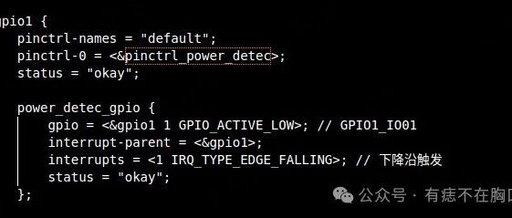
Requirement Description For scenarios that require extremely high real-time response (such as power failure detection), interrupts must be used. However, for the imx6ulx, which is a Linux platform, there are no convenient interrupt operations like those in RTOS. To achieve the same smooth operation, both the kernel driver and the application layer program need to … Read more

The Volatile Keyword You Might Overlook in MCUs

The Volatile Keyword You Might Overlook in MCUs

Click πŸ‘†πŸ‘†πŸ‘† the blue text Follow “Passion Embedded” In embedded development, especially in the development of microcontrollers like STM32, the <span>volatile</span> keyword is a very important concept. 1. Concept of the volatile Keyword <span>volatile</span> is a type modifier in C/C++ that tells the compiler: The variable may be modified unexpectedly (e.g., by hardware, interrupts, or … Read more

Embedded Development Software Architecture in C: Interrupt Service Routines

Embedded Development Software Architecture in C: Interrupt Service Routines

1. Interrupt Mechanism of Microcontrollers The interrupt mechanism refers to the ability of a microcontroller to quickly handle external events (interrupt requests) while executing the main program. When an external event A occurs, the microcontroller pauses the current main program (interrupt response), saves the current state data, and then calls the handler for event A … Read more

Is an Embedded Real-Time Operating System Truly Real-Time?

Is an Embedded Real-Time Operating System Truly Real-Time?

We often refer to RTOS (Real Time Operating System) as a real-time operating system, but what exactly is a real-time operating system? Is it truly real-time?This question is likely to be on the minds of many beginners. Brief Overview of RTOS RTOS: Real Time Operating System, which means real-time operating system. According to Baidu Encyclopedia: … Read more

Understanding Interrupts: Definition, Priority Management, Runtime Triggers, and Program Handling

Understanding Interrupts: Definition, Priority Management, Runtime Triggers, and Program Handling

Follow our official account and reply with “Introductory Materials” to get a comprehensive tutorial from beginner to advanced on microcontroller programming. The development board will guide you in your journey. Written by: Wu Ji (WeChat: 2777492857) The full text is approximately 5582 words, and it takes about 10 minutes to read. Recently, a participant in … Read more

Signal Handling in C: Capturing and Managing Signals

Signal Handling in C: Capturing and Managing Signals

Signal Handling in C: Capturing and Managing Signals In C, a signal is a mechanism used to notify a program that a specific event has occurred. These events may be triggered by external systems, such as user input (like Ctrl+C), software faults, or timer expirations. Signals can interrupt the normal execution flow of a program … Read more

Signal and Interrupt Handling in C++

Signal and Interrupt Handling in C++

Signal and Interrupt Handling in C++ In operating systems, signals and interrupts are two important process control mechanisms. Signals are typically used to notify a program of certain events, while interrupts are responses to hardware events or changes in conditions. In C++ programming, using signals allows for asynchronous event handling, making it crucial to master … Read more