

 9.24Adsorption materialsAdsorption materials
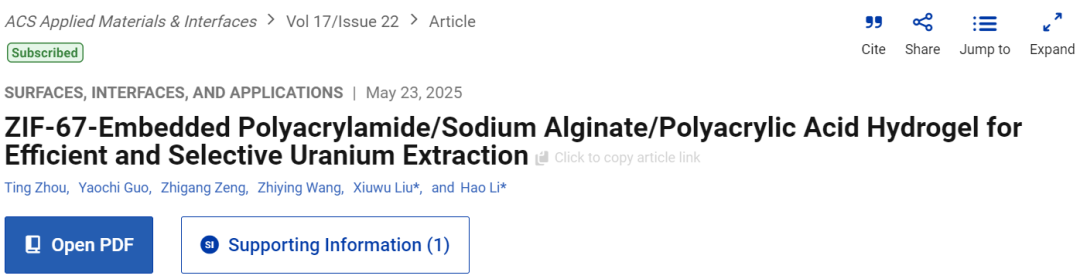 Recently, the international journal ACS Applied Materials & Interfaces published online a research paper titled “ZIF-67-Embedded Polyacrylamide/Sodium Alginate/Polyacrylic Acid Hydrogel for Efficient and Selective Uranium Extraction”. In this study, a novel PAM/SA/PAA@ZIF-67 (PSP@ZIF-67) adsorbent was prepared by incorporating ZIF-67 into polyacrylamide/sodium alginate/polyacrylic acid (PAM/SA/PAA) hydrogel through chelation and covalent crosslinking.ACS Applied Materials & Interfaces is a well-known journal under the American Chemical Society (ACS), with an impact factor of 10.8 in 2023. It mainly publishes cutting-edge research results in the field of materials interface science and engineering applications, ranking among the top journals in the interdisciplinary field of materials science and in the first district of the Chinese Academy of Sciences. This research provides new ideas for the resource utilization of invasive plants and the water-energy coupling under carbon neutrality goals.
 Scan the QR code above to access the original paper
The global demand for nuclear energy is continuously rising, prompting an urgent need to develop efficient and selective adsorbents for extracting uranium from seawater. In this study, ZIF-67 was incorporated into polyacrylamide/sodium alginate/polyacrylic acid (PAM/SA/PAA) hydrogel through chelation and covalent crosslinking, resulting in a novel PAM/SA/PAA@ZIF-67 (PSP@ZIF-67) adsorbent. PSP@ZIF-67 exhibited excellent uranium (VI) (U(VI)) adsorption performance, reaching adsorption equilibrium within 20 hours and achieving a significant adsorption capacity of up to 278.0 mg/g at an initial uranium concentration of 8 mg/L. The adsorption process was consistent with the pseudo-second-order rate equation and the Langmuir model. Furthermore, PSP@ZIF-67 demonstrated selectivity for UO22+ in complex solutions containing 11 competing metal ions. After eight adsorption-desorption cycles, PSP@ZIF-67 still exhibited good recovery and stability. X-ray photoelectron spectroscopy (XPS) analysis indicated that the synergistic effect of amino, carboxylic acid ligands, and Co-O ligands in ZIF-67 was the main mechanism for U(VI) adsorption. This work aims to design a hydrogel adsorbent with a porous structure and multifunctional groups, providing an important strategy for developing high-performance materials for uranium extraction from seawater.

Over the past few decades, nuclear energy has rapidly developed due to its dual capability in reducing greenhouse gas emissions and enhancing energy security. The estimated reserves of uranium in seawater are about 4.5 billion tons, which is more than 1000 times the confirmed land reserves. Extracting uranium from seawater is a feasible way to ensure a long-term supply of uranium and achieve sustainable nuclear energy development. Due to its simplicity, high efficiency, cost-effectiveness, and economic feasibility, adsorption technology has been widely applied in the extraction of uranium from seawater. In recent years, significant progress has been made in advanced adsorption materials, including polymer-based amine oxides, graphene oxide-based materials, covalent organic frameworks (COFs), metal-organic frameworks (MOFs), protein-based biomaterials, modified fibers, and macromolecular hydrogels. However, due to the extremely low concentration of uranium in seawater (only 3.3 μg/L) and challenges such as competing ions, biofouling, high salinity, and specific pH conditions, developing adsorbents with high adsorption capacity and excellent selectivity remains a significant challenge in this field.
MOFs are a class of porous crystalline materials formed by the self-assembly of metal ions and organic ligands through coordination bonds. Among these MOFs, zeolitic imidazolate frameworks (ZIFs) are promising candidates for uranium adsorption in seawater due to their high surface area, uniform pore structure, morphological stability, and excellent adsorption capacity. The functional groups in synthesized ZIFs, particularly Zn/Co-OH and C-N(H), exhibit high selectivity for U(VI) adsorption. However, ZIF crystals typically exist in nanoscale particles, which tend to aggregate in aqueous solutions, reducing the accessibility of active sites and thus lowering their adsorption efficiency. To overcome this limitation, ZIFs have been combined with three-dimensional (3D) porous materials to form composite adsorbents, providing more active sites for uranium capture. For example, researchers from Du’s group synthesized ZIF-67-polyurethane sponge (PU) composites by utilizing electrostatic interactions and n-n stacking forces to fix ZIF-67 onto the sponge skeleton, achieving a removal capacity of 150.86 mg/g for U(VI). A biofouling-resistant ZIF-8/chitosan/alumina sponge exhibited an adsorption capacity of 129.90 mg/g for U(VI) at a pH of 8.0. Despite these advancements, practical challenges remain in using these materials for seawater uranium extraction, including limited adsorption capacity, complex synthesis processes, and high production costs.
Polyacrylamide hydrogels (PAM) possess a three-dimensional crosslinked network structure and exhibit strong hydrophilicity. Their amino groups have a high affinity for uranium ions, enabling targeted capture of uranium. Similarly, poly(acrylic acid) hydrogels (PAA) utilize abundant carboxyl groups (-COOH) to chelate U(VI) ions and have been applied in seawater uranium extraction. However, their simple structure and poor mechanical properties limit their effectiveness as uranium adsorbents. Sodium alginate (SA) is a natural polysaccharide polymer that also exhibits chelation properties for metal ions. When combined with polyacrylamide (PAM), the hydroxyl and carboxyl groups in SA can be functionalized through the amino groups in PAM, forming a double-network hydrogel through crosslinking between SA and PAM. Therefore, the mechanical strength and stability of PAM/SA are effectively enhanced. Despite these improvements in mechanical properties, the adsorption capacity and efficiency of PAM/SA hydrogels remain unsatisfactory. Previous studies have introduced nanomaterials, such as MOFs and COFs, into PAM/SA and PAM/PAA hydrogels to achieve excellent adsorption and mechanical properties. However, research on the application of ZIFs in combination with hydrogels for uranium extraction is scarce. This composite hydrogel is expected to enhance uranium adsorption capacity. Therefore, incorporating ZIFs into the hydrogel matrix can form a three-dimensional network adsorbent with a porous structure and multifunctional groups, providing an efficient method for uranium extraction from seawater.
In this study, a novel MOF-modified hydrogel (PSP@ZIF-67) was synthesized by covalently crosslinking polyacrylamide (PAM), sodium alginate (SA), and polyacrylic acid (PAA), constructing a structural framework for embedding ZIF-67. In PSP@ZIF-67, the carboxyl groups (-COOH) of polyacrylic acid and sodium alginate form ionic bonds with Co2+ in ZIF-67 crystals, while the crosslinked polyacrylamide chains provide additional structural reinforcement. This integration not only enhances the embedding of ZIF-67 in the hydrogel matrix but also prevents crystal aggregation. Scanning electron microscopy (SEM), Fourier-transform infrared (FTIR) spectroscopy, X-ray diffraction (XRD), and other characterization methods were used to analyze the morphology, structure, and chemical composition of PSP@ZIF-67. A series of adsorption experiments were conducted to systematically evaluate the adsorption performance of PSP@ZIF-67 for U(VI). Furthermore, the adsorption mechanism was further investigated through X-ray photoelectron spectroscopy (XPS). The PSP@ZIF-67 hydrogel exhibited several significant advantages, including simple preparation, low cost, and high adsorption capacity, making it a promising material for uranium extraction from seawater.

- PSP@ZIF-67 exhibits excellent uranium (VI) (U(VI)) adsorption performance;
-
The synergistic effect of amino, carboxylic acid ligands, and Co-O ligands in ZIF-67 is the main mechanism for U(VI) adsorption;
-
PSP@ZIF-67 has excellent recyclability and structural stability, with an adsorption capacity of 228.9 mg/g for U(VI) after eight consecutive adsorption-desorption cycles, and a desorption efficiency of 90.79%.
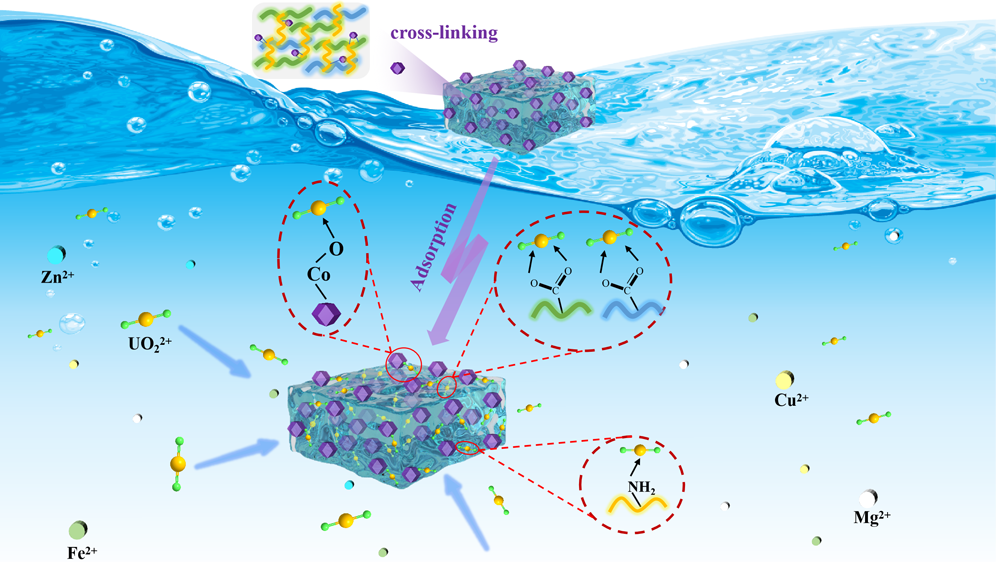
Figure 1 (a) Schematic diagram of the preparation of PSP@ZIF-67, (b) FTIR spectra of AM, SA, PAA, ZIF-67, and PSP@ZIF-67, (c) XRD patterns of AM, SA, ZIF-67, PS, PSP, PS@ZIF-67, and PSP@ZIF-67, and (d) SEM images and digital photos of dried ZIF-67, PS, PSP, PS@ZIF-67, and PSP@ZIF-67.
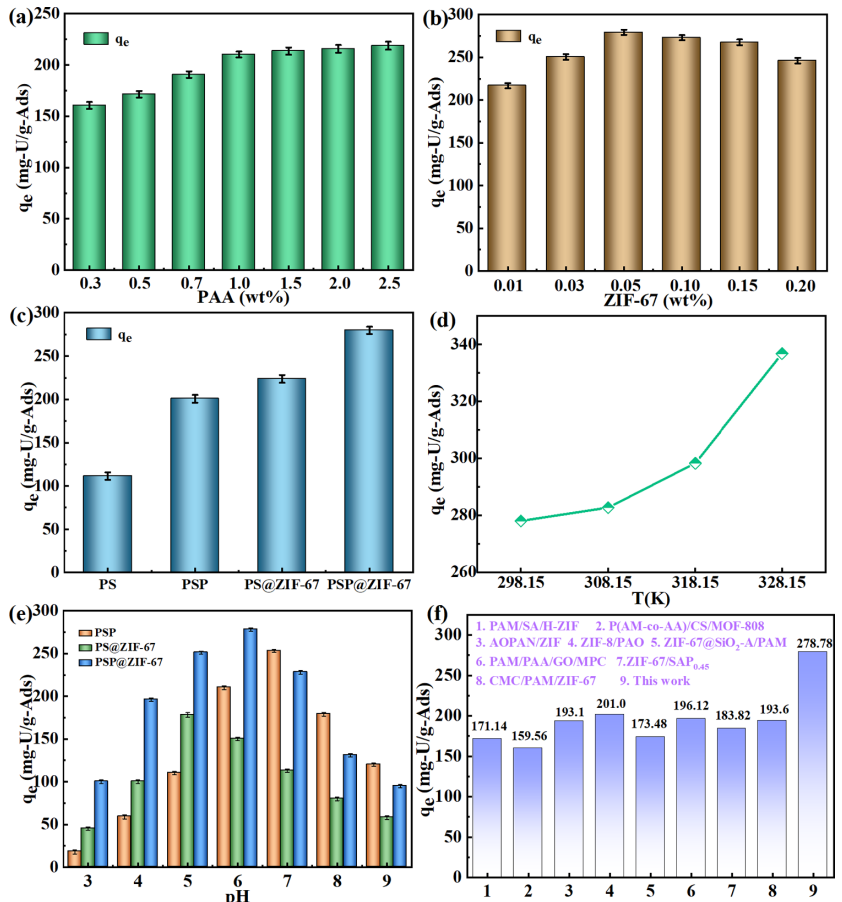
Figure 2 (a) Adsorption capacity of PSP@ZIF-67 with different PAA contents (experimental conditions: Cads=10 mg/L, C=8 mg/L, pH 6, volume 1L, temperature 25 °C, time 25 h), (b) Adsorption capacity of PSP@ZIF-67 with different ZIF-67 contents (experimental conditions: Cads=10 mg/L, C0=8 mg/L, pH 6, volume 1L, temperature 25 °C, time 25 h), (c) Adsorption amounts of PS, PSP, PS@ZIF-67, and PSP@ZIF-67 (Cads=10 mg/L, C0=8 mg/L, pH 6, volume 1L, temperature 25 °C, time 25 h), (d) Effect of temperature on the adsorption capacity of PSP@ZIF-67 for U(VI) (Cads=10 mg/L, C0=8 mg/L, pH 6, volume 1L, time 25 h), (e) Effect of pH on the adsorption capacities of PSP, PS@ZIF-67, and PSP@ZIF-67 (experimental conditions: Cads=10 mg/L, C0=8 mg/L, volume 1L, temperature 25 °C, time 25 h), (f) Comparison of the uranium adsorption capacity of PSP@ZIF-67 with adsorbents based on MOFs and hydrogels in the literature (initial concentration of uranium (cobalt): 1*=99.52 mg/L, 2*=99.47 mg/L, 3*=100 mg/L, 4*=100 mg/L, 5*=99.73 mg/L, 6*=99.8 mg/L, 7=50 mg/L, 8*=99.75 mg/L, 9″=8 mg/L).
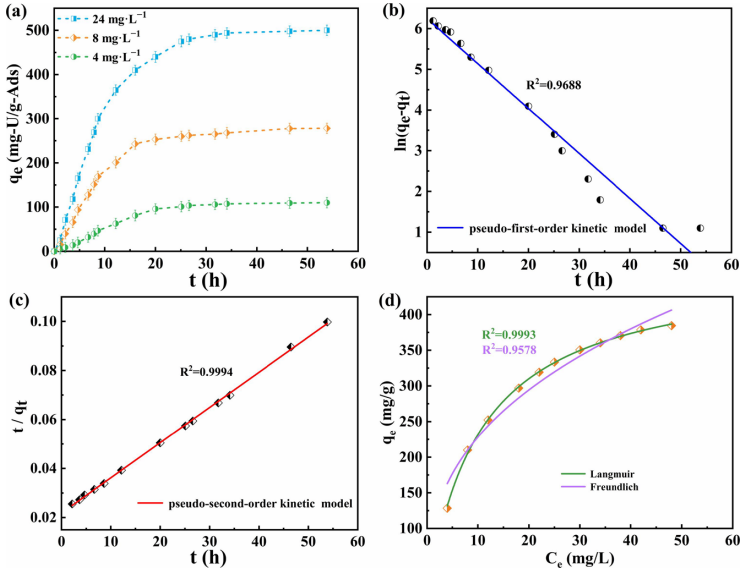
Figure 3 (a) Effect of contact time and initial U(VI) concentration on the adsorption amount of PSP@ZIF-67 for U(VI), (b) Linear simulation of pseudo-first-order kinetics, (c) Linear simulation of pseudo-second-order kinetics, and (d) Langmuir and Freundlich adsorption isotherm simulations.
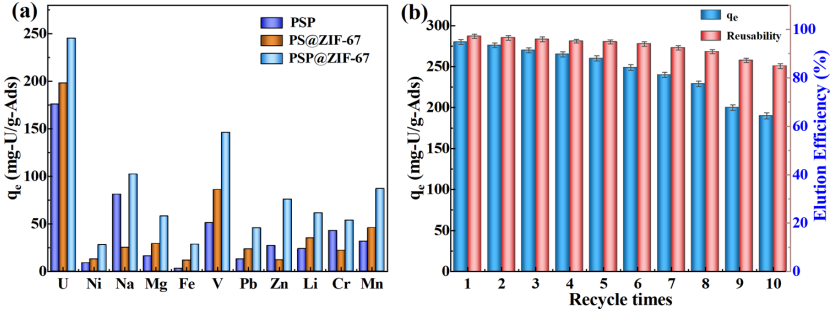
Figure 4 (a) Effect of coexisting ions on the adsorption of U(VI) by PSP@ZIF-67 (ion concentration C0=8 mg/L, adsorption amount Mads=10 mg, volume V=1L, pH 6, temperature T=25 °C); (b) Number of cycles of PSP@ZIF-67 and its corresponding desorption rate.
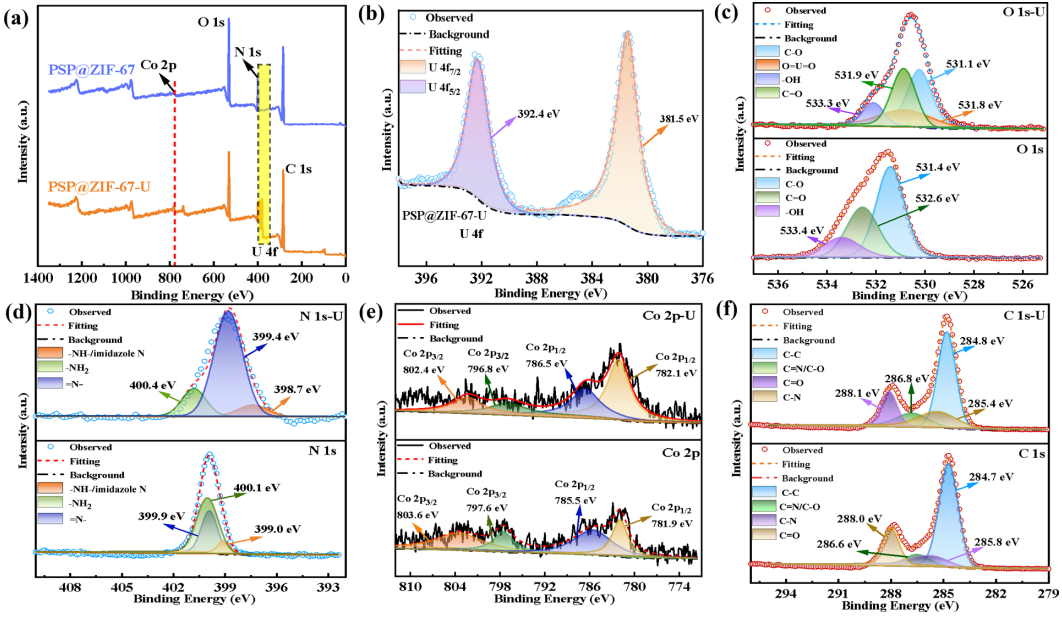
Figure 5 (a) Full spectrum XPS spectra of PSP@ZIF-67 and PSP@ZIF-67-U, (b) 4f energy level spectrum of U, (c) 1s energy level spectrum of O, (d) 1s energy level spectrum of N, and (e) 2p1/2 energy level spectrum of Co and (f) 1s energy level spectrum of C.
 In summary, we report the development of a high-performance adsorbent for uranium extraction by decorating ZIF-67 crystals onto PAM/SA/PAA hydrogels through chelation and covalent crosslinking. The PSP@ZIF-67 composite hydrogel exhibited an outstanding adsorption capacity of 278.0 mg/g at a uranium concentration of 8 mg/L, while maintaining excellent adsorption performance across a pH range of 3 to 9. This adsorbent also demonstrated remarkable selectivity for UO22+ among competing ions. Furthermore, PSP@ZIF-67 exhibited excellent recyclability and structural stability, with an adsorption capacity of 228.9 mg/g for U(VI) after eight consecutive adsorption-desorption cycles, and a desorption efficiency of 90.79%. Our work provides valuable insights for the development of high-performance materials for uranium extraction.
References: T. Zhou, Y.C. Guo, Z.G. Zeng, Z.Y. Wang, X.W. Liu, H. Li, ZIF-67-Embedded Polyacrylamide/Sodium Alginate/Polyacrylic Acid Hydrogel for Efficient and Selective Uranium Extraction, ACS Appl. Mater. Interfaces 2025, 17, 33080−33088, https://doi.org/10.1021/acsami.5c03761.

Scan the QR code above to access the original paper

Compiled by: Zang Xiao (Sunshine Water Purification)
Editor: Environmental and Energy Functional Materials
Sunshine Water Purification Research Group: The main research directions include biomass-based environmental functional materials, solar evaporation materials, magnetic environmental functional materials, pollutant adsorption, and mechanisms of environmental catalytic reactions. The group has undertaken more than ten projects, including the National Natural Science Foundation project, Zhejiang Provincial Natural Science Foundation exploratory project, and municipal science and technology plan projects. Over 80 SCI papers have been published or accepted in journals such as Chem Eng J, Bioresour Technol, J Hazard Mater, Desalination, Carbohydr Polym, J Colloid Interf Sci, Sep Purif Technol, Ind Eng Chem Res, J Environ Manag, and J Environ Sci. Nine review papers have been published in top journals of the Chinese Academy of Sciences, with over 6000 citations across more than 400 SCI journals, with an average citation of over 90 times per paper. The highest citation for a single paper is 520 times; 19 papers have been selected as ESI highly cited papers, and 7 papers have been selected as hot papers.


Chitosan丨Cellulose丨MOF Materials丨Graphene丨Carbon Nanotubes丨MXenes丨Molybdenum Disulfide丨Catalytic Materials丨Evaporation Materials丨Adsorption Materials丨Electrode Materials丨Phosphorus Removal Materials丨Hydrogen Production Materials
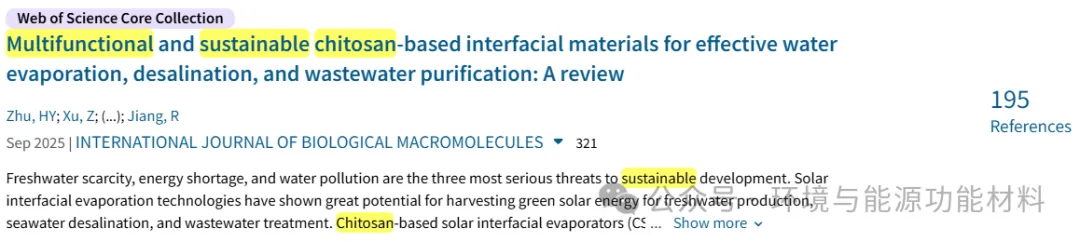
In September 2025, the international top journal International Journal of Biological Macromolecules published a review paper by the Sunshine Water Purification Research Group titled “Multifunctional and sustainable chitosan-based interfacial materials for effective water evaporation, desalination, and wastewater purification: A review”. According to Web of Science, this is the first comprehensive review discussing multifunctional and sustainable chitosan-based interfacial evaporation materials in wastewater treatment and water purification applications. This paper summarizes four types of chitosan-based solar interfacial evaporators (CS-SIEs), five types of modified materials, and their applications in water pollution control. Finally, it summarizes the challenges faced by CS-SIEs in practical applications. The International Journal of Biological Macromolecules focuses on the chemical modification of natural macromolecules and their industrial applications in biology, environment, pharmaceuticals, and food, with the latest Chinese Academy of Sciences ranking: 8.50/Second District TOP journal.

Scan the QR code above to view the full text
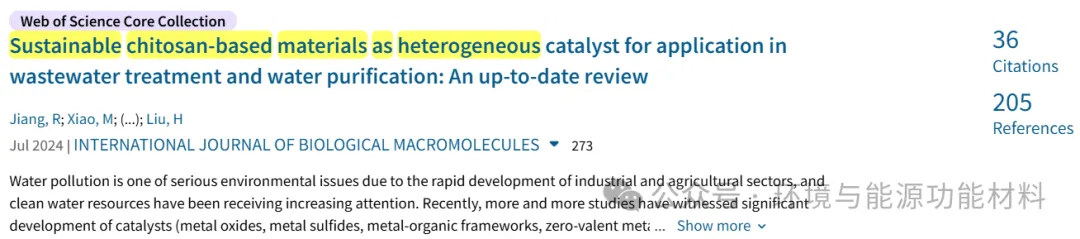
On June 8, 2024, the international journal International Journal of Biological Macromolecules published a review paper by the Sunshine Water Purification Research Group titled “Sustainable chitosan-based materials as heterogeneous catalysts for application in wastewater treatment and water purification: An up-to-date review”. According to Web of Science, this is the first comprehensive review discussing the application of chitosan-based heterogeneous catalysts in wastewater treatment and water purification. This review summarizes the preparation strategies and application progress of five types of Cat@CSbMs materials, including metal oxides/chitosan-based composites, metal sulfides/chitosan-based composites, bismuth-based semiconductors/chitosan-based composites, metal-organic frameworks/chitosan-based composites, and nano-zero-valent metals/chitosan-based composites. This review not only deepens the understanding of the role of environmental functional materials in environmental pollution control but also provides references and insights for future research on Cat@CSbMs in pollutant adsorption and enrichment, photocatalytic oxidation degradation of pollutants, and reduction of metal ions.
This paper has been cited 36 times since its publication in June 2024 (Web of Science), with 18 citations from foreign scholars, accounting for 50.0% of international citations.

Scan the QR code above to view the full text
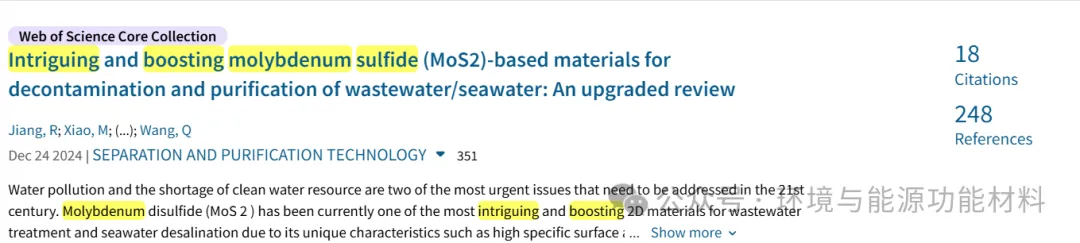 On December 24, 2024, the international journal Separation and Purification Technology published a review paper by the Sunshine Water Purification Research Group titled “Intriguing and boosting molybdenum sulfide (MoS2)-based materials for decontamination and purification of wastewater/seawater: An upgraded review”. This review comprehensively summarizes the effective modification strategies for MoS2-based materials (MoS2 bMats) to enhance wastewater treatment and water purification over the past six years (2018-2024), focusing on the applications of MoS2 bMats in environmental pollutant adsorption, photocatalytic degradation and reduction, Fenton advanced oxidation, PMS/PS activation oxidation, and wastewater desalination (membrane filtration and solar evaporation desalination). Finally, it discusses the gap between theoretical research and application of MoS2 bMats, engineering challenges, future research directions, and opportunities.
This paper has been cited 17 times since its online publication in December 2024 (Web of Science), with 25 citations from foreign scholars, accounting for 55.5% of international citations.
Scan the QR code above to view the full text

Scan the QR code above to view the full text
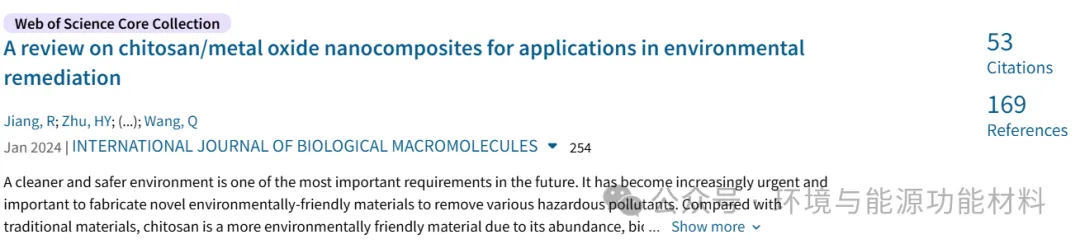
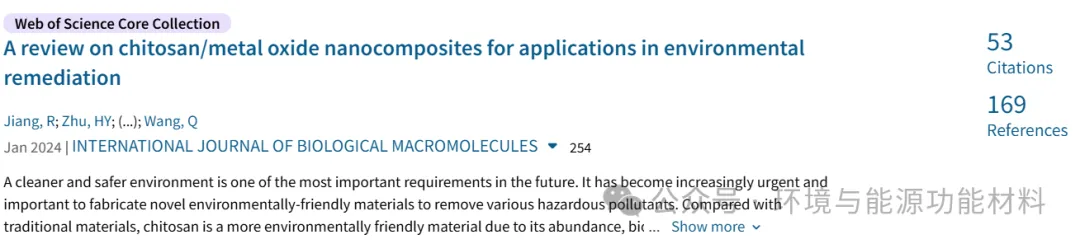 In February 2024, the international journal Separation and Purification Technology published a review paper by the Sunshine Water Purification Research Group titled “A review on chitosan/metal oxide nanocomposites for applications in environmental remediation”. A cleaner and safer environment is one of the most important requirements for the future. Compared to traditional materials, chitosan has rich biocompatibility, biodegradability, film-forming ability, and hydrophilicity, making it a more environmentally friendly functional material. Due to the abundant -NH2 and -OH groups on the chitosan molecular chain, it can effectively chelate various metal ions, and chitosan-based materials as metal oxide nanomaterials (TiO2, ZnO, SnO2, Fe3O4, etc.) have great potential. In recent years, many chitosan/metal oxide nanomaterials (CS/MONMs) have been applied as adsorbents, photocatalysts, heterogeneous Fenton reagents, and sensors in environmental remediation and monitoring. This review comprehensively analyzes and summarizes the latest progress of CS/MONMs composites, which will provide rich and meaningful information for the preparation and wastewater treatment applications of CS/MONMs composites and help researchers better understand the potential of CS/MONMs composites in environmental remediation and monitoring.
This paper has been cited 51 times since its online publication in January 2024 (Web of Science), with 26 citations from foreign scholars, accounting for 51.0% of international citations.

Scan the QR code above to view the full text

Scan the QR code above to view the full text
 Disclaimer:1. The public account shares international environmental and energy functional materials, including biomass (chitosan, cellulose, lignin, sodium alginate, etc.) functional materials, solar evaporation materials, new adsorption materials, carbon-based (graphene, carbon nanotubes, carbon quantum dots, biochar, fullerenes, etc.) materials, MOFs/HOFs/COFs materials, photocatalytic materials, Fenton materials, hydrogen production materials, and other related cutting-edge academic achievements, as well as other related data processing methods, paper writing, and submission information, with no commercial purpose. This public account respects the legitimate rights of original authors and intellectual property rights. If there is any infringement, please contact the public account backend or send an email, and we will promptly modify or delete it.2. Some images and resources are sourced from the internet or reprinted from other public accounts! Any works marked with “Source: xxx (not from this public account)” are reprinted from other media, and the purpose of reprinting is to convey more information, and do not represent the views of this public account or take responsibility for their authenticity, nor bear direct or joint liability for any infringement of such works.3. The purpose of translating foreign literature is to convey more international information in related fields. The foreign literature is translated by graduate students of the research group, and due to limited knowledge, there may be omissions and errors. Readers are encouraged to read critically and provide feedback.4. Contributions related to environmental and energy materials research results are welcome, and the Environmental and Energy Functional Materials public account will promptly promote them. Contact email: [email protected].5. Submissions are welcome, and this public account promotes them for free. Contact WeChat: 18358609860.
Research group homepage:
https://www.x-mol.com/groups/qiwang
https://www.x-mol.com/groups/zhuhuayue