Google’s Ironwood Chip Ignites the PCB Industry, Zhongfu Circuit’s Thailand Factory to Mass Produce Delta Orders in Q4
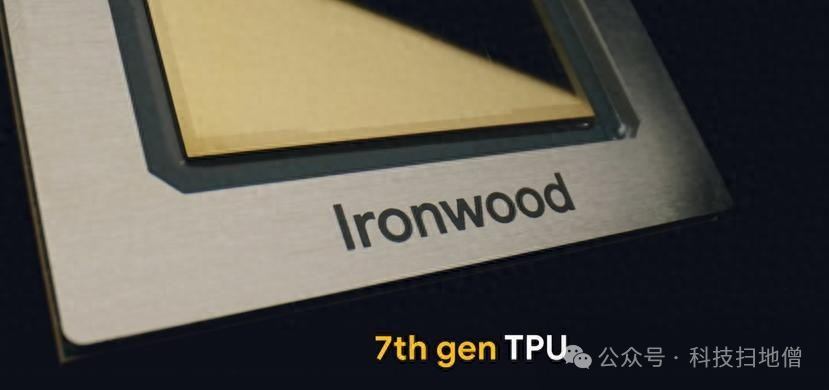
On November 7, 2025, Google suddenly announced the seventh-generation TPU chip Ironwood, with a single-chip liquid cooling component priced at $49,860, while the PCB boards carrying these chips are valued at 30 times that of traditional products. This seemingly ordinary technological upgrade has brought about a profit explosion for Chinese PCB companies not seen in a decade—high-layer boards required for AI servers, with more than 18 layers, are priced at 30,000 to 50,000 yuan per square meter, with gross margins exceeding 40%. On the same day that Google released the chip, Zhongfu Circuit (300814.SZ) reported good news from its Thailand factory: in Q4, it will officially introduce bulk orders from Delta Electronics, marking the harvest period for this PCB invisible champion’s “AI power + overseas capacity” strategy.
2025 Q3 Global Tech Events Review: AI Computing Power Demand Explosion Reshapes Industry Landscape
Google Ironwood Chip Mass Production: PCB Value Surges 30 Times
On November 7, Google announced the mass production plan for the seventh-generation TPU chip Ironwood, with the liquid cooling component priced at $49,860, while the value of the PCB boards carrying these chips has increased 30 times compared to traditional products. More critically, the price of high-layer boards required for AI servers, with more than 18 layers, reaches 30,000 to 50,000 yuan per square meter, with gross margins exceeding 40%. Chinese PCB companies, leveraging their mass production technology for boards with over 70 layers and holding a 35% global market share, are upgrading from “contract manufacturers” to core suppliers of AI infrastructure.
NVIDIA GB300 Architecture Launched: Demand for High-End HDI Boards Surges 150%
On October 29, NVIDIA’s GB300 GPU began mass production, requiring 20-30 layer HDI process for its accompanying PCB boards, with line width precision reaching 40 microns (half the thickness of a human hair). TrendForce data shows that the global AI server PCB market size will exceed $12 billion by 2025, with a compound annual growth rate of 101%, and the demand for high-end HDI boards is expected to grow by 150%. Zhongfu Circuit has been certified by Delta and is a potential supplier for NVIDIA’s AI power modules.
Zhongfu Circuit’s Thailand Factory Mass Production: Delta Orders to be Introduced in Q4
On November 4, Zhongfu Circuit disclosed the progress of its Thailand factory: the project is located in the Rayong Industrial Zone, mainly producing thick copper boards, high-speed boards, and other products for applications in 5G communications, new energy vehicles, data centers, and more. By the end of Q3, the factory had passed audits from multiple overseas clients, and core customers like Delta will successively introduce bulk orders in Q4. This factory is positioned as an “overseas capacity hub,” serving international clients like Delta and Flex, as well as supporting domestic companies like Huawei and BYD with their overseas factories.
Global PCB Market Size Exceeds $78.6 Billion: AI Servers Become Core Growth Driver
According to Prismark data, the global PCB market size is expected to reach $78.6 billion by 2025, with a year-on-year growth of 6.8%. Among them, the AI server PCB market size will reach $12 billion, with a compound annual growth rate of 32.5%; the PCB market size for new energy vehicles will reach $9.9 billion, accounting for 12.6%. China’s PCB output accounts for 53.9% of the global total, but high-end products are still constrained by technological blockades, with the localization rate of multilayer boards with more than 18 layers being less than 30%.
EU Carbon Tariff Policy Takes Effect: Southeast Asian Capacity Becomes a Key Variable
On October 1, the EU Carbon Border Adjustment Mechanism (CBAM) officially took effect, requiring additional carbon tariffs for PCB products exported to the EU. This has accelerated the transfer of domestic PCB companies’ capacity to Southeast Asia. Zhongfu Circuit’s Thailand factory can reduce costs by 15% through RCEP tariff advantages and enjoys a 10-year tax exemption locally. Industry data shows that from 2024 to 2029, the compound annual growth rate of PCB capacity in Southeast Asia will reach 7.1%, making it the fastest-growing region for global capacity.
Three Major Trends in the Tech Industry: AI Power, High-End HDI, and Southeast Asian Transfer Reshape Competitive Landscape
AI Server PCB: From “Layer Competition” to “Material Revolution”
Technology Development Stage: Currently, AI server PCBs have surpassed the 46-layer technology node, using the semi-additive process (mSAP) to achieve a line width precision of 1.5μm, with wiring density increased by 5 times compared to traditional processes. The NVIDIA GB300 platform requires 20-30 layer HDI boards, with a dielectric constant (Dk) of ≤3.0 and a dielectric loss (Df) of ≤0.005.
Market Size Forecast: Prismark data shows that the global AI server PCB market size will reach $12 billion by 2025 and exceed $18.9 billion by 2029, with a compound annual growth rate of 11.6%. Among them, high-end HDI boards (4 layers and above) will grow at a rate of 16.3%, becoming the fastest-growing subcategory.
Competitive Landscape: Only 5 companies globally can stably supply high-layer boards with more than 18 layers, with China holding 3 seats (Shenghong Technology, Huadian Co., Shenzhen South Circuit). Shenghong Technology’s AI server PCB global market share exceeds 30%, Huadian Co. holds a 35% global market share for 800G switch boards, while Zhongfu Circuit has entered the Google and AMD supply chains with its AI power modules.
New Energy Vehicle PCB: The Leap in Single Vehicle Value from $500 to $3000
Technology Development Stage: New energy vehicle PCBs are upgrading from “distributed architecture” to “domain controller,” with the 800V high-voltage platform driving a surge in demand for thick copper boards (over 6oz), and temperature ratings rising from 105℃ to 150℃. Tesla’s Cybertruck uses a 24-layer high thermal conductivity PCB, improving temperature performance by 50%.
Market Size Forecast: Yole data shows that the global automotive PCB market size will reach $30 billion by 2025, with smart driving domain controller PCBs accounting for 49.34%, and a compound annual growth rate of 24.18%. China’s new energy vehicle PCB market size will exceed 20 billion yuan, increasing its global share to 25%.
Competitive Landscape: Jingwang Electronics holds over 40% global market share for Tesla domain controller PCBs, Huadian Co. has a 35% global market share for millimeter-wave radar boards, and Zhongfu Circuit’s new energy vehicle power PCBs have been certified by BYD, with a 32% revenue growth expected in the first half of 2025.
Southeast Asian Capacity Transfer: A Dual Game of Cost Advantage and Supply Chain Resilience
Technology Development Stage: Southeast Asian PCB capacity is still mainly mid-to-low-end, but the construction of high-end capacity is accelerating. Shenghong Technology’s Thailand base has achieved mass production of 70-layer boards, and Zhongfu Circuit’s Thailand factory supports the production of high multilayer boards with over 20 layers, with a yield rate exceeding 90%.
Market Size Forecast: Prismark predicts that from 2024 to 2029, the compound annual growth rate of PCB output in Southeast Asia will reach 7.1%, and by 2029, it will account for 15% of the global total. Chinese PCB companies have invested over 32 billion yuan in Southeast Asia, with new capacity mainly concentrated in Thailand and Vietnam.
Competitive Landscape: Huadian Co.’s Thailand factory will start production in Q2 2025, exclusively for NVIDIA orders; Shenghong Technology’s Vietnam base has an HDI capacity of 1 million square meters per year; Zhongfu Circuit’s Thailand factory has an initial capacity of 500,000 square meters, expected to contribute 1.2-1.5 billion yuan in revenue by 2026.
Zhongfu Circuit Core Technology Analysis: Breakthrough from “Manufacturing” to “Intelligent Manufacturing”
AI Power Module Technology: HVDC Architecture + Embedded Devices, Efficiency Improved by 15%
Technical Principles and Innovations: Zhongfu Circuit’s AI power module adopts HVDC architecture, achieving direct conversion from 800V to 12V, eliminating traditional intermediate conversion stages, improving efficiency by 15%. The embedded inductance technology compresses the module thickness to 60% of traditional solutions, with thermal conductivity increased to 2.5W/m·K.
Comparison with Similar Technologies in the Industry: Traditional power modules use discrete component designs, which are bulky and have high losses; Zhongfu Circuit’s “PCB + embedded devices” integration scheme reduces module losses by 15% and increases power density by 40%. This technology has been certified by Google TPU, supporting 1000A high current output with efficiency exceeding 98.5%.
Patent Layout: As of November 2025, Zhongfu Circuit has accumulated 94 patents, including the “New Energy Vehicle Power PCB Board Punching Device” (Patent No. CN202422207447.8), which solves the burr problem in thick copper board punching, improving yield to 99.2%. In 2024, R&D investment reached 76.5977 million yuan, a year-on-year increase of 42.72%, with R&D personnel accounting for 18%.
High Multilayer Board Manufacturing Technology: Staggered Riveting Process Solves Layer Offset Issues
Technical Principles and Innovations: Zhongfu Circuit’s “High Multilayer Staggered Riveting PCB Board” (Patent No. CN202422993337.9) uses a staggered riveting design for adjacent three layers, solving the layer offset problem during traditional multilayer board lamination, achieving inter-layer alignment precision of ±15μm, with yield improved by 15 percentage points.
Comparison with Similar Technologies in the Industry: Traditional riveting fixing processes have inter-layer offset rates exceeding 20%, while Zhongfu Circuit’s staggered riveting process controls layer offset within 50μm, suitable for the production of high multilayer boards with over 20 layers. This technology has been applied to Google TPU power modules, with a single machine value of 5000 yuan.
Commercialization Path: This technology has been certified by Delta and Flex, with bulk orders expected to be introduced in Q4 2025, anticipated to contribute 300-500 million yuan in annual revenue. After the Thailand factory is put into production, the product capacity will increase to 100,000 square meters per year, accounting for 5% of the global high-end power PCB market share.
Financial and Technical Prospects Cross-Analysis: R&D Investment Conversion Efficiency Leading the Industry
Strong Correlation Between R&D Investment and Revenue Growth
In 2024, Zhongfu Circuit’s R&D investment reached 76.5977 million yuan, accounting for 5.27% of revenue, a year-on-year increase of 42.72%. Key technologies such as AI power modules and high-frequency high-speed boards have been converted into revenue, with revenue of 1.355 billion yuan in the first three quarters of 2025, a year-on-year increase of 29.8%, outpacing the industry average growth rate (25.1%).
Data Comparison: Peers like Shenghong Technology have an R&D investment ratio of 4.8% with a revenue growth rate of 83.4%; Huadian Co. has an R&D investment ratio of 6.5% with a revenue growth rate of 56.59%. Although Zhongfu Circuit’s R&D investment intensity is lower than Huadian Co., its conversion efficiency is higher, generating 17.7 yuan in revenue for every yuan of R&D investment, exceeding the industry average of 12.3 yuan.
Technical Conversion Efficiency: Patent Quantity and Gross Margin Correlation
As of November 2025, Zhongfu Circuit has accumulated 94 patents, including 17 invention patents and 77 utility model patents. The AI power module, which is dense in patents, has a gross margin of 25%, nearly 10 percentage points higher than the company’s overall gross margin (15.24%). In the first half of 2025, this business’s revenue share increased to 18%, driving an overall gross margin increase of 1.98 percentage points year-on-year.
Industry Comparison: Shenzhen South Circuit has over 960 patents with a gross margin of 35.14%; Jingwang Electronics has 399 patents with a gross margin of 28%. Zhongfu Circuit’s patent density (patent quantity/revenue) is 7 patents per billion yuan, higher than the industry average of 5 patents per billion yuan, indicating strong technical conversion capability.
Cash Flow Supporting R&D: Operating Cash Flow Net Amount Improved by 62% Year-on-Year
In the first three quarters of 2025, Zhongfu Circuit’s operating cash flow net amount was 45.78 million yuan, a year-on-year improvement of 62%, providing a stable funding source for R&D investment. Monetary funds reached 694 million yuan, an increase of 118% compared to the same period last year, with interest-bearing liabilities of 595 million yuan and a debt-to-asset ratio of 48.34%, indicating a stable financial structure.
Peer Comparison: Shenghong Technology has a debt-to-asset ratio of 53.77% and an operating cash flow net amount of 1.222 billion yuan; Huadian Co. has a debt-to-asset ratio of 47.70% and an operating cash flow net amount of 2.895 billion yuan. Although Zhongfu Circuit’s cash flow scale is small, its growth rate is fast, providing ample ammunition for subsequent technology R&D.
Future Trends in the Tech Industry for the Next 1-3 Years: Three Major Dividends Give Rise to New PCB Leaders
AI Computing Power Demand Explosion: Driving PCB Value to Increase Fivefold in Five Years
Core Viewpoint: As the parameters of AI large models break through from hundreds of billions to trillions, the number of GPUs per cluster will rise from thousands to tens of thousands, leading to exponential growth in PCB demand. Prismark predicts that from 2025 to 2029, the compound annual growth rate of the AI server PCB market will reach 11.6%, more than three times that of traditional PCBs.
Investment Opportunities: High-end HDI boards, high-frequency and high-speed materials, and liquid cooling PCBs will become core tracks. Zhongfu Circuit’s AI power modules have been introduced into the Google and AMD supply chains, and are expected to contribute 500-800 million yuan in revenue by 2026, increasing its share to 30%.
Centralization of Automotive Electronic and Electrical Architecture: Single Vehicle PCB Value Exceeds 10,000 Yuan
Core Viewpoint: New energy vehicles are upgrading from “distributed ECU” to “central computing + regional control” architecture, with the single vehicle PCB value rising from $500 in traditional vehicles to $3000 in smart electric vehicles. Level 3 autonomous driving requires 12-layer HDI boards, and the 800V platform is driving a surge in demand for thick copper boards.
Investment Opportunities: Automotive radar PCBs, domain controller PCBs, and battery management system PCBs are the three growth poles. Zhongfu Circuit has been certified by Tesla and BYD, and its automotive electronics business revenue is expected to exceed 300 million yuan in 2025, increasing its share to 22%.
Southeast Asian Capacity Dividend: Dual Advantages of Avoiding Tariffs and Proximity to Customers
Core Viewpoint: Against the backdrop of Sino-US trade frictions, Southeast Asia has become the core destination for PCB capacity transfer. Factories in Thailand and Vietnam can avoid the 301 tariffs and are close to assembly plants of clients like Apple and Google, shortening delivery times to 3 days, saving 7 days compared to domestic delivery.
Investment Opportunities: Companies that achieve mass production in Southeast Asia first will seize the opportunity. Zhongfu Circuit’s Thailand factory will introduce Delta orders in Q4 2025, with a capacity utilization rate expected to reach 80% in 2026, contributing a net profit of 120-150 million yuan, accounting for over 50%.