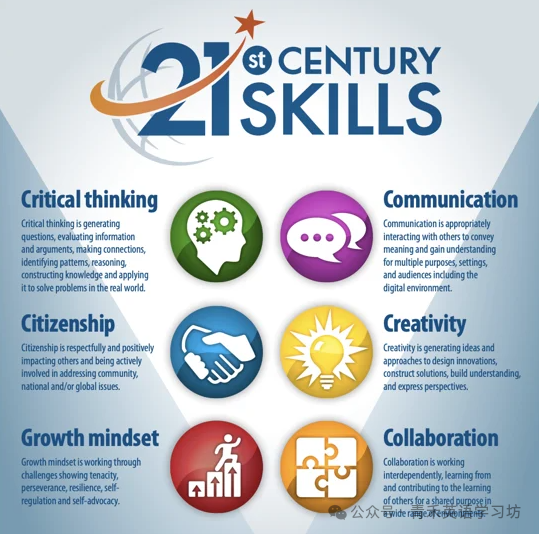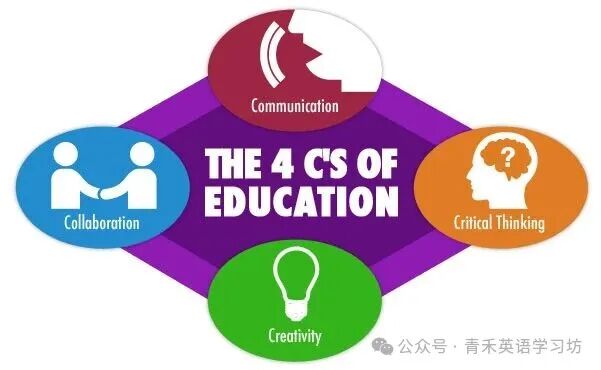
As an English teacher educator, I often think about the skills our students need most to succeed in today’s world. Different countries and systems highlight various “core competencies”, but the four C’s of 21st century skills are almost universally recognized as essential: critical thinking, creativity, collaboration, and communication. These are not abstract ideas. They are practical, everyday abilities that help students thrive in school, in the workplace, and in life.
Critical thinking is the ability to question, analyze, and solve problems. In an age when information is everywhere but not always reliable, this skill is more important than ever. Students need to be able to separate fact from opinion, to ask “Why?” and “How?” rather than accept everything at face value. Critical thinking is not about memorizing facts—it is about learning how to uncover facts independently. When students share their findings with peers, they not only deepen their own understanding but also help build a classroom culture where reasoning and inquiry are valued. In this way, critical thinking turns learning into an active, purposeful pursuit.
While critical thinking sharpens students’ judgment, creativity encourages them to imagine and innovate. Creativity is often misunderstood as something only artists or writers have. In reality, it is the ability to look at problems from fresh perspectives and generate new solutions. Students can develop creativity by experimenting, designing, or simply trying out unfamiliar approaches. Of course, not every idea will work, and failure is part of the process. But what matters is that students gain confidence to think differently and express original ideas. Even better, creativity tends to be contagious—one student’s imaginative solution can inspire others to explore new possibilities.
As important as creativity is, students also need to learn how to work with others. That’s where collaboration comes in. Almost every career requires teamwork, and students who practice collaboration early will be better prepared for the future. Collaboration teaches them to listen actively, respect different viewpoints, and combine their strengths to reach a common goal. At first, students may feel discouraged when their ideas don’t match those of others. But with encouragement, they can come to see differences as opportunities rather than obstacles. When they recognize that their unique contributions add value to the group, they become more willing to speak up and engage meaningfully.
Finally, communication is the skill that ties everything together. Communication is more than simply talking or writing—it is the ability to convey ideas clearly, concisely, and appropriately for the audience. In our digital world, where tone and context are often missing in texts and emails, effective communication is more important than ever. Students need to learn how to present their ideas in a way that others can understand, while also listening and adjusting based on feedback. Good communicators can engage an audience, avoid misunderstandings, and make a lasting impression.
When we consider these four skills together, it’s clear they are deeply interconnected. Critical thinking helps students analyze, creativity pushes them to innovate, collaboration enables them to build with others, and communication allows them to share their ideas effectively. Together, the four C’s empower students to become independent thinkers, confident creators, cooperative team members, and clear communicators.
As teachers, we have a responsibility to weave these skills into our daily practice—not as extras, but as central to what we do. By doing so, we are not only preparing students for exams but also equipping them with the tools they need to navigate life, contribute to their communities, and succeed in an ever-changing world.