
Have you ever noticed what your mobile phone calls the wireless network in the settings?
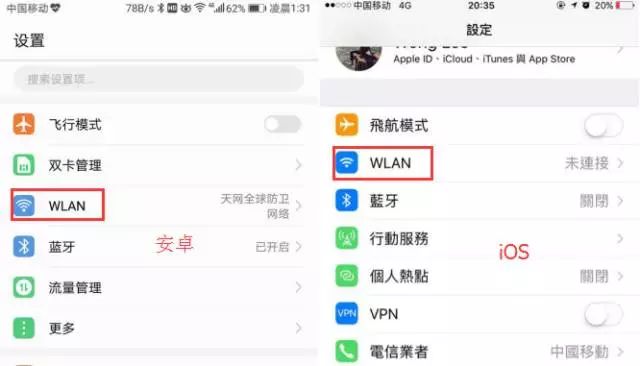
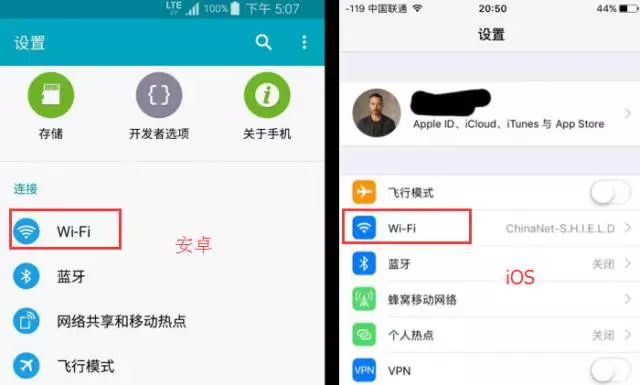
Some say that iPhones call it Wi-Fi, while Android phones call it WLAN. In fact, regardless of whether you are using an iPhone or an Android phone, or even the same model of phone, there are instances where it is called Wi-Fi in some cases and WLAN in others. So, which one is the fake phone?
To clarify this issue, we first need to understand the difference between Wi-Fi and WLAN.
WLAN: This is a general term for Wireless Local Area Networks. For networks, it is a type of network mode; for mobile phones, it is a function similar to a computer’s wireless network card.
Its function is to use radio frequency (RF) technology for data transmission, achieving a network system for communication and resource sharing.
Wi-Fi: This stands for Wireless Fidelity. In simple terms, Wi-Fi is a technology for wireless networking, which used to connect computers through cables but now connects them via radio waves.
Wi-Fi is somewhat similar to Bluetooth technology and is a short-range wireless technology used in offices and homes.
 Differences Between the Two
 1. They are inclusive of each other.
The main difference is that WLAN is a type of network, and there are many ways to establish a wireless local area network, which leads to the use of many different data transmission standards.
Wi-Fi is one of those standards and is currently the most widely used WLAN standard. Wi-Fi is included within WLAN and is a technology under the WLAN protocol.
2. Different signal transmission power and coverage range.
The coverage radius of Wi-Fi can reach 90 meters, while WLAN’s radio coverage is broader, and with antennas, it can reach up to 5 kilometers.
In daily life, Wi-Fi is usually generated by routers, wireless network cards, or wireless APs, mainly used in smaller areas like homes and offices, whereas WLAN is typically used in broader areas, such as schools and airports.
On mobile phones, whether it’s an iPhone or an Android phone, regardless of whether the wireless network in the settings is called Wi-Fi or WLAN, they are currently connected to WLAN through Wi-Fi, and the effect is the same.
So why do phones of the same model have different names?
The reason is that as long as it is a domestic version, it will be called WLAN or Wireless Local Area Network, while non-domestic versions (such as Hong Kong versions, American versions, etc., commonly known as “water goods”) are called Wi-Fi.
This issue involves the self-service intellectual property wireless local area network protocol—WAPI, which was promoted in China starting in 2003.
WAPI, short for Wireless Local Area Network Authentication and Confidentiality Infrastructure, is a security protocol and also a mandatory standard for wireless local area network security in China.
At the end of 2003, China planned to enforce the WAPI standard, but it faced resistance from American companies like Intel and even the U.S. government.
It wasn’t until June 2009 that WAPI was first agreed upon by over ten countries, including the U.S., U.K., and France, to be advanced as an international standard in an independent text form. (This means it can be established as a standard, but we don’t use it).

Compared to Wi-Fi, WAPI, although having better security, has not been able to gain international promotion due to various commercial and political reasons, rendering this standard almost non-existent and causing China to lose its voice in this area.
Aside from significant patent fees, Wi-Fi is an American standard, and its security cannot be guaranteed.

A fallback approach is to require that all domestic devices must support both WAPI and Wi-Fi protocols. Since both connection methods are supported, calling it Wi-Fi in the system settings is inaccurate. Therefore, this function on domestic phones is collectively referred to as Wireless Local Area Network or WLAN. In contrast, “water goods” only support Wi-Fi, so it is correct for them to be called Wi-Fi in the settings.

So now you finally understand! What does your phone call it: WLAN, Wi-Fi, or Wireless Local Area Network?