Technology makes life better. With the rapid development of technology, people are constantly enjoying various conveniences. Especially driven by high technologies such as the Internet, mobile communications, and artificial intelligence, the pace of applying trending and cutting-edge technological achievements has accelerated. Cutting-edge technologies such as drones, flexible screens, biometric recognition, and immunotherapy have begun to be applied and are quickly integrating into the lives of ordinary people.
Recently, at the 50th International Consumer Electronics Show, technologies such as drones, unmanned driving, and virtual reality shone brilliantly. As the public’s interest in drones grows, they frequently appear in various locations. In tourist attractions, film shooting bases, or major news sites, drones can often be seen busily shuttling through the air.
What level has the development of drones reached? What changes can it bring to people’s lives? Recently, reporters visited several representative drone companies and research institutions to experience the technological charm of drones up close.
It’s an Aircraft, But Not Just an Aircraft
A complete drone refers to the “drone system,” which is an intelligent, rapidly evolving robot.
When it comes to drones, it seems everyone understands, but what exactly is a drone? Yin Zhihong, chief designer of the system at the Drone Technology Research Institute of China Aerospace Science and Industry Corporation, summarized it in “industry jargon”: “A drone is a type of unmanned aerial vehicle, which refers to aircraft controlled by humans remotely or autonomously by programs.”
Drones are primarily aircraft. “Their technical principles are not fundamentally different from those studied in traditional aerospace engineering,” said Guo Liang, co-founder and CEO of AOS Technology. He believes that the main difference between drones and manned aircraft is that the former has higher requirements for navigation, guidance, and control technologies, as well as a ground command control system to execute predetermined tasks.
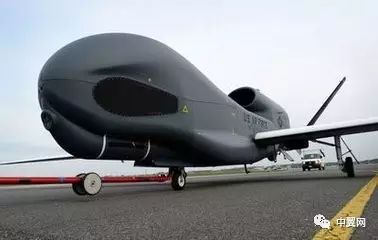
Drones are not necessarily unmanned. “Generally, drones do not carry passengers, such as the U.S. Global Hawk drone. However, some drones can carry passengers, like Israel’s ‘Aerial Mule’ drone,” said Yin Zhihong.
The drones familiar to the public usually refer to the airframe, which is the drone platform that carries payloads during flight. A complete drone refers to the “drone system,” which consists of the drone platform, mission payload, takeoff and landing system, measurement and control and information transmission system, ground support and guarantee system, and pilot/operator.
Yin Zhihong listed them one by one: “The drone platform is responsible for safely flying and delivering payloads to designated locations; the mission payload is mainly used to execute tasks; the takeoff and landing system is responsible for the drone platform’s takeoff and landing; the measurement and control and information transmission system enables the drone to generate and transmit control instructions; the ground support and guarantee system is responsible for the maintenance and support of the drone; and the pilot/operator is responsible for operating and controlling the drone, serving as the command center for the drone.”
Based on different criteria such as takeoff weight, flying speed, flight time, task functions, and technical systems, drones can be classified in various ways. Generally, target drones, unmanned reconnaissance aircraft, unmanned transport aircraft, surveying drones, and agricultural protection drones are distinguished from a functional perspective, but the industry usually classifies them based on technical systems.
“There are three common types of drones. The first type is fixed-wing, which, as the name suggests, has a fixed wing shape and relies on the wind flowing over the wings to provide lift. For example, the Boeing and Airbus large aircraft we usually fly on are fixed-wing aircraft,” introduced a relevant person from DJI Innovations. The second type is helicopters, characterized by one or two main rotors providing lift. The third type is multi-rotor drones, which have four or more rotors. “However, multi-rotor drones are usually just called multi-rotors, not multi-rotor helicopters, to distinguish them from helicopters.”
Different types of drones have different advantages. “Fixed-wing drones fly fast, at high altitudes, cover large areas, and have strong wind resistance, making them suitable for full-length cruising, communication line inspection, aerial photography, etc. However, their speed and large turning radius are not conducive to safety, especially since they require dedicated takeoff and landing sites,” said Wang Jun, vice president of Beijing Zhonghang Intelligent Technology Co., Ltd. Helicopters, although flying at lower altitudes and slower speeds, are more suitable for short-distance cruising, high-definition photography, and monitoring and tracking ground targets, and can hover in place, especially in various situations where takeoff and landing is required.
Suitable for Both Civil and Military Use
Some countries have attempted to use drones for delivery and to detect haze conditions
Drones can perform many tasks that traditional aircraft cannot.
“The birth of drones stemmed from the need for a type of unmanned aircraft to replace manned aircraft in executing ‘3D’ tasks—namely ‘Dull’, ‘Dirty’, and ‘Dangerous’ tasks,” said Guo Liang. A typical example is using drones as target drones for long-distance patrols or long-term communication relays.
The functionality of drones mainly depends on their performance and the characteristics of the mission payload. “For example, a car can serve as a private vehicle for convenient travel, but it can also function as an ambulance, fire truck, water truck, or cargo truck. How a car is used depends on the solutions provided by the industry using the car platform. The same principle applies to drones,” Guo Liang explained.
With advantages such as low cost, zero casualties, strong survivability, good maneuverability, and ease of use, drones are highly favored in the industry. In military applications, drones can be used for reconnaissance and surveillance, ground attacks, communication relays, transportation, and target simulation, making them a “valuable partner.”
In civilian applications, drones are also “versatile.” The rise of consumer drones allows consumers to buy ready-to-fly drones, transforming aerial photography from a unique skill of a few professionals into an activity that everyone can try and enjoy.
In addition to entertainment experiences, civilian drones are mainly used for scientific research, land surveying, pipeline inspection, agricultural and forestry protection, meteorological observation, and other commercial purposes.
——Disaster relief. When geological disasters or major maritime accidents occur, and the accident site is in high mountains, canyons, or areas far from the coast, where conventional methods cannot reach the site in time, unmanned helicopters can maintain contact between the rear and on-site personnel, enabling rescuers to prepare tools and equipment effectively.
——Agricultural and forestry protection. Drones can provide effective means for farmland management and precision operations. Small drones can not only observe crop growth but also spray pesticides and perform foliar fertilization.
——Meteorological observation. The remote sensing rapid monitoring system installed on drones can provide more intuitive and accurate images and data information for monitoring marine disasters, coastal pollution, and marine engineering.
——Forest fire prevention. It is reported that the U.S. “Predator” drone has captured thermal images in real-time during forest fires, transmitting them to the forest firefighting center, allowing for quick and accurate identification of fire locations, thereby reducing disaster losses.
Moreover, the imaginative possibilities related to drones leave people with more space for imagination and expectations. For example, some countries have conducted test services for drone delivery, and domestic companies have also begun attempts at drone cargo delivery; in hazy weather, some companies have started using drones to detect haze conditions; drones are also expected to assist in air traffic. Reports suggest that Uber has envisioned developing a vertical take-off and landing all-electric flying vehicle transportation system that could take about 15 minutes to travel from San Francisco to Silicon Valley, helping people avoid traffic jams. With the continuous development of energy technology, computer technology, and communication technology, drones will increasingly influence and change people’s lifestyles.
Guo Liang believes that in the future, drones should continue to develop towards full electrification and autonomy.
The Market Prospects Are Very Broad
It is predicted that by 2025, the scale of China’s drone market will reach 75 billion yuan, with the civilian drone market accounting for about 93%
So, what is the current state of drone development?
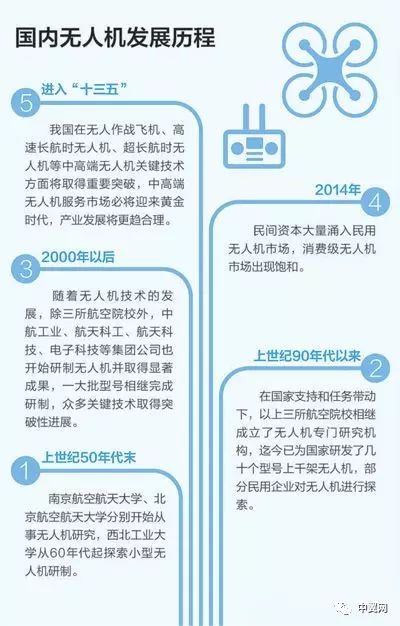
Yin Zhihong introduced that there are currently more than 150 drone production units in China, and there are thousands of drone products on the market, with different types and uses developed by various institutions. “Based on predicted international data and optimistic forecasts for China’s drone market, by 2025, the scale of China’s drone market will reach 75 billion yuan, with the military drone market accounting for about 7% and the civilian drone market accounting for about 93%. The prospects for the drone market are vast.”
Experts believe that the development of drone technology in China is still not consistent. In terms of micro, light, small, and medium low-speed drones, the technology level is close to or has reached international advanced levels, but there is still a significant gap in medium high-speed drones, ultra-long endurance drones, and large drones compared to international advanced levels.
Developed countries have always attached great importance to the development of drones. It is understood that the major drone manufacturing companies in the U.S. include Northrop Grumman, General Atomics, and Boeing. Israel is one of the earliest countries to explore the combat application potential of drones, with major manufacturing companies including Israel Aerospace Industries and Elbit Systems. Europe is also a significant potential market for drone systems and has been accelerating the development of drones.
Since 2015, the Federal Aviation Administration of the United States has gradually relaxed regulations on civil drone flights in several areas, including agriculture, pipeline inspection, and aerial surveying. “Before 2015, only six companies were allowed to use civil drones in the U.S., but by the first half of 2015, the FAA had approved over 500 companies to conduct civil drone operations,” said Yin Zhihong.
The annual forecast report on the drone industry released by the FAA states that in the coming years, small drones will become the strongest growth point in the aviation field. It is expected that by 2020, the total sales of small drones in the U.S. will soar from 2.5 million units in 2016 to 7 million units, including 4.3 million consumer drones and another 2.7 million for commercial purposes.
The prosperity of the market undoubtedly places higher demands on the stability, safety, and intelligence of drones.
In Yin Zhihong’s view, drones are machines, and their basic capabilities, such as maneuverability, flight stability, control performance, and intelligence level, mainly depend on the research and development capabilities of manufacturers and the foundational industrial capabilities. Their reliability also depends on the complexity of the system and the external operating environment; any failure of equipment in the drone system will affect mission execution, and any hindrance in any link of drone use will impact flight safety, which requires joint efforts from consumers and manufacturers. (Reported by Liu Shiyao)
Further Reading
How to Fly Drones Safely?
Drones Cannot Be Unmanaged
As more drones hover in the sky, safety issues have also emerged.
In 2015, in the U.S., a highway fire caused by a car burning incident was delayed for nearly half an hour due to five “illegal flying” small drones at the scene, seriously delaying rescue operations. Moreover, incidents of drones threatening commercial flights have been frequently reported, and there are concerns that drone aerial photography “peeping” infringes on privacy rights and even leaks national secrets.
How can drones fly safely? Experts believe that the safety of drones should be divided into platform safety and usage safety.
“The safety of the drone platform is determined by the technical capabilities and management levels of the drone manufacturers,” said Yin Zhihong. The stronger the technical strength and the more complete the management system of a drone company, the easier it is to ensure the safety of its drone platform.
However, the safety of drone usage is not just a manufacturer issue. It is understood that, currently, from the definition, control, and quality of drones to the qualifications of practitioners, commercial scope, and flight qualifications and behavioral standards of users, government authorities have yet to establish corresponding laws, regulations, and industry standards, resulting in policy gaps in the macro environment and management systems.
“The prominence of safety issues reflects the lack of regulation in industrial development,” said Guo Liang, co-founder and CEO of AOS Technology. He believes that China can learn from the experiences of developed countries to avoid simplistic flight bans and ensure that drone users have the right to use legal airspace. He argues that many parties involved in “illegal flying” are unaware of the potential risks and relevant laws and regulations, and while media should enhance publicity and warnings, it is also necessary to quickly establish and improve a regulatory system and rules for drones of different levels and uses.
Many industry insiders believe that, in addition to laws and regulations, integrating technological means of regulation is also worth promoting.
Experts suggest establishing a market access mechanism for drones and their supporting products, mandating the installation of safety modules with standard electronic fences, prohibiting products without safety modules from circulating in the market. It is also possible to set up electronic police at the boundaries of safety fences to manage drones in the air in real-time, using radio waves to activate the self-destruct feature of drones that exceed boundaries. (Source: Xinhua News)