▲Click the blue text aboveto follow our public account and reply with“Feilian Cloud” to obtain【Data Download Method】

3D printing technology, also known as additive manufacturing, is a technique for constructing three-dimensional objects by adding material layer by layer. According to the latest market research report, the global 3D printing market is expected to reach $50 billion by 2025, with a compound annual growth rate of 23%. This growth trend indicates that 3D printing technology is rapidly becoming a key driver in the manufacturing industry.
With continuous technological advancements, 3D printing has expanded from prototype design to the manufacturing of final products, particularly demonstrating unique advantages in small batch production and personalized customization. Thus, the concept of 3D printing farms has emerged, integrating multiple 3D printers to achieve large-scale, automated production.
Definition and Current Status of 3D Printing Farms
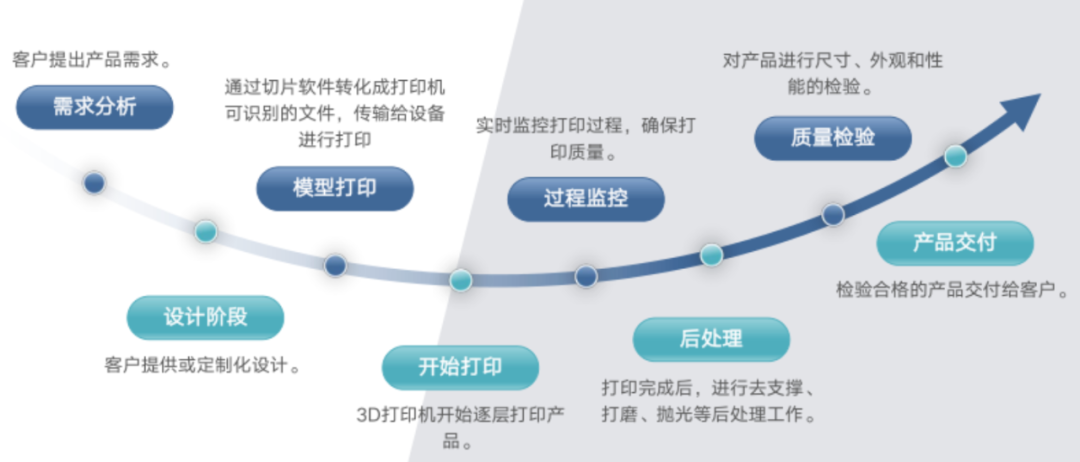
The 3D printing farm model mainly includes the following key elements:

1. Technical Advantages of 3D Printing Farms
Compared to traditional manufacturing models, 3D printing farms have various technical advantages that make them increasingly popular in many industries, such as automotive, aerospace, medical, construction, and consumer electronics.
Energy-saving and environmentally friendly: By optimizing design and material usage, as well as reducing logistics requirements, 3D printing farms help lower energy consumption and reduce environmental impact.
Flexibility and scalability: 3D printing allows users to adjust production specifications according to demand and manage various designs without changing hardware or tools. This provides a high degree of flexibility for changing requirements.
Customized production: 3D printing farms can efficiently conduct customized production of single items or small batches. This makes them particularly advantageous in manufacturing custom medical devices, bespoke tools, or personalized consumer products.
Rapid prototyping and production: 3D printing farms can quickly transition from design to production, significantly shortening the time from concept to market. This is especially valuable for projects that require rapid design iteration.
Complexity without increased costs: In traditional manufacturing, complex parts often incur higher costs due to the need for intricate molds or multi-step processing. 3D printing can produce complex designs without significantly increasing costs.
High material utilization: As mentioned earlier, 3D printing typically adds material only where needed, reducing material waste, which contrasts with the large amounts of waste common in traditional manufacturing methods.
2. Reasons for the Rise of 3D Printing Farms
The rise of 3D printing farms can be attributed to several factors, with the following being key points:
1. Technological advancements: Continuous improvements in 3D printing technology have enhanced printing speed, precision, and material diversity, making 3D printing more suitable for commercial production.
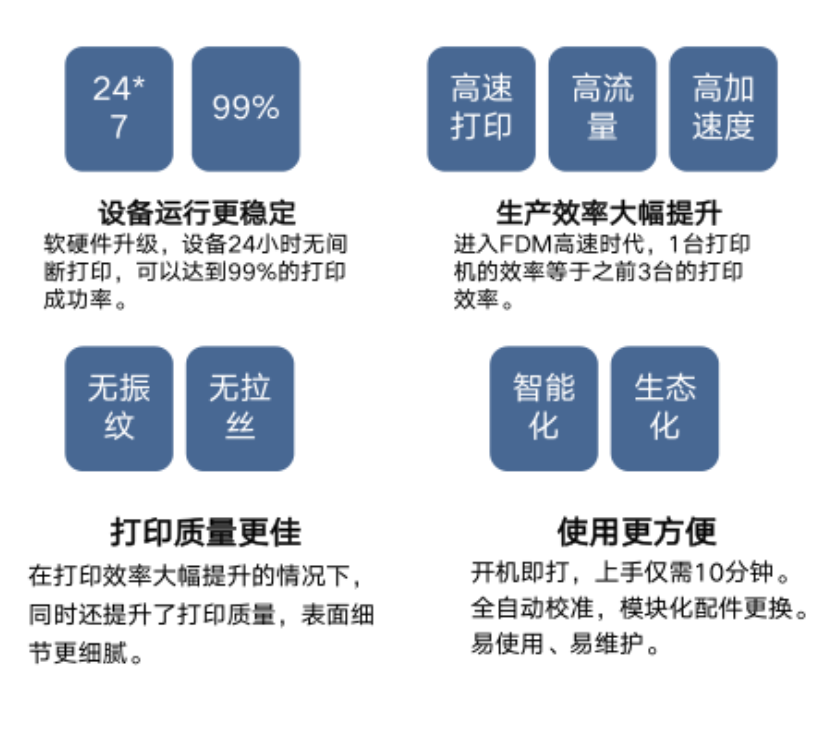
2. Cost reduction: As technology matures and scales up production, the costs of 3D printing equipment and materials have gradually decreased, making the initial investment and operating costs of 3D printing farms more reasonable. Some products have seen a return on investment as short as one month.
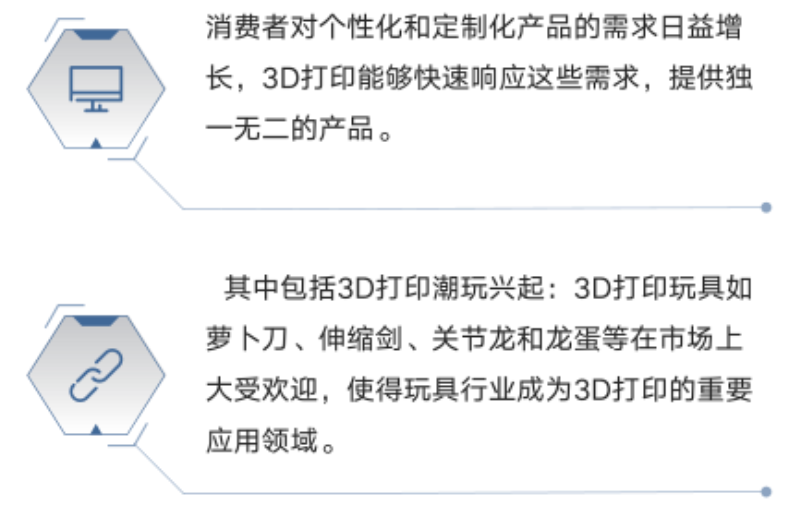
3. Growing market demand
4. Environmentally friendly: As an additive manufacturing technology, 3D printing has high material utilization, reduces waste generation, and aligns with trends in sustainable development and environmental protection. This has also allowed 3D printing farms to be established in various locations, including garages, offices, and even residential areas.
5. Supply chain optimization: 3D printing farms can produce parts close to where they are needed, reducing reliance on distant supply chains. This advantage is particularly evident when global supply chains are disrupted. Establishing 3D printing farms around industrial clusters shortens supply chains and lowers capital costs, providing opportunities for entrepreneurs to enter the market.
6. Educational and policy support: Government and educational institutions’ support and promotion of 3D printing technology have increased public awareness and acceptance of this technology.
7. Expansion of industry applications: The application of 3D printing in various industries, including medical, aerospace, automotive, and consumer electronics, continues to expand, providing a broad market space for 3D printing farms.
3. Market Analysis of 3D Printing Farms – A Broad Application Market
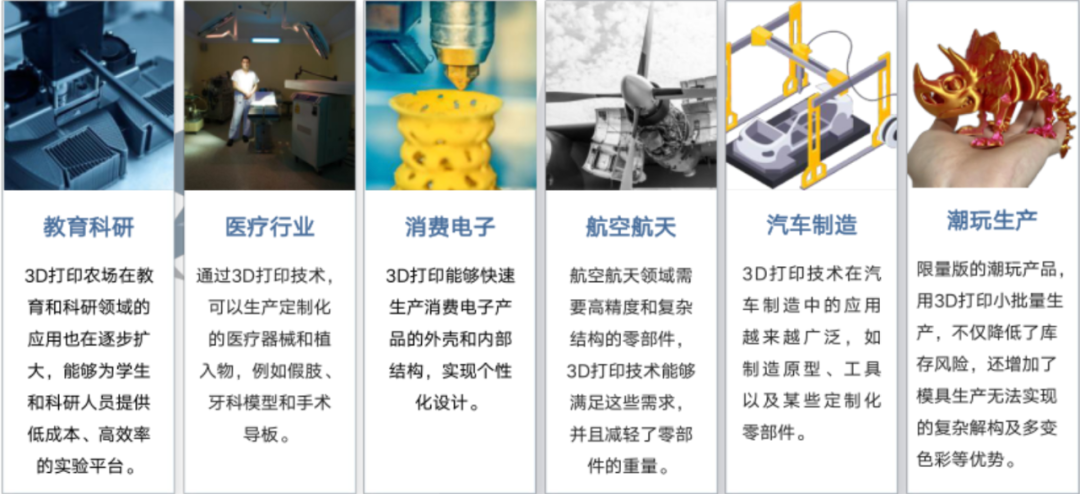
Characteristics of the Target Market for 3D Printing Farms
The target market for 3D printing farms typically has the following characteristics, making this production method particularly effective in specific scenarios.
1. High customization demand: Suitable for scenarios requiring highly customized products.
Such as medical implants, custom dental aligners, personalized consumer goods, etc., these products need to be designed and produced according to the specific needs of each user or patient.
2. Small batch production: For manufacturers producing small batches or short runs, 3D printing farms provide a cost-effective solution. Compared to traditional large-scale production lines, 3D printing farms can start production without expensive molds and setup costs.
3. Complex geometries: 3D printing is particularly suitable for producing complex or geometrically intricate structures that are difficult to manufacture efficiently using traditional methods, such as topologically optimized structural components or parts with complex internal channels.
4. Instant production: Suitable for scenarios requiring immediate production and delivery, such as spare parts manufacturing and supply chain management, where rapid production can reduce inventory costs.
5. Rapid iteration: In the early stages of product development, designs may require frequent modifications and optimizations. 3D printing farms can quickly respond to design changes and manufacture new prototypes, accelerating the product development cycle.
6. Sustainable and environmentally friendly production: Since 3D printing can reduce material waste and typically uses less energy and resources, it is suitable for applications seeking more sustainable production models.
Target Market for FDM 3D Printing Farms
• Viral trending toys • Souvenirs/crafts/ornaments • Original designs • Small batch customization for corporate clients
• Student projects/graduation designs • Industrial parts
3D Printing vs. Traditional Mold Production
Helping clients find a reasonable balance between 3D printing and traditional mold production involves considering multiple factors, including cost, production volume, product complexity, customization needs, and market response time. Below are some key steps and strategies to help clients find the right balance between these two manufacturing technologies:
1. Cost-benefit analysis
Initial costs: The initial costs of mold production are typically high, suitable for large-scale production to amortize the high mold costs. In contrast, 3D printing has lower initial costs, making it suitable for small batch production or personalized products.
Unit costs: For large-scale production, traditional manufacturing usually has lower per-unit costs; for small batches or highly customized products, 3D printing may be more economical.
2. Production speed and flexibility
Production speed: Traditional manufacturing is faster during mass production, while 3D printing has advantages in small batch or single-item production.
Design flexibility: 3D printing allows for quick design changes without additional costs, making it suitable for products that require rapid design iteration.
3. Product complexity and functionality
Complex structures: 3D printing can manufacture complex structures that are difficult or impossible to produce using traditional methods. If a product design includes such structures, 3D printing may be preferred.
Material selection: Although the variety of materials for 3D printing is increasing, traditional manufacturing may still have advantages in certain materials and functionalities.
4. Market demand and inventory
Market demand uncertainty: In situations of uncertain demand or during market testing phases, 3D printing can provide rapid production capabilities, reducing inventory risks.
Simplified supply chain: 3D printing can produce near-demand, reducing supply chain complexity and transportation costs.
5. Sustainability considerations
Material waste: 3D printing typically generates less material waste, making it more attractive for environmentally conscious companies.
Energy usage: Evaluate the energy consumption of both production methods and choose the one that aligns better with the company’s sustainability goals.
6. Long-term strategy
Technology investment: Consider the long-term technological development direction of the company and invest in manufacturing technologies that can provide technological accumulation and competitive advantages.
Market positioning: Based on the company’s market positioning (such as high customization or large-scale standardized production), choose the production method that aligns better with strategic goals.
By integrating these factors, 3D printing farm owners can find the balance between mold production and printing through gradual experimentation and data analysis.
Thank you for watching!

Disclaimer: The articles published in this public account are either original or edited and organized based on online searches. The copyright belongs to the original author and is for readers’ learning and reference only. Commercial use is prohibited. Due to numerous reprints, it is impossible to find the true source. If the source is incorrectly cited or if there are any infringements regarding the images, text, links, or software/data used in the article, please contact us for removal. Thank you!