Do Robots Really Have “Touch” Now?
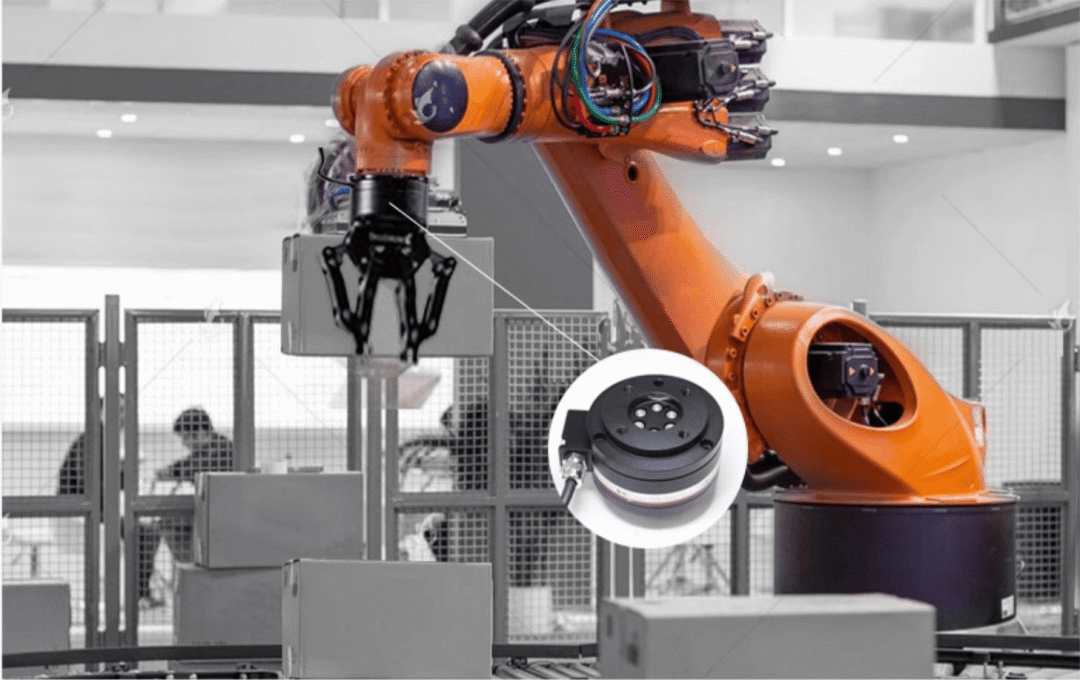 On industrial production lines, robots can accurately perceive the shape, position, and assembly force of components, efficiently and flawlessly completing complex assembly tasks. This may seem like a plot from a science fiction movie, but it is gradually becoming a reality through six-dimensional force/torque sensors, which provide robots with crucial “touch,” enabling more intelligent and precise interactions with the real world.
Unveiling the Mystery of Six-Dimensional Force/Torque Sensors
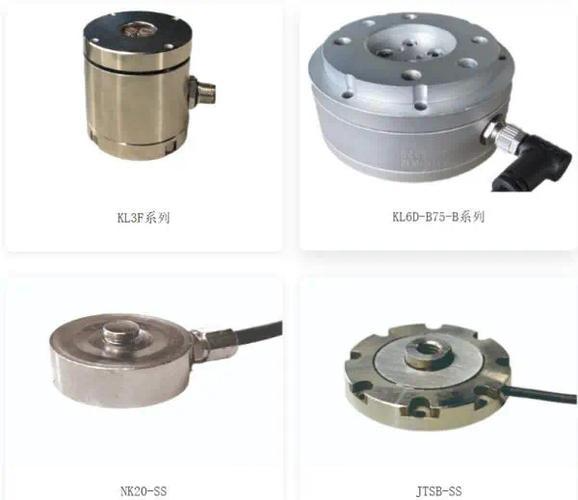
What exactly is a six-dimensional force/torque sensor? How does it endow robots with “touch”?
(1) Definition and Principle Overview
A six-dimensional force/torque sensor, also known as a six-axis force sensor, is an extremely advanced sensor that can simultaneously measure three force components (Fx, Fy, Fz) and three torque components (Mx, My, Mz) in three-dimensional space, akin to installing a “super organ” that provides robots with omnidirectional sensing capabilities, allowing them to keenly perceive changes in force and torque from all directions.
The working principle is primarily based on the strain gauge principle and the piezoelectric effect. Sensors based on the strain gauge principle act like precise deformation recorders. When external forces act on the sensor’s elastic body, it deforms, causing a change in the resistance of the strain gauge attached to it. This is similar to stretching a rubber band, where its length and thickness change, and the resistance change of the strain gauge is analogous to this alteration. By measuring these resistance changes and applying complex mathematical models, the magnitude and direction of the applied force and torque can be deduced, as if deciphering the “code” of force information from the resistance changes.
On the other hand, sensors based on the piezoelectric effect act as energy converters. Piezoelectric crystals generate electric charges when subjected to external forces, and different directions and magnitudes of force and torque produce different charge outputs, much like how varying strengths of strikes produce different volumes of sound from a bell. By measuring these charges and processing them through algorithms, six-dimensional force information can also be obtained, converting charge signals into understandable force and torque data.
(2) Unique Structural Analysis
The core structure of a six-dimensional force/torque sensor typically consists of an elastic body, strain gauges, circuit components, and a signal processing unit, with each part playing an indispensable role in enabling the sensor to achieve precise force sensing.
The elastic body is the main body of the sensor, akin to the “skeleton” of the robot, and its design directly affects the sensor’s measurement accuracy and stability. Common elastic body structures include multiple elastic strain beams, which act like delicate springs that undergo slight deformation when external forces are applied, providing the basis for the strain gauges to sense changes in force.
The strain gauges (or piezoelectric crystals and other sensitive elements) serve as the “nerve endings” of the sensor, responsible for directly sensing changes in force. In sensors based on the strain gauge principle, the strain gauges are closely adhered to the elastic strain beams, and when the strain beams deform, the resistance of the strain gauges changes, converting force changes into variations in electrical signals. In piezoelectric sensors, the piezoelectric crystals take on the responsibility of converting external forces into charge signals.
The circuit components function like the “blood vessels” of the sensor, responsible for transmitting and processing electrical signals. They amplify, filter, and process the weak electrical signals generated by the strain gauges or piezoelectric crystals, enabling accurate recognition and analysis by subsequent signal processing units.
The signal processing unit acts as the “brain” of the sensor, receiving signals processed by the circuit and employing complex algorithms to decouple and compute the signals, ultimately outputting accurate force and torque data, providing critical information for the robot’s action decisions.
How It Endows Robots with “Touch”
 (1) Initial Experience of Force Perception
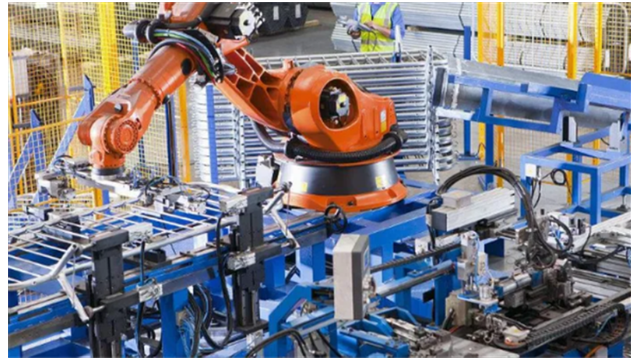
When a robot wants to pick up an object, the six-dimensional force/torque sensor begins to function. The sensor continuously senses the forces and torques experienced by the robot’s end effector (such as a mechanical claw) during contact with the object. For instance, if the robot is to pick up an apple placed on a table, as the mechanical claw approaches and gradually contacts the apple, the sensor can quickly detect the contact forces in the X, Y, and Z directions, as well as the torques generated around these three axes. With this precise force perception data, the robot can determine the apple’s position, orientation, and weight, similar to how humans perceive the size, shape, and weight of an apple when holding it. Subsequently, the robot adjusts the position and gripping force of the mechanical claw based on this information, securely picking up the apple while avoiding dropping or crushing it due to improper force. This ability to perceive force is fundamental for robots to interact with their external environment, allowing them to make reasonable action decisions based on the sensed force information, just like humans do.
(2) Showcasing Precision Operations
In the field of precision assembly, six-dimensional force/torque sensors demonstrate their powerful capabilities. Taking the assembly of smartphone motherboards as an example, the electronic components on smartphone motherboards are very small and precise, requiring extremely high assembly accuracy. During the operation, assembly robots use six-dimensional force/torque sensors to continuously sense the changes in forces and torques experienced by the robotic arm in all directions. When the robotic arm places tiny electronic components onto the motherboard, the sensor can accurately detect the contact forces and torques between the components and the motherboard, even the slightest deviations can be detected. Based on the feedback from the sensor, the robot fine-tunes the position and orientation of the robotic arm to ensure that the electronic components are accurately installed in their designated positions, applying just the right amount of pressure to secure the components without damaging them due to excessive force.
In polishing tasks, the sensor is equally indispensable. For high-precision polishing of certain components, it is essential to ensure that the polishing force is uniform and precisely controlled. For example, polishing the blades of an aircraft engine, which have complex shapes and require high surface precision. Polishing robots utilize six-dimensional force/torque sensors to continuously sense the forces and torques during contact between the polishing tool and the blade surface. Based on this feedback, the robot can dynamically adjust the angle, pressure, and movement speed of the polishing tool, ensuring that every part of the blade is evenly polished to achieve the desired surface precision and smoothness, while avoiding excessive or insufficient polishing that could lead to blade scrapping.
(3) Ensuring Safety in Human-Robot Collaboration
In human-robot collaboration scenarios, six-dimensional force/torque sensors act as safety guardians. For example, in automotive manufacturing factories, workers and collaborative robots work together to assemble automotive components. During the robot’s operation, it continuously monitors the contact situation with the surrounding environment and personnel through six-dimensional force/torque sensors. If the sensor detects that the contact force between the robot and a worker exceeds a preset safety threshold, it immediately transmits a signal to the robot’s control system, which quickly responds by stopping the robot’s movement or changing its direction to avoid collision injuries to the worker.
Similarly, in the field of medical rehabilitation, rehabilitation robots assist patients in rehabilitation training. Six-dimensional force/torque sensors are installed at the points of contact between the robot and the patient, allowing real-time sensing of the forces and torques between the patient and the robot. When the patient exerts unexpected force or changes posture during training, the sensor can promptly capture this information and notify the robot to adjust its movement parameters, ensuring the safety and comfort of the training process, preventing secondary injuries to the patient due to improper robot actions.
High-End Application Scenarios Unveiled
(1) A New Revolution in Industrial Manufacturing
In the automotive manufacturing sector, the application of six-dimensional force/torque sensors has brought about a leap in production accuracy and quality. Taking the assembly of automotive engines as an example, the internal structure of engines is intricate and complex, and the assembly accuracy of various components directly affects the engine’s performance and reliability. During the piston assembly process, the six-dimensional force/torque sensor installed at the end of the assembly robotic arm acts like a strict quality supervisor, continuously and accurately monitoring the changes in forces and torques in various dimensions during the assembly process. When the piston is inserted into the cylinder, the sensor keenly captures the insertion force, and if the force deviates from the preset range, it immediately feeds back the signal to the control system. The control system quickly responds, adjusting the robotic arm’s actions to ensure that the piston is smoothly and accurately installed, avoiding damage to the piston or cylinder due to improper force, significantly enhancing assembly quality and success rates. Statistics show that after adopting six-dimensional force/torque sensors, the pass rate of engine assembly increased from 80% to over 95%, greatly reducing the defect rate and improving production efficiency.
In the production of electronic products, such as smartphones and computers, six-dimensional force/torque sensors also play a critical role. As electronic products continue to trend towards miniaturization and lightweight designs, the accuracy requirements for component assembly are becoming increasingly stringent. In the chip placement phase, controlling the forces and torques applied by the placement head on the chip is key to ensuring placement quality. Six-dimensional force/torque sensors installed at the placement head of the placement equipment can continuously and accurately monitor the changes in forces and torques during the placement process. When the placement head picks up the chip and approaches the circuit board, the sensor senses the forces between the placement head, chip, and circuit board in real-time. If the force magnitude or torque direction deviates from the preset optimal value range, the sensor immediately feeds back the signal to the control system of the placement equipment. The control system quickly adjusts the movement trajectory, pressure, and angle of the placement head based on the feedback, ensuring that the chip is accurately placed at the designated position on the circuit board with just the right amount of force and angle, greatly enhancing the accuracy and success rate of chip placement, effectively reducing the defect rate caused by placement errors, and laying a solid foundation for the stable performance of electronic products.
(2) New Hope in the Medical Field
In the field of surgical robots, six-dimensional force/torque sensors have significantly improved the precision and safety of surgeries. Taking neurosurgery as an example, the distribution of brain nerves and blood vessels is extremely complex, and the margin for error in surgical operations is very low. In traditional surgeries, doctors primarily rely on experience and visual judgment to operate instruments, making it difficult to accurately perceive the forces between the instruments and tissues. The introduction of six-dimensional force/torque sensors has changed this situation; they are installed at the end of surgical instruments and can accurately measure the forces and torques during the surgical process in real-time. During brain tumor removal surgery, doctors can precisely control the surgical instruments’ force and direction based on the force information feedback from the sensors, minimizing damage to surrounding normal nerves and blood vessels while excising the tumor, thereby reducing surgical risks and improving success rates. According to relevant clinical research data, the incidence of surgical complications decreased by approximately 30% after the introduction of six-dimensional force/torque sensors in neurosurgery, and patients’ postoperative recovery times were also significantly shortened.
In rehabilitation equipment, six-dimensional force/torque sensors provide personalized rehabilitation training programs for patients. For patients with limb dysfunction due to stroke, spinal cord injuries, and other reasons, rehabilitation robots equipped with six-dimensional force/torque sensors can tailor rehabilitation training programs based on the patients’ specific physical conditions and rehabilitation stages. The sensors continuously monitor the patients’ force exertion during training, including the magnitude, direction, and torque changes of the forces. The rehabilitation robots dynamically adjust the resistance and assistance during training based on this data, matching the training intensity to the patients’ actual capabilities. For example, during lower limb rehabilitation training, when a patient performs leg lifting movements, if the sensor detects that the patient’s leg strength is weak, the rehabilitation robot will appropriately increase assistance to help the patient complete the movement; as the patient’s recovery progresses and leg strength gradually increases, the robot will reduce assistance and increase resistance based on the sensor feedback to further strengthen the patient’s muscle strength and joint mobility. This personalized rehabilitation training approach can significantly enhance the effectiveness of rehabilitation training and accelerate patients’ recovery processes.
(3) New Breakthroughs in Aerospace
In the development of aircraft, wind tunnel testing is a crucial method for obtaining the aerodynamic characteristics of the aircraft. Six-dimensional force/torque sensors are installed on aircraft models to accurately measure the aerodynamic forces and torques experienced by the models under wind tunnel airflow. This data is vital for optimizing aircraft design, allowing engineers to adjust the shape of the wings, fuselage, and other components to reduce drag and improve lift coefficients, thereby enhancing the aircraft’s flight performance and fuel efficiency. For instance, in the development of a new type of passenger aircraft, data obtained from six-dimensional force/torque sensors during wind tunnel tests optimized the wing’s sweep angle and airfoil shape, reducing the aircraft’s cruise drag by 8% and effectively improving fuel economy.
In space exploration missions, six-dimensional force/torque sensors also play a key role. For example, during spacecraft docking tasks, precise control of the spacecraft’s attitude and position is required to ensure that two spacecraft can dock safely and accurately. Six-dimensional force/torque sensors installed on the docking mechanisms of spacecraft can continuously sense the changes in forces and torques during the docking process. As the two spacecraft approach each other, the sensors feed the measured force and torque data back to the spacecraft’s control system. The control system uses this data to precisely adjust the spacecraft’s attitude and the operation of the thrusters, allowing the spacecraft to dock at the appropriate speed and angle, avoiding collisions during the docking process that could lead to mission failure. During the construction of the International Space Station, multiple spacecraft docking tasks relied on the precise measurements of six-dimensional force/torque sensors to ensure smooth docking, providing strong support for the successful assembly of the space station.
Current Status, Challenges, and Future Prospects
(1) Market Development in Progress
Currently, the market for six-dimensional force/torque sensors is showing robust growth. In terms of market size, the global six-dimensional force sensor market reached 2.5 billion yuan in 2023, and it is expected to continue growing at a compound annual growth rate of nearly 40% in the coming years. The Chinese market also shows strong growth potential, with a market size of approximately 235 million yuan in 2023, as the rapid development of various robots drives the increasing demand for six-dimensional force/torque sensors.
In terms of market competition, the global six-dimensional force sensor market is primarily dominated by three major camps: Europe and the United States, Japan and South Korea, and China. The Europe and United States region holds a leading position due to its strong technological foundation and market share, with companies like ATI in the United States occupying the high-end market with its high-precision (0.1% FS accuracy) technology, holding over 30% of the global market share and being a recognized industry leader. Meanwhile, China has seen rapid development in recent years, with increasing market concentration, where leading companies hold over 60% of the market share. For example, Kunwei Technology, as a leading domestic enterprise, has a market share exceeding 50% and has achieved a leading position in the collaborative robot sector, establishing partnerships with several domestic humanoid robot companies and achieving mass production, receiving investments from well-known institutions like Xiaomi and Hillhouse. Landpoint Touch has performed excellently in the humanoid robot sector, with its six-dimensional force sensors accounting for 70%-80% of the market share, having established close collaborations with mainstream humanoid robot companies like Zhiyuan and Xiaomi. These domestic brands are gradually emerging in the market due to their cost advantages and rapid delivery capabilities, continuously narrowing the gap with international brands and driving changes in the market landscape.
(2) Technical Bottlenecks Awaiting Breakthroughs
Despite significant progress in the application of six-dimensional force/torque sensors, their development still faces numerous technical challenges.
In terms of accuracy improvement, current sensors still have room for enhancement in measurement accuracy. In some applications requiring extremely high precision, such as flight attitude control of aircraft in aerospace and attitude adjustment of satellites, as well as ultra-precision machining in high-end manufacturing, the existing sensor accuracy struggles to meet the growing demands. Even minor measurement errors can lead to severe consequences; for instance, in aircraft flight, they may cause deviations in flight trajectories, jeopardizing flight safety.
Inter-dimensional coupling is also a key challenge. During the measurement process, the forces and torques in different dimensions can influence each other, resulting in inter-dimensional coupling errors, which pose significant challenges to accurate measurement. In complex force and torque environments, such coupling errors can lead to inaccurate measurement results, affecting the precision of robotic operations and the stability of systems.
Cost control is equally important. The production of six-dimensional force/torque sensors requires high-precision processing techniques, high-quality materials, and complex manufacturing and calibration processes, which keep costs high. In large-scale application scenarios, such as industrial robots and consumer-grade service robots, the high costs limit the widespread adoption and promotion of sensors, making cost reduction a key factor in expanding market applications.
(3) Future Blueprint to Be Drawn
Looking ahead, six-dimensional force/torque sensors are expected to expand their applications and achieve technological innovations in more fields. In the smart home sector, as people’s demand for home automation and intelligence continues to grow, smart appliances and service robots equipped with force sensing capabilities will become a future trend. Six-dimensional force/torque sensors can enable smart robots to interact better with family members, completing tasks such as cleaning and caregiving, providing people with a more convenient and comfortable living experience.
In the fields of virtual reality and augmented reality, six-dimensional force/torque sensors can provide users with a more realistic force feedback experience. In virtual industrial design, surgical simulations, and other scenarios, users can wear related devices to feel the changes in forces and torques of objects in the virtual environment in real-time, enhancing the sense of interaction and immersion, improving work efficiency and training outcomes.
With continuous advancements in materials science, artificial intelligence, and micro-electromechanical systems (MEMS), six-dimensional force/torque sensors will evolve towards higher precision, smaller size, lower cost, and greater reliability. New materials and manufacturing processes will emerge, likely addressing current precision and cost issues; the application of artificial intelligence algorithms will further enhance the data processing capabilities and intelligent decision-making levels of sensors, enabling them to better adapt to complex and variable application scenarios.
Small Sensors, Big Impact
Although small, six-dimensional force/torque sensors have sparked a tremendous wave of transformation in the field of robotics. They provide robots with “touch,” allowing them to interact with their surrounding environment in a more natural and precise manner, greatly expanding the application fields and functions of robots. From industrial manufacturing to the medical field, from aerospace to daily life, six-dimensional force/torque sensors are ubiquitous, changing our modes of production, medical methods, and lifestyles.
With continuous technological advancements and breakthroughs, it is believed that six-dimensional force/torque sensors will play an even more important role in the future, creating a smarter, more convenient, and better life for us.
Disclaimer: Images and materials are sourced from publicly available online resources, and this writing is intended to convey industry information. If there are any inaccuracies, please feel free to correct them. If there are any infringements, please contact the author via WeChat to delete the article.