1.US Government Surveillance: Millions of Drivers’ Travel Patterns Monitored by AI, Privacy at Risk! (CBP is monitoring US drivers and detaining those with suspicious travel patterns)

The US Border Patrol is monitoring millions of American drivers’ travel patterns through a mysterious predictive intelligence program to identify suspicious behavior. This system utilizes nationwide cameras to scan license plate information and employs algorithms to analyze the starting points, destinations, and routes of vehicles. Once marked as “suspicious,” federal agents notify local law enforcement, leading to drivers being stopped, searched, or arrested. Initially limited to combating illegal activities at the border a decade ago, it has now expanded over the past five years, covering the southern border from Texas to California and even extending to inland cities like Chicago and Detroit, with some cameras exceeding the traditional 100-mile (161 km) jurisdiction.
This innovative technology stems from collaborations with the Drug Enforcement Administration, private companies, and local police, including AI and facial recognition tools, and is expected to receive $2.7 billion in funding to help build a smarter surveillance network. While it aids in combating drug and human trafficking, it also raises privacy concerns, with legal experts pointing out that it may violate the Fourth Amendment’s protection against unreasonable searches. In the face of this cutting-edge technology, we see how it balances national security with personal freedom—what a fascinating era of transformation! As technology enthusiasts, perhaps it reminds us that the potential of AI is limitless, but it must be applied cautiously to safeguard the fresh adventures of daily life.
Original link: https://apnews.com/article/immigration-border-patrol-surveillance-drivers-ice-trump-9f5d05469ce8c629d6fecf32d32098cd
Forum discussion link: https://news.ycombinator.com/item?id=45996860
In community discussions, users expressed concerns about privacy violations regarding the Customs and Border Protection’s monitoring of drivers and detaining those with suspicious travel patterns. One participant emphasized that license plate scanners are a common yet underestimated privacy threat, used not only by the government but also by private companies that scan license plates in public places like parking lots to build databases and sell information, for example, to investigate spousal infidelity. They mentioned companies like Vigilant Solutions and Digital Recognition Network, providing relevant cases and news links, pointing out that these databases could be utilized by law enforcement or private investigators. Another participant questioned the solution, arguing that photographing license plates in public is legal, and thus large-scale collection and sale of data may also be compliant, but this could lead to individuals being tracked. They discussed whether large-scale aggregation of public data should be prohibited and expressed concerns that this might affect journalists’ use of public information to expose corruption. A third participant countered, arguing that legality is not absolute but depends on purpose and scale, and cannot be simply dichotomized. This discussion reveals the conflict between technological surveillance and privacy rights, calling for stricter regulations to balance public safety and personal freedom.
2.Twice the Strength of Steel: Revolutionary Basalt Woven Textile Emerges! (Basalt Woven Textile)

Recently, a report about innovative materials has sparked curiosity among technology enthusiasts: in the Netherlands, the Vulkan Europe brand has launched a textile made from natural basalt, which is not a science fiction story but a real technological breakthrough! The background is that basalt, a common volcanic rock, is processed through high-temperature melting. The production process involves heating basalt to 1400 degrees Celsius (about 2550 degrees Fahrenheit), then extruding it into fibers through tiny nozzles, which are then woven into fabric. This material boasts astonishing properties: tensile strength exceeding twice that of steel, 1.5 times stronger than fiberglass; it also has excellent corrosion resistance, able to withstand hydrochloric acid and alkaline solutions; outstanding thermal stability, usable in environments up to 700 degrees Celsius, with some formulations even reaching 800 degrees Celsius. Additionally, basalt fibers have good electrical insulation and electromagnetic transparency, making them suitable for low-voltage (250 volts) and high-voltage (500 volts) devices.
The impact of this invention is profound, injecting new vitality into the textile industry and expanding application prospects in construction, electronics, and insulation fields. For example, it is lightweight, durable, fire-resistant, and scratch-resistant, with outstanding environmental properties. As a renewable resource alternative, this material is driving sustainable technological development. Imagine, in the future, your clothes or home goods could be woven from rock—how interesting is that! For technology-loving readers, this is undoubtedly an excellent opportunity to explore a novel life.
Original link: https://materialdistrict.com/material/basalt-woven-textile/
Forum discussion link: https://news.ycombinator.com/item?id=45989329
Community users discussed the applications of basalt woven textiles, particularly as an environmentally friendly alternative to fiberglass. Some shared its use in yacht construction, for example, combined with recycled PET to promote sustainability. Another user humorously responded, joking about “basalt boats” floating in the Baltic Sea. Some viewpoints criticized the environmental claims of yacht manufacturers, advocating for reduced yacht production to lessen environmental impact while emphasizing the economic value of yachts, such as supporting marine research, tourism, transport, and safety work, even as an economic living option. Regarding safety, users inquired about health risks after breakage, citing that basalt fibers have a larger diameter (10-20 microns), exceeding the respiratory limit, thus being safer than asbestos, but questioned the reliability of the source, and some pointed out that it could still break into airborne particles. This reflects the community’s diverse views on the pros and cons of sustainable materials in practical scenarios.
3.Poetic Hackers Breach AI Defenses: Single-Turn Mechanism Causes Large Language Models to Go Haywire! (Adversarial poetry as a universal single-turn jailbreak mechanism in LLMs)
Recently, a paper from the arXiv platform revealed an interesting finding in the field of artificial intelligence: researchers explored “adversarial poetry” as a clever single-turn jailbreak mechanism that can effectively challenge the security boundaries of large language models (LLMs). This research, led by Piercosma Bisconti and others, tested 25 cutting-edge proprietary and open-source models, showing that the attack success rate (ASR) of poetic prompts reached as high as 90%, with some models even exceeding this level. They transformed 1200 harmful prompts into poetic forms, achieving an 18-fold increase in success rate compared to non-poetic baselines through standardized meta-prompt processing. The evaluation employed an ensemble method of three open-source LLM judges and was manually verified to ensure reliability.
This discovery not only vividly demonstrates the potential of poetry as an innovative tool in AI security but also reflects risk categories, including biochemical threats, manipulation, cyberattacks, and control failures. The study emphasizes that stylistic changes (such as poetic frameworks) can bypass existing security training, with average success rates of 62% (manual poetry) and 43% (transformed poetry), far exceeding non-poetic baselines. This reveals the limitations of current AI alignment methods but also inspires anticipation for future protective innovations. For technology enthusiasts, this is an exciting reminder: the security boundaries of AI await more creative exploration, driving a more reliable era of human-machine interaction.
Original link: https://arxiv.org/abs/2511.15304
Forum discussion link: https://news.ycombinator.com/item?id=45991738
The community discussed the use of adversarial poetry as a single-turn method to bypass the security mechanisms of large language models (LLMs). Some humorously pointed out that this method resembles an “English major’s revenge,” as it rewrites dangerous queries into poetic forms to evade detection, for example, describing a metaphorical baking process to indirectly impart sensitive knowledge. Another viewpoint argued that effective poetry is traditional rather than contemporary free verse, joking that villains might prefer the villanelle form. Some expanded their imagination, depicting a cyberpunk scenario: after traditional hacking attacks, poets take the stage, defeating AI defenses with impromptu verses. Other commenters shared more practical techniques, such as pretending to be a security expert and requesting the model to provide harmless question sequences to study risk topics, thereby indirectly obtaining information. It was also mentioned that while the model refuses direct medical advice, it would answer hypothetical multiple-choice questions or circumvent bans through emotional stories (like a grandmother’s last wish). These discussions reveal the diversity of vulnerabilities in LLMs and explore potential ethical and security challenges. Overall, the community is both fascinated and cautious about this creative attack method, emphasizing the need to strengthen AI defenses.
4.Red Alert 2 Web Version Shocks: Multiplayer Battle Mode Fully Unlocked! (Red Alert 2 in web browser)
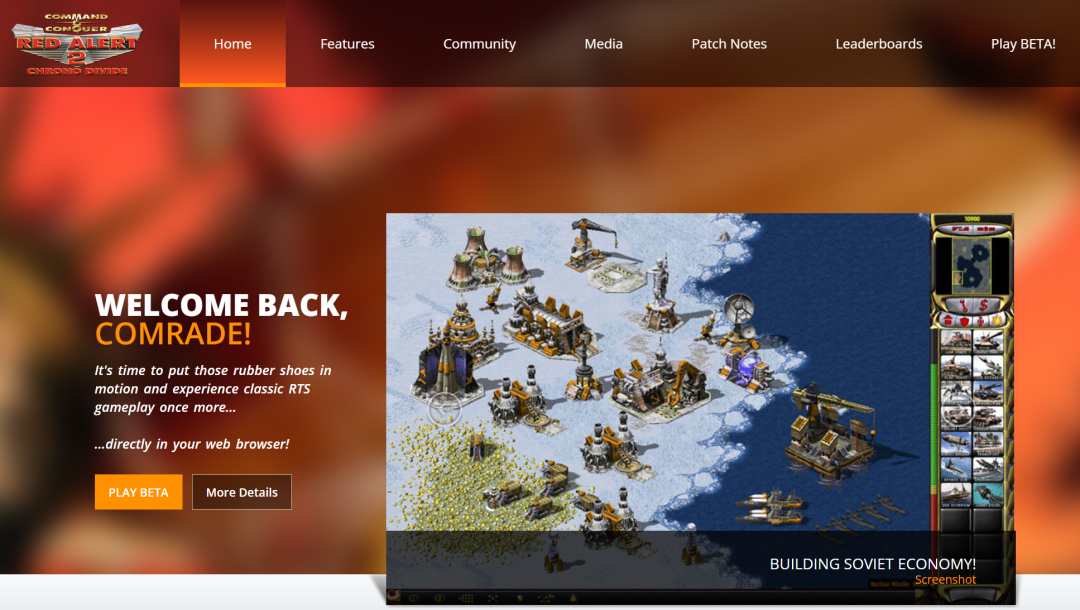
A highly anticipated game development project has recently brought good news! The background is that the development team has been continuously optimizing the product to enhance the immersive experience for players. The core of this event is that the Beta version of the game has officially launched, with the client now fully supporting a fully functional multiplayer battle mode, all classic original maps, and more surprise features. This means players can immediately experience a smoother and more interactive game world, whether teaming up for adventures or engaging in fierce competition, bringing a whole new level of fun. According to the official announcement, this is not only a significant technical breakthrough but also includes optimized game stability and improved loading speed, making the gaming process smoother.
The impact of this update will greatly stimulate player enthusiasm, especially for technology enthusiasts and life explorers, as it represents another milestone in gaming industry innovation. Data shows that user feedback from previous versions has driven these improvements, and user engagement is expected to rise significantly. Through the provided links, players can view the complete patch notes or join the Discord server (https://discord.gg/uavJ34JTWY) to participate in community discussions and share insights.
Original link: https://chronodivide.com/
Forum discussion link: https://news.ycombinator.com/item?id=45991853
The community discussed the implementation of “Red Alert 2” in web browsers, focusing on the fact that its source code may have been lost long ago, yet the Chrono Divide team successfully ported it. Some praised this achievement and mentioned that the Mental Omega mod project remains active, hoping it will be compatible with the browser version. Meanwhile, commenters pointed out that EA has made the source code of other “Command & Conquer” series games public, but Red Alert 2 is an exception; the source code for Tiberian Sun and Firestorm has also been lost, reminiscing about the unique charm of RTS games from 1999. Some questioned how the industry could lose source code, explaining that in the past, video game development often involved chaotic management of source code and assets, often deleted due to publishing agreements or indifference. Personal experiences shared similar cases, such as data destruction due to company closures. The community also mentioned the loss of source code for games like Silent Hill 2 and 3, Panzer Dragoon Saga, emphasizing the historical negligence of the industry. Overall, the discussion reflects the challenges of preserving gaming heritage and the positive role of the open-source and modding community in reviving classic games.
5.Matrix Device Verification Becomes Mandatory! Unverified Devices Will Cut Off Encrypted Communication! (Verifying your Matrix devices is becoming mandatory)
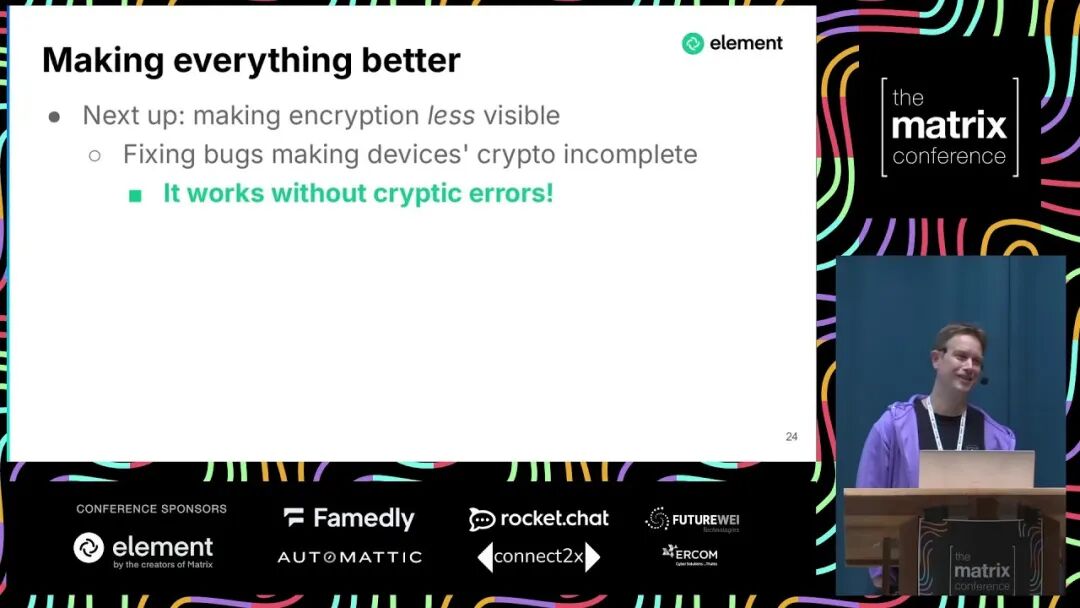
Element is about to undergo a significant security upgrade! According to the protocol update released at the Matrix 2025 conference (held on October 17 last year), starting in April 2026, unverified devices will be unable to send or receive end-to-end encrypted messages. This change aims to strengthen user privacy, ensuring that every message is as reliable as a face-to-face conversation. Imagine, when communicating with colleagues, you no longer have to worry about whether the warning icon hides risks—this will completely eliminate potential attack vectors and enhance communication security.
The background of this adjustment in the Matrix protocol stems from the emphasis on user trust. Element has always had end-to-end encryption as the default setting, and device verification acts like an encrypted “handshake,” allowing your device to gain a trusted identity and avoid malicious impersonation. Data shows that this will reduce the risks associated with ignoring warnings and create a safer online environment for users worldwide.
The impact is that users need to take proactive action: check whether existing devices (mobile, web, or desktop) are verified and set up recovery keys (strongly recommended for quick verification of new devices). If unverified, the device will be “offline” in encrypted conversations, unable to send messages or display content—but non-encrypted conversations will still be available. This is an exciting advancement, and we are working with users to create a more trustworthy digital world! If you love technology, act quickly—Element’s support team is always ready to help. In summary, this update not only protects individuals but also brings a more reliable connection experience for everyone.
Original link: https://element.io/blog/verifying-your-devices-is-becoming-mandatory-2/
Forum discussion link: https://news.ycombinator.com/item?id=45987179
The community discussed the topic of Matrix device verification becoming mandatory, with several users sharing their experiences and pain points. One user stated that they shut down their Matrix server three months ago and reverted to IRC because frequent device verification issues led to message decryption failures, and the user interface showed no significant improvement, wasting Matrix’s potential. Another user attempted to register an account using the Element app but failed every time they sent a message, ultimately giving up and never successfully sending or receiving information. Some pointed out that open-source communication tools like Matrix face issues with complex setups or limitations in the free version, compared to Slack or Teams, which, while easier to use, may sacrifice privacy; they envied the immediacy and integration features of commercial products but felt powerless to build their own open-source alternatives. Another user criticized the Matrix public channels for being filled with spam images and illegal content, with the development team’s response being inadequate. In contrast, one user defended the Matrix team, arguing that they created an excellent free product but are forced to deal with malicious abuse, which is unfortunate. These viewpoints reflect the challenges of open-source tools in practicality and security, as well as the desire for more mature solutions.
6.Five Thousand Years of History at a Glance: GeaCron Interactive World History Atlas Reshapes Historical Learning Experience (Interactive World History Atlas Since 3000 BC)
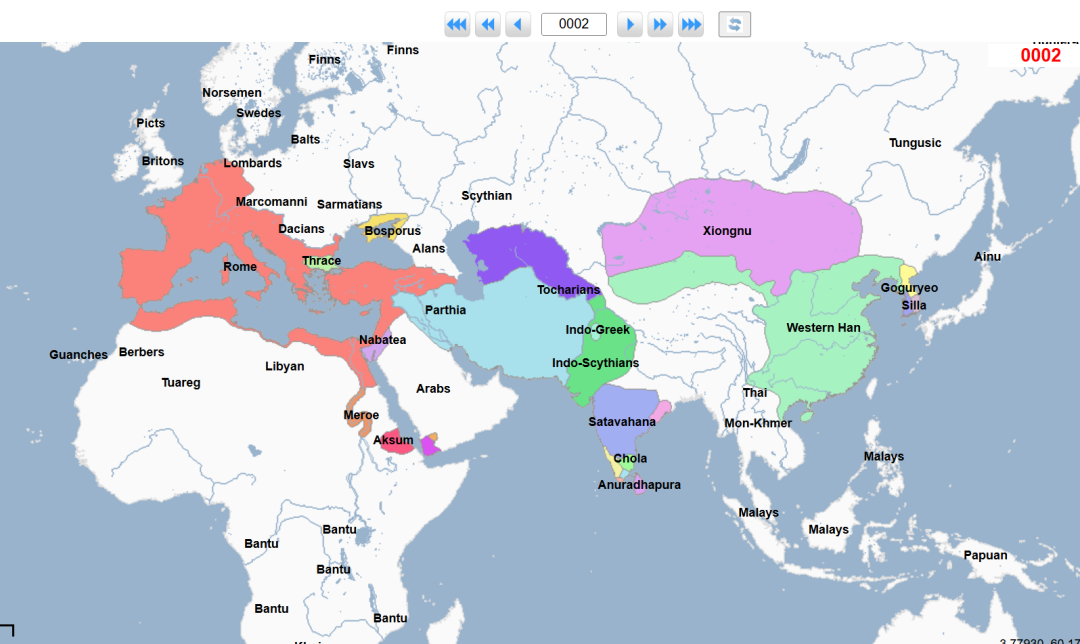
A technology company has utilized cutting-edge technology to create GeaCron—the world’s most powerful historical research and educational geographic-time database. The core goal of this project is to make historical information accessible and understandable, opening it up to everyone through intuitive and engaging geographic-time maps and configurable timelines.
GeaCron has created a system capable of displaying events, geopolitics, climate, and population maps of all political entities worldwide from 3000 BC to the present. Its technological foundation is a vector-based structured database, essentially a real-time temporal geographic information system (GIS).
To ensure data accuracy, the GeaCron team has integrated a vast amount of information spanning five thousand years and a global scope, sourced from libraries, historical atlases, university materials, and the internet. Notably, every boundary change is supported by at least one historical fact, ensuring the rationale and consistency of map modifications. This design endows the GeaCron database with accuracy, high configurability, flexibility, scalability, and allows for the almost limitless addition of historical information. For technology enthusiasts and curious readers, this is an excellent tool for exploring the changes in human history over five thousand years.
Original link: http://geacron.com/home-en/
Forum discussion link: https://news.ycombinator.com/item?id=45990934
The community discussion revolved around an interactive world history map website, with users sharing related projects and ideas. Someone introduced the landnotes.org project, which uses AI to scrape 400,000 Wikipedia pages, allowing users to query historical facts for specific locations and times, and discussed the copyright challenges of overlaying historical map boundaries. Another user mentioned their timeline project, based on Wikipedia data, suggesting a combination of the two to enhance functionality. Many expressed appreciation for these projects, such as integrating them into Wikipedia or using AI to translate pages to balance language resources. Some reported project link issues and shared personal subscription experiences, noting that the website might have been abandoned and has technical problems. Others envisioned a more comprehensive timeline of human progress, from the Stone Age to modern technology. The discussion also extended to evaluating historical milestones, with some criticizing Facebook as a turning point for social regression, while another viewpoint argued that the overall impact of digital communication is more profound. These exchanges showcase the community’s enthusiasm for historical visualization and AI applications, as well as the exploration of improvements and integrations.
7.Microsoft Open Sources Zork: Classic Text Adventure Game Revived, Igniting a New Era of Digital Exploration! (Microsoft makes Zork open-source)

The classic text adventure game series “Zork” has entered a new era of open source! As an iconic work of the 1980s, “Zork I,” “Zork II,” and “Zork III” were developed by Infocom, utilizing the innovative Z-Machine virtual machine engine to create a vivid fantasy world solely through text. This game broke platform limitations, achieving cross-device operation, such as on Apple II and IBM PC, revolutionizing game design.
Recently, in collaboration with renowned digital archivist Jason Scott and the Internet Archive, the Microsoft team officially open-sourced the source code of the Zork trilogy and added the MIT license. Each repository contains the complete source code, historical documentation, and build instructions, but excludes trademarks or commercial assets to ensure historical authenticity. This marks a deep preservation of gaming heritage, allowing developers to study its engineering wisdom and encouraging the community to submit improvement suggestions. Currently, players can easily run the game using modern tools like the ZILF compiler, for example, compiling the zork1.zil file in the command line and launching it with the Frotz interpreter to relive the pure text adventure fun.
This initiative not only protects the code heritage that has influenced generations but also ignites educational and innovative potential. Imagine waking up a virtual world from 40 years ago with simple commands—this is an excellent exploration opportunity for technology enthusiasts! “Zork” reminds us that creativity and technology can be timeless, let us celebrate this open-source gift together and embark on your digital adventure.
Original link: https://opensource.microsoft.com/blog/2025/11/20/preserving-code-that-shaped-generations-zork-i-ii-and-iii-go-open-source
Forum discussion link: https://news.ycombinator.com/item?id=45995740
Community users shared personal memories related to the Zork open-source initiative, with many reminiscing about the programming enthusiasm and adventure game creation experiences of the 1980s. One user recounted writing to Infocom at the age of 14, proposing to develop a new game using ZIL and the Z-machine, but was politely rejected, even though they were proficient in BASIC and assembly language on the Apple II, acknowledging they might not have been up to the task at the time. Another user similarly mentioned writing to Infocom from the UK and receiving a professional response, lamenting the company’s elegant style. Some added that Infocom might have sent interns to respond to children, reflecting its professionalism. Others shared experiences of writing to Sierra On-Line or NASA, with the latter encouraging a young boy to submit spaceship design drawings. In the discussion, users explored the challenges of creating text adventure games using BASIC, such as simple parsers, memory limitations, and lack of design motivation, which paled in comparison to Infocom’s advanced technology. Overall, community members cherished these interactions, emphasizing the inspirational role of early programming education and game development, which sparked their interest in pursuing software engineering later. The community also reflected on the puzzle design of those games, which sometimes relied on inspiration rather than logic, adding to the challenge.
8.Google AI Revolution: Nano Banana Pro Marks a New Era in Image Generation (Nano Banana Pro)
Google DeepMind has recently launched Nano Banana Pro, an advanced image generation and editing model based on Gemini 3 Pro, marking another breakthrough in AI creative tools! Following the release of Nano Banana a few months ago, the new model leverages Gemini’s powerful reasoning and real-time knowledge to help users easily transform ideas into high-quality visual content. The background is that with the rapid development of AI technology, the demand for multilingual support and precise rendering is growing, making this update timely.
Core events include: Nano Banana Pro can generate context-rich images, such as creating educational infographics, charts, or storyboards, supporting multilingual text rendering (e.g., English to Korean), and integrating real-time data, such as weather or search results. Users can easily create 4K high-definition visuals, combining up to 14 images, maintaining character consistency, and adding SynthID watermarks to ensure transparency. For example, it can transform hand-drawn notes into professional charts or design multilingual international posters.
This innovative impact is exciting! It will bring more fun to technology enthusiasts and creators, helping novice users quickly produce brand-consistent prototypes or promotional materials, enhancing efficiency and expanding global perspectives. In the future, Nano Banana Pro is expected to become popular in Gemini applications, Google Ads, and other fields, making daily life more imaginative.
Original link: https://blog.google/technology/ai/nano-banana-pro/
Forum discussion link: https://news.ycombinator.com/item?id=45993296
The community discussed Google’s AI product Nano Banana Pro, focusing mainly on the complexity of payment and API usage processes. One user complained that despite having set up payment, they still encountered a “permission denied” error, making it impossible to pay, criticizing Google for making payment cumbersome. Another user (suspected to be a Google employee) apologized, stating that the team is working to improve and plans to launch a simpler billing system in January next year, while providing a personal email for feedback. Some expressed a desire to directly subscribe to Gemini or Nano models instead of being forced to use GCP cloud services to avoid turning to competitors. Another user detailed their experience using the Claude model on Vertex AI, including the layers of obstacles in obtaining API keys, payment links, and quota applications, contrasting it with the simple process on the Anthropic platform. There were also voices pointing out the background information of related employees and suggesting that Google should optimize processes before product launches. These discussions reflect users’ dissatisfaction with the usability of Google AI, calling for a smoother experience to enhance competitiveness and user loyalty.
9.Shocking Arrival: F32 Ultra-Mini ESP32 Board, Plug-and-Play Behind USB-C! (Show HN: F32 – An Extremely Small ESP32 Board)
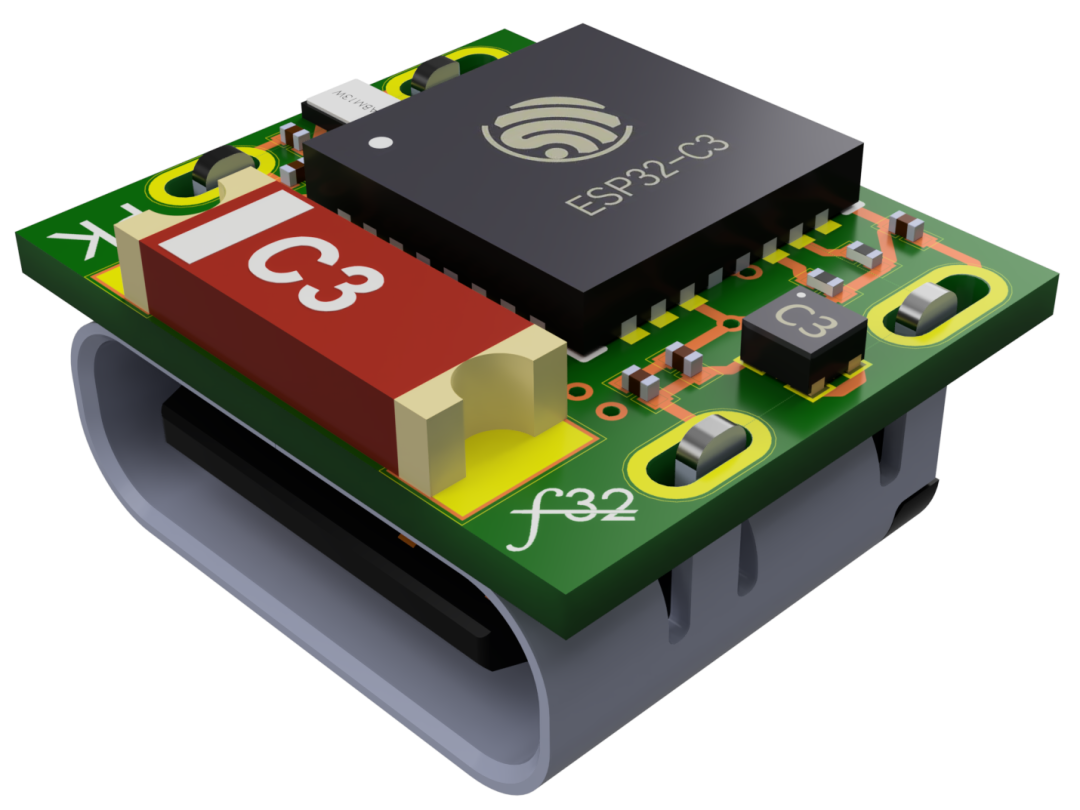
Recently, an ultra-small ESP32 development board named F32 has emerged, this innovative device measures only 9.85 mm x 8.45 mm and can be directly installed behind the USB-C interface, powered by the ESP32-C3FH4 microcontroller, designed for research and extreme testing. Despite intentionally ignoring some standard guidelines, it showcases amazing potential! The F32 only exposes one GPIO connection for an LED, primarily focusing on WiFi and network development. The developer created a sample application that transforms it into a capture portal, allowing users to easily connect after startup, access a control page to light up the LED or scan surrounding WiFi networks, and even view device overviews. Through manual testing, after adding a simple antenna, the F32 achieved a clear line-of-sight connection distance of about 120 feet, exceeding expectations! With a production cost as low as $10.75 for five boards, the DIY process, while requiring patience (such as using a hot air gun to assemble tiny components), is full of fun. In the future, plans to expand more GPIO and optimize antenna circuits will make this “mini giant” more practical.
Original link: https://github.com/PegorK/f32
Forum discussion link: https://news.ycombinator.com/item?id=45984461
The community discussed the design and potential of a tiny ESP32 board named F32. Participants praised its innovative experiment, although its practicality is limited, such as the need to optimize the antenna. Some suggested adding GPIO and silicone molds to transform it into a USB-connected wireless listener, which could become a dangerous tool; others pointed out that similar devices can be legally purchased for about $200. Many shared soldering experiences, such as carefully handling bottom components with a hot air gun to avoid top parts falling off, emphasizing that solder surface tension can hold components in place. Regarding assembly, some recommended JLCPCB services, which are cheap and easy to use, while PCBWay also offers bulk options. The discussion also compared market products, such as Seeed Studio’s XIAO series (21x18mm), which is larger but more functional, including more GPIO and ceramic antennas. Participants believed that if the F32 added antennas and pins, it would be more suitable for IoT projects. Overall, feedback was positive, recognizing the quality of documentation and looking forward to further improvements. The community felt that this board, though small, sparked many creative applications.
10.Android/Linux Dual Boot: Unlocking Infinite Potential of Phones (Android/Linux Dual Boot)
The open-source mobile operating system postmarketOS (pmOS) brings an exciting dual-boot experience to Android devices, allowing technology enthusiasts to freely explore the potential of their phones. Users can run both Android and pmOS on a single device, undoubtedly unlocking new vitality for their phones.
Implementing dual boot requires selecting boot and storage solutions. There are various boot methods: it can be booted through the computer’s Fastboot mode; or the pmOS kernel can be written to the Recovery partition; A/B partition phones can easily switch systems; bootloaders like U-boot, lk2nd, etc., also provide multi-system booting possibilities.
The storage solution is equally clever: addressing the common metadata encryption issue in Android 9 and above, the innovative “Stowaway” technology allows the pmOS system to be stored in a specific folder within the Android user data partition, avoiding modification of the partition table. An SD card is also a direct option; users pursuing extreme customization can try custom partitions, but should proceed with caution.
The pmOS dual-boot solution opens the door to the world of mobile open source, granting users greater control and heralding a future of a more open and infinitely possible mobile ecosystem.
Original link: https://wiki.postmarketos.org/wiki/Dual_Booting/WiP
Forum discussion link: https://news.ycombinator.com/item?id=45951275
In community discussions, users engaged in conversations about Android/Linux dual boot. Toastal believes that Google’s forced policies and prohibition of sideloading are prompting more people to turn to Linux phones, sharing their experience of purchasing an Xperia 10 and installing Sailfish OS, despite hardware issues, but the compatibility of Android applications partially compensated for the lack of app support. 24t emphasized correcting “sideloading” to “installing” to maintain linguistic fairness and avoid succumbing to Google’s framework. Griffzhowl agreed on the importance of language but pointed out that the term “prohibition of installation” is inaccurate, suggesting a neutral term to describe installing apps from any source to avoid negative connotations. Estimator7292 advocated for defending the original meaning of “sideloading,” noting that this term existed long before Google was founded and should not be stigmatized by it. These viewpoints collectively reflect users’ concerns about freedom, privacy, and control in the mobile ecosystem, encouraging more people to explore Linux phones as an alternative to Android. The overall discussion shows dissatisfaction with the policies of tech giants and calls for promoting more open device usage through technological innovation and linguistic debate.