

Abstract
PIIF Intelligent Manufacturing Innovation
The three basic components of ADC are antibodies, linkers, and drugs, each of which can directly affect the safety and efficacy of the final product.
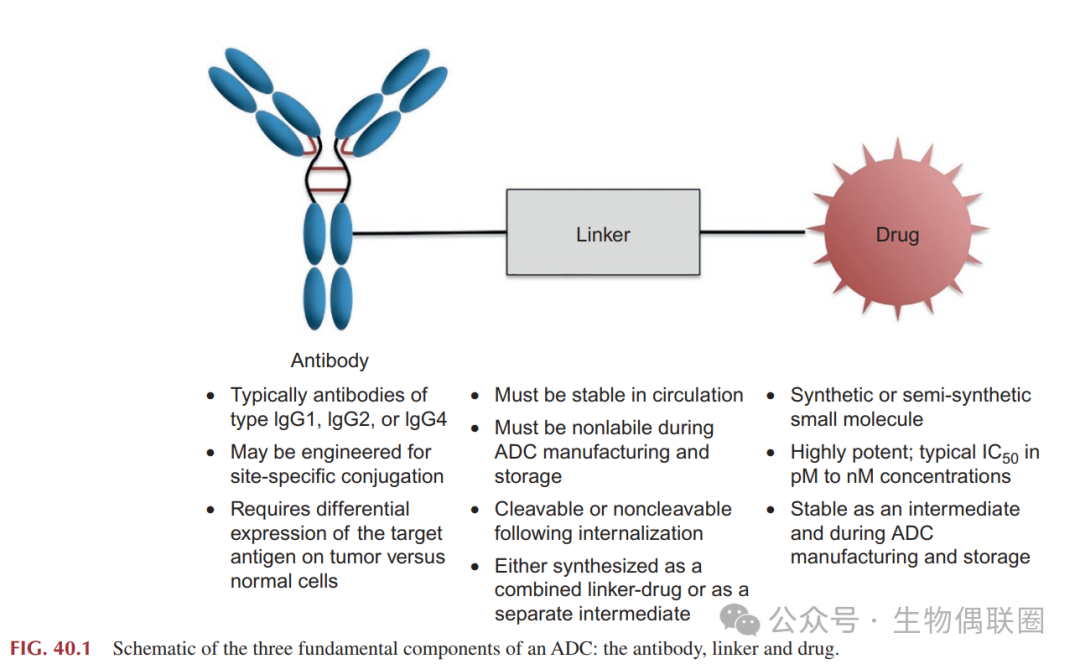
In this article, the author will discuss general methods for ADC process development and manufacturing based on experiences from three different ADC platforms, which represent the most common ADC designs in the current industry (Figure 40.2). These examples demonstrate how the design of ADC significantly impacts the required manufacturing processes, including complexity, cost, and robustness.
1
ADC Quality Attributes
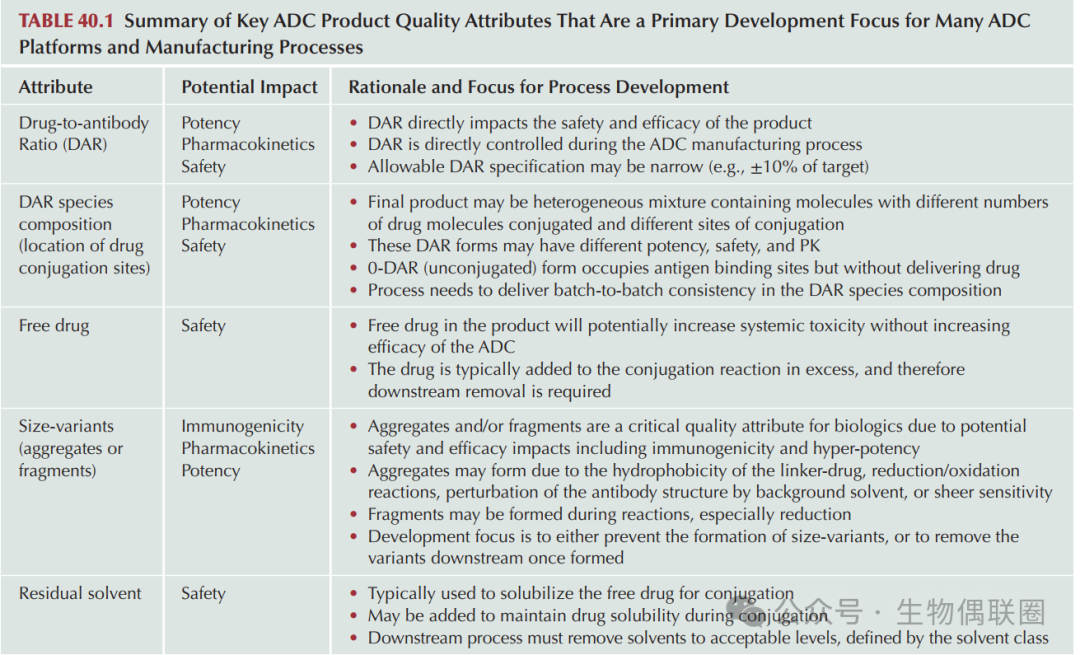
The development focus of ADC coupling processes is typically on the quality attributes described in the figure, as these attributes are directly affected during the coupling process and are often the most challenging attributes to control in ADCs.
2
Overview of ADC Processes
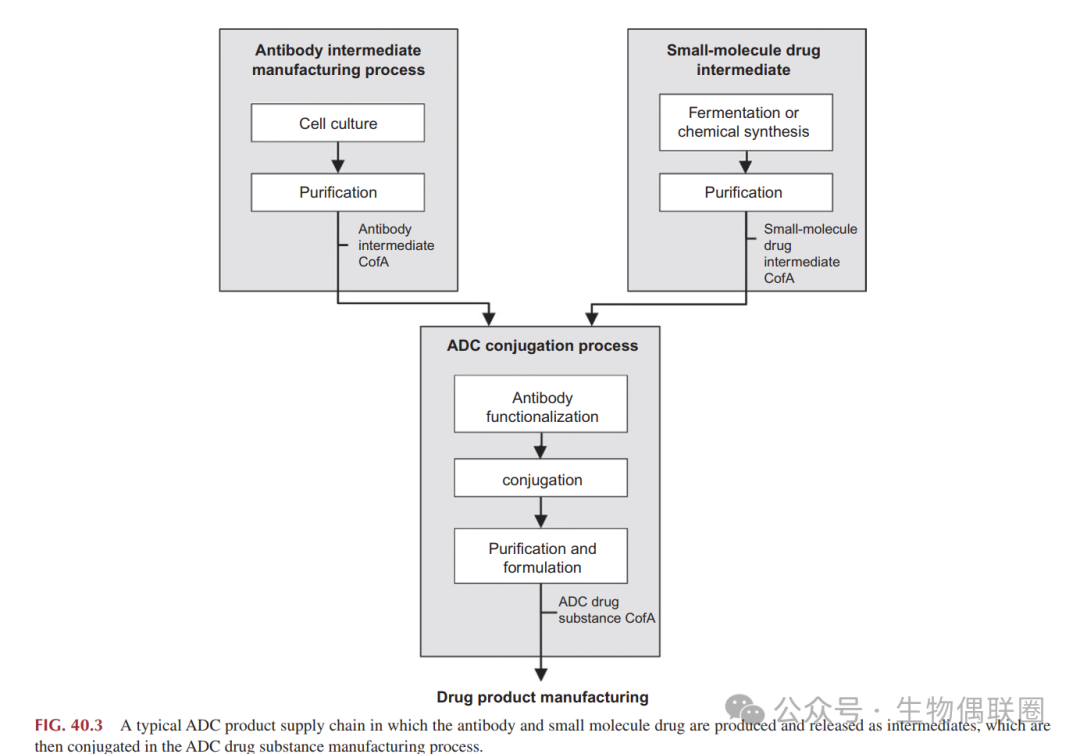
Antibodies and small molecule drugs are prepared and released separately as intermediates before coupling production. This segmented production approach allows existing production facilities to be used for producing antibody intermediates. The segmented production of antibodies and ADCs increases the length and complexity of the supply chain, but it has significant benefits in controlling the quality of antibody intermediates and small molecule drug intermediates before ADC coupling production, reducing the risk of potential failures during coupling due to lower quality batches of antibodies or small molecules, thus avoiding losses of coupling raw materials, production delays, and related costs. Other benefits of this approach include simplifying the ADC manufacturing process and control systems, and providing flexibility to separate coupling batches from antibody production scales.
3
Key Considerations for ADC Coupling Process Development and Production
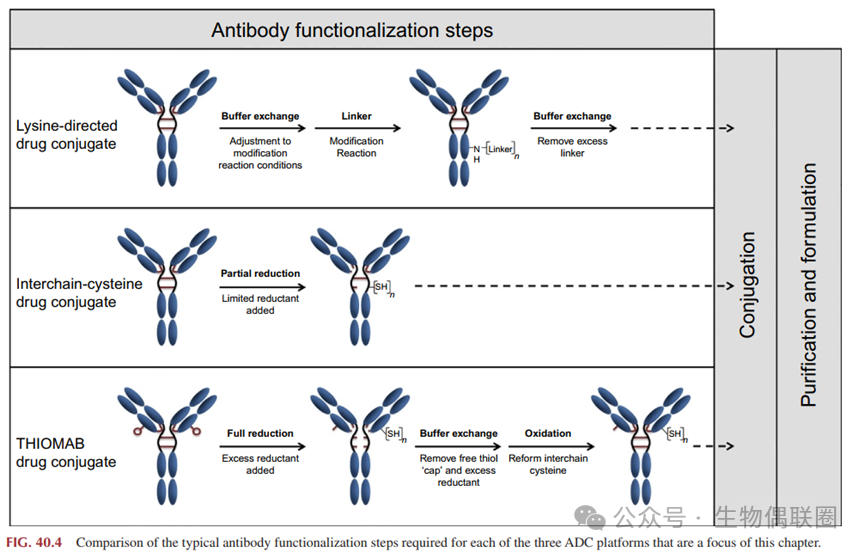
During the “antibody functionalization modification” stage of the ADC production process, reactive groups are generated on the antibodies, which can then directly couple with drugs to form ADCs. For many ADC processes, the antibody functionalization step is the most critical and sensitive step in the production process, as it directly controls the quantity and sites of drug attachment, making the process robustness to achieve the target DAR an important development focus for these steps.
The antibody functionalization step varies significantly based on the design of the ADC, exhibiting the greatest variability among different ADC coupling technology platforms. The most common methods for preparing antibodies for coupling include reduction, reduction/reoxidation, or modification with bifunctional linkers. Additional adjustment steps may also be performed during antibody functionalization to achieve the conditions required for downstream coupling reactions, including altering the concentration of antibodies, pH, temperature, solvent levels, or buffer composition in the reaction system, and buffer exchange steps may be necessary to remove incompatible buffer substances or excess reagents before the reaction step. For certain ADC technology platforms, once the antibodies have completed functionalization modification, only the conditions required for the coupling reaction need to be adjusted for the antibody intermediates. Figure 40.4 compares the antibody functionalization stages of the three ADC platforms highlighted in this chapter.
NEWS
Welcome to scan the QR code to follow us

Copyright Notice: This article is sourced from “Bioconjugation Circle” and is compiled and published by the “PIIF Intelligent Manufacturing Innovation” platform. All rights belong to the original author, and please indicate the source when reprinting.