Click the blue text above to follow “China Science Paper Online”


Since 2018, the trade war between China and the United States has escalated, with the U.S. wielding a ban on sales, attempting to restrict China’s information technology development through chips, operating systems, and other technologies. This has greatly wounded the national pride of the Chinese people and ignited patriotism. Many people, while feeling indignant, cannot help but wonder why, despite the significant scientific research investments China makes each year, and its achievements such as the world’s longest high-speed rail, leading supercomputing power, the Yutu-2 landing on the far side of the moon, and the completion of the Beidou satellite navigation system, we are still so troubled by the production of a small chip. This indicates that while many are filled with resentment, they do not truly understand what a chip is. Today, let’s try to clarify the history and significance of chips.



From Vacuum Tubes to Transistors
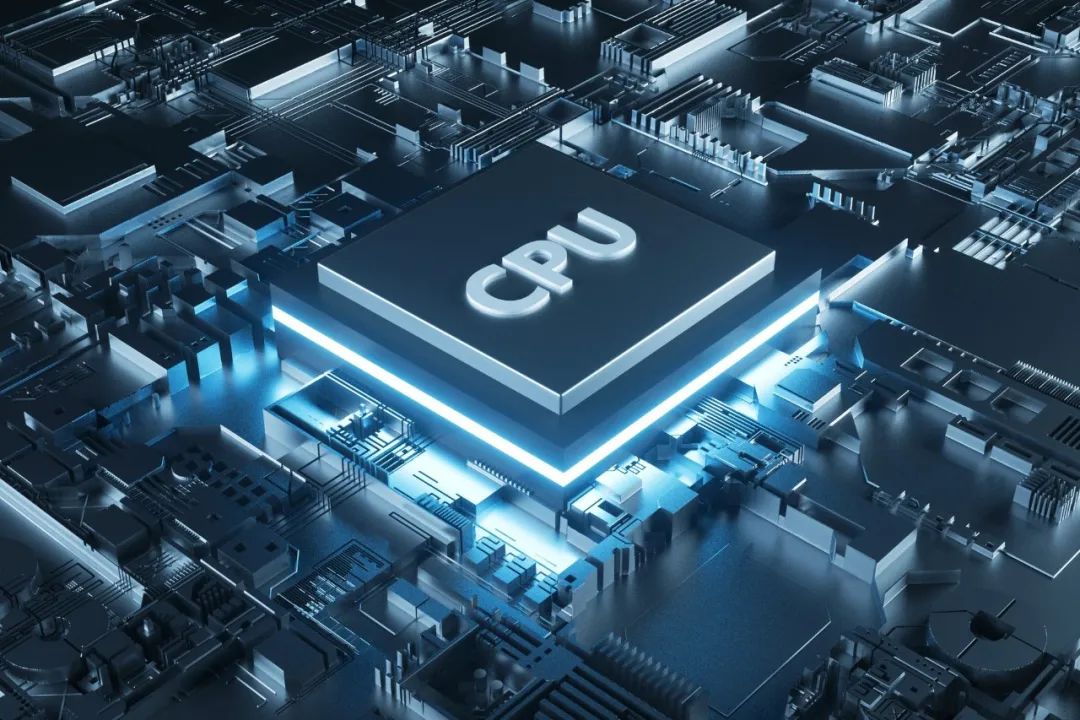
A chip, in essence, is an integrated circuit (Integrated circuit, abbreviated as IC), or the carrier of an integrated circuit. It is an electronic device that integrates all the semiconductor, resistor, capacitor, and connecting wires needed to form a circuit with certain functions on a small silicon wafer through semiconductor manufacturing processes such as oxidation, photolithography, diffusion, epitaxy, and aluminum evaporation, and then packages it in a shell. In simple terms, it is a circuit module that integrates various electronic components on a silicon plate to achieve a specific function, and slightly more complex electronic devices cannot do without chips.
Why was the integrated circuit developed? This also allows us to glimpse the original driving force behind human technological progress, which is to solve practical problems.
When we easily carry a notebook computer weighing about 1kg, containing many chips, while strolling leisurely down the street, we might imagine the appearance of the world’s first electronic computer born in the United States in 1946: a massive machine occupying 150 square meters, weighing 30 tons, using 17,468 vacuum tubes, 7,200 resistors, 10,000 capacitors, and 500,000 wires, consuming as much as 150 kilowatts of power. Clearly, the most intuitive and prominent problem is its large footprint and immobility, so can we reduce its size?
The invention of the transistor made this idea possible. The first transistor was manufactured in 1947 at Bell Labs in the United States, while previously, the only way to achieve current amplification was through large, power-hungry, and fragile vacuum tubes. Transistors have the main functions of vacuum tubes and overcome the aforementioned disadvantages, so shortly after the invention of transistors, the concept of semiconductor-based integrated circuits emerged. In 1958, the world’s first integrated circuit was born, and one of its inventors, Jack Kilby, won the Nobel Prize in Physics in 2000 for this achievement.
Compared to manually assembling circuits using individual discrete electronic components, integrated circuits can integrate a large number of micro-transistors onto a small silicon substrate, achieving powerful functionality, which is a significant advancement.
What Makes Chip Manufacturing Difficult?
From the above introduction, you might have a vague understanding: the so-called chip is like a circuit board, integrating common electronic components and circuits into a small silicon substrate, which doesn’t seem difficult. Indeed, the difficulty lies not in the theory but in the design philosophy and technical processes; it is challenging to achieve powerful functions while also being small and portable!
The problem lies in how to integrate these transistors to the nanoscale. For an ordinary Intel Core CPU, the core part is only slightly larger than a fingernail, yet it integrates billions of transistors.
Here, let me explain the meaning of the nm we often see in chip processes like 5nm, 7nm, and 13nm. Nanometer (symbol: nm) is a unit of length, originally called a millimicron, which is one billionth of a meter, approximately the length of 10 atoms. Assuming the diameter of a hair is 0.05 millimeters, if we were to average it radially into 50,000 strands, each strand would be about 1 nanometer thick. In 2003, the Pentium 4E series was launched, adopting a 90nm process, marking the official entry of chip processes into the nanometer era (previously still at the micron level).
The value of 5nm refers to the etching size of the processor, simply put, it indicates how large a chip can etch a unit of transistor. The smaller the etching size, the more computing units can be accommodated in a processor of the same size, enhancing performance; at the same time, advanced etching technology can also reduce the resistance between transistors, lowering the voltage required by the CPU, thereby significantly reducing power consumption and heat generation. Therefore, a 5nm process chip not only means a smaller size but also a generational improvement in functionality.
According to authoritative sources, TSMC’s most advanced 5nm process chip technology has a transistor size of only 20 silicon atoms, and they are connected into logic circuits through multiple layers of nanometer-level metal lines to achieve various functions.
A 7nm chip typically requires 4,000 process steps, and the construction cost of a 7nm chip manufacturing factory is approximately $10 billion to $20 billion, which is almost equivalent to the cost of building an aircraft carrier battle group.
We can even say that from a technical process perspective, chip manufacturing represents the most precise and complex industrial technology currently available, and is also a continuously accumulating and improving process.
There Are Many Types of Chips
In the minds of many, a chip is simply the CPU chip in a computer, which is a significant misunderstanding. A chip is a general term for semiconductor devices; when you open your computer or phone, any rectangular black component with many metal contacts soldered to the motherboard is a chip. For example, there are graphics card chips responsible for images, cache chips on memory sticks, power management chips, audio chips responsible for sound, and timing control chips, etc.
Moreover, chips are not only found in computers and mobile phones; even slightly advanced electronic products have them. From large medical testing equipment and scientific instruments used in research to small audio chips in radios, electromagnetic chips in induction cookers and microwaves, control chips in washing machines, and even power control chips in electric bikes, they have become a foundational technology in modern life.
China has made some achievements in this area; for example, in the consumer-grade analog/mixed-signal circuit chip field, we have basically achieved self-sufficiency. However, in other high-performance analog/mixed-signal fields, such as ultra-high-speed SerDes and high-speed AD/DA, China still struggles to produce chips that meet international leading standards.
The top designs in this field are still held by American companies like TI and ADI, requiring a great deal of time accumulation and engineering practice to achieve optimal performance. The architecture design and instruction sets for high-end processors (CPUs) have also undergone long-term accumulation. Moreover, these processor chips involve enormous engineering scales, so it will take many years of effort for China to independently develop architectures with intellectual property rights similar to ARM or Intel to catch up with international standards.
The high-end chip sales ban caused by the trade war may temporarily affect the development of some enterprises and the growth of China’s information technology industry, but in the long run, foreign sales bans will stimulate our endogenous motivation for self-development, promote improvements in our chip manufacturing technology, or lead to the creation of alternative products and technologies. For example, like Russia, which has low chip manufacturing capabilities, they have used alternative technologies to produce advanced military and civilian products.

Speaking of chips, it is worth mentioning the “biochip,” which is a completely different concept from the chips mentioned above.
What is a biochip? A biochip (biochip or bioarray) integrates biochemical analysis processes on the chip surface based on the principle of specific interactions between biological molecules, allowing for high-throughput rapid detection of DNA, RNA, peptides, proteins, and other biological components. People may easily associate biochips with electronic chips. In fact, the two do share a fundamental commonality: they both contain vast amounts of data information at a tiny size. However, they are entirely different entities; electronic chips contain semiconductor electronic units, while biochips contain biological probe molecules.
China Science Paper Online
www.paper.edu.cn
The largest preprint library in China, free OA paper library
Scan to follow us
China Science Paper Online
Sciencepaper Online
Ministry of Education Science and Technology Development Center