
Click on the blue text above to follow us
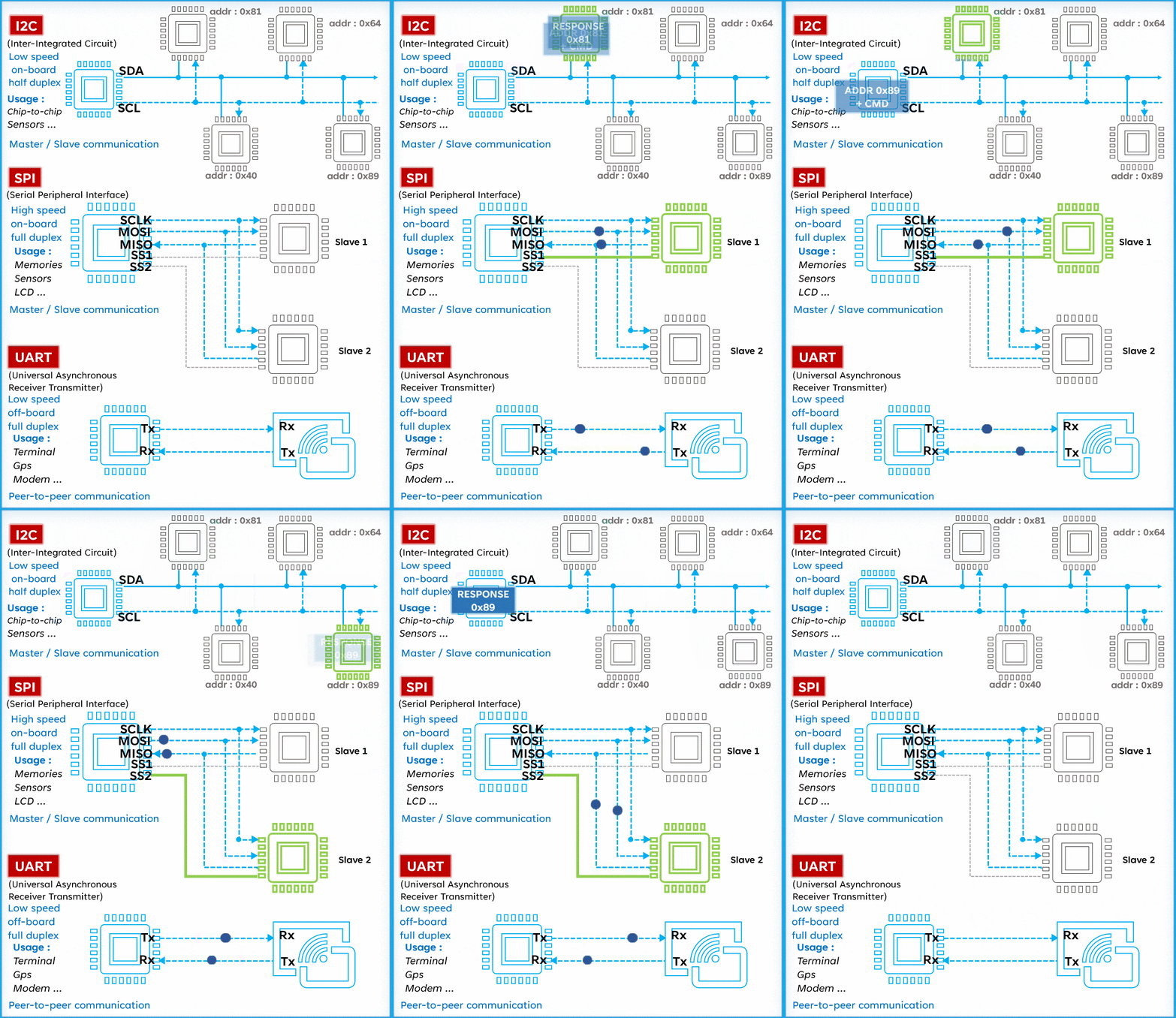 I2C, SPI, and UART are the three most commonly used serial communication protocols for embedded IoT terminals.
This article briefly introduces the principles of UART, I2C, and SPI serial bus communication. For more detailed explanations, please see the following three articles.
Understand I2C Bus Communication in One Article
Understand SPI Communication Protocol in One Article
Understand UART Communication Protocol in One Article
01
I2C Communication Protocol
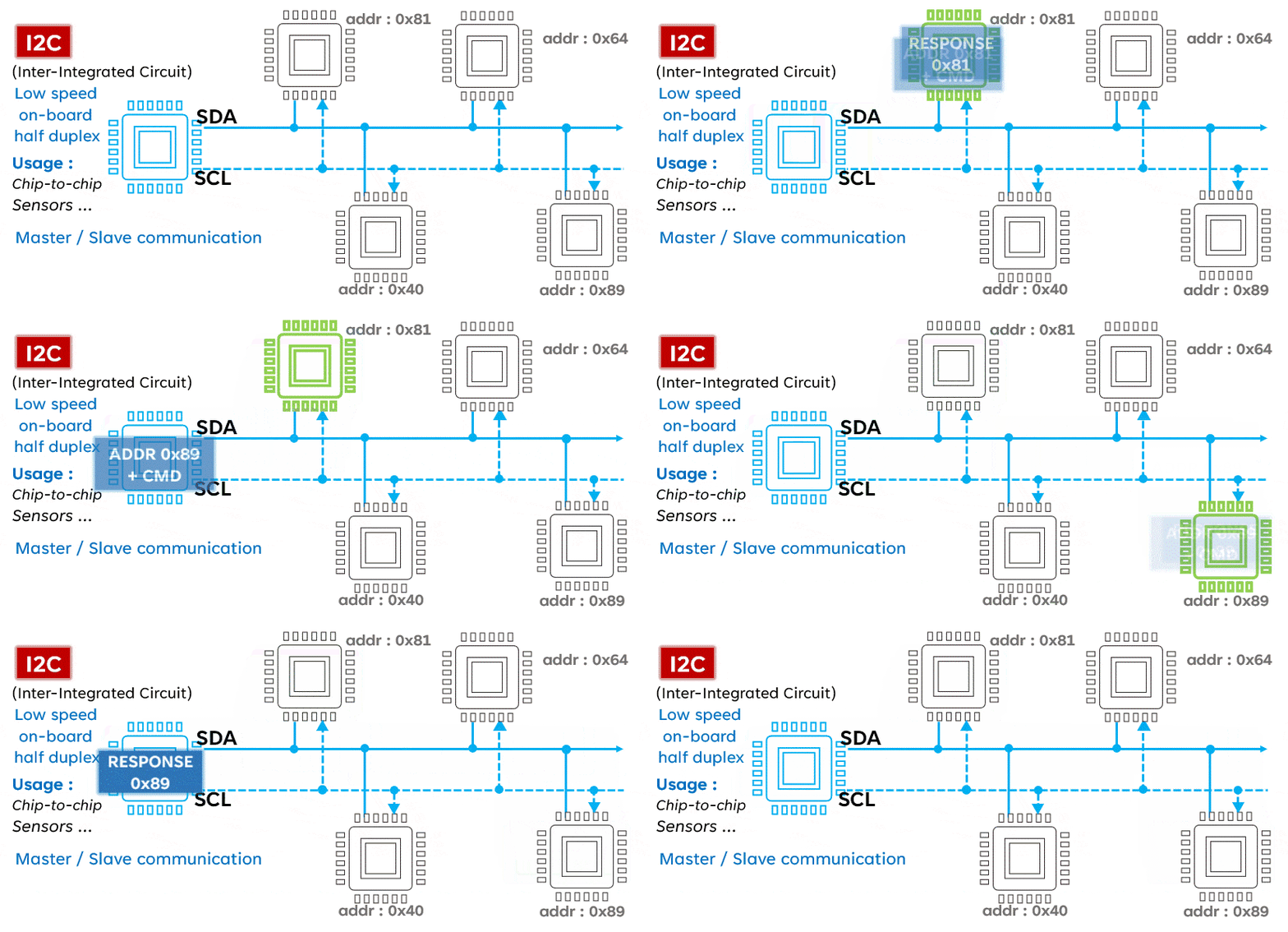
I2C (Inter-Integrated Circuit) communication protocol is a multi-master/slave architecture serial communication bus, which has two bi-directional signal lines: one data line SDA for sending and receiving data, and one clock line SCL for synchronizing the clocks of both communicating parties.I2C communication protocol is typically used to connect low-speed devices, such as sensors, memory, and other peripherals.Devices connected on the I2C bus are categorized as master and slave.The master has the authority to initiate and terminate a communication session, while the slave can only respond passively.
The I2C communication protocol specifies the following data transmission rates:
-
In standard mode, the data transmission rate is 100kb/s
-
In fast mode, the data transmission rate is 400Kb/s
-
In high-speed mode, the data transmission rate is 3.4 Mb/s
The I2C communication protocol has the following advantages:
-
Multiple Device Support:I2C supports multiple devices connected to the same bus, each with a unique address.
-
Simplicity:The I2C protocol is relatively simple and easy to implement and debug.
-
Low Power Consumption:In idle states, devices on the I2C bus can enter low-power modes to conserve energy.
The I2C communication protocol has the following disadvantages:
-
Slow Speed:I2C communication speed is relatively low and suitable for low-speed devices.
-
Limitations:The bus length and the number of devices in I2C are limited, and overly long buses may cause communication issues.
-
Conflicts:When multiple devices attempt to send data simultaneously, conflicts may occur, requiring additional conflict detection and handling mechanisms.
The I2C communication protocol is efficient and cost-effective in compact circuits, making it very common in small sensors, LCD screen controllers, RTC modules, temperature control devices, and battery management systems.
02
SPI Communication Protocol
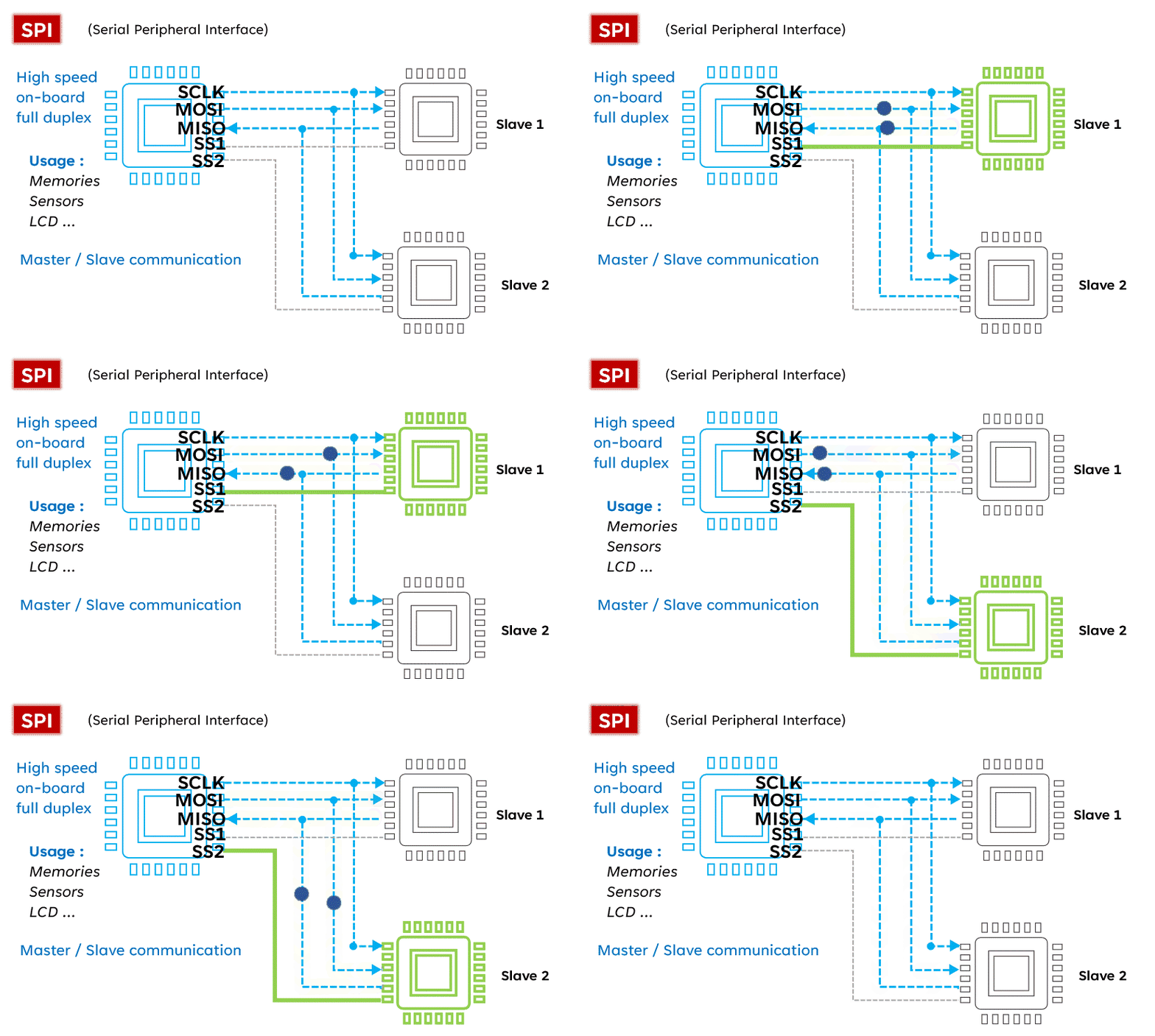
SPI (Serial Peripheral Interface) is a synchronous serial communication interface, mainly used for short-distance, low data rate communication, commonly found in embedded systems.
The four important elements of the SPI communication protocol are:
-
Master: The device that initializes communication and controls the clock signal.
-
Slave: The device being communicated with by the master.
-
Clock Signal (SCK): The synchronous clock signal generated by the master for synchronizing data transmission.
-
Data Output (MOSI) and Data Input (MISO): Used for data transmission between the master and slave.
There are four modes of SPI communication protocol:
-
Mode 0: The first edge of the clock signal corresponds to the first bit of data.
-
Mode 1: The first edge of the clock signal corresponds to the last bit of data.
-
Mode 2: The first edge of the clock signal corresponds to the first bit of data, with a delay in the SS signal compared to Mode 0.
-
Mode 3: The first edge of the clock signal corresponds to the last bit of data, with a delay in the SS signal compared to Mode 0.
The basic steps of the SPI communication protocol are:
-
Initialize the master and slave, set the SPI mode and clock rate.
-
The master initiates communication by pulling down the slave’s chip select signal (SS).
-
The master sends the first byte of data while the slave responds with the first byte of data.
-
The master receives data and sends the next byte of data, and so on, until communication is complete.
-
After communication ends, the master releases the chip select signal to terminate SPI communication.
The SPI communication protocol has the following advantages:
-
High Speed: SPI communication is relatively fast, suitable for applications that require high-speed operations.
-
Full Duplex: SPI supports full-duplex communication, allowing simultaneous data transmission and reception.
-
Simplicity: The SPI communication protocol is relatively simple, suitable for rapid development and implementation.
The SPI communication protocol has the following disadvantages:
-
Complex Wiring: SPI requires multiple wires for connection, which may increase the complexity of hardware design.
-
Distance Limitations: The transmission distance of SPI is limited; overly long lines may lead to signal attenuation and interference.
-
Master-Slave Mode Limitations: SPI typically uses a master-slave mode, limiting the number of master devices, making it unsuitable for multi-master scenarios.
SPI is very suitable for situations requiring fast and reliable data transmission, such as TFT displays, SD storage cards, and wireless communication modules. However, its effectiveness decreases in complex systems with many slaves.
03
UART Communication Protocol
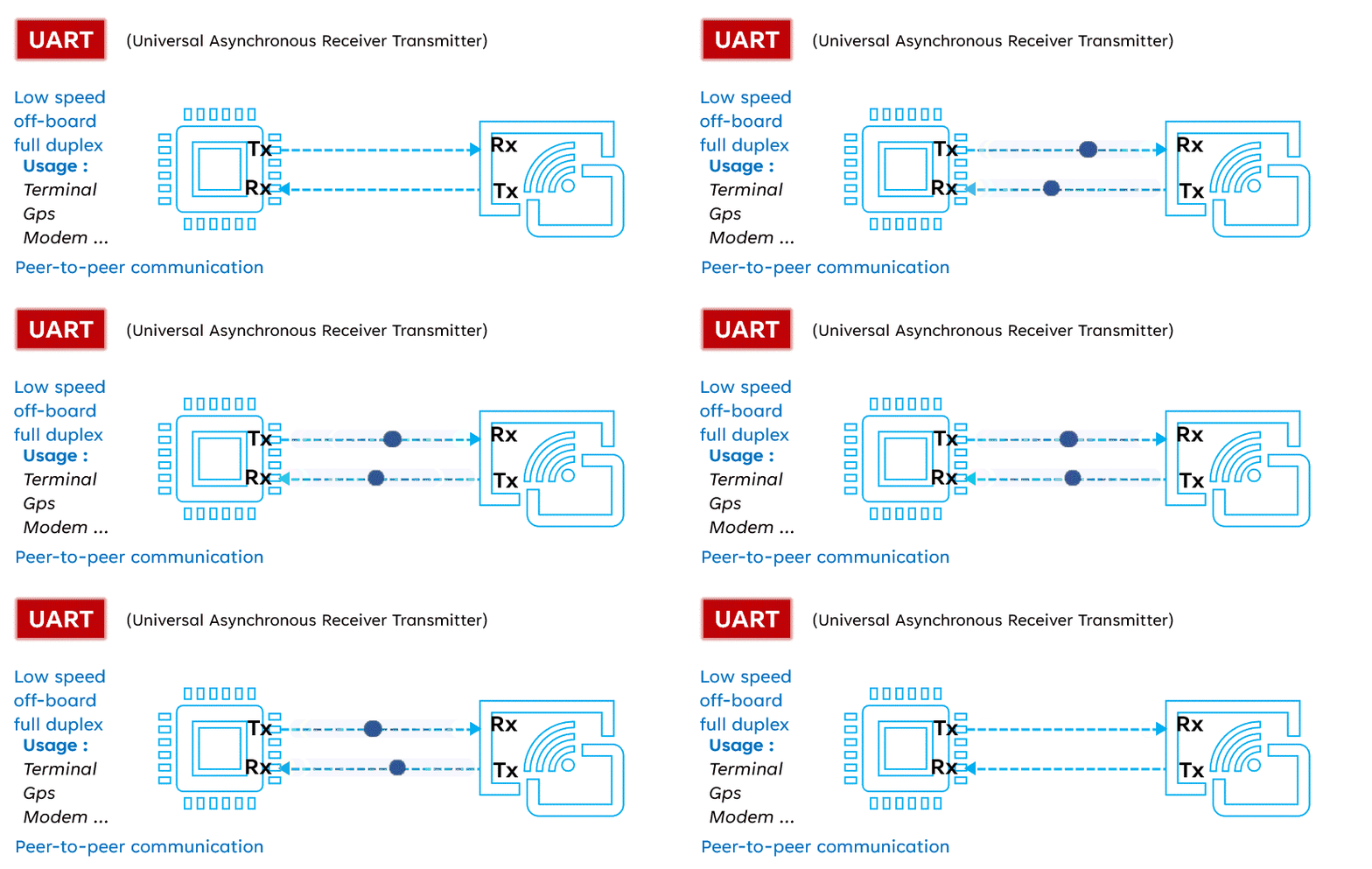
UART (Universal Asynchronous Receiver/Transmitter) is a full-duplex communication protocol commonly used for communication between various embedded systems. UART communication requires only two lines to operate: TX (transmit) and RX (receive). This protocol allows asynchronous communication, meaning that the transmitter and receiver do not need to share a clock. Data is organized into packets, each containing a start bit, 5 to 9 data bits, an optional parity bit, and one or two stop bits.
Here are the basic principles of the UART communication protocol:
-
Start Bit: At the beginning of communication, the data line is pulled low.
-
Data Bits: Following the start bit, data bits are transmitted one by one, usually 5, 6, 7, or 8 bits, as agreed by both parties.
-
Parity Bit: Optional, used to detect errors during data transmission.
-
Stop Bit: At the end of data transmission, the data line is held high. The stop bit can be 1, 1.5, or 2 bits, as agreed by both parties.
-
Baud Rate: The data transmission rate, such as 9600bps, 115200bps, etc.
Advantages of the UART communication protocol:
-
Simplicity: The UART communication protocol is relatively simple and easy to implement and debug.
-
Wide Applicability: UART is widely used for communication between various devices, with good compatibility.
-
Distance: UART communication can cover long distances, suitable for scenarios requiring long-distance transmission.
Disadvantages of the UART communication protocol:
-
Slow Speed: UART communication speed is relatively low, not suitable for applications requiring high speed.
-
Duplex: UART communication is duplex, allowing for low-speed duplex data transmission for sending and receiving data.
-
Unreliable: Due to UART being asynchronous communication, it may be affected by noise and interference, leading to unreliable data transmission.
04
How to Choose a Communication Protocol
When selecting an appropriate serial communication protocol for IoT hardware, consider the following aspects:
-
Communication Speed: SPI offers high speed, UART provides high flexibility, and I2C is suitable for low-speed configurations with simple wiring.
-
Circuit Design: I2C can efficiently manage multiple devices in a compact space, SPI can achieve performance in large designs, while UART can provide simplicity and versatility.
-
Distance and Communication Environment: UART offers stability over long distances, while I2C is better suited for short distances.
-
Duplex Requirements: SPI and UART provide full-duplex capabilities, while I2C is limited to half-duplex.
The I2C communication protocol stands out for its simplicity and ability to manage multiple slave devices with minimal pins, making it an ideal choice for short-distance communication.
The SPI communication protocol with its high-speed and full-duplex mode is excellent for fast and efficient data transmission in systems where space is not a primary concern.
UART communication protocol excels in long-distance communication and scenarios requiring low speed.

 Click Read Original for more exciting content~