Did you know? Bill Gates, Jeff Bezos, NVIDIA, and Intel have all invested in one company—FieldAI. They are betting not on ordinary robots, but on robots with a “brain.” (Bezos Expeditions, Khosla Ventures, Temasek, Intel Capital, NVentures)
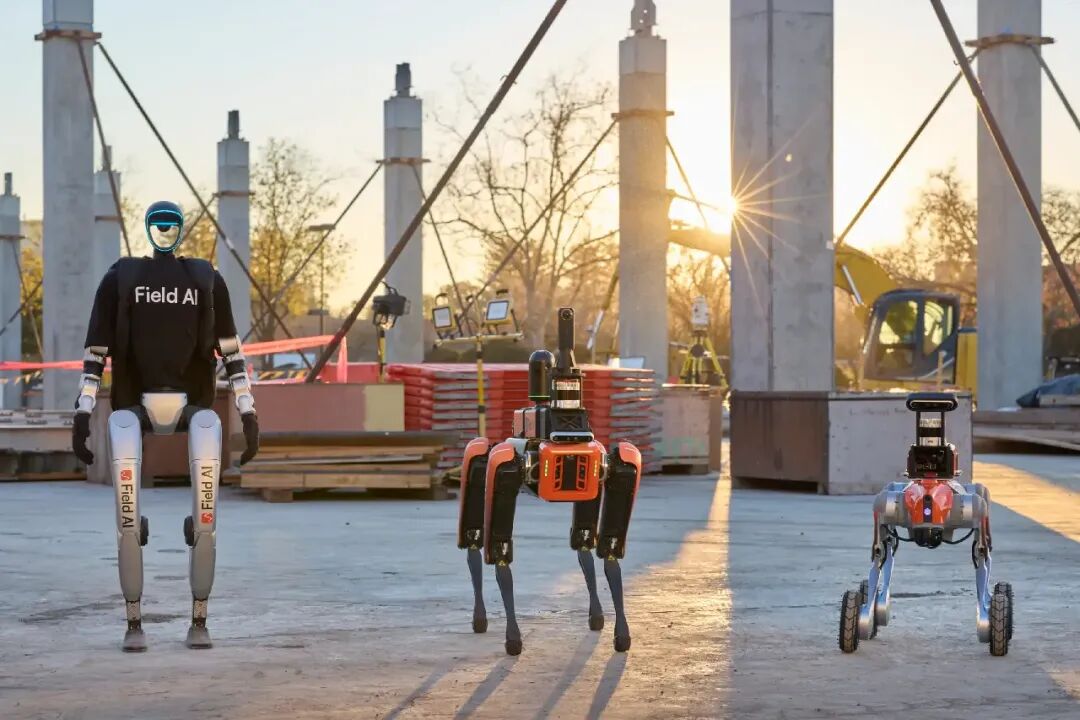
In summary, their technology can be described as: “The robot brain” allows robots to no longer act according to fixed programs, but to function as an intelligent agent that can understand the environment, make judgments, and act independently. This is the key to transforming robots from ‘tools’ to ‘labor force.’
In the past decade, the two most talked-about terms in the construction industry have been digitalization and robotics. However, everyone knows that many robots end up being mere showcases, with very few actually deployed.
Why is that?
Because while robots may have a “body,” they lack a “brain.”
Without intelligence, robots can only perform preset actions in ideal environments, but once they reach complex, unpredictable, and high-risk construction sites, they fail completely.
It is only in the past two years that the concept of “Robot Brain” has emerged, fundamentally changing the situation.
Today, we will clarify one question:
What exactly has the robot brain changed? Why has it become a breakthrough point in the construction industry?
01 Why have past construction robots failed to take off?
Let’s start with the conclusion:
The reason past robots have failed is that they lack intelligence and cannot understand their environment.
Here are a few scenarios you encounter every day:
-
The site is muddy, with pits, water, and debris.
-
Daily routes and material stacking locations vary.
-
Construction machinery and workers are constantly moving.
-
Lighting, smoke, and obstacles on site are continuously changing.
-
GPS signals are blocked by steel structures.
-
CAD drawings never match the actual site.
In such scenarios, traditional robots must meet three conditions to operate:
-
They must have a fixed route.
-
They must have a stable ground.
-
They must have pre-written programs.
But construction sites are precisely the most “unfixed” places in the world.
This is why most past “construction robots” could only serve as showcase products, not production equipment.
02 What is the “Robot Brain”?
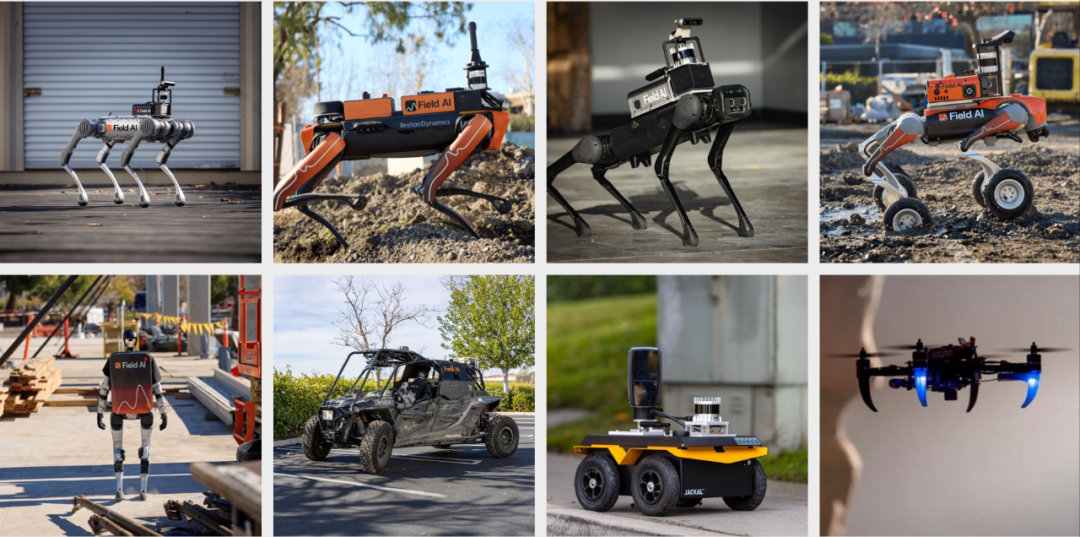
It allows robots to no longer follow programs but to “understand, judge, and act on their own.”
In other words:
Past robots were “passively executing tasks”;
Now robots are “actively understanding the environment.”
Traditional robots are tools, while robots with a “brain” have become labor force.
03 What does the “Robot Brain” consist of?
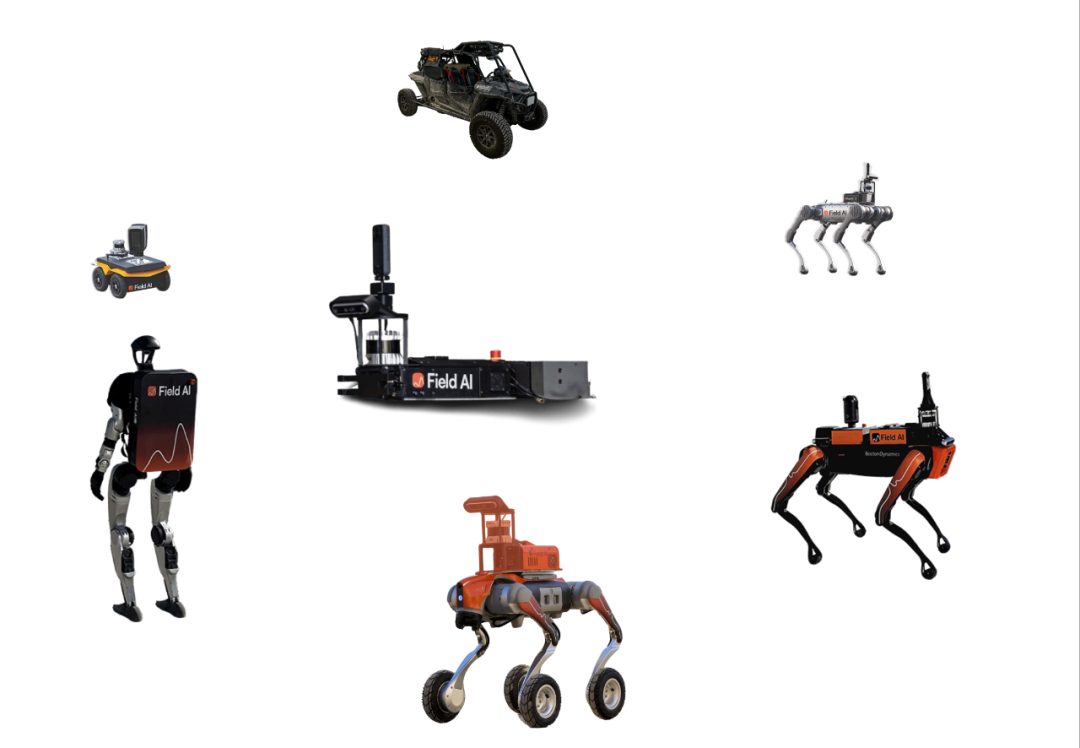
The robot brain is actually a set of “Embodied AI” systems, comprising four capabilities:
① Understanding the site (Perception)
Can recognize:
-
This is a wall.
-
This is a pit.
-
This is rebar.
-
This is a bag of cement.
-
Where can walk and where cannot.
② Understanding the scene (Semantic Understanding)
Can understand:
-
The temporary roads on site are dynamically changing.
-
This route is high-risk and cannot be taken.
-
Inclined rebar is an abnormal situation.
③ Making decisions (Autonomous Decision-Making)
For example:
-
I want to go from point A to point B.
-
If I encounter an obstacle, I will choose to detour.
-
If the road is difficult, I will slow down.
-
If I encounter danger, I will stop.
④ Controlling its body (Motion Control)
Includes:
-
Walking, stopping, turning.
-
Avoiding obstacles.
-
Stably stepping on uneven ground.
These four capabilities combined make up the “robot brain.”
It is not a module, but a complete intelligent system.
04 The changes brought by the robot brain to the construction industry are “qualitative.”
The following six points represent the deepest value in the industry.
① From “showcase” to “deployable”
Previous robots:
✔ Could be showcased on flat ground.
✘ But could not be used on construction sites.
Current robots:
✔ Can adapt to complex, irregular, and dynamic construction environments.
This is the first time in the industry in 10 years that a robot can truly “run on site.”
② Transforming robots from “a device” to “a worker”
Previous robots:
-
Could perform one task.
-
Could only operate in standard scenarios.
-
Failed with slight changes.
Current robots:
-
Can understand tasks.
-
Can adjust strategies based on scene changes.
-
A “brain” can adapt to various forms (quadruped, humanoid, wheeled).
This means: For the first time, robots possess the characteristics of “labor force.”
③ Site inspections have transformed from “manual walkthroughs” to “robotic automated rounds.”
Robots with brains can autonomously complete:
-
Quality inspections.
-
Safety inspections.
-
Progress tracking.
-
Material counting.
-
Construction area monitoring.
Inspection tasks have become: Robot → Data collection → Cloud-based automatic report generation. Workers no longer need to walk the site every day.
④ The construction site now has a “real-world digital twin” for the first time.
The robot brain enables robots to automatically collect:
-
Real-time photos.
-
360-degree scans.
-
Point cloud data.
-
Model comparisons.
-
Progress deviations.
Previously reliant on manual collection, robots can now collect data automatically, frequently, and standardized.
This will become the “underlying data infrastructure” for future construction digitalization.
⑤ Cost structures have been disrupted.
The cost composition of a previous construction robot project was:
-
20% hardware.
-
80% software + debugging + integration + manual assurance.
This made it expensive, time-consuming, and difficult to scale.
With the robot brain:
-
Software becomes generalized.
-
Scene adaptation is automated.
-
Deployment no longer requires a large number of engineers.
-
Costs drop by an order of magnitude.
Construction robots can finally be scaled for deployment.
⑥ Making “human-robot collaboration” a reality.
Robots can handle:
-
Dangerous tasks.
-
Repetitive tasks.
-
High-intensity tasks.
-
Tasks requiring high precision.
-
Tasks posing risks to human safety.
Humans can handle:
-
Judgment.
-
Coordination.
-
Management.
With a “brain,” robots are no longer a replacement for humans but rather an augmentation of the workforce.
This is of great significance for the construction industry.
05 Why will 2025–2026 be a critical point for industry explosion?
There are three key factors:
① The leap of AI foundational model capabilities to the “embodied intelligence” stage.
Large models are no longer just language models but can handle:
-
Vision.
-
Actions.
-
Trajectories.
-
The physical world.
② Capital pouring into robotic intelligence (FieldAI, Figure, Tesla, etc.).
Capital is not just for excitement but because it sees a scalable business model.
③ The labor shortage on construction sites is becoming increasingly severe.
Especially:
-
Rising labor costs.
-
Young people are unwilling to work on construction sites.
-
Strict regulations on high-risk operations.
Robots are not a “luxury,” but a “necessity.”
Conclusion: What does the robot brain mean for the construction industry?
It is the passport for robots to truly enter construction sites.
For the first time, robots have escaped the era of “following programs” and possess the ability to “understand the environment and make decisions.”
For the construction industry, it will bring: safer sites, lower construction costs, higher frequency of digital data collection, and more reliable production processes.
In the next 3–5 years, robots with “brains” will become as ubiquitous as drones, becoming the standard tools + data entry + digital infrastructure on construction sites.
This time, construction robots are truly set to take off.
The end of the text.
The following QR code is my contact information. If anyone is interested, feel free to reach out for discussions.
Including but not limited to digital transformation, BIM, AI, construction robots, etc.