
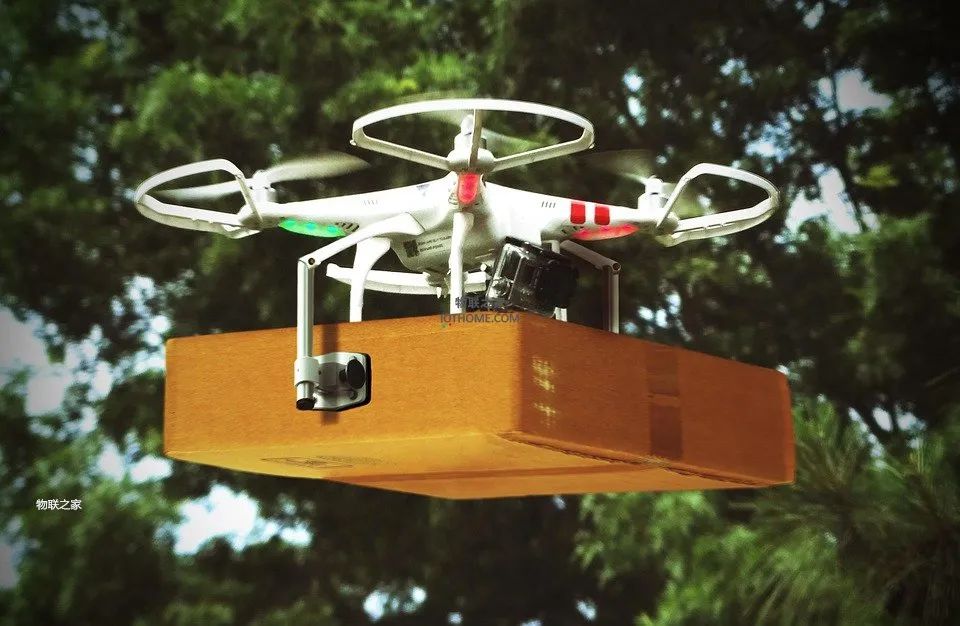
Image Source: https://pixabay.com/images/id-1134764/Compiled by: iothomeIt is estimated that by 2023, there will be nearly 30 billion connected devices in use, and the Internet of Things will grow at an exponential rate. As our world becomes more interconnected, new IoT applications are emerging across almost every industry. Moreover, 5G has also played a key role in enabling new capabilities for IoT. We have compiled a list of the 10 most common IoT use cases today.1.AutonomousVehicles and Connected Cars In the future, vehicles will reach level 5 autonomy, requiring no human intervention. However, today, automakers and automotive startups are working hard to perfect level 3 and 4 autonomous driving technologies. Cameras, radar, LiDAR, and many other onboard sensors are being used to capture road conditions, inform appropriate driving behaviors, and prevent potential accidents. To achieve this, nearly 1TB of data will be stored in vehicles, and this amount is expected to surge to over 2TB in the next decade. However, future cars will not only be autonomous. They will use “Vehicle-to-Everything” or “V2X” technology to communicate with each other, with road infrastructure, and even with pedestrians. Through this communication, fleets of autonomous vehicles can be managed, making travel faster and safer.2.AR/VR Whether in gaming, shopping, entertainment, or healthcare, Augmented Reality (AR) and Virtual Reality (VR) are gaining traction to create “extended reality” experiences. AR overlays information onto the real world. Whether animating faces during video chats or capturing adorable animals in the backyard, your device uses information from the real world and then overlays digital information to alter or enhance reality. VR places users in a digital world and uses captured actions (eye movements, head turns, etc.) to immerse them in that world.3.Smartwatches, Fitness Trackers,Wearablesand Hearables The wearables market is booming due to a surge of new personal devices. In fact, a recent report predicts that by 2025, the industry is expected to grow from 181.5 million units in 2019 to 520.1 million units, with a compound annual growth rate of 19.9% during the forecast period (2020-2025). The report also states that over 80% of consumers are willing to wear fitness wearables. In the coming years, smartwatch sales will account for more than half of global watch sales. Consumers are looking for seamless connectivity and interaction between their smartphones and smartwatches to track, manage, and protect their data, especially sensitive health data. However, technological innovation will not only happen on the wrist. A new subclass known as “hearables” could disrupt the wearables industry with voice-controlled headphones. As more headphone manufacturers abandon the headphone jack, these types of devices are expected to become commonplace in the future. Another opportunity lies in portable medical devices that can monitor blood pressure and heart rate and contact emergency services during medical emergencies.4.Machine-to-Machine (M2M) Connected Devices M2M is a technology that enables communication between machines without human intervention, with examples including telemetry, traffic control, robotics, and other applications involving inter-device communication. Today’s factories are using IoT-enabled machines to work smarter. By equipping machines with sensors, factory managers can more accurately map machine workloads, inputs, and outputs. They can also more closely monitor machine wear and tear, enabling predictive maintenance that extends lifespan. With these capabilities, factories will become increasingly automated.5.The Future Supply Chain Another IoT use case is the supply chain, which is becoming increasingly globalized and complex. Customer demands are rapidly changing, products must be procured, and transportation and delivery routes must be coordinated. In response, companies are creating connected enterprise systems and making data modeling a key part of broader data management strategies. Additionally, low-power IoT devices are being used to track assets throughout the supply chain and monitor product quality (e.g., temperature, vibration) and track the opening of shipping containers. Furthermore, routes can be further optimized by collecting supply chain data in transit.6.Drones Are On The Rise For photographers, drones help capture stunning landscapes that were previously inaccessible. But these flying devices are not just for that purpose; oil rig workers are using drones to complete comprehensive inspections of rigs faster without compromising worker safety or production downtime. E-commerce companies are beginning to use delivery robots and drones to bring goods ordered by buyers right to their doorsteps. Even non-profit organizations are using drones to monitor deforestation in vulnerable environmental areas. Beyond commercial uses, drones are also serving the public in search and rescue missions. These machines can help search and rescue teams find victims faster, assess their conditions, and guide rescue missions accurately.7.Smart Cities: Energy, Traffic, Parking, etc. One of the most promising use cases for IoT is creating smarter, more efficient cities. Public energy grids can be optimized to balance workloads, predict energy surges, and distribute energy more equitably to customers. Traffic systems in dense urban environments can also be synchronized to adapt to real-time traffic conditions. In emergencies, emergency responders can communicate with traffic lights to change their colors. Other applications include digital tracking of parking lots, so information about available spaces is automatically pushed to drivers looking for parking.8.Healthcare Edge IoT devices are transforming patients’ healthcare experiences, whether through mobile devices that collect patient information during emergency room visits or continuous blood glucose monitoring systems for diabetes patients. We are beginning to see a variety of IoT devices collect health data from individuals: from heart monitors, blood pressure monitors to “smart” pills or electronic medications for monitoring intake, to wearables like smart socks with temperature control or smart vests for vital sign monitoring. In addition to monitors, various devices can remind patients to correct their posture, take medications, or act as personal assistants while on the go.9.Smart Agriculture Today’s farmers are leveraging the power of IoT to streamline their operations. With free-range livestock being widely adopted, connected technology can track livestock across open pastures. Smart sensors can also be installed in irrigation systems to reduce water consumption and create optimal moisture levels for crop soil. (Source: IoT Home) It is even used to monitor factors such as humidity and temperature during the composting process. Additionally, farmers can closely monitor their equipment, pinpoint the location of each device, track its performance, and perform predictive maintenance. Beyond traditional farms, winemakers are using IoT devices to understand the health and sugar content of grapes.10.Companion Robots With the outbreak of the pandemic this year, a use case for IoT emerged: companion robots. For those stuck at home, companion robots have become a very popular friend.The IoT Unlocks Data Gates The IoT has shown remarkable growth driven by connectivity, data economics, and affordable computing power. And storage plays a key role, providing the fuel for the most valuable asset of IoT—data. As IoT evolves, data can be stored closer to the people, devices, and “things” it serves, leading to storage and computing closer to the edge and endpoints. The closer to the source, the less latency, and as these new IoT use cases gradually become mainstream, this means faster insights and value.
Reprinted from: IoT Home
Previous Popular Articles (Click on the article title to read directly):
-
How IoT Works: Sensors
-
How IoT Works: Network Connections
-
Four Core Principles of IoT Security
-
AI or Will Dominate the New Mode of Aerial Combat
-
Narrowband IoT Will Land in Consumer Industries
-
Artificial Intelligence Is Liberating Chemists’ Hands