(This article is translated from Semiwiki)
In the rapidly evolving technology industry, the semiconductor sector serves as a cornerstone, driving innovation across multiple fields. At the core of the semiconductor industry is semiconductor intellectual property (IP) — a component that often goes unnoticed yet is crucial to the future direction of electronic devices.
Understanding Semiconductor IP
Semiconductor IP, or semiconductor intellectual property, encompasses pre-designed and pre-verified components that are essential for the development of semiconductor chips and integrated circuits (ICs). It includes key technologies that semiconductor companies can license or reuse, such as memory controllers, processor cores, and interface protocols. From smartphones to automotive systems, these technologies play a critical role in the creation and development of advanced and innovative electronic products.
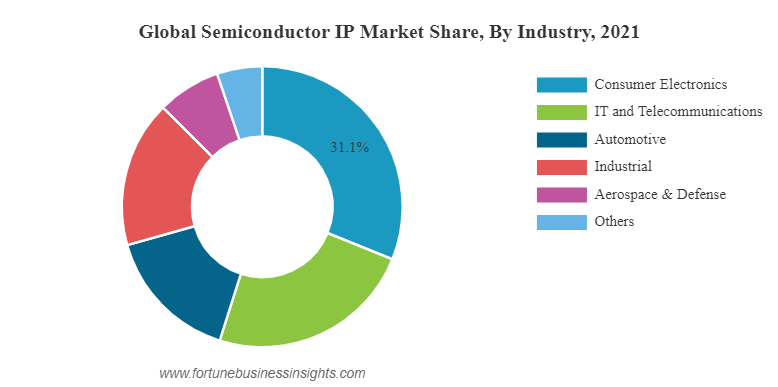
As the demand for higher performance and stronger energy efficiency in semiconductor solutions continues to grow, the semiconductor IP market is experiencing significant growth. According to Fortune Business Insights, the global semiconductor IP market revenue is expected to reach $8.53 billion by 2029.
Advantages of Semiconductor IP in Modern Chip Design
Accelerated Time-to-Market
Semiconductor IP allows designers to leverage pre-designed and verified components, minimizing the time required to develop these components as it avoids the necessity of designing devices from scratch. This feature accelerates chip development speed, shortens time-to-market, and provides companies with a competitive advantage.
Cost Savings
Designing semiconductor chips from the ground up requires significant time, expertise, and resources. However, by adopting semiconductor IP, companies can reduce development costs by reusing or licensing existing IP products without the need for internal redevelopment.
Performance Optimization
Semiconductor IP modules offer optimal performance and energy efficiency. By applying these modules in their designs, companies can greatly benefit from the expertise and optimized knowledge provided by IP vendors.
Design Quality and Reliability
Semiconductor IP is often extensively tested and verified, providing higher quality and reliability. Chip designers can leverage the knowledge and experience of IP vendors by integrating these validated IP modules into their designs, thus developing more durable and reliable semiconductor products.
Access to Advanced Technologies
Semiconductor IP vendors are often at the forefront of technological innovation, offering IP modules equipped with advanced features and functions. Semiconductor designers can utilize these IP solutions to develop cutting-edge semiconductor solutions, thereby fully leveraging the benefits brought by the latest technological advancements and maintaining a competitive edge.
Driving Forces Behind Semiconductor IP Growth
The widespread adoption of wireless technology devices is driving market growth, as major players invest in advanced and innovative wireless products. Companies operating in this market are investing globally in the development of wireless technologies to meet consumer demands. The surge in wireless technology development has increased the popularity of IP solutions, including interface IP, silicon-based design IP (ASIC), and processor IP. These components are crucial for manufacturing mobile and wireless devices.
The proliferation of technology-driven consumer electronics is significantly driving the growth of the semiconductor IP market globally. Semiconductor IP solutions are indispensable components in the production of various electronic devices, including smartphones, wearables, headphones, and various other innovative and advanced household products. Memory and interface IP are used in wearables to enhance daily experiences by providing real-time feedback. As global demand for wearables and smart connected devices grows, this trend is expected to further drive market growth.
Understanding the Limitations of Semiconductor IP
IP theft and counterfeiting can lead to high costs, particularly in ASIC and FPGA semiconductor designs, while also posing reputational risks to organizations. This issue has garnered widespread attention in the semiconductor market, as counterfeit components have become a significant threat. Another major challenge faced by semiconductor companies is the complexity involved in technological upgrades. To remain competitive, businesses must continuously innovate and adapt to changes, which requires substantial investment in R&D and a workforce capable of addressing modern technological complexities.
Emerging Trends in the Semiconductor IP Field
Artificial Intelligence and Machine Learning: The integration of artificial intelligence (AI) and machine learning (ML) with semiconductor IP is becoming increasingly common, aimed at optimizing performance, enhancing security, and improving energy efficiency.
Advancements in 5G Technology: The rollout of 5G technology is significantly driving the demand for advanced IP that supports faster and more reliable communication networks.
Automotive Electronics R&D: The rise of autonomous driving and electric vehicles necessitates dedicated IP in the automotive electronics sector.
Security-Centric IP: With the evolving nature of cyber threats, there is an increasing emphasis on developing IP solutions with robust security features.
Customization and Flexibility: There is a noticeable trend towards offering more customizable and flexible IP solutions to meet specific customer needs.
The Asia-Pacific Semiconductor IP Market: A Dominant Force of Innovation and Growth
The Asia-Pacific region dominates the global semiconductor IP market and is expected to hold the largest share in the coming years, primarily due to increased investments from leading electronics manufacturers in the region.
In May 2022, Samsung Group announced an investment of approximately $489 billion over the next five years, which is a significant reason for the Asia-Pacific region’s dominance. This investment is primarily aimed at developing semiconductors and biopharmaceuticals to strengthen the domestic supply chain and enhance strategic competitiveness.
Additionally, the concentration of electronics manufacturers and the growth of electronic component exports from the Asia-Pacific region are also important factors for market expansion. The ASEAN Investment Organization reports that the consumer electronics industry in several Asia-Pacific countries, including India, China, and Japan, accounts for approximately 50% of their total exports.
Key Players in the Semiconductor IP Field
Arm (UK)
ARM is a well-known provider of semiconductor IP solutions, offering a diverse range of graphics processors, processor cores, and system-on-chip (SoC) designs for various applications, including automotive, mobile, and IoT. ARM’s featured products include the ARM Cortex-A series CPUs, ARM Artisan physical IP, and Mali GPUs, providing high performance and energy efficiency for a wide array of semiconductor applications.
Synposys (USA)
Synposys is a leading provider of semiconductor design tools and IP core verification solutions, offering an enhanced product portfolio that includes analog, digital, and mixed-signal IP for FPGA and ASIC design. The company’s goal is to provide designers with configurable and reusable semiconductor IP solutions.
Cadence (USA)
Cadence is a dominant provider in the semiconductor design and verification software space, offering a wide range of verification IP, IP cores, and SoC development design tools. Cadence innovates through advanced features like Denali memory IP, Tensilica DSPs, and the Virtuoso design platform to provide designers with tools to manage complex SoC projects.
CEVA (USA)
CEVA specializes in providing semiconductor IP solutions for AI acceleration, digital signal processing (DSP), and wireless connectivity. The company offers licensed Bluetooth, Wi-Fi, cellular, and audio processing IP cores, providing advanced performance and energy-saving solutions for various applications.
Lattice Semiconductor (USA)
Lattice Semiconductor is a leading provider of semiconductor IP solutions, focusing on signal processing, programmable logic, and interface bridging. The company aims to provide CPLD and FPGA solutions for various applications in automotive, industrial, and consumer markets.
Rambus (USA)
Rambus is a well-known provider of semiconductor IP solutions, offering solutions for security, memory interfaces, and chip-to-chip interconnects, providing low latency and high speed for various applications, including storage, networking, and AI. The company’s goal is to provide designers with flexible and scalable IP solutions.
Lite-On Semiconductor (Taiwan)
Lite-On Semiconductor is a leading provider of semiconductor IP solutions, focusing on non-volatile memory (NVM) areas such as MTP, OTP, and RRAM. The company aims to provide designers with secure and scalable solutions to meet various functional needs, including security, data storage, and code storage.
Reflections on Changes in the Semiconductor IP Market
The semiconductor IP market is rapidly evolving, driven by trends such as AI acceleration, complex SoC designs, and the adoption of RISC-V. These factors not only enhance device performance and functionality but also lay the foundation for the success of semiconductor companies through innovation. As challenges in the market increase, implementing effective strategies is crucial for capitalizing on emerging opportunities. The ongoing evolution of this market is vital for driving innovative devices in our interconnected world. Ultimately, understanding and adapting to these trends will be key for businesses to succeed in this dynamic environment.
END