Click the blue text
Follow us
 In the field of electronic manufacturing, the quality of PCBs directly affects the performance and reliability of electronic devices.Jinjian Laboratory, as a research and testing institution focused on the PCB industry, can provide reliability testing for PCBs and related electronic components,developing suitable testing plans based on different product testing requirements, and offering one-stop solutions.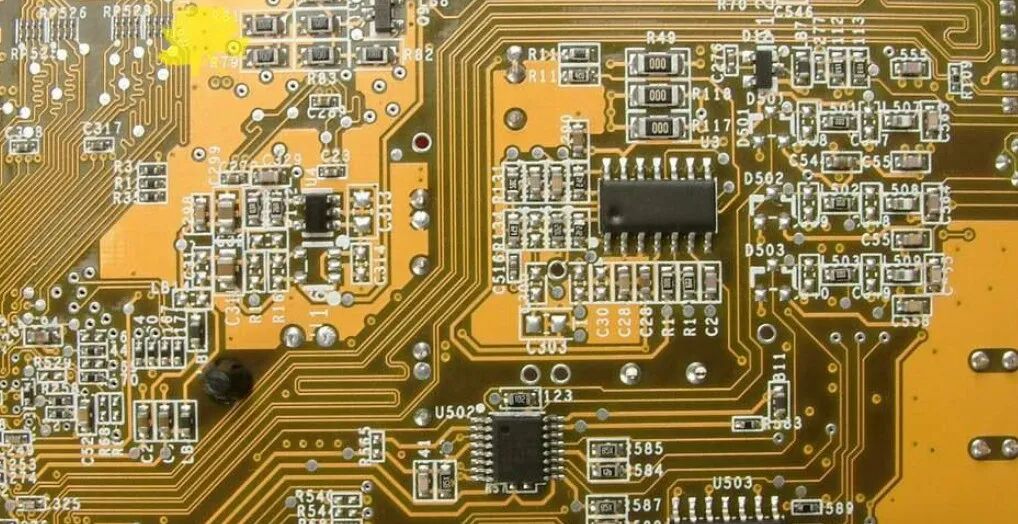
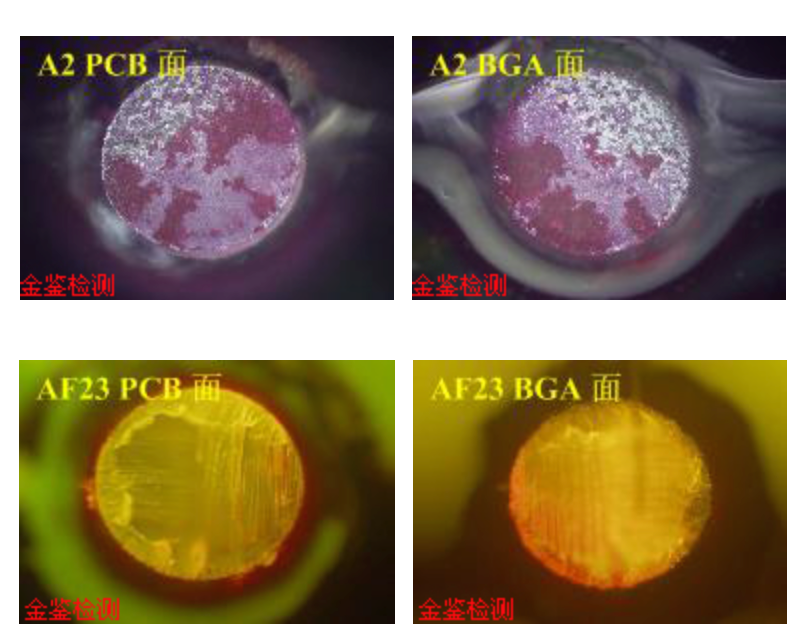
Red ink testing, also known as dye testing, is a commonly used analytical method for assessing the quality of electronic assembly soldering, which can examine whether there are defects such as cold solder joints, false soldering, cracks, etc. Because it is a destructive test, it is generally only applied to circuit boards that cannot be inspected for problems by other non-destructive methods. The dye test can provide a true and reliable three-dimensional distribution of solder joint cracks, facilitating SMT process manufacturers and failure analysis engineers to understand product defects, providing references for subsequent adjustments of soldering process parameters, or offering reliable evidence for identifying the causes of product failures and clarifying responsibilities.
The main functions of PCB red ink testing include the following three aspects:
Detection of Solder Joint Integrity
The integrity of solder joints is one of the key indicators of PCB quality. In PCB red ink testing, by immersing the PCB in red ink, the permeability of the red ink can be used to detect the internal conditions of the solder joints.This detection method can identify microscopic defects such as interface cracks and intergranular cracks that are difficult to detect by visual inspection, X-ray, and other non-destructive testing methods. JinjianLaboratory utilizes advanced experimental equipment and rigorous operational procedures to ensure consistency and accuracy of experimental conditions. For professional testing, please contact Jinjian testing consultant at 181-4899-0106.When the solder joint is intact, the red ink cannot penetrate into the solder joint, and the surface of the solder joint will be evenly covered with red ink; however, if there are defects such as cracks or voids in the solder joint, the red ink will penetrate into the solder joint along these defects.By observing the penetration of the red ink, technicians can accurately determine whether there are defects in the solder joint. Jinjian Laboratory’sred ink testing can provide a true and reliable three-dimensional distribution of solder joint cracks, offering effective analytical methods for inspecting the quality of electronic assembly soldering.
Failure Analysis
Red ink testing plays a unique role in failure analysis. By comparing the dyed areas with the undyed areas, it is possible to clearly distinguish the types and stages of soldering defects. For example, red penetration at the interface often indicates poor wetting, while penetration paths within the solder suggest thermal stress cracks.
More importantly, red ink testing can reproduce the process of failure occurrence. By analyzing the direction and range of the penetration paths, the origin and expansion direction of cracks can be traced, providing decisive evidence for determining the root cause of failure—whether it is due to improper process parameter settings, material matching issues, or external stress influences.
During testing, Jinjian Laboratory strictly adheres to relevant standards, and by observing the dyeing conditions of solder joints, it can determine the types and severity of soldering defects, such as cold solder, false solder, and cracks, further analyzing the causes of failure to provide a basis for improving production processes.
Reference for Process Improvement
In terms of process improvement, red ink testing provides quantifiable directions for improvement. By statistically analyzing the proportion and distribution of red ink penetration under different process parameters, a correspondence between process parameters and soldering quality can be established. For example, by comparing the dyeing results under different reflow soldering temperature curves, temperature parameters can be optimized precisely.
Additionally, this test can also verify the effectiveness of process improvement measures. After adjusting solder paste formulations, improving stencil designs, or optimizing placement parameters, a comparative analysis through red ink testing can visually assess the improvement effects, ensuring that process optimization is advancing in the right direction.
Moreover, PCB red ink testing can also be used to detectthe solderability of PCB surfaces,and the cleanliness of PCB surfaces.
Jinjian Laboratory, as a research and testing institution focused on optoelectronic semiconductor failure analysis, has rich experience and outstanding technical strength in red ink testing.Jinjian Laboratory can not only provide standard testing services but also offer customized testing plans based on customer needs, helping clients optimize product design and enhance product competitiveness.

To learn about technical knowledge or testing requirements
Please scan the QR code below to contact your dedicated testing consultant

Disclaimer:Some content of this article is sourced from the internet;This account maintains neutrality regarding all statements and views of original and reprinted articles, and the articles pushed are for readers’ learning and communication purposes only. The copyright of articles, images, etc. belongs to the original authors. If there is any infringement, please delete it!!
Recommended Reading